
Valencia Cruise Port is a port where the city is more rewarding than the first map glance suggests, but the port location needs respecting. Cruise ships arrive in the port area south-east of the historic centre, so Valencia is not a simple stroll from gangway to cathedral. That does not make it difficult. It means the day should be designed around one main choice: Old Town Valencia, the City of Arts and Sciences, the beach, or a wider excursion. Trying to make all of them fit can turn a good port into a transfer exercise.
Valencia Cruise Port at a Glance
| Port name | Valencia Cruise Port |
|---|---|
| Main cruise area | Valencia cruise port and passenger terminal area, south-east of the historic centre |
| Cruise region | Mediterranean |
| Country / Territory | Spain |
| Currency | Euro (EUR) |
| Language | Spanish, Valencian |
| Disembarkation | Docked |
| Typical berth | Docked; cruise piers may use internal shuttle arrangements to the main terminal area |
| Walkability | Low |
| Shuttle required | Sometimes |
| Main transport options | Cruise Shuttle, Local Bus, Metro / Underground, Tram / Light Rail, Taxi, Walking Route, Organised Excursion |
| Best DIY option | Choose either the Old Town or City of Arts and Sciences, adding the other only if timing and transport are clear |
| Main caution | The port is not beside the historic centre, so a casual walk-off city day is the wrong assumption |
Weather & Best Times to Visit Valencia
January to March
Typical high: 16–20°C
Typical low: 7–11°C
Rain / note: Cool to mild; comfortable for the old town and Turia Gardens, with occasional rain.
April to June
Typical high: 20–28°C
Typical low: 11–19°C
Rain / note: Warm and increasingly sunny; one of the best periods for mixed city walking.
July to September
Typical high: 29–32°C
Typical low: 21–23°C
Rain / note: Hot, bright and exposed; taxis or buses save useful energy between port, city and beach.
October to December
Typical high: 17–26°C
Typical low: 9–18°C
Rain / note: Often pleasant in autumn, with occasional heavier rain episodes later in the season.
Weather guide: CruisePing summary based on NASA POWER climate data for the Valencia city and port area. Check the latest forecast.
Heat matters because Valencia’s best choices are spread out. In July and August, a taxi or bus between the port, City of Arts and Sciences and old town can be better value than saving a few euros but losing energy in exposed streets. The beach is strongest when you choose it deliberately, not when you add it late.
Where Cruise Ships Dock in Valencia
Valencia’s official cruise and visitor information places the cruise operation in the port area rather than beside the old town. Visit Valencia notes the distance from the cruise port to the centre and describes taxis, buses and shuttle arrangements from cruise piers to the main terminal area. That is the core practical fact for passengers: your day begins with a transfer decision.
Check whether your ship is using an internal port shuttle to the terminal. Once at the public transport/taxi point, the centre, City of Arts and Sciences and beach become manageable choices. The wrong move is to walk vaguely away from the port hoping the historic centre will appear quickly.
Getting Around Valencia from the Port
Valencia has useful public transport, but cruise passengers should first solve the port exit. From there, local buses, metro/tram links and taxis can all work depending on the target. The old town is the most classic first-time destination. The City of Arts and Sciences is closer to the port side of the city than the old town, which makes it a practical first stop or a standalone day.
Taxis are often good value in Valencia because they reduce dead time. Public transport is sensible if you are comfortable with stops and connections. A shuttle into town, when provided, may be the easiest route for a simple old-town day.
Best Cruise-Compatible Things to Do from Valencia Cruise Port
Valencia Old Town and Cathedral
Best for: First-time visitors who want history, squares, churches and food stops.
Best way: Taxi, shuttle/bus/metro combination into the centre, then walk.
Watch: Do not spend the morning moving slowly from the port if the old town is your priority.
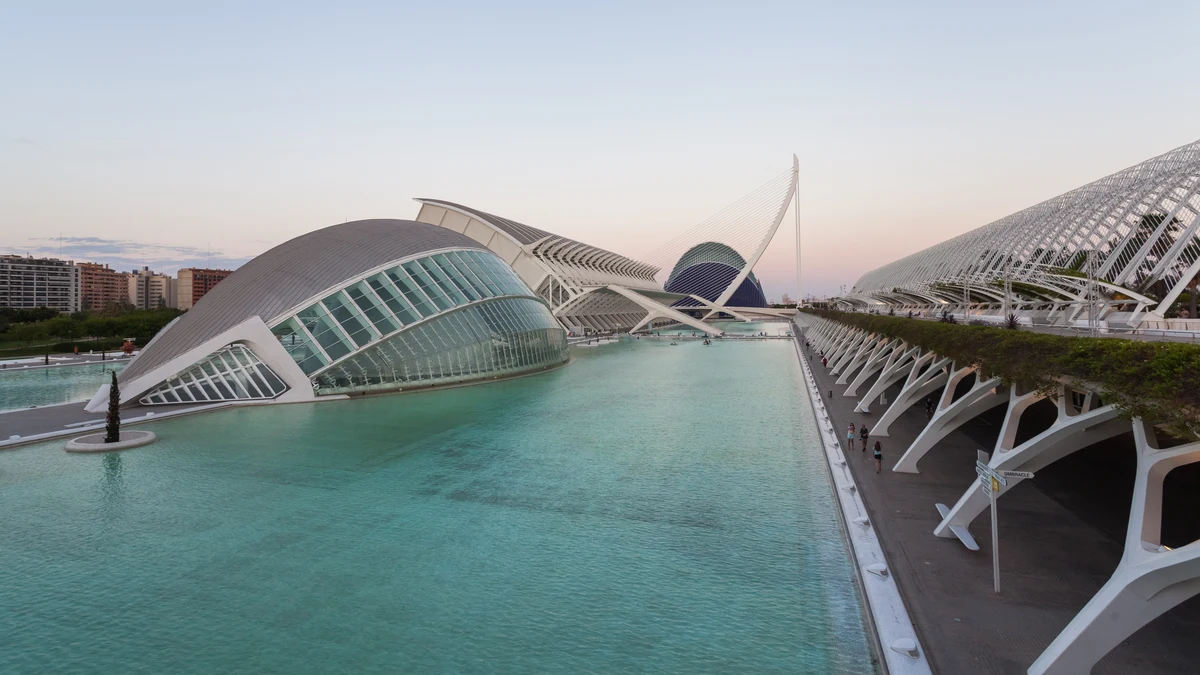
City of Arts and Sciences
Best for: Architecture, museums, family-friendly attractions and a visually distinctive Valencia day.
Best way: Taxi or public transport depending on berth and time.
Watch: The complex can absorb more time than expected; choose which buildings matter.
Turia Gardens
Best for: A gentle city route linking parts of Valencia without constant street crossings.
Best way: Combine with Old Town or City of Arts and Sciences, not as a whole-day target on its own.
Watch: Distances are longer than they look if heat is high.
Malvarrosa and city beaches
Best for: A beach-focused alternative to the old town.
Best way: Taxi, tram/bus or organised beach transfer depending on call time.
Watch: Beach time needs a firm return plan and should not be squeezed after a full city route.
Central Market area
Best for: Food, architecture and a compact old-town anchor.
Best way: Walk once in the centre.
Watch: Check opening days and times; do not make it a late-afternoon fallback without checking.
Albufera excursion
Best for: Nature, rice fields and lagoon scenery outside the city.
Best way: Organised excursion or private transfer.
Watch: Worth considering for repeat visitors, but not the first choice for a short first Valencia call.
CruisePing Recommended Port Day
For a first visit, pick either the Old Town or the City of Arts and Sciences as the anchor. If you want history, go straight to the centre and spend the day around the Cathedral, market area, squares and old streets. If you want modern architecture and a more visual family-friendly plan, use the City of Arts and Sciences as the core and do not feel guilty about skipping the old town.
A beach day is a valid Valencia plan, but it should be chosen from the start. It is weaker as a rushed third act after the old town and City of Arts and Sciences. CruisePing would not try to force all three into a normal port call.
Old Town or City of Arts and Sciences?
This is the Valencia decision that matters most. The Old Town gives you the Cathedral, historic squares, food market atmosphere and a more traditional Spanish city day. The City of Arts and Sciences gives you bold architecture, museum-style choices, the Oceanogràfic nearby and a less typical Mediterranean port image.
If your call is short, choose one. If your call is long and transport works well, start with the City of Arts and Sciences and continue to the Old Town, or do it the other way round depending on opening times and heat. Leave the beach for a separate plan unless you are happy with only a brief look.
Valencia’s challenge is not that the city lacks options. It is that the good options sit in different places. The Old Town, City of Arts and Sciences, Turia Gardens, beach and Albufera cannot all be treated as one compact walk from the ship. Cruise passengers who accept that early tend to have a much better day.
The Old Town version is the strongest choice for passengers who want history, food and traditional city texture. Go there directly, then let the route develop on foot. The Cathedral, market area, old squares and lanes work best when you are not constantly checking how to cross back to the port or beach. Add Turia Gardens if you want a green walking link, but remember that linear parks still involve distance.
The City of Arts and Sciences version is a different kind of day. It is visually memorable, easier to explain to families and often practical from the port side of Valencia. You do not need to enter every building for it to be worthwhile. Some passengers will be satisfied with the exterior architecture, a shorter museum/aquarium choice and a taxi back. Others will want to make the Oceanogràfic or science museum the core of the call. Both are valid, but they are not quick photo stops if you buy tickets.
The beach version should be chosen honestly. Valencia has beach appeal, but the beach is not a natural final flourish after a full old-town and City of Arts route. If you want sand, shade and a slower pace, build the day around Malvarrosa or the seafront and accept that you are choosing a different Valencia from the Cathedral-and-market version.
Public transport can make the city good value, but only after the port exit is clear. Cruise piers, internal shuttles and the main terminal area can add a step before you reach ordinary city transport. Taxis are often the better value for two or more passengers when they prevent wasted time or a hot exposed walk.
A sensible long-call route might pair the City of Arts and Sciences with the Old Town, using taxis or direct public transport between them. A sensible short-call route should not. For short calls, choose the old town or the modern complex and keep the return simple. Valencia rewards decisiveness more than ambition.
Families should be especially careful with Valencia’s geography. The City of Arts and Sciences may be the most practical anchor because it gives a clear destination and several indoor/outdoor choices. The old town is richer historically, but it involves a more traditional walking route with plazas, churches, markets and food stops. Neither is wrong; the weaker plan is dragging tired children across both without a break.
For passengers who have visited Barcelona, Valencia may feel less obvious at first, but that can be an advantage. The city has a very different shape: modern architecture in one area, historic streets in another, beach life elsewhere. A cruise day should lean into that variety by choosing the version that suits your group rather than trying to imitate a Barcelona-style highlights march.
Mobility is less about steep hills and more about distance and transfer friction. Once in the old town the walking can be manageable, but getting there from the port and then moving to another district can add fatigue. Taxis are not a failure of DIY here; they are often the tool that makes an independent day comfortable.
Repeat visitors might look at Albufera or a food-led route, but those choices should replace the standard first-time plan, not sit on top of it. A lagoon excursion, beach afternoon or long market lunch changes the day’s purpose. That is fine, as long as the port return remains simple.
Food-focused passengers should consider the Central Market area as part of an old-town plan rather than a separate destination. It fits naturally with the Cathedral, old streets and plazas, but it does not work well if you arrive after the useful part of the market day has passed. Check current opening before making it the reason for crossing the city.
Architecture-focused passengers can make the City of Arts and Sciences the day and still feel they have “done” Valencia in a meaningful way. That is not the same as seeing the historic core, but it is a distinctive local experience and often easier to manage from the port. The key is to be honest about which Valencia you are choosing.
Beach-focused passengers should not be embarrassed about skipping churches and museums. A cruise day is finite, and a well-paced beach/seafront plan with a reliable return can be better than a half-hearted cultural route. Valencia supports several kinds of day; the weak version is the one that refuses to choose.
On very hot calls, consider starting with the most exposed part of the day and ending somewhere easier to leave. That might mean City of Arts and Sciences first, then a shorter old-town route, or old town first with a taxi return before the hottest part of the afternoon.
DIY or Organised Excursion?
Valencia is a good DIY port for passengers comfortable with a shuttle, taxi or public transport into the city. The sights themselves do not require a cruise excursion. A guided walk can add context in the Old Town, but the city layout is manageable once you are in the right area.
Organised excursions make more sense for Albufera, winery or wider regional trips, or for passengers who want a no-thinking transfer loop. For most first-time visitors, independent travel gives better control: taxi or shuttle in, one strong area, and a return that leaves time for the port shuttle if required.
Valencia Port-Day Pitfalls and Value Tips
- Do not assume the cruise berth is close to the historic centre.
- Check whether an internal port shuttle is needed before you reach public transport.
- Choose Old Town, City of Arts and Sciences or beach as the main plan.
- Use taxis selectively in hot weather to save energy for the sights.
- Do not make Albufera your first Valencia plan unless you actively want a nature excursion.
Valencia Cruise Port Checklist
- Confirm the cruise-pier shuttle and terminal drop-off arrangements.
- Decide whether the day is Old Town, City of Arts and Sciences or beach-led.
- Check public transport or taxi options before leaving the terminal area.
- Build in extra return time if your berth requires a shuttle inside the port.
- Carry sun protection for Turia Gardens, open plazas and beach plans.
- Use official Visit Valencia pages for current transport and attraction details.
Useful Official Links for Valencia
For Valencia, the useful checks are port-to-city transport, the cruise-pier shuttle position and whether your day is centred on the Old Town, the City of Arts and Sciences or the beach.
- Valenciaport cruise information
- Visit Valencia cruise passenger guide
- Visit Valencia port transport information
- Visit Valencia public transport guide
- City of Arts and Sciences visitor information
- Valencia Cathedral visitor information
FAQ
Is Valencia cruise port walkable?
Not in the simple old-town sense. The port is away from the historic centre, so most passengers should use a shuttle, taxi, bus or metro/tram connection before starting the main sightseeing walk.
What is the best first-time plan in Valencia?
Choose either the Old Town and Cathedral area or the City of Arts and Sciences. Both are strong, but combining them with the beach can make the day feel rushed.
Is the City of Arts and Sciences easy from Valencia cruise port?
It is one of the more practical major targets from the port side of the city, especially by taxi or with a clear public-transport plan. Decide in advance which parts of the complex you actually want to visit.
Can you do Valencia DIY from a cruise ship?
Yes. Valencia works well independently once you have handled the port-to-city transfer. Organised excursions are more useful for out-of-city trips or passengers who prefer a fully managed route.
CruisePing Port Verdict
Valencia is a rewarding port when you stop trying to see it as a walk-off city. The port-to-centre gap is real, but the choices after that are strong: historic Valencia, modern architecture, beach time or a regional excursion. The best day has one clear anchor and sensible transport at both ends. Get that right, and Valencia feels distinctive rather than difficult.
Ready to browse our article library?
Looking beyond Valencia? Explore more ports in the Mediterranean region, or narrow it to Spain in particular. For cruise comparisons, planning shortcuts and value guides, head over to our main article archive.