
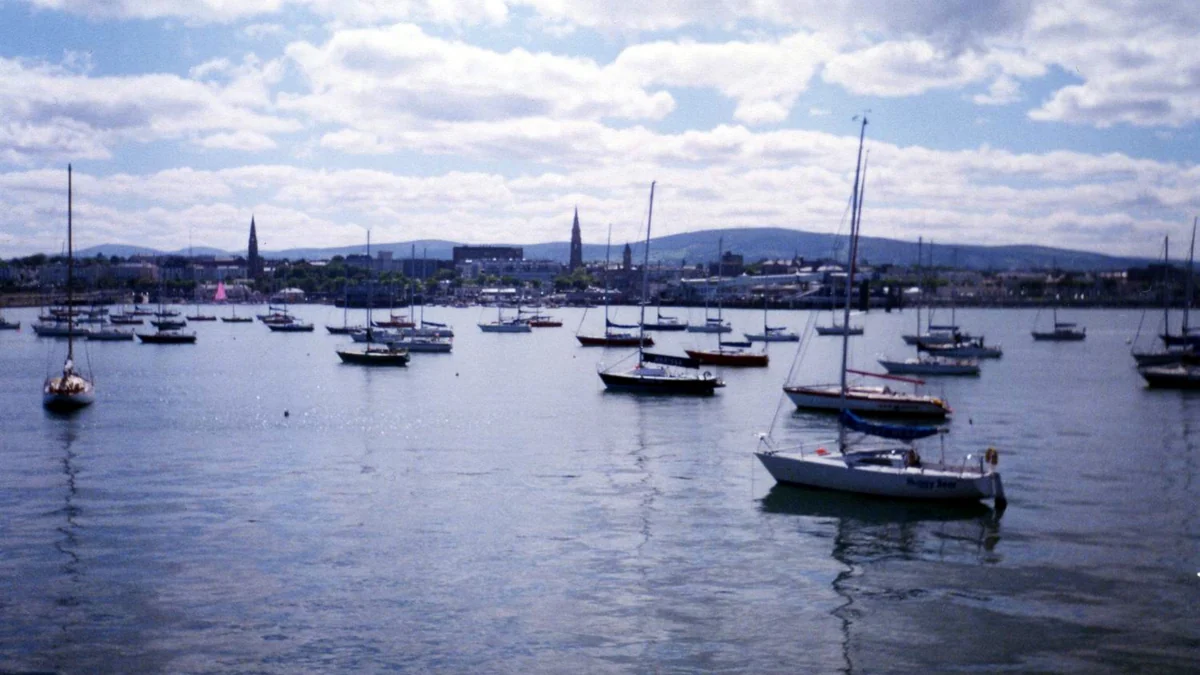
Dún Laoghaire is the Dublin Bay cruise call that can look wonderfully simple until you remember that the ship is not in Dublin city centre. Passengers come ashore south of the city, usually by tender, and then choose between a coastal Dún Laoghaire day, a DART-based run into Dublin, or an organised excursion that removes some of the transport thinking.
The port can work very well independently, but it needs a clear choice before you leave the harbour. Dublin is close enough to be tempting and far enough that vague planning costs time. Dún Laoghaire itself is pleasant, coastal and low-risk; Dublin city has the bigger sights but asks you to manage railway timing, city walking and the tender return.
Dún Laoghaire Cruise Port at a Glance
| Port name | Dún Laoghaire Cruise Port (Dublin) |
|---|---|
| Main cruise area | Tender landing in Dún Laoghaire Harbour from ships anchored in Dublin Bay |
| Cruise region | British Isles |
| Country / Territory | Ireland |
| Currency | Euro (EUR) |
| Language | English, Irish |
| Disembarkation | Tender |
| Walkability | Medium |
| Shuttle required | Sometimes |
| Mobility difficulty | Medium |
| Main transport options | Walking Route, Train, Local Bus, Taxi, Organised Excursion |
| Best DIY option | DART or taxi into Dublin, or a coastal Dún Laoghaire / Sandycove day |
| Main caution | Tender timing plus the return from Dublin city centre |
Weather & Best Times to Visit Dún Laoghaire
April to May
Typical high: 11–15°C
Typical low: 5–8°C
Rain / conditions: Changeable spring weather; good layers matter on the pier and seafront.
June to August
Typical high: 17–20°C
Typical low: 10–13°C
Rain / conditions: Usually mild for walking, though rain and wind can still affect tendering.
September to October
Typical high: 14–17°C
Typical low: 8–11°C
Rain / conditions: Comfortable for Dublin sightseeing, with showers more likely as autumn develops.
November to March
Typical high: 7–10°C
Typical low: 3–6°C
Rain / conditions: Cool, wet and windy at times; plan around indoor Dublin options.
Weather guide: CruisePing summary based on NASA POWER climate data for Dún Laoghaire and Dublin Bay. Check the latest forecast.
Dún Laoghaire weather matters twice: first for the tender run across Dublin Bay, then for whether Dublin feels like a city-walk day or a museum-and-pub day. If the bay is unsettled, protect the return rather than squeezing in one more stop near Trinity or the Castle.
Where Cruise Ships Anchor for Dún Laoghaire
The local harbour notice for passenger ship tendering operations into Dún Laoghaire Harbour refers to cruise ships anchored in Dublin Bay transferring passengers into the harbour. That is the central fact for the day: Dún Laoghaire is a tender gateway, not a city-centre docking terminal. Dublin Port’s own tendering procedure documentation also refers to domestic tender operations used in conjunction with Dún Laoghaire Harbour. Exact operations sit with the ship, harbour and cruise line on the day, so passengers should follow onboard instructions rather than relying on an old schedule. The harbour setting is attractive and usable, but the tender creates a natural time gate. A late tender start should push you towards a simpler Dublin plan or a Dún Laoghaire/Sandycove day rather than an overpacked city route.
Transfer Reality Check: Dún Laoghaire to Dublin
The transfer question is straightforward but not trivial. From the tender landing, passengers need to reach Dún Laoghaire town and station area, then choose DART, taxi, cruise shuttle or ship excursion. The DART is the classic independent option because it links the south Dublin coast with the city, but you still need to allow for the tender, the walk to the station, ticketing and the city end.
DART into Dublin city
Best for: Confident DIY passengers who want Trinity, Grafton Street, Dublin Castle or a central city wander.
Typical timing: Allow time from tender landing to Dún Laoghaire station, then the rail leg into central Dublin, then walking from the chosen city station.
CruisePing view: Good value and flexible when services are running normally, but check the same-day Irish Rail / Transport for Ireland information before relying on it.
Taxi or private transfer
Best for: Passengers who want speed, reduced walking or a direct drop near a specific attraction.
Typical timing: Usually simpler door-to-door, but traffic into Dublin can vary and the return still needs a buffer.
CruisePing view: Best for small groups or mobility-sensitive travellers who do not want railway decisions on a tender day.
Stay coastal
Best for: Passengers who prefer a lower-risk day with sea air, piers, Sandycove and James Joyce Tower.
Typical timing: Walk locally or use a short bus/taxi link depending on mobility and weather.
CruisePing view: A strong fallback, especially if tendering is slow or Dublin weather looks miserable.
Dún Laoghaire or Dublin: Choosing the Right Day
If you have never been to Dublin, the city is the obvious draw. A sensible first-time city plan might be Trinity College area, Grafton Street, Dublin Castle and a pub or museum stop rather than trying to cross the whole city. Keep it walkable and compact.
If you already know Dublin, Dún Laoghaire is not a second-rate day. The harbour, East Pier, Sandycove, the James Joyce Tower and coastal cafés give a gentler Irish Sea port day with much less return stress.
Do not combine the two too casually. A morning in Dublin and a relaxed coastal afternoon can work only with an early tender, reliable transport and discipline. More often, one clear plan beats two half-days.
Best Cruise-Compatible Things to Do from Dún Laoghaire
Dublin city centre
Best for: First-time visitors who want the main capital-city experience.
Best way: DART, taxi, cruise shuttle or organised transfer, depending on your appetite for DIY.
Watch: Do not turn it into an all-Dublin checklist; choose a compact route.
Trinity College / Grafton Street area
Best for: A manageable central Dublin focus with easy onward walking.
Best way: DART to a central station, then walk if mobility allows.
Watch: Popular areas can be crowded; avoid tight timed bookings if tendering is slow.
Dublin Castle and the historic core
Best for: Passengers who prefer history and a defined city route.
Best way: DIY by DART/taxi or guided excursion.
Watch: Leave enough time to get back across the city, then out to Dún Laoghaire.
Dún Laoghaire harbour and piers
Best for: A low-risk local day with sea views and minimal transfer stress.
Best way: Walk from the harbour/town area, weather permitting.
Watch: Exposed pier walks are less attractive in heavy wind or rain.
Sandycove and James Joyce Tower
Best for: A compact coastal-literary add-on beyond the harbour.
Best way: Use a short bus, DART to Sandycove & Glasthule, taxi or walk if time and mobility allow.
Watch: The James Joyce Tower visitor page notes access limitations, so check before making it the centrepiece.
Organised Wicklow or coastal excursion
Best for: Passengers who want scenery without managing multiple connections.
Best way: Ship excursion or pre-booked private tour.
Watch: Only worthwhile if the excursion has a clean return plan to the tender operation.
Using the DART Without Turning the Day into a Commute
DART is the key independent option from Dún Laoghaire because it links the harbour town with central Dublin and the wider coast. The station is close enough to make rail a realistic DIY choice for many passengers, but the plan still depends on tender timing. A slow tender start can turn a neat city plan into a compressed one.
For central Dublin, decide your first stop before you board. Pearse, Tara Street and Connolly all serve different walking patterns, and wandering out of the station without a target wastes the time that DART has saved. Trinity College, the National Gallery, Merrion Square, Grafton Street and Temple Bar can form a sensible first-time loop if you resist the urge to cross the city repeatedly.
The return matters more than the outward journey. Check the same-day DART service, allow room for a missed train and return to Dún Laoghaire early enough to manage the tender queue. On a port day, the best independent Dublin plan is the one that still works when one connection is less convenient than expected.
Passengers who dislike rail logistics should not feel they have failed by taking a cruise-line transfer. If the goal is simply to see Dublin with the least mental load, paying for a structured transfer can be good value.
The smartest independent rail plan keeps the city portion deliberately compact. Do not arrive in Dublin and then use taxis or buses to chase sights on opposite sides of the centre unless you have a long call and a strong reason. The easiest win is a walkable central loop from the chosen DART station.
Keep an eye on direction at the end of the day. Returning towards Dún Laoghaire is simple when everything is running normally, but cruise passengers should not cut the last train choice fine. Build in an earlier return option and treat the final possible service as something you hope not to need.
The Coastal Alternative: Dún Laoghaire, Sandycove and Dalkey
The coastal option is under-rated for repeat visitors to Dublin. Dún Laoghaire itself has piers, marina views and a seaside-town feel, while Sandycove and the James Joyce Tower add a literary and coastal edge without committing the whole day to the city centre.
This plan works particularly well if the weather is bright but the tender timing is uncertain. You can stay close to the harbour, extend towards Sandycove if conditions are pleasant, then return without needing a city-centre buffer. Dalkey can be added when rail or taxi timings are easy, but it should not be forced on a short call.
The main difference is tempo. Dublin city centre gives bigger landmarks and more obvious first-time value. The coastal plan gives a lower-risk day with fewer queues, fewer road crossings and less chance of feeling that you have spent the day moving between transport nodes.
The pier walk is the easiest local signature experience, especially in decent weather. It gives sea air, harbour scale and views back towards the town without asking you to navigate Dublin traffic or train platforms.
Sandycove adds a more specific destination. The James Joyce Tower is close enough to make sense from Dún Laoghaire but far enough that you should still watch the time, especially if walking both ways. Dalkey is better treated as an extension for longer calls rather than an automatic stop.
This coastal plan is particularly attractive on repeat Dublin calls. It avoids the feeling of doing the same Temple Bar-and-Trinity route again and gives the day a stronger sense of place around the bay.
What to Prioritise in Dublin City Centre
For most first-time cruise passengers, central Dublin works best as one compact story rather than a long list. Trinity College and the Book of Kells area, Grafton Street, St Stephen’s Green, Temple Bar and the riverfront are close enough to combine into a walkable introduction if you keep the route disciplined.
Adding Kilmainham Gaol, Guinness Storehouse, Phoenix Park or outlying museums changes the day. Those places may be excellent, but they increase travel time and reduce flexibility. From a tender port, that loss of flexibility matters. Choose one outlying attraction only if it is the reason for going into Dublin.
Food and drink stops also need timing judgement. A long pub lunch can be the best part of the day if you have chosen Dublin for atmosphere rather than sightseeing, but it can quietly consume the time needed for the return train and tender. Put the fixed transport decision into the plan before choosing how relaxed the middle of the day can be.
A first-time city-centre route should start with the area you most care about. Literary Dublin points towards Trinity and the surrounding streets. Political and cultural Dublin may push you towards museums, galleries and Georgian squares. Pub-and-street-atmosphere Dublin points to a shorter route with more time to sit down.
Pre-booked attractions should sit early or centrally in the plan, not at the far end of the day. A timed entry that forces you to cross Dublin late in the afternoon is the sort of decision that creates avoidable stress on a tender call.
Mobility and Tendering from Dún Laoghaire
Dún Laoghaire is easier than many tender gateways once you are ashore, but the tender itself remains the gatekeeper. Passengers with limited mobility should check whether the ship will allow them to use the tenders and whether any mobility equipment can be carried. This can vary by ship and conditions.
The town and harbour areas can be manageable for many passengers, especially if the plan stays close to the waterfront. Central Dublin adds station access, crowds, kerbs, cobbles in some older streets and longer walking distances between sights. It is perfectly doable for many visitors, but it differs from arriving by coach outside one attraction.
For a lower-mobility day, a transfer or taxi into Dublin may be better than DART, especially if the target is a single attraction or a guided city overview. For an easier independent day, stay around Dún Laoghaire and Sandycove rather than turning the call into a capital-city transport exercise.
Two Strong Ways to Plan Dublin from Dún Laoghaire
The first good plan is a Dublin-focused day using DART or a cruise-line transfer. That works best for passengers who want Trinity College, the Book of Kells area, Temple Bar, the National Gallery, Grafton Street or a general first look at the city. The key is to avoid spreading the day too widely once you arrive. Dublin has enough to fill a full day without adding outlying sights on top.
The second good plan is a harbour-and-coast day based around Dún Laoghaire, Sandycove and Dalkey. This suits passengers who have already seen central Dublin, dislike tender-and-train logistics or simply want a calmer day. The James Joyce Tower area, the pier walks and the coastal villages give the call a different feel from the usual city-centre rush.
The weaker plan is trying to do both properly. A morning in central Dublin followed by a rushed coast stop can work on paper, but only if the ship’s tendering is smooth and the DART timings behave. Most passengers will enjoy the day more by choosing whether they want the capital or the coast before they leave the harbour.
CruisePing Recommended Port Day
For a first visit with a decent-length call, choose Dublin but keep the city plan tight. Aim for one cluster: Trinity/Grafton Street, Dublin Castle/Temple Bar area, or a museum-led route. Save far-flung combinations for a land trip.
If tendering is slow or the weather is poor, switch to a Dún Laoghaire and Sandycove day. The point is not to prove you reached Dublin; it is to enjoy the port without giving the return journey a chance to spoil the afternoon.
For a first visit to Ireland’s capital, the best plan is still Dublin city centre, but only if you keep the route tight. Use DART or a direct transfer, choose one central arrival point, and build the day around a compact walk rather than a list of every famous name.
For repeat visitors, Dún Laoghaire and the coast are the better value. The harbour, pier, Sandycove and possibly Dalkey create a day that feels specific to Dublin Bay rather than a shortened version of a city break.
For limited-mobility passengers, a cruise-line transfer or taxi-supported city plan is often easier than self-guided rail. Central Dublin can involve crowds, uneven surfaces and long distances between sights, while the coastal plan can be shortened quickly if energy drops.
The strongest overall advice is to choose one identity for the day. Make it a Dublin day, or make it a coastal Dún Laoghaire day. The in-between version is where time disappears.
A useful compromise for some passengers is to go into Dublin early, keep the visit to one central route, then return to Dún Laoghaire with time for the pier or a coffee near the harbour. That gives both identities of the call without pretending there is time for a full coastal afternoon.
Passengers travelling in mixed-ability groups should plan around the slowest walker. Dublin can be tiring because the interesting streets encourage wandering. A taxi back to the DART station, or a direct transfer rather than train both ways, may be sensible if the group includes anyone who tires quickly.
For an early tender group, central Dublin becomes more attractive because the first part of the day can be spent before the worst crowds build. For a late tender group, the coast may be the calmer choice.
Do not leave the harbour without knowing which return route you trust. DART is useful, but it should sit inside a plan with an earlier return option, not as a last-minute rescue.
The port is at its best when the tender landing, rail choice and sightseeing route all point in the same direction. A disciplined Dublin day can feel rich; a scattered Dublin Bay day can feel like logistics.
Cruise passengers who want a pub stop should place it near the end of the city route or back in Dún Laoghaire, not in the middle of an already stretched Dublin loop.
A map can make Dublin look deceptively close to the harbour, but the practical day includes tendering, walking to transport, the rail or road leg, city walking and the same process in reverse. Count all of it.
The extra planning is worth it because Dún Laoghaire gives access to two different cruise days: one capital-city day and one bay-and-coast day. Choose deliberately and the port feels generous rather than awkward.
For most readers, that choice should be made before breakfast on board. Once the tender sequence begins, the temptation to keep every option open usually makes the day weaker, not stronger.
That is the difference between using Dún Laoghaire as a useful Dublin gateway and letting it become a sequence of small transport decisions. That clarity is useful. Choose the shape first, then the stops, and the day stays more honest.
That early clarity saves the return journey from becoming the dominant memory of the port day.
DIY or Organised Excursion from Dún Laoghaire?
Dún Laoghaire is a viable DIY Dublin gateway, especially for passengers comfortable with rail travel. The DART gives a logical route into the city, and Transport for Ireland / Irish Rail information should be checked on the day for service updates.
An organised transfer or excursion is better if mobility is limited, if you want to reach several Dublin sights with commentary, or if your call is short. Tender plus train plus city walking is manageable, but it is still a sequence of moving parts.
DIY works best for passengers who are comfortable with train stations, city walking and a little uncertainty. The route is not difficult in principle, but it does require calm decision-making if the tender landing is slow or the weather changes.
A transfer works better for passengers who want the city without watching timetables. It also helps groups where one person is less mobile or less confident with independent rail. The extra cost may buy a simpler day rather than a better attraction.
An organised excursion is strongest where it gives interpretation or access, not simply a coach into Dublin. A guided city overview, a literary-focused route or a specific attraction-led tour can be worthwhile. A generic transfer sold as a tour may be less compelling if you are happy using DART.
Weather also changes the comparison. Central Dublin has more indoor options and sheltered stops, but it also involves more crowds and road crossings. The coast feels better in clear weather, less rewarding in rain and wind.
A private tour is worth considering only when it gives a clear route and avoids unnecessary city driving. A car that tries to cover every Dublin landmark from the outside may not be better than a focused walking route from the train.
There is no shame in reducing the plan once ashore. If the tender has taken longer than expected, choose Dún Laoghaire and Sandycove rather than trying to prove that the capital still fits.
Dún Laoghaire Port-Day Pitfalls and Value Hacks
- Do not assume the ship docks in Dublin city. Dún Laoghaire is south of the centre and usually involves tendering.
- Check rail service updates before relying on the DART; engineering works can affect Dublin coastal services.
- Do not book a tight timed attraction in Dublin unless your tender time and transport plan are secure.
- Keep your final hour conservative. The last leg is not just a train or taxi; it is the tender return.
Dún Laoghaire Cruise Port Checklist
- Confirm whether your ship is tendering into Dún Laoghaire and note the final tender time.
- Choose either Dublin city or a coastal Dún Laoghaire/Sandycove day before leaving the harbour.
- Check current DART and local transport status if travelling independently.
- Pick a compact Dublin route rather than scattered sights.
- Return to Dún Laoghaire early enough to handle queues, weather and tender boarding calmly.
Useful Official Links for Dún Laoghaire
For Dún Laoghaire, these links help you separate the harbour/tender plan from the onward Dublin plan.
- Dún Laoghaire Harbour passenger tendering notice
- Dublin Port passenger ship tendering procedure
- Irish Rail station and DART information
- Transport for Ireland service updates
- James Joyce Tower visitor information
Dún Laoghaire Cruise Port FAQ
Is Dún Laoghaire the same as Dublin cruise port?
It is a Dublin Bay cruise arrival point rather than Dublin city centre. Passengers usually tender into Dún Laoghaire and then travel into Dublin if that is the chosen plan.
Can you get from Dún Laoghaire to Dublin by train?
Yes, the DART is the main independent rail option, but check current Irish Rail or Transport for Ireland information before relying on it because service changes and engineering works can affect the line.
Is Dún Laoghaire worth staying in instead of going to Dublin?
Yes, especially for repeat Dublin visitors, shorter calls, poor weather or anyone who wants a calmer coastal day. The harbour, piers and Sandycove can make a good lower-risk visit.
What is the main timing risk?
The return sequence: city transport back to Dún Laoghaire, then tender boarding back to the ship. Build more slack than you would at a docked city port.
CruisePing Port Verdict
Dún Laoghaire is a good Dublin gateway if you respect the tender and keep the city plan compact. First-timers can reach Dublin independently when transport is running well, but the smarter cruise-day plan is selective. Repeat visitors and cautious travellers may get more pleasure from the harbour, Sandycove and a slower coastal day.
Ready to browse our article library?
Looking beyond Dún Laoghaire? Explore more ports in the British Isles region, or narrow it to Ireland in particular. For cruise comparisons, planning shortcuts and value guides, head over to our main article archive.