
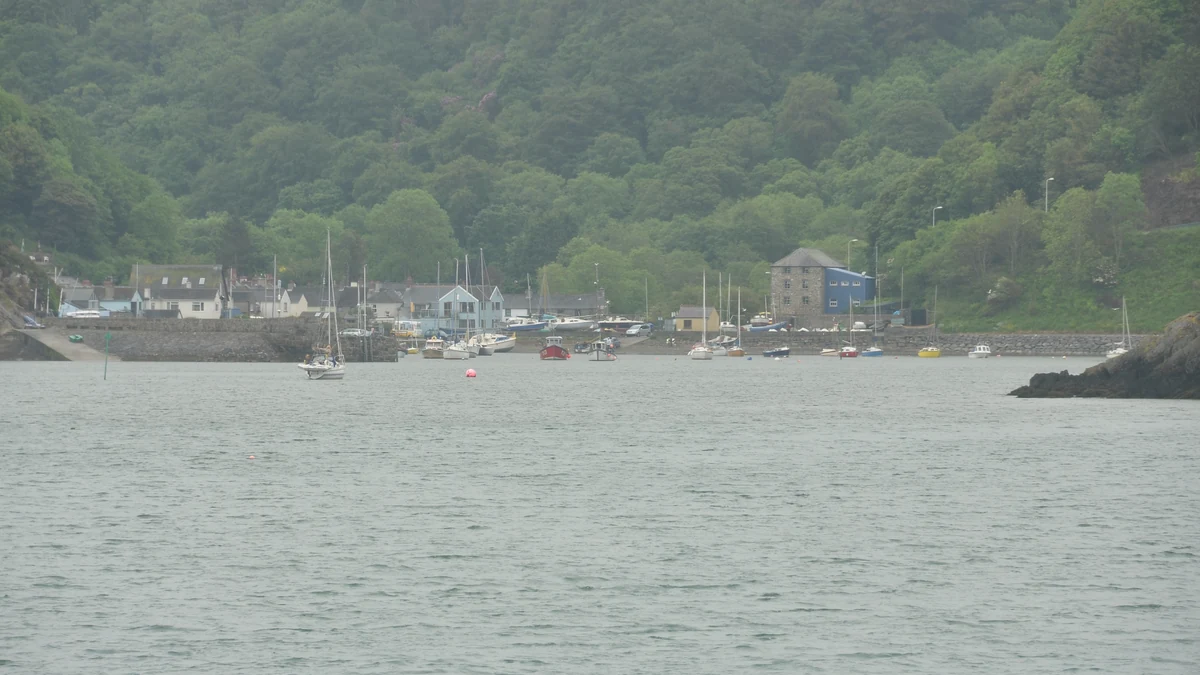
Fishguard cruise port brings ships to a small harbour on the north Pembrokeshire coast rather than to a purpose-built city terminal. The reward is a day with genuine local character: wooded harbour slopes, Lower Town’s old quayside, the story of Britain’s last mainland invasion and access to one of Wales’s strongest coastal landscapes. The complication is that many passengers arrive by tender and the settlements of Goodwick, Fishguard and Lower Town are spread around hills rather than gathered beside one flat promenade.
This call works best when the plan matches the weather and the ship’s landing arrangements. A local day can combine harbour scenery, the town centre and the Last Invasion Tapestry without turning the visit into a transport exercise. St Davids, the Pembrokeshire Coast National Park and prehistoric sites are worthwhile alternatives, but they are better treated as one deliberate excursion than as additions to a walking day.
Fishguard Cruise Port at a Glance
| Port name | Fishguard Cruise Port |
|---|---|
| Main cruise area | Fishguard Harbour / Goodwick, with arrangements varying by ship |
| Cruise region | British Isles |
| Country / Territory | UK |
| Currency | British pound (GBP) |
| Languages | English and Welsh |
| Disembarkation | Usually tender for larger cruise ships; an alongside berth can serve smaller vessels |
| Walkability | Medium: useful local walking is possible, but the settlements are hilly and spread out |
| Shuttle required | Sometimes; follow the cruise line’s call-specific instructions |
| Main transport | Walking, call-specific shuttle, local bus or pre-arranged excursion |
| Best DIY option | Lower Town, central Fishguard and the Last Invasion story |
| Main caution | Tender conditions, gradients and limited time for distant Pembrokeshire sights |
Weather & Best Times to Visit Fishguard
January to March
Typical high: 8–10°C
Typical low: 4–6°C
Rain / conditions: Cool, often breezy and changeable; exposed coastal walking can feel colder than the thermometer suggests.
April to June
Typical high: 11–17°C
Typical low: 6–11°C
Rain / conditions: Longer daylight and improving temperatures, although Atlantic showers and brisk winds remain possible.
July to September
Typical high: 16–19°C
Typical low: 11–14°C
Rain / conditions: The mildest cruise-season conditions; sea mist, showers and wind can still alter tender and coast plans.
October to December
Typical high: 9–15°C
Typical low: 5–11°C
Rain / conditions: Increasingly unsettled, with shorter days and a greater chance of wet or windy harbour conditions.
Weather guide: CruisePing summary based on NASA POWER climate data for Fishguard and Goodwick. Check the latest forecast.
Wind matters more than a small temperature difference in Fishguard. A calm morning supports a Lower Town and Marine Walk plan, while stronger wind or persistent rain makes the Last Invasion Tapestry and a compact town visit a better use of the call. Tender instructions always outrank a coastal walking ambition.
Where Cruise Ships Arrive in Fishguard
The official Cruise Wales port profile for Fishguard describes both a sheltered alongside facility for expedition-sized vessels and a tender berth used for cruise calls. Larger ships should therefore expect a tender operation unless their cruise line says otherwise. The precise landing point, shuttle provision and pedestrian route can change with the vessel and harbour operation, so the ship’s daily programme is the practical source to follow on arrival.
Fishguard Harbour is beside Goodwick, while Fishguard’s main town centre sits uphill and east of the harbour. Lower Town is a separate historic harbour inlet farther around the coast. These names are often used loosely in excursion descriptions, but they represent different parts of the day. A map that shows a single “Fishguard” label can make the area look more compact than it feels once gradients and road crossings are included.
The tender is not merely an inconvenience. It gives a good approach to the wooded harbour and makes the maritime setting part of the visit. It also creates a fixed return process: passengers need to allow for the queue, the boat journey and any last-tender cut-off rather than treating the published all-aboard time as the moment to reach the waterfront.
Understanding Goodwick, Fishguard and Lower Town
Goodwick grew around the modern harbour and ferry activity. It is the practical arrival side of the call, with transport connections and local services, but it is not usually the part that passengers picture when they imagine an old Welsh harbour. Fishguard’s upper town provides shops, cafés, the town hall and the cultural focus of the Last Invasion story. Lower Town, set around its smaller harbour, supplies the most atmospheric waterside walking.
The official Visit Pembrokeshire guide to Fishguard and Goodwick treats the two communities together, which is sensible for a longer stay. Cruise passengers need to be more selective. Walking from one section to another is feasible for active visitors with time, but it should not be assumed to be a flat, continuous harbour stroll. A taxi or call-specific shuttle can preserve energy for Lower Town or the town-centre sights.
Getting Around Fishguard Independently
A local independent day can be done on foot, by a combination of walking and taxi, or with whatever shuttle the cruise operator provides. The most robust approach is to decide which two local areas matter most. Goodwick plus the upper town is practical; the upper town plus Lower Town gives more history and harbour character; trying to cover all three on foot can leave the day feeling like a sequence of connecting roads.
Pembrokeshire’s rural public transport is useful but not turn-up-and-go city transport. The county’s official getting-around information explains scheduled buses and the demand-responsive fflecsi service. Cruise visitors should check current operation, booking requirements and return times before relying on either. A route that appears on a general journey planner may not fit the ship’s tender window.
Taxis are the simpler tool for a short transfer between the harbour, town centre and Lower Town, or for a pre-agreed local circuit. Availability can tighten when a ship is in, so a passenger who has a fixed attraction or mobility need should arrange the journey rather than assume several cars will be waiting. For St Davids or a wider coast itinerary, a ship excursion, local tour or pre-booked private vehicle is more dependable than improvising after landing.
Best Cruise-Compatible Things to Do from Fishguard
Lower Town harbour and the Marine Walk
Lower Town is the strongest local choice for passengers who want a recognisable Pembrokeshire harbour rather than a conventional shopping stop. Stone buildings sit around the sheltered inlet, and the county council’s Lower Town harbour page identifies the Marine Walk around the harbour area. It suits a flexible day because the route can be shortened if rain arrives or tender timings change.
The caution is access. Lower Town is not the same place as the cruise harbour, and the connecting terrain is not flat. Use a taxi for one leg if hills would reduce enjoyment, then spend the saved energy beside the water. Wet surfaces and traffic on the approach roads make a relaxed pace more sensible than chasing a precise walking circuit.
The Last Invasion story and tapestry
Fishguard is associated with the 1797 French landing and the local response that ended what is commonly described as the last invasion of mainland Britain. The Pembrokeshire Coast National Park account provides the historical context. In town, the tapestry is the most cruise-friendly way to engage with the story because it is compact, local and not dependent on clear coastal weather.
Treat the tapestry as an anchor for a town-centre visit rather than a five-minute box to tick. Its value lies in making sense of the landscape and the community’s version of the event. Check current visitor access before the call, particularly outside the main season, and combine it with a café stop or a short walk rather than building a distant excursion around it.
A local harbour-and-town day
Passengers who dislike coach touring can make a satisfying day from the immediate area: tender or berth arrival, a look around Goodwick, transfer uphill to Fishguard, time with the invasion story and a finish at Lower Town. This plan reveals more of the place than a rapid photograph at one viewpoint, and every stage can be shortened if the harbour operation changes.
The best order depends on the ship’s landing point and shuttle. Ask where the final return transport leaves from before setting off. Ending near the confirmed tender or shuttle point is more comfortable than finishing in Lower Town and then searching for a taxi at the busiest part of the afternoon.
St Davids and its cathedral
St Davids is the headline cultural excursion from this part of Pembrokeshire. Its cathedral setting and small-city scale make it a better single destination than an overfilled coach itinerary that adds several distant photo stops. For most cruise passengers, an organised excursion or pre-booked driver is the sensible method because the value comes from having enough time there, not from proving the route can be assembled by public bus.
A St Davids plan should remain a St Davids plan. Adding a long coastal walk, a beach and multiple prehistoric sites makes the return fragile. Passengers with reduced mobility should also check the drop-off point and gradients around the cathedral precinct rather than assuming the coach stops beside every entrance.
Pembrokeshire Coast scenery
The national park coast is the main reason to travel beyond Fishguard, but “see the coast” is too vague for a cruise day. A good excursion names a viewpoint, a short path or a specific section and explains how much walking is involved. The coast is exposed, and a route that is glorious in light winds can become an endurance exercise in driving rain.
Choose a guided or private outing with a weather-adjustable route. A coach that can switch from an exposed headland to a village, gallery or historic stop has more value than a rigid walk booked because photographs showed blue skies. Footwear with grip matters even on a short path, as grass and stone can remain slick after showers.
Pentre Ifan and the Preseli landscape
North Pembrokeshire’s prehistoric monuments and Preseli hills offer a very different day from the harbour. Pentre Ifan is often the recognisable focal point, but it is best approached as part of a planned heritage circuit rather than by trying to link rural sites with uncertain transport. The interest is the relationship between monument and landscape, which needs more than a hurried roadside stop.
This option favours an organised small-group tour or private driver, especially when the call is tendered. Paths may be uneven or grassy, facilities are limited and weather can shift quickly. It is a worthwhile choice for passengers who have already visited St Davids and want archaeology, but not the default first visit for someone who also hopes to explore Fishguard itself.
CruisePing Recommended Port Day
For a first Fishguard call, the strongest low-risk day stays local. Use the ship’s shuttle or a short taxi to reach central Fishguard, spend proper time with the Last Invasion story, then continue to Lower Town for the harbour and a manageable section of the Marine Walk. Return towards the confirmed tender or shuttle point before the final wave of passengers rather than squeezing in one more hill.
This plan is modest on a map but well matched to the port. It includes the event that gives Fishguard national historical significance, shows the more attractive old harbour and leaves room for Welsh weather. A passenger who has a long, clearly timed call and a strong interest in St Davids should choose that as the day’s main excursion and accept that Fishguard will then be mostly the arrival point.
The sensible bad-weather fallback is the upper town, the tapestry where open, cafés and a short harbour look rather than an exposed coast route. If tendering is delayed, drop the farthest component immediately. Fishguard rewards adjustment; it does not reward trying to recover lost time by walking faster over wet, hilly ground.
Choosing Between Local History, St Davids and the Coast
These are three different days, not three layers of one itinerary. Local history gives the most resilient plan because it remains close to the ship and works in mixed weather. St Davids provides the clearest major destination and suits passengers who want a structured cultural excursion. The coast delivers the strongest scenery but carries the greatest dependence on wind, visibility and suitable footwear.
First-time visitors who enjoy independent wandering should favour Fishguard and Lower Town. Cathedral enthusiasts should book St Davids. Regular visitors to Pembrokeshire, confident walkers and passengers with a flexible private guide may gain more from a selected coastal or prehistoric route. The weak choice is a generic panoramic tour that spends most of the call moving between several places without allowing time to understand any of them.
DIY or Organised Excursion in Fishguard?
Fishguard itself is a good DIY proposition once the landing and shuttle arrangements are clear. The attractions are not ticket-heavy, the local story is specific to the port and a taxi can bridge the awkward gradients. Independent travel also makes it easy to abandon a coastal segment if rain closes in. CruisePing would not pay for a coach merely to drive through the local settlements.
An organised excursion becomes better value when the objective is St Davids, a national-park route or a rural heritage circuit. Distance is only part of the calculation. Sparse transport, tender timing and the absence of abundant taxis at remote stops make an improvised return harder than it looks. A cruise-line tour adds ship coordination; a reputable local tour can offer smaller groups and more flexibility, but its meeting and return arrangements need to fit the tender operation exactly.
Private touring works especially well for mixed-mobility groups because it can link one major attraction with a scenic stop without committing everyone to a long walk. Agree the route, waiting time and return point in advance. Do not accept a list of six locations as proof of value; ask how much usable time the itinerary gives at the place you care about most.
Fishguard for Passengers with Limited Mobility
The principal obstacles are tender transfer, gradients and the separation between the harbour communities. A passenger who can manage the tender but not sustained hills may still have a good day by using shuttle or taxi links and concentrating on the town hall area or Lower Town waterfront. Confirm whether mobility aids can be carried on the tender; that decision belongs to the ship and can change with sea conditions.
Lower Town’s visual appeal does not make every route step-free, and the Marine Walk should be assessed section by section. For an excursion, ask where the vehicle sets down at St Davids or coastal viewpoints and whether uneven ground is optional. The right vehicle plan can turn Fishguard from a demanding walking port into an accessible scenic call, but it needs arranging rather than leaving to chance.
Tender Weather and the Shape of the Day
Fishguard’s harbour is sheltered, yet the wider coast remains exposed to Atlantic weather. Cruise lines decide whether tendering can operate safely, and that decision may shorten or cancel time ashore even when the town itself looks calm. Keep one eye on announcements before committing to a rural pickup or a route that ends far from the landing point.
Low cloud and drizzle do not ruin the history-focused plan. They do reduce the appeal of distant viewpoints, exposed footpaths and photograph-led coach stops. A useful local operator will adapt; a passenger travelling independently should do the same. The practical hierarchy is simple: protect the tender, preserve one meaningful visit, then add scenery only while conditions and time support it.
Fishguard Pitfalls and Better-Value Choices
The first trap is assuming that Fishguard Harbour, Fishguard town and Lower Town are one level waterfront district. The second is relying on a rural bus without checking the cruise-day timetable and booking conditions. The third is selecting an excursion by the number of named stops rather than by the time spent at St Davids, a coastal path or a heritage site.
Better value often means paying for one targeted taxi leg. It can remove the least attractive uphill connection and leave more time for the harbour or tapestry. A pre-booked small-group excursion can also outperform a large panoramic coach when it provides a clear weather alternative. Conversely, there is little reason to buy a full-day tour if your real interests are the local invasion story and a Welsh harbour walk.
Fishguard Port-Day Checklist
- Read the ship’s notice for the precise Fishguard landing point, tender schedule and any shuttle route before leaving your cabin.
- Choose either a local Fishguard–Lower Town day, St Davids, or a defined coast and heritage excursion; do not assume all three fit.
- Check the current opening arrangements for the Last Invasion Tapestry if it is central to your plan.
- Use the official Pembrokeshire transport information before relying on a bus or fflecsi journey and verify the return, not just the outbound leg.
- Carry a waterproof layer and footwear with grip even when the morning begins dry, particularly for Marine Walk or coastal ground.
- Confirm taxi pickup locations in Lower Town or at rural sights rather than expecting a passing cab.
- Return to the tender or shuttle area with enough time for queues and the boat transfer, following the ship’s stated last-tender time.
Useful Official Links for a Fishguard Cruise Call
These sources answer the decisions most likely to change between calls: how the port is handling the ship, what is practical around Fishguard and Goodwick, and how local transport is operating.
- Cruise Wales: Fishguard port information
- Visit Pembrokeshire: Fishguard and Goodwick
- Visit Pembrokeshire: buses, trains and fflecsi
- Pembrokeshire Coast National Park: the Last Invasion story
- Visit Fishguard local visitor information
Fishguard Cruise Port FAQs
Do cruise ships dock or tender at Fishguard?
Larger cruise ships generally use a tender operation, while official port information also identifies sheltered alongside capacity for smaller or expedition-sized vessels. Treat the arrangement as call-specific. Your cruise line will confirm whether you are tendering, where you will land and whether a shuttle is part of the day.
Can I walk from Fishguard cruise port into town?
A useful local visit is possible on foot for reasonably fit passengers, but it is not a simple flat stroll from one waterfront to another. Goodwick, the upper town and Lower Town are separated by gradients and roads. A shuttle or short taxi can remove the least rewarding connection and make the day much more comfortable.
Is St Davids realistic from Fishguard on a cruise day?
Yes, when the port call is long enough and the transport is arranged around the ship. It is best treated as the main excursion rather than combined with a full Fishguard walking day. A cruise-line tour, local organised trip or pre-booked driver is normally more robust than trying to build the journey around rural public transport.
What is the best thing to do locally in Fishguard?
The strongest local combination is the Last Invasion story in the upper town and Lower Town harbour. Together they provide something historically distinctive and a coastal setting without using most of the day on a coach. The order should follow your landing point, weather and confirmed return transport.
What happens if weather affects the tender?
The ship controls tender operations and may delay, shorten or cancel time ashore. Do not commit to a distant pickup until landing is confirmed. If the day is shortened, keep the plan close to the shuttle or tender route and choose one local priority rather than attempting to recover the original itinerary.
Are public buses a good way to explore Pembrokeshire from the ship?
They can support a carefully researched plan, but frequencies, demand-responsive booking and cruise timing make them less forgiving than urban transport. Check the official current timetable and the return connection before travel. For St Davids or rural monuments, an arranged tour is usually the lower-risk choice.
CruisePing Port Verdict
Fishguard is a port where a smaller plan gives a better day. The local combination of the Last Invasion story and Lower Town is distinctive, flexible and close enough to survive a late tender or a rain shower. It is the option CruisePing recommends for most first-time visitors who enjoy independent travel.
Choose St Davids when the cathedral is the clear priority, and use arranged transport. Choose the coast or Preseli landscape when scenery or archaeology matters more than seeing Fishguard itself, but demand a route with a weather alternative. The day goes wrong when passengers treat north Pembrokeshire as a list of distant stops. Give one place enough time to justify leaving the harbour.
Ready to browse our article library?
Planning another British Isles call after Fishguard? Explore the British Isles cruise region, browse ports across the UK, or use the CruisePing article library to compare destinations and practical cruise-planning guides.