
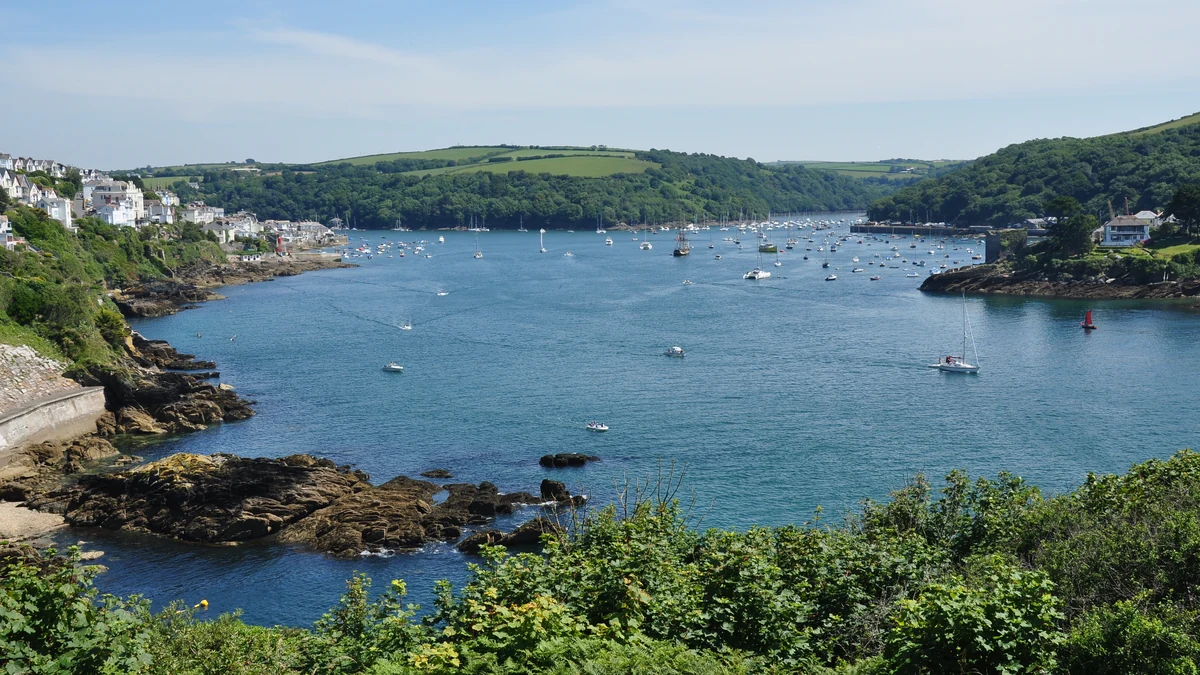
Fowey cruise port is one of the British Isles calls where the arrival itself carries much of the appeal. Ships enter a wooded Cornish estuary lined by houses, small boats and the facing village of Polruan, then passengers normally transfer ashore into a town of narrow lanes, steep connecting streets and constant river views. Fowey does not need a marquee attraction to justify the stop; the harbour, ferries and walking routes are the day.
That intimacy creates the main planning choice. You can stay close and let the town unfold slowly, cross to Polruan, tackle part or all of Hall Walk, or leave the estuary for a larger Cornwall excursion. The local option is usually the strongest because it uses the feature that made the ship call here. The mistake is to read “small town” as “flat and effortless”: Fowey’s slopes, steps, ferry links and tender operation can make an ambitious walking circuit more demanding than its mileage suggests.
Fowey Cruise Port at a Glance
| Port name | Fowey Cruise Port |
|---|---|
| Main cruise area | The lower Fowey estuary, with passengers landed close to the town |
| Cruise region | British Isles |
| Country / Territory | UK |
| Currency | British pound (GBP) |
| Language | English |
| Disembarkation | Usually by tender or harbour launch; arrangements depend on the ship and harbour plan |
| Walkability | Medium: the centre is compact but slopes, steps and uneven lanes are significant |
| Shuttle required | No for central Fowey |
| Main transport | Walking, passenger ferry, taxi or organised excursion |
| Best DIY option | Fowey town, Polruan and a weather-matched estuary walk |
| Main caution | Tender timing, ferry operation and steep routes can limit how much fits comfortably |
Weather & Best Times to Visit Fowey
January to March
Typical high: 9–11°C
Typical low: 4–6°C
Rain / conditions: Cool and frequently damp; wind can affect exposed paths, harbour boats and tender comfort.
April to June
Typical high: 12–18°C
Typical low: 6–12°C
Rain / conditions: Brighter spells and longer days suit estuary walks, though showers remain common in Cornwall.
July to September
Typical high: 17–20°C
Typical low: 12–14°C
Rain / conditions: The warmest period and busiest visitor season; ferries and narrow streets can feel crowded on fine days.
October to December
Typical high: 10–16°C
Typical low: 6–12°C
Rain / conditions: Milder than many inland areas but increasingly wet, windy and unsuitable for ambitious cliff or ferry-linked walks.
Weather guide: CruisePing summary based on NASA POWER climate data for Fowey and the lower Fowey estuary. Check the latest forecast.
Fowey’s best plans involve water or gradients, so weather changes the route rather than merely the clothing. Hall Walk and the path towards Readymoney Cove need more caution after rain, while harbour ferries and boat trips can be altered by conditions. In poor weather, the town, harbour viewpoints and a shorter Polruan crossing are more sensible than forcing a long circular walk.
How the Fowey Cruise Arrival Works
The official Fowey Harbour cruise information describes a range of anchoring and mooring possibilities within the harbour. For passengers, the essential point is that the call is handled on the water and the final transfer ashore is determined for that vessel. Do not assume that a photograph of one ship’s operation shows where yours will be positioned or exactly which landing will be used.
Fowey’s advantage is proximity. Cruise Britain highlights the close relationship between the harbour landing and the town, so passengers are not beginning with a long industrial-port transfer. Once ashore, shops, cafés, the parish church, harbour viewpoints and the Polruan ferry are part of the immediate walking area. The day can begin without a coach and remain interesting even if the tender schedule shortens the call.
The return still needs discipline. Narrow streets can slow movement, the waterfront becomes busier around boat departures and the tender queue may not be visible until you reach the landing area. Establish the last tender and the location of any ticket or assembly point before walking towards Readymoney Cove or crossing the river.
Why Fowey Feels Compact but Walks Larger
On a map, the centre occupies a small space. On foot, routes repeatedly move between waterfront level and higher streets. Cobbles, steps, narrow pavements and passing vehicles add friction, particularly for passengers who are unsteady or using a mobility aid. The most attractive view may sit only a short horizontal distance away but require a sharp climb to reach it.
This does not make Fowey a poor walking port. It makes route selection important. A relaxed waterfront and town-centre circuit is achievable for many visitors, while Readymoney Cove, St Catherine’s Castle, Polruan viewpoints and Hall Walk add progressively more terrain. The official Fowey visitor guide to places of interest is useful for choosing a small number of local targets before the call.
Passengers who want scenery without sustained climbing should prioritise harbour views and a ferry crossing rather than a full upland circuit. A short taxi can also remove one steep link. Fowey is a place to spend energy on the view or walk you actually value, not on completing every connecting street.
Using Fowey’s Ferries Without Building a Fragile Day
The Polruan passenger ferry is the most useful local transport for cruise visitors. It crosses the estuary and turns the opposite bank into a realistic extension of the town day. The Bodinnick vehicle ferry serves a different part of the river and is integral to the classic Hall Walk circuit. Official Fowey public-transport information lists these ferry connections and notes that services can be affected by weather.
A single Polruan crossing is easy to understand: go over, explore the waterfront and nearby viewpoints, then return with a generous margin. Hall Walk is more involved because it uses two ferry crossings and includes climbs on the east side of the estuary. A missed or altered connection does not necessarily leave you stranded, but it can turn a pleasant route into a rushed return.
Seasonal boat services, including trips farther along the coast, should be treated as timed activities rather than casual add-ons. Check the operator, departure point, duration and return against the tender schedule. A cruise passenger has less flexibility than a holidaymaker who can simply take the next sailing or stay for dinner.
Best Cruise-Compatible Things to Do from Fowey
Fowey town and harbour frontage
The best first hour is often the simplest: follow the waterfront, explore the lanes around the centre, look back across the river and let the harbour traffic provide the movement. Fowey’s literary associations, parish church, independent shops and old buildings add texture, but the town is strongest as a connected place rather than a sequence of admission-ticket attractions.
This is the safest option for a shortened tender call and the easiest to adapt for mixed mobility. Stop before every climb becomes compulsory. A café with an estuary view and one well-chosen higher viewpoint can deliver more of Fowey than racing through the centre to say you reached a beach.
Polruan by passenger ferry
Crossing to Polruan changes the perspective of the harbour and gives a satisfying sense of having explored both sides of the estuary. It works as a standalone outing or as the opening part of Hall Walk. The ferry itself is part of the experience, and the return view towards Fowey explains the town’s setting better than another inland street.
Check the current landing points and service status before crossing. Polruan also rises steeply from the water, so passengers who want an easy visit should stay close to the lower village and choose viewpoints selectively. Build the return around the ferry you intend to catch, not the last possible service that theoretically fits.
Hall Walk around the estuary
Hall Walk is Fowey’s signature active day: a roughly four-mile circular route using the Polruan and Bodinnick ferries, with woodland, estuary views and substantial changes of level. The local visitor site’s guided-walk description makes clear that the circuit includes climbs rather than a level river path. For fit passengers in dry weather, it is a much richer use of the call than sitting on a coach.
Do not begin Hall Walk merely because the distance sounds modest. Confirm both ferries, carry water, use suitable footwear and leave a real buffer for wrong turns, photographs and slippery ground. When the tender call is short or rain has made the paths awkward, walk one section and return rather than turning the circuit into a test.
Readymoney Cove and St Catherine’s Castle
The route towards Readymoney Cove gives a coastal counterpoint to the working estuary. The cove is the easier destination; the castle ruins add uneven ground and a more demanding extension. This is a good choice when the weather is settled and you prefer one out-and-back walk that remains on the Fowey side of the water.
The walk should be judged on gradients and surfaces, not mileage alone. Beach time also needs realism: Cornwall’s water temperature and changeable weather do not guarantee a conventional sunbathing stop. Visit for the route and setting, then turn back early enough to enjoy the town rather than reaching the tender hot and hurried.
A harbour or coastal boat trip
A local boat trip can show the harbour entrance, cliffs and river scenery without asking passengers to manage the steepest paths. The official local activities listings are the right starting point for identifying current operators. It is particularly attractive for repeat visitors who have already walked the town.
Boat trips are only good cruise choices when departure and return are comfortably inside the tender window. Sea state, visibility and minimum passenger numbers may alter operation. Book with an operator who understands the ship schedule, and do not pair a long sailing with Hall Walk or a distant taxi excursion.
Charlestown or the Eden Project
Leaving Fowey can make sense for passengers with a specific Cornwall priority. Charlestown offers a historic harbour setting, while the Eden Project provides a large, weather-resistant attraction. Neither should be treated as a quick extension of a town walk: road transport, entry timing and the tender return all need to be built into the day.
Use a cruise-line excursion, established local tour or pre-booked driver. Choose one main destination and ask how much time is spent there. A coach itinerary that adds several Cornish villages may sound generous but can sacrifice the estuary experience that made Fowey different from a call at a larger regional port.
The Lost Gardens of Heligan
Heligan is a plausible garden excursion from Fowey for passengers who prefer horticulture to harbour walking. Its scale means the visit benefits from a clear route through the gardens rather than a brief arrival between coach stops. The terrain within a large garden also matters for anyone with limited stamina.
This is better as an organised or pre-booked private day than as an improvised taxi outing. Confirm admission arrangements, the vehicle’s waiting plan and the return allowance. On a short call, stay with Fowey; the garden deserves enough time to justify leaving one of Cornwall’s most distinctive harbour towns.
CruisePing Recommended Port Day
CruisePing’s first choice is to keep Fowey as the main event. Begin with the harbour and central lanes while the landing area is quiet, cross to Polruan if the ferry is operating, then decide whether conditions support a section of Hall Walk or a return to Fowey for a slower route towards Readymoney Cove. This gives a genuine estuary day without committing the ship call to one inflexible circuit.
Fit walkers with a long call, dry paths and confirmed ferry operation can make Hall Walk the centrepiece. Start early and resist adding Readymoney Cove afterwards unless you return with abundant time. Passengers who dislike hills should take the Polruan ferry for the changing view, explore at waterfront level and use a short taxi or café stop to break the day.
The fallback is unusually strong: Fowey town alone. If tendering starts late, wind stops a boat trip or rain makes the paths uninviting, there is no need to rescue the day with a coach. Stay near the harbour, choose one viewpoint and enjoy the town at a pace that suits the surfaces.
Hall Walk: Full Circuit or Selective Taste?
The full circuit appeals because it turns two ferries and several viewpoints into one coherent route. It also creates a chain of dependencies. Weather affects the ground, ferry operation affects continuity, gradients affect pace and the tender affects the deadline. A holidaymaker can pause or reroute; a cruise passenger carries a fixed return.
A selective version often gives better value. Cross to Polruan, climb only as far as a worthwhile view, then return by the same ferry. Alternatively, use the Bodinnick side as the planned walking focus with transport arranged. The aim is not to collect the “completed Hall Walk” label. It is to see the estuary from the side that appeals without allowing the circuit to consume every margin.
Complete it when the call is long, the forecast is stable, both ferries are running and your normal walking pace is comfortably faster than the minimum needed. Shorten it when paths are wet, knees dislike descents, the ship lands late or you find yourself stopping frequently for views. Fowey offers enough interest to make turning back a positive decision rather than a failure.
DIY or Organised Excursion in Fowey?
The local day strongly favours DIY. Fowey, Polruan, the ferries and the immediate walks are understandable once you have current service information, and independent pacing is valuable on steep ground. An organised town tour is worthwhile only when specialist history, literature or guided walking is the purpose, not because navigation requires a coach.
Organised transport earns its price for the Eden Project, Heligan, Charlestown or a broader Cornwall route. The tender operation makes a ship-coordinated excursion attractive, particularly when road traffic or timed admission is involved. A private driver can be better for a couple or small group who want one garden or harbour plus a scenic stop, but the driver must be waiting on the correct side of the water at the agreed time.
CruisePing would not combine a paid inland excursion with a rushed Hall Walk. Decide whether the call is about the Fowey estuary or another Cornwall attraction. Both can produce a good day; dividing the time usually weakens each and leaves the passenger experiencing Fowey mainly as a tender queue.
Mobility, Steps and Tender Transfers
Fowey’s mobility challenge begins before the hills if the ship uses tender boats. Cruise lines determine whether wheelchairs, scooters or other aids can be transferred safely in the conditions on the day. Confirm this before booking a shore activity. Once ashore, the central waterfront is more manageable than the higher lanes, but narrow routes and changes of level remain part of the town.
A passenger with limited walking capacity can still enjoy the harbour by staying near the landing area, taking a short ferry crossing where boarding is suitable, and arranging a taxi for a viewpoint or beach approach. Ask ferry staff about steps and gangways rather than assuming all tide states produce the same access. Hall Walk and the castle extension beyond Readymoney are not sensible defaults for reduced mobility.
For an organised excursion, request the actual walking surface and vehicle drop-off, not merely an “easy” label. Gardens may contain long internal routes, old harbours may use cobbles and coaches may stop above or beyond the attraction. Fowey is most accessible when the day is deliberately compact.
When Fowey’s Water Links Change the Plan
The harbour is the attraction and the source of uncertainty. Wind can affect tender comfort, local ferries and sea-going trips in different ways. A service may continue while an exposed walk becomes unpleasant, or the ship may operate tenders while a smaller leisure trip is cancelled. Check each element rather than making one general judgement from the view out of the cabin.
Rain mainly changes the ground. Hall Walk’s slopes and woodland sections demand more care, while polished town surfaces and steps can become slippery. Persistent rain favours a shorter town circuit, cafés and viewpoints reached without a long descent. Fog or low cloud reduces the value of a coast-focused boat trip even if it technically sails.
Keep the order flexible. Do the ferry or boat activity first if it has a fixed departure and the forecast is deteriorating. Leave unbooked town wandering for later. If the tender arrival is delayed, cancel the farthest or most connected activity immediately instead of compressing every component.
Fowey Pitfalls and Smart Spending
The common planning error is treating every ferry as interchangeable. Polruan, Bodinnick and seasonal coastal services serve different routes and landing points. The second is underestimating vertical distance: the short line on a map may conceal a steep climb. The third is leaving the tender return until after a ferry that has little slack.
Good-value spending is selective. Pay for a boat trip if water-level scenery is the priority, a taxi if it removes a punishing hill, or an organised excursion if a specific inland attraction justifies leaving town. Do not pay for transport simply to be driven through Fowey. The harbour and centre are the rare parts of Cornwall that the ship has already delivered almost to your feet.
Fowey Port-Day Checklist
- Confirm the ship’s mooring or anchoring arrangement, landing place and final tender time before starting a ferry-linked walk.
- Check current Polruan and Bodinnick ferry operation on the official local transport page; note that the two crossings serve different plans.
- Choose footwear for wet slopes and uneven paths if Hall Walk, Readymoney Cove or St Catherine’s Castle is on the route.
- Decide in advance whether Hall Walk is a full circuit or a shorter out-and-back, with a clear turnaround point.
- Book harbour and coastal boat trips only when their return leaves a comfortable margin before the tender deadline.
- For Eden, Heligan or Charlestown, use arranged transport and ask how much usable time the itinerary provides at the main destination.
- Keep Fowey town as the fallback; it remains worthwhile if weather or landing delays remove the more ambitious plan.
Useful Official Links for Planning Fowey
Fowey’s practical details are unusually dependent on harbour and ferry operation, so these are worth checking close to the call rather than relying on an old excursion description.
- Fowey Harbour: cruise information
- Fowey visitor information: ferries and public transport
- Fowey visitor information: local places of interest
- Fowey visitor information: boat trips and activities
- Cruise Britain: Fowey port profile
Fowey Cruise Port FAQs
Will my cruise ship dock in Fowey?
Fowey Harbour can handle ships through different anchoring and mooring arrangements, but many cruise passengers should expect a transfer by tender or harbour launch. The call plan is vessel-specific. Use the cruise line’s daily information for the exact landing location and final return time.
Is Fowey easy to explore without an excursion?
Yes. The town, harbour frontage and Polruan ferry make Fowey a strong independent port. The qualification is terrain: the centre is compact but not flat. Choose a route that matches your walking ability and do not assume every viewpoint, cove and ferry circuit fits into a short tender call.
Can I complete Hall Walk during a cruise visit?
Fit passengers often can when the call is long, the paths are in reasonable condition and both required ferries are operating. It is not a casual level stroll. Check the current ferry information, start early and keep the option to turn the route into a shorter out-and-back if pace or weather is weaker than expected.
Which ferry should cruise passengers take in Fowey?
The Polruan passenger ferry is the simplest scenic extension from town. The Bodinnick ferry is used as part of the Hall Walk circuit. Seasonal coastal services serve other purposes. Check the current landing points and timetable so that a pleasant crossing does not put you on the wrong side of the estuary late in the call.
Is Readymoney Cove worth adding?
It is a good choice for passengers who want a purposeful walk on the Fowey side of the harbour. Add St Catherine’s Castle only when surfaces, weather and mobility allow. On a short call, the cove should replace a longer ferry circuit rather than being added after it.
Should I leave Fowey for the Eden Project or Heligan?
Only when that attraction is a genuine priority. Use a ship excursion or arranged driver and allow enough time to experience it properly. First-time visitors who mainly want Cornwall atmosphere often gain more by staying with Fowey, Polruan and the estuary instead of spending the call in road transport.
CruisePing Port Verdict
Fowey is one of the clearest cases for letting the port be the destination. The harbour approach, ferry crossing and steep riverside town form a coherent day that is difficult to reproduce from another Cornish call. Most passengers should stay local, explore independently and scale the walking route to the weather.
Hall Walk is the premium active option, not an obligation. Polruan plus Fowey gives much of the estuary character with fewer dependencies. Pay for an inland excursion only when Eden, Heligan or another named attraction matters more to you than Fowey itself. The best Fowey day is rarely the one with the longest list; it is the one that leaves enough time to stop and watch the harbour.
Ready to browse our article library?
Fowey sits within a wider set of small British Isles ports where landing method and local terrain shape the day. Continue through the British Isles port collection, view other destinations in the UK cruise directory, or search all planning material in the CruisePing article library.