
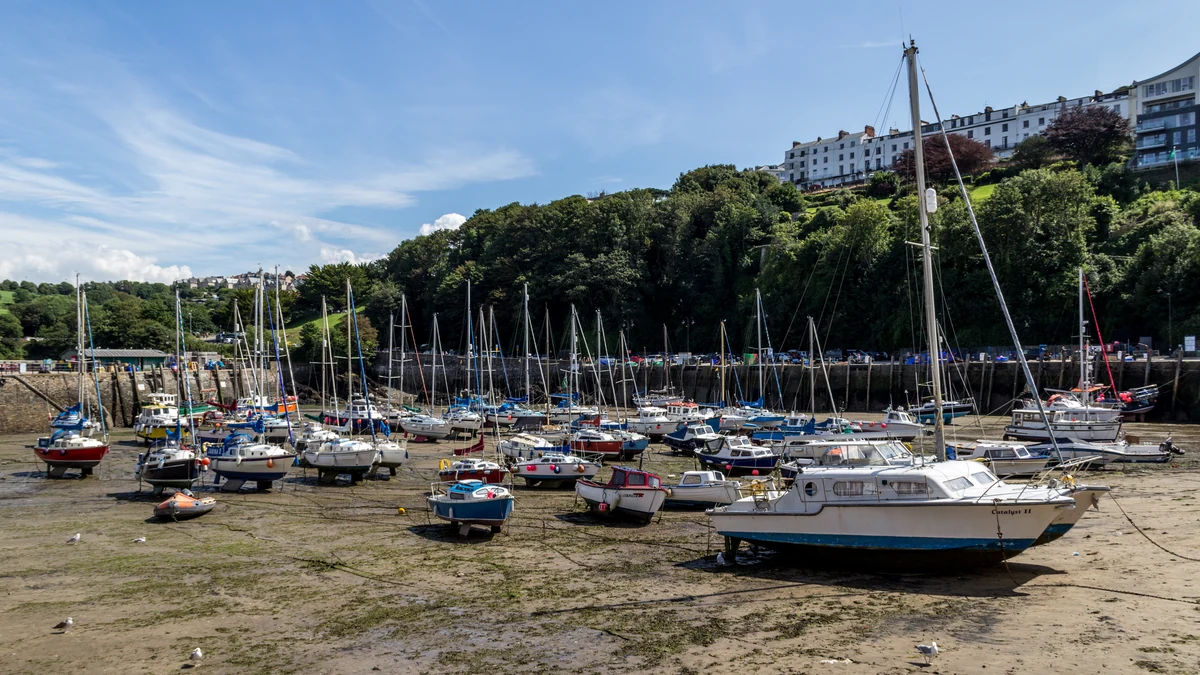
Ilfracombe cruise port is a tender call into a small tidal harbour framed by steep North Devon streets. Passengers arrive close to the quay, the harbour chapel and Damien Hirst’s towering Verity sculpture, but the operation is more weather-sensitive than the compact map suggests. Tide, swell and wind can influence both the ship’s tenders and any independent boat trip booked from the harbour.
The strongest first visit stays local: harbour, Lantern Hill, town and Victorian seafront, with one carefully chosen museum, beach or coastal sailing. Exmoor, the Valley of Rocks, Clovelly and Lundy can all tempt passengers away. They are separate day strategies, not a list to combine, and the tender return should decide how ambitious the plan becomes.
Ilfracombe Cruise Port at a Glance
| Port name | Ilfracombe Cruise Port |
|---|---|
| Main cruise area | Offshore anchorage with tender landing in Ilfracombe Harbour |
| Cruise region | British Isles |
| Country / Territory | United Kingdom |
| Currency | British pound (GBP) |
| Language | English |
| Disembarkation | Tender |
| Typical arrival | Working tidal harbour close to the quay and town |
| Walkability | High for central sights, but with steep gradients |
| Shuttle required | No |
| Main transport | Walking; local bus; taxi; organised excursion |
| Best DIY option | Harbour, Verity, Lantern Hill and the Victorian seafront |
| Main caution | Tender conditions, large tidal range, hills and fragile sea-excursion timing |
Weather & Best Times to Visit Ilfracombe
January to March
Typical high: 8–11°C
Typical low: 3–6°C
Rain / conditions: Cool, wet and often windy; exposed harbour conditions can be more important than the air temperature.
April to June
Typical high: 12–18°C
Typical low: 6–11°C
Rain / conditions: Lengthening days with a mix of bright spells, showers and brisk coastal winds.
July to September
Typical high: 17–21°C
Typical low: 11–14°C
Rain / conditions: Mild main visitor season; rain remains possible and sea state can still interrupt boat and tender operations.
October to December
Typical high: 9–16°C
Typical low: 4–10°C
Rain / conditions: Increasingly unsettled, with shorter daylight, rain and stronger Atlantic winds.
Weather guide: CruisePing summary based on NASA POWER climate data for Ilfracombe and the North Devon coast. Check the latest forecast.
At Ilfracombe, wind and swell can change more than your choice of coat: they influence tendering and local boat departures. A dry forecast does not guarantee a comfortable sea plan, while a showery day can still support a good harbour-and-museum route between showers.
Why the tender and tide shape Ilfracombe
Ilfracombe Harbour is a working tidal harbour on the North Devon coast, not a deep-water cruise terminal. Cruise ships remain offshore and passengers normally transfer by tender. The harbour authority publishes a large local tidal range, and that matters because water depth, landing arrangements and sea conditions affect how smoothly tenders can use the harbour. Your ship controls the operation, including whether tender tickets are issued and when independent passengers can leave.
The harbour is the destination’s natural centre. The landing puts you close to the quay, the aquarium, the lifeboat station, St Nicholas Chapel on Lantern Hill and Damien Hirst’s Verity. The town spreads into valleys and up steep streets behind the waterfront. It is therefore both walkable and physically more demanding than a flat harbour map implies.
Weather can alter the call more decisively here than at a sheltered dock. A fresh wind or swell may slow tendering, change local boat departures or affect whether the ship can operate the visit. Independent tickets for Lundy or a coastal cruise should have sensible cancellation terms. Never build a day that assumes a precise first tender and a sea excursion leaving minutes later.
Walking Ilfracombe without wasting the climbs
Most local sights are close in distance, but Ilfracombe rewards an ordered route. Start with the harbour while you are already at water level. Walk the quay, look across towards Verity, and decide whether Lantern Hill suits your mobility. St Nicholas Chapel sits above the harbour and adds a short, steep ascent; the reward is context and a view, not a long attraction visit.
From the harbour, the most useful route continues through the town towards the seafront and Tunnels Beaches area. Shops and cafés sit along the connecting streets, but gradients accumulate. Passengers who need to ration hills should choose either Lantern Hill or the longer walk towards Tunnels Beaches rather than treating both as effortless additions.
Ilfracombe’s Victorian bathing tunnels, local museum and galleries give the town more depth than a quick quay circuit. Opening patterns are seasonal, and Tunnels Beaches may be affected by private events or operating arrangements. Check the official visitor information before making it the fixed centre of your day.
A taxi is most useful for solving elevation or reaching an excursion meeting point, not for routine movement around the harbour. Local buses can extend the day to nearby communities, but cruise passengers should not rely on a thin timetable without checking the live service and a return alternative.
Best cruise-compatible things to do from Ilfracombe
Ilfracombe Harbour, Verity and the quay
Best for: The essential, low-risk introduction to the port and its mix of working harbour, art and seaside history.
Best way: Walk directly from the tender landing, allowing time to look back across the harbour rather than passing straight through.
Watch: Quaysides can be wet and busy with working vessels. Follow barriers and do not obstruct tender or harbour operations.
St Nicholas Chapel and Lantern Hill
Best for: Harbour views and a compact historic stop above the landing point.
Best way: Walk up early while you are fresh, then descend to continue through town. Check current access and opening information.
Watch: The climb is short but steep. It is unnecessary for anyone who would sacrifice the rest of the day to reach it.
Ilfracombe Aquarium and local museum
Best for: Families, poor-weather cover and passengers wanting local natural or social history.
Best way: Choose one according to current opening rather than rushing both. The aquarium fits naturally with a harbour circuit; the museum fits a town and seafront walk.
Watch: These are modest-scale attractions. Their value is strongest as part of an Ilfracombe day, not as reasons to miss a rare excursion you have deliberately chosen.
Tunnels Beaches and the Victorian seafront
Best for: Ilfracombe’s seaside heritage, coastal views and a longer town walk.
Best way: Walk from the harbour through the centre and check the venue’s official status for your date.
Watch: Access, events and seasonal opening can change. The route adds gradients, and swimming conditions should never be assumed from photographs.
Coastal boat trip
Best for: Seeing the cliffs and North Devon coast from the water when conditions are settled.
Best way: Use an established harbour operator whose departure and return fit comfortably inside the tender day. Confirm the exact vessel, trip length and accessibility.
Watch: Departures are sea- and weather-dependent. A delayed local boat plus a tender queue is a poor combination near all-aboard.
Lundy Island
Best for: Wildlife, walking and a distinctive offshore island experience on the rare cruise call whose timings genuinely align.
Best way: Only use the official or recognised service after verifying the full-day schedule, embarkation point and return against the ship’s times.
Watch: Lundy is not a casual half-day add-on. Sailings, sea conditions and time ashore must all work, and many cruise calls will not provide a safe fit.
Exmoor and the Valley of Rocks
Best for: Moorland and coastal scenery beyond the town, especially for repeat visitors or passengers who prefer landscapes to seaside heritage.
Best way: Choose a ship excursion, private driver or locally arranged tour with a defined return. A route may combine Lynmouth, Lynton or the Valley of Rocks, but the exact programme should stay realistic.
Watch: North Devon roads can be slow, narrow and indirect. Do not judge travel time from distance alone.
Clovelly or a wider North Devon tour
Best for: Passengers willing to exchange a local day for one specific village or regional itinerary.
Best way: An organised excursion or private car is more robust than piecing together public buses.
Watch: Clovelly’s famous steep, cobbled street is physically demanding. Confirm what is included and whether the attraction suits everyone in the group.
CruisePing Recommended Port Day
For most first-time visitors, CruisePing recommends an Ilfracombe day rather than a long road excursion. Begin with the harbour and Verity, climb to St Nicholas Chapel only if the gradient suits you, then walk through the town towards the museum or Tunnels Beaches. Add lunch or a coastal boat trip only when the operator’s return leaves a wide tender margin.
This recommendation is not a fallback born from nervousness. Ilfracombe’s harbour, Victorian seaside fabric and steep coastal setting are the reasons the ship has called. A local day also remains adjustable if tendering starts late or showers arrive.
Choose Exmoor, the Valley of Rocks or Clovelly when one of those places is the clear priority and you are comfortable using an organised or private vehicle. Choose Lundy only when the full published sailing pattern fits the call without using the final possible return. CruisePing would skip any independent excursion whose success depends on being on the first tender ashore.
Local DIY day or organised North Devon excursion?
The harbour and town are best handled independently. There is no benefit in paying for a coach to deliver you to sights that begin beside the tender. A self-guided route lets you respond to weather, attraction opening and your tolerance for hills.
A guided walking tour can still earn its price if it interprets the town’s maritime, Victorian or artistic history. It should add local knowledge, not simply escort you along the obvious waterfront. Ask how much climbing is involved and where the tour ends relative to the tender landing.
Organised transport becomes the sensible choice beyond Ilfracombe. Exmoor roads and the North Devon coast are not difficult because of enormous mileage; they are difficult because direct-looking routes can be slow. A driver removes parking and navigation problems, while a ship excursion protects the return if traffic or a stop overruns.
Public transport may suit a carefully researched repeat visitor, but it is not the default recommendation for a first call. Timetables can be sparse, seasonal or poorly aligned with a tender window. The money saved is small compared with the lost flexibility if a bus is missed.
Sea excursions sit between DIY and organised touring. You book directly with a specialist harbour operator, but the experience is structured and weather-controlled. Tell the operator that you are a cruise passenger and distinguish between the operator’s scheduled return and the time you personally need to be back for the tender.
Mobility reality: short distances, real gradients
The tender itself is the first accessibility filter. Cruise lines set their own rules for boarding tenders, and sea movement can make the transfer harder even when crew assist. Ask the ship’s accessibility team before the call; a local description of the harbour cannot override the vessel’s policy.
At the landing, the harbour circuit is the gentlest option. Lantern Hill, streets behind the quay and the walk towards Tunnels Beaches introduce gradients. Pavements may narrow, and historic surfaces are not uniformly smooth. A passenger who can walk a kilometre on level ground should not assume the same comfort on Ilfracombe’s slopes.
Use taxis selectively to remove one difficult leg, but arrange the return when travelling beyond the central rank. For wheelchairs or mobility scooters, verify the vessel, tender and attraction access individually. A scenic coast tour by accessible vehicle may provide more enjoyment than trying to force a walking route designed around hills.
What to do if the sea plan disappears
A cancelled boat trip should not ruin the call. Keep the harbour, aquarium, town museum and Tunnels Beaches information saved before sailing. If rain is intermittent, use indoor stops to break the waterfront route. If tendering itself is delayed, prioritise the harbour and one second attraction; do not compensate by walking faster up every hill.
When the ship cancels the port entirely, an independent operator’s terms determine whether you receive a refund. Read those terms before purchase and avoid non-refundable bookings made through informal channels. The more weather-dependent the product, the more important the cancellation policy becomes.
Ilfracombe pitfalls and value hacks
Planning from road mileage alone. Exmoor and North Devon journeys can take longer than their distance suggests. Use a local operator’s realistic timings.
Booking a sea trip against the final tender. Give yourself room for disembarkation, walking back across the harbour and a tender queue. The operator’s docking time is not the ship’s all-aboard time.
Treating every hill as compulsory. Lantern Hill, the town centre and Tunnels Beaches can make a rewarding route, but the day is not a fitness test. Choose the viewpoints that justify their climb.
Assuming the tide is background scenery. Ilfracombe’s harbour operation is closely tied to a large tidal range. Follow ship and harbour instructions around landing areas and do not wander into restricted working zones.
Paying for an “Ilfracombe highlights” coach. Unless mobility requires vehicle support or the tour includes expert interpretation, the central sights are better reached on foot from the tender.
Ignoring seasonal opening. A beach, museum or boat attraction can have different hours outside peak summer. Confirm the date rather than relying on a general destination list.
Ilfracombe port-day checklist
- Check the ship’s tender procedure, mobility rules and final tender time before making an independent booking.
- Look at wind and sea state, not just rain probability, when deciding whether a boat plan is sensible.
- Choose footwear with grip for wet quays, slopes and uneven historic surfaces.
- Decide in advance whether Lantern Hill or the longer Tunnels Beaches route is the more worthwhile climb for you.
- Confirm opening and event information for Tunnels Beaches and any museum you consider essential.
- Book Lundy only when the complete official sailing schedule fits the call with a generous margin.
- For Exmoor, Clovelly or the Valley of Rocks, use a driver or excursion that states the return plan clearly.
- Tell independent sea operators the ship name and the time you need to be back at the tender landing.
- Carry a light waterproof layer and protect cameras or phones during the tender ride.
- Keep a harbour-based fallback that still works after a delayed landing or cancelled sea excursion.
- Allow extra time to descend through town; returning downhill is easier but not instantaneous.
- Aim for an earlier tender rather than joining the last large queue at the end of the call.
Useful official links for Ilfracombe
- Ilfracombe Harbour authority information
- Ilfracombe harbour tide and approach information
- Visit Ilfracombe
- Ilfracombe harbour visitor guide
- Ilfracombe attractions
- Ilfracombe Princess boat trips
- Met Office Ilfracombe forecast
Ilfracombe cruise port FAQs
Do cruise ships dock in Ilfracombe?
Cruise ships normally anchor offshore and tender passengers into Ilfracombe Harbour. The exact operation depends on vessel requirements, tide and sea conditions.
Is Ilfracombe easy to explore on foot?
The harbour and central sights are close, but the town is hilly. A useful local day is possible without transport, provided you choose climbs according to your mobility.
What can I see near the tender landing?
The harbour, Verity, the aquarium, lifeboat station area and the route towards St Nicholas Chapel are all close. The town centre, museum and Tunnels Beaches require a longer walk.
Is Lundy possible from an Ilfracombe cruise call?
Only on calls whose times align with the official full sailing and leave a safe return margin. Many calls will not fit. Sea conditions can change the operation, so examine cancellation terms.
Should I take an excursion to Exmoor?
Take one when moorland, Lynmouth, Lynton or the Valley of Rocks is your main priority. For a first visit, Ilfracombe itself offers a lower-risk and more flexible day.
Can I use buses for a North Devon excursion?
It may be possible with current timetable research, but services are not built around cruise tender times. A missed or delayed bus can remove the return margin, so CruisePing favours organised or private transport for distant plans.
Is Ilfracombe suitable for limited mobility?
The harbour level provides a manageable core, but tender boarding, slopes and uneven surfaces can be challenging. Confirm tender eligibility with the ship and consider a taxi or accessible vehicle tour for higher areas.
What happens if my boat trip is cancelled?
Use the harbour, aquarium, museum, galleries and Tunnels Beaches according to opening and weather. Buy from an operator with clear cancellation terms so a sea-state decision does not become a financial dispute.
What is the main timing risk?
The combination of a weather-dependent tender and a separate sea or road excursion. Finish independent activities early enough to absorb a delay at either stage.
Do I need cash?
The local currency is the British pound. Cards are widely useful, but a small amount of cash can help with minor purchases or an operator whose payment system is unavailable.
Where is the best harbour view?
Lantern Hill provides an elevated view for those comfortable with the short steep climb. Good lower-level views are also available around the quay, so the hill is optional rather than essential.
What should I prioritise on a short call?
Stay around the harbour: walk the quay and Verity, choose St Nicholas Chapel or the aquarium, then add a brief town circuit before returning for an earlier tender.
Planning Ilfracombe by call length
With fewer than four usable hours ashore, stay around the harbour. Walk the quay and Verity, choose the aquarium or Lantern Hill, then make a short circuit into town. A paid road excursion or scheduled coastal sailing has too many points of failure for such a narrow tender window unless it is sold and managed by the cruise line.
A six-hour call supports the full local route from harbour to the Victorian seafront, with one indoor attraction and lunch. It may also support a short coastal boat trip when the sea is settled and the departure returns well before your chosen tender. Decide between the longer walk and the boat rather than assuming both will fit after a delayed landing.
Eight or more useful hours make Exmoor, Lynmouth, the Valley of Rocks or another regional tour reasonable. The extra time should buy a better visit, not more names. A route with two meaningful stops and a scenic drive is preferable to one that races through four settlements. Lundy still depends on its own full sailing schedule and cannot be made safe merely by describing the port call as long.
The tender reduces every published duration. If the itinerary lists eight hours in port, subtract the time needed for tender groups at both ends before comparing an independent tour. Sea-state delays are not predictable enough to justify a connection that works only on the fastest possible operation.
Eating and spending locally without losing the tender
The harbour and town offer cafés, pubs and fish-and-chip options within walking range, but a busy ship can create lunchtime queues. Eat slightly early or late if a specific venue matters. Tell staff when you need to leave rather than assuming service will match a cruise timetable.
Community shops, galleries and harbour businesses make a local day good value because spending stays in the port rather than disappearing into a long coach fare. That does not mean buying from the first stall beside the tender. Walk through town, compare what is genuinely local and leave enough time to carry purchases down the slopes.
Alcohol and a moving tender are not an ideal combination. Keep lunch moderate, particularly when sea conditions are lively or the tender uses steps. Passengers prone to seasickness should save the richest meal for after returning to the ship.
CruisePing Port Verdict
Ilfracombe should not be judged by how far you can escape from it. The harbour, steep town and Victorian coast create a distinctive North Devon call, while the tender and tide make long independent plans less forgiving. CruisePing’s choice is a local walking day with one carefully timed addition: a museum, Tunnels Beaches or a coastal boat trip. Save Exmoor or Lundy for the itinerary that genuinely gives them room.
Ready to browse our article library?
Continue through our British Isles cruise-port collection, or browse destinations across the United Kingdom. More cruise comparisons, planning shortcuts and value guides are available in the main article library.