
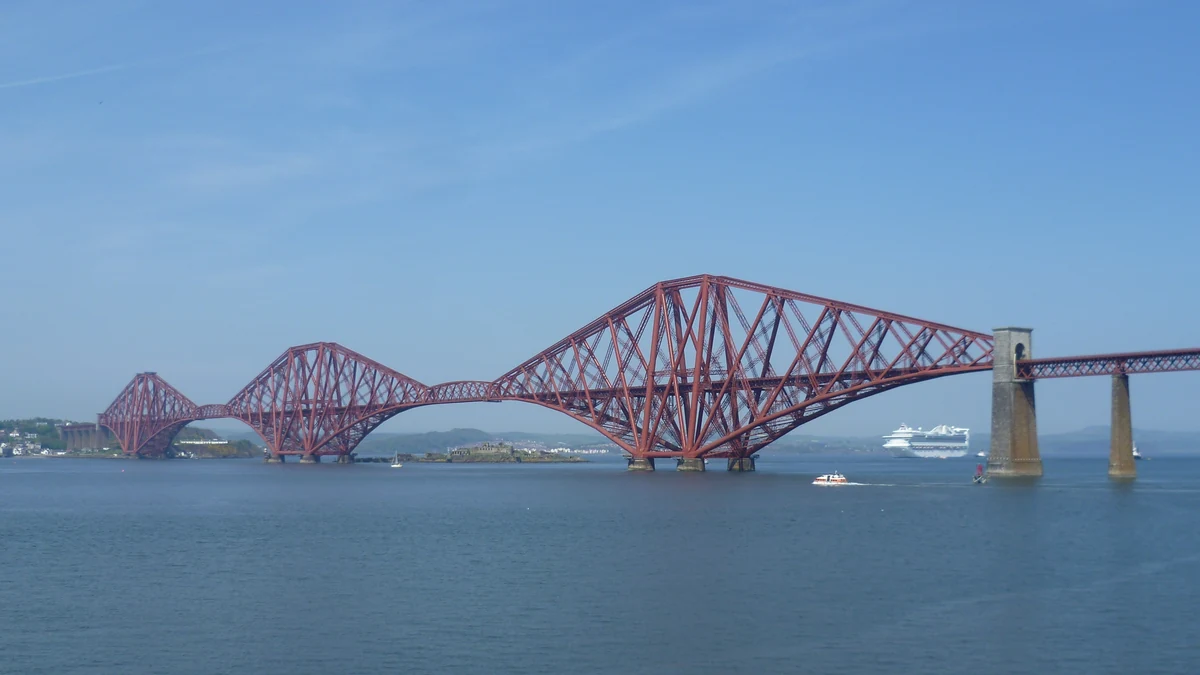
South Queensferry cruise port is one of Edinburgh’s most memorable arrival points and one of its most timing-sensitive. Ships anchor in the Firth of Forth beneath the bridges, and tenders bring passengers to Hawes Pier in the historic town. Edinburgh is the main draw, but reaching it requires a second transfer. The easiest choice is usually the direct X99 cruise bus; the train from Dalmeny is faster on rails but begins with a steep uphill walk.
This is not the same arrival as Newhaven, Leith or Rosyth. The transport plan must match South Queensferry and Hawes Pier. Cruise Forth describes a tender of roughly ten minutes, while Lothian’s 2026 X99 service links the pier directly with central Edinburgh and runs at least every twenty minutes, with additional capacity for larger calls. The last bus is scheduled around the final tender, but CruisePing would still return earlier rather than treating the final advertised connection as a target.
South Queensferry Cruise Port at a Glance
| Port name | South Queensferry Cruise Port |
|---|---|
| Main cruise area | Anchorage in the Firth of Forth with tender landing at Hawes Pier |
| Cruise region | British Isles |
| Country / Territory | UK |
| Currency | British pound (GBP) |
| Language | English |
| Disembarkation | Tender |
| Walkability | High for South Queensferry; Edinburgh requires transport |
| Shuttle required | No for the village; use X99, train, taxi or excursion for Edinburgh |
| Main transport | Tender, X99 cruise bus, train from Dalmeny, taxi or organised excursion |
| Best first-time option | Edinburgh Old Town with one major attraction |
| Main caution | Tender queues and the steep Hawes Pier–Dalmeny route reduce usable time |
Weather & Best Times to Visit South Queensferry
January to March
Typical high: 7–10°C
Typical low: 1–3°C
Rain / conditions: Cold, breezy and often wet, with short daylight and possible tender disruption.
April to June
Typical high: 10–18°C
Typical low: 3–10°C
Rain / conditions: Longer days and brighter spells, but east-coast wind and showers remain common.
July to September
Typical high: 15–20°C
Typical low: 9–12°C
Rain / conditions: Mild main-season weather; August is especially busy in Edinburgh and rain is still possible.
October to December
Typical high: 8–14°C
Typical low: 2–8°C
Rain / conditions: Cooling, wetter and darker, with stronger wind and reduced daylight for city touring.
Weather guide: CruisePing summary based on NASA POWER climate data for South Queensferry and Edinburgh. Check the latest forecast.
Weather affects both ends of this call. Wind and swell can delay or cancel tendering, while rain turns Edinburgh’s steep closes and stone pavements slippery. On a clear day, the bridges and views from the Old Town add greatly to the visit. In hard rain, the National Museum of Scotland is a stronger anchor than an exposed itinerary built around viewpoints and long Royal Mile queues.
Tendering to Hawes Pier in South Queensferry
Cruise ships normally anchor east or west of the Forth Bridge according to marine arrangements, with tenders landing at Hawes Pier. Cruise Forth advises a short crossing in normal conditions, but large passenger numbers can make the overall process much longer once boarding groups and queues are included. The published arrival time is not the time every passenger reaches the pier.
Hawes Pier places passengers beneath the Forth Bridge and at the eastern end of South Queensferry. The village centre stretches west along the shore. X99 coaches, excursion buses and taxis use the arrival area, so follow local signs and staff instructions. Record the final tender and the recommended return time before choosing transport.
Tender operations can change with wind. A ship may bring forward the last boat, suspend service temporarily or prioritise excursions. Avoid a timed Edinburgh attraction too early in the morning unless your tender priority is known. On return, do not assume a queue at the pier will move at city-bus speed; passengers still have to board small boats and transfer to the ship.
Getting from South Queensferry to Edinburgh
The X99 Cruiselink is the most straightforward independent route. Lothian’s call-specific service runs from Hawes Pier to the east end of George Street in central Edinburgh, avoiding the uphill walk to the station and placing passengers within reach of Princes Street, the New Town and the climb towards the Old Town. Check the timetable published for the exact ship call.
Dalmeny station provides a fast rail journey to Edinburgh Waverley, often around the mid-teens in minutes once aboard. The hidden cost is the steep walk from Hawes Pier to the station. It is manageable for fit passengers and unattractive for limited mobility, heavy rain or anyone already concerned about hills in Edinburgh. Rail tickets and live service information should be checked before committing.
Taxi can reduce walking and works well for a small group, but road traffic and festival conditions matter. A ship excursion becomes sensible for passengers who want guaranteed transport, an accessible coach or a route beyond central Edinburgh. No option removes the need to protect tender time at the end of the day.
Best Cruise-Compatible Things to Do from South Queensferry
Edinburgh Castle and Old Town
Best for: First-time visitors seeking the city’s defining historic core
Best way: X99 or train, then pre-booked castle entry and walking
Watch: Timed admission, steep streets, crowds and the return to Hawes Pier
Royal Mile and National Museum of Scotland
Best for: A flexible city day balancing streets with a major indoor attraction
Best way: Independent by X99 or train
Watch: Do not try to walk every close and add the castle without pacing the day
Royal Yacht Britannia
Best for: A focused maritime and royal visit in Leith
Best way: Organised excursion, taxi or carefully planned city transport
Watch: It lies away from the Old Town and should be treated as a separate strategy
Edinburgh New Town and galleries
Best for: Architecture, shopping and a lower-gradient city alternative
Best way: X99 gives a convenient central starting point
Watch: August crowds and distance from the tender return
South Queensferry and the Forth Bridges
Best for: A low-risk local day with exceptional engineering views
Best way: Walk independently from Hawes Pier
Watch: Village cobbles, waterfront weather and attraction opening
Queensferry Museum and local heritage
Best for: Context on the town and bridges without travelling into Edinburgh
Best way: Walk, subject to current opening
Watch: Small scale and limited capacity on a busy ship day
Ship-organised Edinburgh highlights
Best for: Passengers prioritising return protection or limited mobility
Best way: Cruise-line coach or accessible tour
Watch: Coach panoramas may provide less time on foot than the title suggests
Edinburgh Castle and Old Town
Edinburgh Castle is the strongest first-time anchor, but it should dominate the plan rather than compete with five other paid sights. Book a realistic entry slot after allowing for tender and transfer. From the castle, descend the Royal Mile at a measured pace and use Waverley or George Street as the decision point for returning.
Royal Mile and National Museum of Scotland
The National Museum gives Edinburgh depth beyond the postcard route and works particularly well in poor weather. A Royal Mile walk plus the museum is more flexible than a castle booking because passengers can shorten either element. It also suits mixed-interest groups who want Scottish history, science and culture under one roof.
Royal Yacht Britannia
Britannia is not an easy add-on to the castle. It lies at Leith, away from the central Old Town, and reaching it introduces another urban transfer. Choose it as the principal attraction, perhaps with a shorter New Town stop, rather than trying to cross the city repeatedly.
Edinburgh New Town and galleries
The New Town is useful for passengers who find the Old Town’s gradients and crowds difficult. George Street, Princes Street Gardens and galleries can create a rewarding day with fewer steep closes, although Edinburgh is never entirely flat. The X99 terminus makes this a natural independent option.
South Queensferry and the Forth Bridges
South Queensferry is a genuine destination, not merely a tender station. The three bridges, narrow High Street, waterfront and harbour create a relaxed day with almost no transport risk. It is particularly attractive for repeat Edinburgh visitors or when the tender begins late.
Queensferry Museum and local heritage
Queensferry Museum adds local history when open and pairs with the bridge viewpoints. Because it is small, a large ship can fill the space quickly. Build the local day around the town itself and regard the museum as a bonus rather than the only purpose.
Ship-organised Edinburgh highlights
A ship excursion earns its premium when passengers need step-free coach transport, want a guided overview or are anxious about tender return. Read the itinerary carefully. “Edinburgh highlights” may mean substantial coach time and exterior views rather than admission to the castle.
CruisePing Recommended Port Day
For a first visit, CruisePing would take the X99 into Edinburgh, choose one anchor attraction and keep the rest walkable. The classic version is a sensibly timed Edinburgh Castle visit followed by the Royal Mile and an early return. The more flexible version is the Royal Mile and National Museum, with no fixed admission controlling the morning.
Use the train only when everyone in the group can manage the steep climb to Dalmeny and is comfortable reading live rail information. The rails are quick, but the station approach can remove the advantage. X99 is usually the easier whole journey because it begins at Hawes Pier and returns to the tender area.
Stay in South Queensferry when the tender is delayed, the call is short, Edinburgh has already been visited or the weather makes city crowds unappealing. The bridge setting is exceptional, and a local day avoids turning a picturesque arrival into a transport problem.
DIY or Organised Excursion from South Queensferry?
Edinburgh is highly feasible independently from South Queensferry, especially on the X99. The service exists for cruise calls and provides a clear central endpoint. Independent travel gives more time at a chosen attraction than many panoramic tours, but passengers carry responsibility for the city-to-pier return and the final tender.
The train is also DIY-friendly for mobile passengers. Walk uphill to Dalmeny, take a service to Waverley and emerge directly between the Old and New Towns. Check engineering work and disruptions. On the return, allow for the uphill or downhill route between station and pier, crowds at Waverley and possible platform changes.
An organised excursion is the better choice for Britannia plus city touring, for destinations beyond Edinburgh, or when mobility support and ship protection matter more than flexibility. CruisePing would not pay for a generic coach simply to be driven past the Old Town if an X99 and one pre-booked attraction achieve a richer day.
Planning Edinburgh around Tender and Transfer Time
A shorter call
Stay in South Queensferry or use X99 for a focused central walk without a fragile timed attraction. The local bridges plan is far better than a rushed city photograph.
A normal full-day call
Choose castle plus Old Town, or Royal Mile plus National Museum. Leave central Edinburgh earlier than feels necessary so a bus or train disruption does not threaten the tender.
A long call
A deeper city day is possible, but adding Britannia to the Old Town still creates cross-city travel. Use the extra time for depth, lunch and an unhurried return rather than another district.
Best Ways to Use an Edinburgh Day from South Queensferry
The first-time highlights plan begins with transport straight into the centre, one reserved castle slot and a largely downhill route along the Royal Mile. It is visually strong but physically demanding. Do not add Britannia, the Palace of Holyroodhouse and several museums merely because their names line up on a map.
The weather-proof plan uses the National Museum as the anchor, then adds as much Old Town walking as conditions permit. It has fewer ticket and queue dependencies. The lower-mobility plan starts from George Street and the New Town, perhaps adding Princes Street Gardens or an accessible guided tour rather than tackling every steep close.
The repeat-visitor plan stays local or chooses one specialist Edinburgh target. South Queensferry’s bridge story is strong enough to justify the whole call, while Britannia can carry a separate excursion. A gateway port works best when passengers stop treating the famous city as a compulsory checklist.
Mobility, Tendering and Edinburgh’s Hills
Tendering is the first accessibility barrier. The ship decides whether wheelchairs and mobility devices can transfer safely in the day’s sea conditions. Ask before sailing rather than assuming Hawes Pier itself solves the problem. Gangway steps, tender movement and the return transfer all matter.
The walk to Dalmeny station is steep. Passengers who find gradients difficult should use X99, taxi or an accessible excursion. Edinburgh’s Old Town adds hills, stone paving, steps and crowded narrow pavements. A castle-and-Royal-Mile plan can be physically demanding even though the map distances look modest.
South Queensferry is easier to shorten, but parts of the historic waterfront have cobbles and uneven paving. Accessible transport and attraction arrangements should be checked directly. A lower-energy day around the bridges can still be memorable without presenting the village as completely level or barrier-free.
South Queensferry Port-Day Pitfalls and Value Hacks
- Do not confuse South Queensferry with Newhaven, Leith or Rosyth. Use the transport plan for Hawes Pier.
- X99 is usually the easiest whole journey. The train is fast only after the steep station climb.
- Do not book an early castle slot without tender priority. Published ship arrival is not pier arrival.
- Return before the final advertised service. Tender queues add another stage after the bus or train.
- Treat Britannia as a separate city strategy. It is not beside the Old Town.
- Use South Queensferry as a real fallback. The bridges and village can carry the day.
- Watch Edinburgh festival dates. August crowds, road restrictions and accommodation pressure affect movement even on a day call.
South Queensferry Cruise Port Checklist
- Confirm the tender sequence and final boat.
- Check the call-specific X99 timetable.
- Choose X99 or Dalmeny train before landing.
- Book Edinburgh Castle only after allowing for tender and transfer.
- Download live rail and bus information.
- Wear shoes suitable for steep stone streets.
- Carry waterproof layers.
- Set an earlier city departure target than the final connection.
- Keep South Queensferry as the fallback.
Three Realistic Edinburgh Itineraries
The first-time historic plan uses X99 to central Edinburgh, then moves towards the castle for a pre-booked visit. After the castle, walk downhill along part of the Royal Mile rather than trying to cover every close, church and museum. Turn towards Waverley or George Street with enough time to catch an earlier return bus. This route gives the city a clear narrative and limits cross-town travel.
The flexible mixed-weather plan starts with the Royal Mile or Old Town streets, then spends substantial time in the National Museum of Scotland. The museum removes dependence on one timed admission and provides shelter if rain strengthens. Because it is large, choose galleries rather than attempting every floor. Leave through the Old Town with a direct route back to the X99 area or Waverley.
The lower-gradient plan uses the X99 terminus near George Street as an advantage. Explore the New Town, Princes Street Gardens and an accessible gallery or guided activity, then decide whether a shorter Old Town section is comfortable. Edinburgh is still hilly, but this avoids making the steepest closes the compulsory centre of the day.
Each itinerary should contain one point at which the return decision is made. Do not wait until the final attraction closes or a phone alert announces the last possible bus. Edinburgh crowds, road restrictions and station congestion can add delay without warning, especially during major events.
Castle Tickets, Queues and the Tender Morning
A castle booking creates the day’s hardest fixed time. The ship may arrive on schedule while your tender group reaches Hawes Pier much later. Passengers without priority landing should avoid the earliest entry slots. A flexible ticket or later morning admission is usually worth more than an apparently efficient plan that begins with a race.
Allow time to move from the X99 stop or Waverley to the castle esplanade. The route climbs and becomes crowded. Security, ticket checks and event arrangements can add more time. Once inside, the site contains several buildings and viewpoints; a booking only makes sense if the visit is allowed to breathe.
If the tender is seriously delayed, decide early whether to abandon the castle ticket and use a flexible Old Town plan. Trying to recover every lost minute can make the rest of the day anxious. The National Museum, New Town and South Queensferry fallback all provide worthwhile alternatives.
Using Dalmeny Station Well
The train is fast because it avoids road traffic, but the South Queensferry end is physically demanding. From Hawes Pier, the route climbs towards Dalmeny. Fit passengers may prefer it on a busy road day; passengers with limited stamina, breathing difficulty or painful joints should not choose it solely because the rail time looks shorter.
Check live ScotRail information before starting uphill. Engineering work, cancellations or altered platforms at Waverley can remove the time advantage. Buy or understand the ticket before boarding and identify the return services that leave a wide margin for the walk down and tender queue.
On the return, Waverley is a large, busy station. Enter with enough time to find the correct platform. At Dalmeny, the downhill walk may be easier physically but can still be slippery in rain. Do not use the final train that appears compatible with the last tender.
Royal Yacht Britannia as a Separate Day
Britannia is at Leith, not beside Edinburgh Castle. A plan that combines both requires travel across the city and usually weakens each visit. Passengers who particularly want the yacht should make it the principal attraction, using a ship excursion, taxi or carefully controlled city transport.
The visit itself is structured and can work well in wet weather, but getting from South Queensferry to Leith and back to Hawes Pier remains the main planning challenge. Ask an excursion exactly how much time is aboard Britannia and whether the city element is a guided stop or a coach panorama.
Repeat Edinburgh visitors may find this focused plan more rewarding than retracing the Royal Mile. First-time visitors should decide whether royal maritime history matters more to them than the castle and Old Town rather than attempting both out of fear of missing something.
A Full Local Day in South Queensferry
Staying local gives passengers immediate views of the Forth Bridge and access to the historic town without another vehicle. Walk west from Hawes Pier along the waterfront and High Street, allowing time to look back at the bridge from changing angles. The village’s scale supports cafés, local shops and a relaxed meal.
Queensferry Museum can add context when open, but its small size means it should not carry the plan alone. Bridge interpretation, harbour activity and the contrast between the three crossings are the central themes. Official Forth Bridges visitor information can help identify viewpoints and explain the engineering story.
A local day is particularly sensible when tendering begins late or wind is forecast to increase. Being close to Hawes Pier allows passengers to respond quickly to a revised final boat. It also suits limited-mobility travellers who can manage short sections but not Edinburgh’s hills, although cobbles and uneven paving still require care.
CruisePing would choose South Queensferry without hesitation for a repeat call. It turns the Forth Bridges from something glimpsed through a coach window into the main experience and removes almost every transport dependency after the tender.
Setting a Safe Edinburgh Departure Time
Work backwards from the ship’s recommended arrival at Hawes Pier, not from the nominal final tender. Add the X99 or rail journey, walking to the stop or station, a missed-service allowance and time for the tender queue. The resulting city departure may feel early, but it converts several small uncertainties into one controlled margin.
Passengers returning by X99 should check the call-specific pickup point and not assume every central Lothian stop serves the cruise bus. Train users should allow time to navigate Waverley and then walk from Dalmeny to the pier. In either case, the earlier planned service is the target; the last compatible one is an emergency fallback.
Use the final part of the day in South Queensferry if the transfer runs smoothly. A short waterfront walk or drink beneath the bridges is more enjoyable than remaining in Edinburgh until the margin disappears. It also gives the call a sense of its actual port rather than making Hawes Pier only a transport interchange.
This return discipline is what makes an independent Edinburgh day enjoyable rather than risky. It creates room for a delayed bus, a busy Waverley platform or a slower tender queue without forcing the group to abandon its main city visit.
Frequently Asked Questions
Where do tenders land at South Queensferry?
They normally land at Hawes Pier beneath the Forth Bridge, subject to the ship’s operational arrangements.
What is the easiest way to Edinburgh?
For most passengers, the direct X99 cruise bus from Hawes Pier is easiest because it avoids the uphill station walk.
How long is the train from Dalmeny to Edinburgh?
The rail journey itself is often around the mid-teens in minutes, but passengers must add the steep walk to Dalmeny, waiting and station time.
Can I walk from the tender to Dalmeny station?
Yes if reasonably fit, but the route is steep and can be unpleasant with limited mobility or heavy rain.
Can I visit Edinburgh Castle independently?
Yes. Pre-book a time that allows for tendering and travel, and leave enough margin for the return.
Is Royal Yacht Britannia close to the castle?
No. It is in Leith and requires a separate transfer. Treat it as a different day strategy.
Is South Queensferry worth staying in?
Yes. The historic town and Forth Bridges provide an attractive, low-risk alternative, especially for repeat Edinburgh visitors or shortened calls.
What happens if the weather stops tenders?
The ship controls the operation and may delay or cancel landing. Independent tickets should have suitable cancellation terms where possible.
CruisePing Port Verdict
South Queensferry is an excellent Edinburgh gateway once passengers respect its two-stage journey: tender first, city transfer second. X99 removes much of the complexity, while the castle, Old Town and National Museum offer realistic first-time plans when one attraction is allowed to lead.
CruisePing would take X99, spend the day deeply rather than widely and leave Edinburgh early enough to absorb a missed bus. Repeat visitors should consider staying beneath the Forth Bridges. The village is far too good to be treated merely as the queue for a tender.
Useful Official Links
- Cruise Forth: South Queensferry transit
- Lothian X99 Cruiselink
- ScotRail Dalmeny to Edinburgh
- VisitScotland Edinburgh
- Forth Bridges cruise visitors
- Edinburgh Castle
- National Museum of Scotland
- Royal Yacht Britannia
Ready to browse our article library?
Explore more ports across British Isles, browse CruisePing destinations in UK, or head to the main article library for cruise planning guides, port comparisons and practical ideas.