
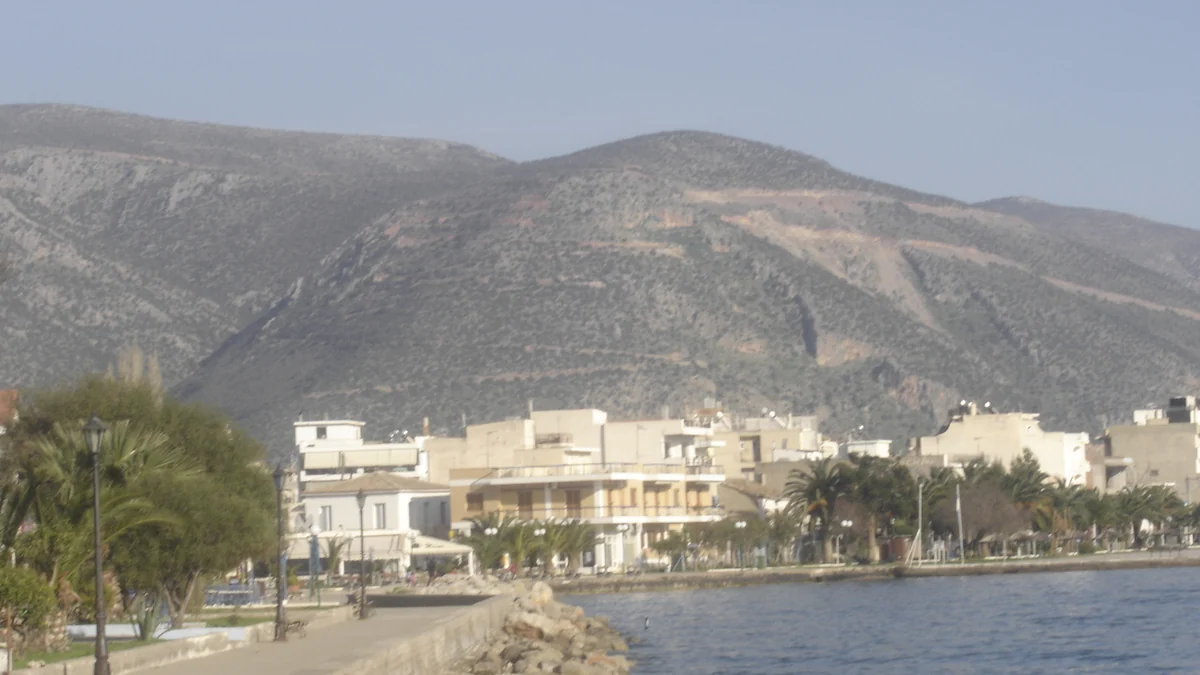
Delphi cruise port is a slightly misleading name, because cruise ships arrive on the coast at Itea while Delphi stands high above the Gulf of Corinth on the lower slopes of Mount Parnassus. That separation is the key to planning the day. Itea itself is an easy-going waterfront town, but the archaeological sanctuary and museum that draw most visitors require a road transfer, an uphill site visit and a disciplined return plan.
For a first visit, Delphi deserves to be the clear priority. The day becomes weaker when passengers try to combine the sanctuary, museum, Arachova, Galaxidi and a long lunch simply because each appears nearby on a map. The strongest itinerary gives the ancient site enough time, uses Itea as a practical fallback, and adds only one secondary stop when the call length and transport arrangements genuinely support it.
Delphi Cruise Port (Itea) at a Glance
| Cruise arrival | Itea, on the Gulf of Corinth |
|---|---|
| Headline destination | Delphi archaeological site and museum |
| Country | Greece |
| Currency | Euro (EUR) |
| Typical arrival method | Docked or tender, depending on the call |
| Best independent transport | Pre-booked taxi or a carefully verified KTEL bus |
| Best low-risk plan | Ship excursion or reserved return taxi to Delphi |
| Mobility challenge | Steep, exposed and uneven ground within the sanctuary |
Where Cruise Ships Arrive in Itea
Itea is the physical port for a Delphi cruise call. The waterfront is compact, and on a straightforward berth passengers can reach cafés and the town centre on foot. However, berth use, security arrangements and tendering can change with ship size and local operations. Treat the cruise line’s arrival notice as the final authority rather than assuming that a previous visitor’s walking route will apply to your sailing.
Before leaving the landing area, confirm the all-aboard time, the ship’s recommended return time and the exact place where independent passengers re-enter the port. On a tender call, note the final tender and allow for a queue. That last stage matters because a taxi reaching Itea on time is not the same as being seated on the final boat back to the ship.
The local waterfront is useful even when Delphi is the main plan. It provides somewhere to wait for a reserved driver, a practical place for a final drink after returning from the mountains and a viable alternative if high heat, reduced mobility or a shortened call makes the archaeological site unrealistic.
The Transfer from Itea to Delphi
Delphi is inland and considerably higher than Itea. By road the journey is normally measured in tens of minutes rather than hours, but the transfer should still be treated as a proper excursion leg. A typical sequence is gangway or tender, port exit, vehicle collection, uphill road journey, ticket or entrance formalities, then walking within the site. Each stage can consume more time when a ship unloads several coaches at once.
A reserved taxi gives the most control. Agree the total price, waiting arrangement, meeting point and return time before setting off. A driver who simply drops passengers at Delphi leaves the harder half of the problem unresolved. For two to four people, a return booking can compare favourably with an organised excursion while preserving control over how long to spend in the museum and sanctuary.
Public buses can be inexpensive, and the regional operator KTEL Fokidas is the correct place to check current information. The risk is not the outward journey alone. The return must match the ship’s schedule with enough margin for seasonal timetable changes, traffic and a missed connection. Do not rely on a timetable copied into an old blog or assume that every listed service runs on the day of the call.
A cruise-line excursion is the simplest answer when the call is short, transport capacity looks limited or the ship is tendering. Its weakness is often pace: large groups can spend time assembling, listening through headsets and waiting for slower walkers. Compare the published itinerary carefully. A tour that includes too many photo stops may deliver less meaningful time at Delphi than a focused transfer.
How to Plan the Delphi Archaeological Site
The sanctuary is arranged across a mountainside. The Sacred Way rises past monuments and treasuries towards the Temple of Apollo, with further climbing for the theatre and stadium. Visitors who picture a level collection of ruins are often surprised by the gradient and exposure. The view is part of the experience, but so are rough stone, steps, limited shade and the need to watch your footing.
Start with the section most affected by heat and physical effort. In warm weather, that usually means entering the outdoor site early and saving the museum for later. On a cool or wet morning, the museum can provide a sheltered opening while conditions settle. Either sequence works; the poor plan is leaving the major climb until the hottest part of the day because a tour has spent the morning elsewhere.
Set a turnaround point before entering. The stadium is rewarding for fit visitors with time, but it should not become compulsory. A sensible hierarchy is the Sacred Way, Temple of Apollo and principal viewpoints first, followed by the theatre, with the stadium added only if time, heat and energy remain comfortable. The lower Sanctuary of Athena Pronaia is in a separate area and requires its own allowance.
The official archaeological information supplied through the Greek Ministry of Culture and the Delphi cultural site should be checked for current access, ticketing and opening arrangements. Cruise articles cannot safely freeze those details, particularly where seasonal hours, conservation work or exceptional heat can alter the day.
Why the Delphi Museum Deserves Proper Time
The museum is not an optional collection of objects detached from the ruins. It explains what the sanctuary looked like, who dedicated its monuments and why Delphi mattered across the Greek world. Highlights commonly include the Charioteer, the Sphinx of Naxos, architectural sculpture and finds from the treasuries. Seeing them after the site gives the landscape greater meaning; seeing them first can make the outdoor route easier to interpret.
Many rushed excursions treat the museum as a short final stop. That is a poor trade for anyone with a serious interest in history. Allow enough time to move beyond the headline pieces, and decide in advance whether the museum or the highest reaches of the site matters more to you. Trying to complete every path and every gallery can turn a rich visit into a race.
The museum also offers a useful recovery period from sun and climbing. Passengers who cannot manage the full sanctuary may still gain a great deal from a museum-led visit combined with selected lower viewpoints. Ask a driver or guide exactly where passengers are dropped, because the distance and gradient between parking, museum and site entrance matter more than a broad claim that a tour is “accessible”.
Arachova: Worth Adding or a Distraction?
Arachova is an attractive mountain town beyond Delphi, known for steep streets, stone buildings, shops and views. It works best as a measured extension after a focused Delphi visit, particularly on a long call with private transport. It is less convincing when inserted into a short coach itinerary that already gives limited time to the sanctuary and museum.
The practical question is not whether Arachova is pleasant; it is what must be sacrificed to include it. A short café stop can work after Delphi. A full wander through the town, shopping and lunch may mean omitting part of the museum or creating a tighter return. Passengers with mobility concerns should also remember that the town’s character comes with gradients and steps.
Choose Arachova when the mountain setting and local atmosphere are genuinely part of your priority. Skip it without regret when Delphi is the reason for booking the itinerary. Adding a place merely because a coach passes close by is how a well-paced archaeological day becomes a sequence of brief stops.
Galaxidi as an Alternative Cruise Day
Galaxidi lies along the coast from Itea and offers a quieter maritime setting, neoclassical houses, waterfront lanes and a history tied to sailing. It is a credible alternative for passengers who have already visited Delphi or who want a less physically demanding day. It should not usually be bolted onto a full Delphi itinerary unless private transport and a long call provide generous time.
A taxi is normally the clearest cruise-compatible method. Agree the return in advance rather than expecting to find an immediate vehicle for the journey back. Public transport may exist for local needs, but the frequency and alignment with an all-aboard deadline must be confirmed for the actual date.
Galaxidi works because it offers contrast: the coast, shade, cafés and maritime history rather than another mountain stop. A relaxed visit here followed by time in Itea can be a better day than forcing a difficult archaeological climb in extreme heat. It is also a useful private-tour combination with Delphi when one member of a party wants a gentler second half.
Staying in Itea
Itea is not a substitute for Delphi in terms of international significance, but it is a perfectly legitimate port day. The promenade, local beach areas, cafés and views across the gulf support a calm independent visit. Passengers recovering from a busy itinerary may appreciate a place where the return to the ship remains simple and the day does not depend on a vehicle.
The town is also the best fallback when arrival is delayed. A shortened call is not the moment to improvise a mountain transfer with an uncertain return. Walk the waterfront, choose a local lunch, and keep the ship’s landing point in view. The value lies in removing risk rather than pretending the town contains a list of must-see monuments.
For limited mobility, ask the ship about the route from gangway or tender to the public area. The waterfront itself is easier than Delphi, but port surfaces, kerbs and the boarding of a tender can still determine whether the plan works. Accessibility begins with the ship-to-shore transfer, not with the attraction selected afterwards.
Hosios Loukas and Other Longer Excursions
The monastery of Hosios Loukas is one of Greece’s important Byzantine sites and can be paired with Delphi on a carefully designed private or organised tour. The road time and visit length make it a deliberate choice, not a spontaneous addition. It suits repeat visitors and passengers especially interested in mosaics, architecture and religious history.
A day combining Delphi, Arachova and Hosios Loukas may look efficient on a sales page, but check how much time is allocated to each place. Long coach itineraries often achieve breadth by reducing free time and removing flexibility. They can still be worthwhile when transport is the main obstacle, but passengers should understand the trade before booking.
More distant destinations should be judged by the same rule. Calculate the complete journey from ship to attraction and back, not the driving time quoted for an empty road. Add port exit, vehicle loading, comfort stops, admission queues, group movement and the final return stage. Theoretical proximity is not the same as cruise-day practicality.
Weather & Best Time to Visit Delphi Cruise Port
January to March
Typical high: 12–16°C
Typical low: 5–9°C
Rain / conditions: Cool and changeable, with wet or windy spells possible on exposed slopes.
April to June
Typical high: 18–28°C
Typical low: 10–19°C
Rain / conditions: Increasingly warm; spring often gives the most comfortable balance for climbing.
July to September
Typical high: 27–34°C
Typical low: 19–25°C
Rain / conditions: Hot and bright; exposed stone and limited shade make an early start valuable.
October to December
Typical high: 15–25°C
Typical low: 8–18°C
Rain / conditions: Pleasant early autumn can give way to cooler, wetter mountain conditions.
Weather guide: CruisePing summary based on NASA POWER climate data for Itea and Delphi. Check the latest forecast before travelling.
Weather has a larger effect here than the coastal temperature alone suggests. Delphi is higher, more exposed and physically demanding. A pleasant morning in Itea can still feel cooler or windier at the sanctuary, while summer sun reflects from pale stone and makes the climb harder. Carry water, sun protection and a light layer rather than dressing only for the port.
Heavy rain changes footing on smooth and uneven stone. Strong wind can also affect tendering at the ship. When conditions are poor, a museum-led Delphi visit may remain possible, but the value of the highest viewpoints falls. Keep the sequence flexible until the day’s actual conditions are clear.
Three Sensible Delphi Port-Day Plans
Plan A: Delphi without unnecessary extras
Use a ship excursion or reserved return taxi, visit the outdoor sanctuary and museum, then return to Itea with a comfortable margin. This is the best first-time plan and the one least likely to feel rushed. Spend any spare time on the waterfront rather than adding another road journey.
Plan B: Delphi plus one mountain or coastal stop
On a long call, pair Delphi with either a short Arachova visit or Galaxidi. Choose between them according to interest: mountain atmosphere and shops in Arachova, maritime character and a gentler pace in Galaxidi. Trying to include both normally weakens the main visit.
Plan C: A relaxed local day
Stay in Itea, or arrange a focused visit to Galaxidi, when mobility, heat or call length makes Delphi unattractive. This is not a failed version of Plan A. It is a different day built around the coastline, food and a low-stress return.
DIY or Organised Excursion?
DIY works best with a reserved taxi or a verified bus schedule that leaves a genuine recovery option. The taxi advantage is control over sequence and departure time. The bus advantage is price. The bus disadvantage is that one missed or altered return can remove most of the safety margin.
An organised excursion earns its cost when it guarantees scarce transport, manages entry and protects the return to the ship. It is especially sensible on a tender call or where several ships may compete for local vehicles. Read the details rather than buying the word “Delphi”: some tours include lengthy shopping or meal stops while giving less time at the site.
Private touring is attractive for a small group that values pacing. Ask whether the driver is also a licensed guide; transport and specialist guiding are different services. A good arrangement may involve a driver for the journey and an authorised guide meeting the party at Delphi. Confirm every element before sailing rather than negotiating under pressure on the quay.
Mobility, Heat and Physical Effort
Delphi is not fully represented by the distance from the port. The decisive factor is the terrain after arrival. Steps, sloping paths and rough surfaces can make a two-hour visit demanding even for passengers who walk comfortably on level streets. Use footwear with grip and avoid carrying unnecessary bags.
Passengers with reduced mobility should ask which parts of the museum and site can be reached, where a vehicle can set down, and whether the tour requires keeping pace with a group. A panoramic drive and museum visit may deliver a far better experience than paying for a standard itinerary that cannot be completed comfortably.
Heat management is equally practical. Start early, pause before fatigue becomes severe and prioritise the lower, most significant areas. There is no prize for reaching the stadium if doing so leaves the return walk unsafe or removes the museum. The visit should be shaped around what you can enjoy, not around completing every point on a map.
Food, Water and a Sensible Break
Delphi village has cafés and restaurants, while Itea provides an easy place for a final meal near the ship. The best choice depends on the transport plan. With a waiting taxi or organised tour, a meal in Delphi can fit naturally. With a public bus, choose somewhere close to the departure point and protect the return connection.
Carry water into the archaeological visit rather than assuming it will be convenient to buy once climbing. In summer, a shaded break between the site and museum is useful. Avoid a long sit-down lunch before the main outdoor route if the afternoon will be hotter and more crowded.
Saving the relaxed meal for Itea has one major advantage: the difficult transport leg is already complete. It turns the end of the day into a buffer rather than a risk. The waterfront is a better place to discover that service is slow than a mountain restaurant shortly before the planned descent.
What to Reserve Before Sailing
Reserve the element that would be difficult to replace: a return taxi, a specialist guide or a ship excursion. General walking, cafés and the Itea waterfront do not need advance commitments. If using a taxi, provide the ship name, arrival method and a conservative harbour return time, and keep the driver’s contact details offline as well as on your phone.
Admission arrangements at major Greek archaeological sites can change, so check the official ticket and opening information shortly before travel. A timed ticket is only useful when the vehicle plan allows enough margin to reach it. Avoid creating a chain in which a delayed tender causes a missed taxi, which then causes a missed admission.
Passengers travelling in a group should agree the priority before sailing. One person may want the stadium, another the museum and another a long lunch. Settling that order in advance prevents the taxi or excursion time being spent negotiating on the mountain.
Common Mistakes at Delphi Cruise Port
- Assuming that “Delphi port” means the ship is close enough to walk to the ruins.
- Booking only an outward taxi and expecting the return to solve itself.
- Using a public timetable without checking the actual day and season.
- Leaving the outdoor sanctuary until the hottest part of the call.
- Treating the museum as expendable while adding several secondary stops.
- Underestimating the final tender or port re-entry queue.
- Following the group to the highest point despite heat, fatigue or limited time.
Delphi Cruise Port FAQs
Can I walk from Itea cruise port to Delphi?
No sensible cruise-day plan treats Delphi as a walk from the ship. It is an inland, uphill road transfer. Use an organised excursion, taxi or a bus schedule checked for the date of the call.
Is Delphi possible independently?
Yes. A pre-booked return taxi is the clearest independent option. Public bus travel can work, but only when both directions and the return margin are verified.
Should I visit the museum or the archaeological site first?
In hot weather, the outdoor site first is usually sensible. In rain or cool conditions, the museum can be a strong opening. Protect enough time for both rather than following a rigid rule.
Is Arachova worth adding?
It can be on a long call with private transport. For a first visit, do not shorten the Delphi sanctuary and museum merely to collect another stop.
What is the best alternative for limited mobility?
Consider a museum-led Delphi visit, a panoramic route, Galaxidi or a relaxed day in Itea. Ask precise questions about vehicle drop-off points and internal gradients.
How early should I return?
Build a margin for the entire final sequence: road journey, vehicle drop-off, port entry and any tender queue. The ship’s instructions for the sailing should override generic advice.
CruisePing Port Verdict
Delphi is the reason to choose this call, and it is worth organising properly. The best first-time day is a focused sanctuary-and-museum visit with transport secured in both directions. Arachova, Galaxidi and Itea are useful choices, but they should support the main plan rather than crowd it. Passengers who cannot comfortably manage the archaeological terrain still have worthwhile alternatives and should not feel obliged to force the standard excursion.
Ready to Browse Our Article Library?
Explore more ports in Greece and the Greek Islands, or narrow it to Greece in particular. For cruise comparisons, planning shortcuts and value guides, head over to our main article archive.