
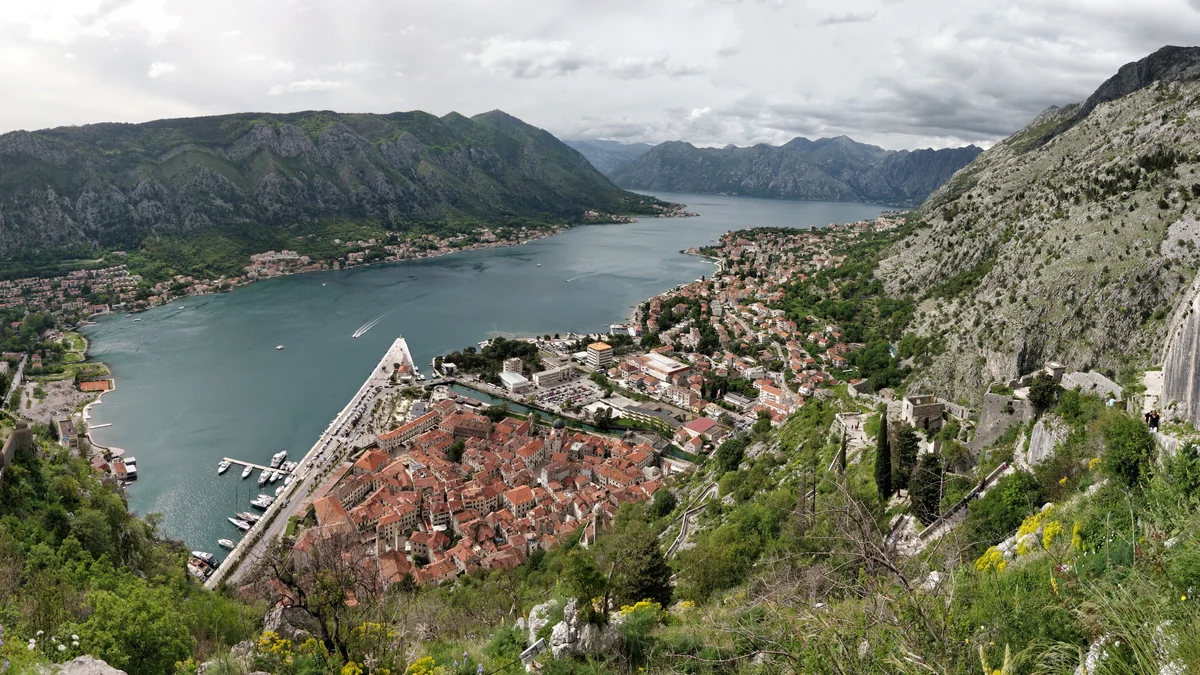
Kotor cruise port delivers one of the Mediterranean’s most memorable arrivals: a long sail through the Bay of Kotor to a walled old town pressed between water and mountain. The port-day problem is not distance from the ship to the main sight. It is deciding how much to add before heat, tender queues and road congestion begin to erode the day.
Kotor Old Town is the easy independent win. Perast and Our Lady of the Rocks add a strong bay excursion, while the cable car opens a higher mountain view from the Dub area outside town. The fortress climb is rewarding but physically demanding. CruisePing would build the day around one of those extensions, not attempt all three.
Kotor Cruise Port at a Glance
| Port name | Kotor Cruise Port |
|---|---|
| Main cruise area | Kotor harbour and passenger landing area |
| Cruise region | Mediterranean |
| Country / Territory | Montenegro |
| Currency | Euro (EUR) |
| Language | Montenegrin, English |
| Disembarkation | Tender or Docked |
| Walkability | High |
| Shuttle required | No |
| Main transport | Walking Route, Taxi, Boat, Cable Car / Lift, Organised Excursion |
| Best DIY option | Kotor Old Town |
| Main caution | Crowds build quickly, so explore early before adding an excursion. |
Weather & Best Times to Visit Kotor
January to March
Typical high: 11–16°C
Typical low: 5–10°C
Rain / conditions: Cooler and wetter; rain can make stone streets and archaeological surfaces slippery.
April to June
Typical high: 18–28°C
Typical low: 11–19°C
Rain / conditions: Warm with increasing sunshine; usually strong for walking and excursions before peak heat.
July to September
Typical high: 27–33°C
Typical low: 19–24°C
Rain / conditions: Hot, bright and busy; start exposed climbs, ruins and transfers early.
October to December
Typical high: 14–24°C
Typical low: 8–17°C
Rain / conditions: Milder but more changeable; wind or rain can disrupt boats and viewpoints.
Weather guide: CruisePing summary based on NASA POWER climate data for Kotor and the Bay of Kotor. Check the latest forecast.
Summer heat makes the fortress path the first activity, not an afternoon add-on. Low cloud can also reduce the value of the cable car’s high views.
Where Cruise Ships Arrive in Kotor
Ships may berth at the quay beside the old town or anchor and tender passengers ashore. The difference matters. A berthed ship gives immediate access, while tendering introduces queues and can shorten an already busy call.
The Sea Gate is close to the waterfront. Inside the walls, the lanes are compact but paved with stone and frequently crowded. The fortress path rises sharply above town; the cable-car lower station is outside Kotor and needs a taxi or arranged transfer.
Getting Around Kotor Independently
The useful transport choices at Kotor are walking route, taxi, boat, cable car / lift, organised excursion.
For a local day, Kotor works best when the first hour is spent orienting around the actual landing point.
Best Things to Do from Kotor Cruise Port
Kotor Old Town
Best for: The essential first visit and strongest DIY option
Best way: Walk from the quay or tender landing
Watch: Crowds build quickly, so explore early before adding an excursion.
Fortress path and viewpoints
Best for: Active passengers seeking the classic high view
Best way: Walk from the old town with water and suitable footwear
Watch: Steep steps, exposure and heat make this a serious climb, not a casual stroll.
Perast and Our Lady of the Rocks
Best for: Bay scenery, a smaller historic town and boat element
Best way: Taxi, organised tour or cruise-compatible local boat
Watch: Road congestion and boat timing require a firm return plan.
Kotor–Lovćen cable car
Best for: High-level views without the fortress climb
Best way: Taxi or official shuttle to the Dub lower station
Watch: The station is not in the old town; queues and road traffic must be included.
Bay boat tour
Best for: A cooler way to see villages and shoreline
Best way: Pre-booked excursion with an explicit ship return
Watch: Operator routes vary; confirm whether Perast and the island are actually included.
Budva
Best for: A second historic coastal town and beach option
Best way: Organised excursion or taxi
Watch: Summer road traffic can make the return fragile.
Easy local day
Best for: Old town, cathedral, maritime museum and waterfront
Best way: Fully independent on foot
Watch: This remains the best plan when tendering or weather shortens the call.
Protect the Bay Road Return
The bay road can slow sharply when several ships and tour groups move together. CruisePing would explore Kotor first, then add one pre-arranged excursion rather than leave the walled town until the final hour.
Kotor Old Town is the reliable core of the day and is worth seeing before coach groups fill the lanes. Perast, Our Lady of the Rocks and the mountain viewpoints are separate extensions whose road or boat timing must be controlled.
CruisePing Recommended Port Day
CruisePing would enter the old town as soon as possible, spend a focused morning there and then choose either Perast or the cable car. Perast gives the stronger cultural and bay experience; the cable car gives the broader landscape with less physical effort than the fortress climb.
The fortress path should be the main activity, not squeezed between other tours. In high heat or after a delayed tender, skip it. Budva is attractive but rarely the best first choice when Kotor and its own bay are already at the gangway.
DIY or Organised Excursion?
Kotor supports independent travel when the chosen plan stays within the reliable local transport envelope.
At Kotor, keep that principle tied to the actual landing, transport route and first-choice attraction.
Detailed Planning for a Kotor Port Day
Kotor’s proximity is deceptive. The old town is close, but the bay road funnels traffic through limited space. A taxi that covers a short distance on the map can spend valuable time stationary.
Explore the old town before coach groups peak. The cathedral, squares and lanes are more rewarding when there is room to look rather than simply follow a crowd.
The fortress path has multiple access and ticket arrangements that can change. Check local information, carry water and turn back early enough that the descent is not rushed.
Perast works well as a half-day because the town and island boat form one coherent outing. Agree whether the transfer includes waiting time and where the return boat lands.
Our Lady of the Rocks is reached by small boats from Perast. Boarding steps and changing water levels matter for passengers with limited mobility.
The cable car’s lower station at Dub is outside central Kotor. The gondola ride itself is short, but transfers, ticket queues and time at the upper complex make it a substantial block of the day.
Low cloud can weaken the cable-car value. On a hazy day, Perast or the old town may offer more reliable detail than a high viewpoint with limited visibility.
Budva should be treated as a road excursion. It is not a casual extension after a relaxed Kotor lunch, particularly when several ships are in the bay.
Boat tours avoid some road congestion but are weather-sensitive. Confirm the vessel, itinerary and return commitment rather than buying solely from a waterfront sign.
Kotor’s stone surfaces become slippery in rain and punishing in heat. Footwear matters even for passengers who have no intention of climbing the fortress.
Tender passengers should return before the final possible boat. Queues ashore can lengthen when thousands of guests converge after excursions.
The sailaway is part of the destination. A day that ends calmly aboard in time to watch the bay is better than one that finishes in a tender queue after an overfilled itinerary.
Port-Day Pitfalls and Value Choices
Do not let the apparent proximity of Kotor hide the time lost to tenders, shuttles, station walks or traffic.
Around Kotor, a route that lists Old Town, Perast, Budva and the cable car is likely to sacrifice time at each. Choose one bay extension and enjoy it properly.
Keep the final hour geographically simple.
Kotor Port-Day Checklist
- Book any capacity-limited boat, museum, tower or transfer.
Useful Official Links
- Port or harbour information
- Official transport information
- Official transport information
- Official tourism or attraction information
- Official tourism or attraction information
Kotor Cruise Port FAQs
Do ships dock or tender in Kotor?
Both occur. Berth allocation and vessel size determine the arrangement, so check the ship’s daily information.
Can I walk to Kotor Old Town?
Yes. The Sea Gate is close to the quay and tender landing.
Is the fortress climb difficult?
Yes. It involves steep, uneven steps and exposure, especially demanding in summer heat.
How do I reach the cable car?
The lower station is at Dub outside central Kotor, so use a taxi, shuttle or organised transfer.
Is Perast better than Budva for a first visit?
Usually. Perast fits naturally with the Bay of Kotor and involves less road exposure than Budva.
What is the best limited-mobility plan?
Use the old town selectively, consider a boat or taxi excursion and avoid the fortress path.
Use Kotor Old Town Before the Bay Gets Busy
Kotor’s old town is the one element that should survive almost every version of the day. It is close to both the berth and tender landing, contains the strongest concentration of historic sights and does not depend on road traffic. Enter early, before excursion groups return from wider bay tours, and use the first hour for the main lanes, squares, cathedral area and maritime history. The town is compact, but its value comes from looking rather than racing through it.
Confirm whether the ship is berthed or tendering before finalising the order. A tender arrival may shorten the morning and create a fixed return queue. A berth gives more flexibility, yet the road outside the walls can still become congested. The old town remains the safest anchor because it can be expanded with museums and churches or shortened when the ship’s operation changes.
Fortress Climb: Rewarding but Not a Casual Add-On
The climb above Kotor delivers the classic high view over the old town and inner bay, but it is a serious physical choice. Stone steps, uneven surfaces, exposure and summer heat make it more demanding than the distance suggests. Start early, carry water and decide on a turnaround time. Passengers who begin the climb late often sacrifice the old town or return under pressure.
Do not combine the full fortress route with Perast and the cable car unless the call is unusually long and transport is tightly organised. All three compete for the same clear-weather window and energy. Active passengers may prefer the climb because it begins directly from town; others will get a broader view from the cable car with less walking. Choose the experience that matches the person travelling, not the one that appears most dramatic in photographs.
Limited-mobility passengers should treat the fortress as optional, not as the measure of whether Kotor has been properly visited. The old town, waterfront, a boat trip or a vehicle transfer to a viewpoint can deliver a distinctive day without the steps. Historic paving inside the walls still requires care, but the route can be kept much flatter.
Perast and Our Lady of the Rocks
Perast is the strongest extension for a first visit because it remains within the Bay of Kotor’s cultural and scenic story. The small waterfront town and the boat element to Our Lady of the Rocks create a clear contrast with Kotor. It is usually a better fit than Budva, which requires more road exposure and shifts the day away from the bay that makes this arrival special.
A boat excursion can avoid some road congestion, but it depends on weather, boarding arrangements and the operator’s return discipline. A taxi or organised road tour gives more control over stops but can be delayed on the narrow bay route. Ask where the vehicle waits, whether the church-island boat is included and how much time is allowed in Perast. A list of destinations is not the same as a workable sequence.
Visit Perast after the old town unless the excursion has a fixed early departure. This protects the essential Kotor experience before the wider transport system becomes busy. Return with enough margin to walk from the drop-off or boat pier to the correct tender queue or gangway rather than treating arrival back in town as the end of the journey.
Cable Car or Fortress View?
The Kotor cable car provides a high mountain perspective from the Dub area outside the centre. It is a strong choice for passengers who want the landscape without the fortress climb, but reaching the lower station requires a taxi, shuttle or organised transfer. Current operating hours, weather restrictions and transfer arrangements must be checked for the call date.
The cable car and fortress should be viewed as alternatives. The fortress gives a gradual, physical relationship with the walls and old town. The cable car gives a wider panorama and can leave more energy for walking below. A passenger who tries both may spend the day in queues, transfers and climbing rather than enjoying either view properly.
If cloud or wind reduces the value of the upper station, do not persist simply because tickets were considered in advance. Perast, a bay boat or a deeper old-town visit may be the better use of time. Kotor has enough layers to support a strong fallback, which is one reason independent planning works well when the itinerary remains selective.
Why Budva Is Usually the Second-Visit Choice
Budva adds another historic centre and a different stretch of coast, but the road can be vulnerable to traffic. On a normal first call, the journey consumes time that could be used in Kotor and Perast. Budva makes more sense for repeat visitors, passengers on a long organised excursion or travellers whose main interest is its beaches and old town rather than the Bay of Kotor.
Do not assume a private taxi removes the traffic risk. It improves flexibility but uses the same constrained road network. Agree a conservative return and keep the driver’s contact details. An excursion that advertises Kotor, Budva, Perast and viewpoints may provide only brief stops at each place. Read the actual timing before paying for a route that is impressive only on paper.
Traffic, Tenders and the Final Hour
Kotor’s geography concentrates vehicles along a limited road corridor. A short distance can take much longer when several ships and tour coaches are moving at the same time. Build the return around conditions, not around the best journey time seen online. Boat travel can bypass part of the road problem, but it introduces weather and fixed-departure risk instead.
Keep the last hour in or beside the old town. This is a useful part of the visit, not empty buffer. A café, museum, church or final waterfront circuit is more valuable than one last taxi viewpoint reached with no recovery time. Tender passengers should join the return process earlier than berthed passengers because the queue and boat crossing still lie between the town and ship.
On a short call, focus entirely on the old town and perhaps a lower-level waterfront walk. On a normal call, add either Perast, the fortress or the cable car. On a long call, one second extension may fit, but the day should still be built around two strong experiences rather than a tour of every name around the bay.
Food, Museums and Time Inside the Walls
Kotor Old Town should not become merely the space between an excursion and the ship. A meal or drink inside the walls, the Maritime Museum or a church interior can give the day texture without another transfer. Choose one indoor visit according to interest and keep the rest of the old-town time unstructured. The narrow lanes reward pauses, and the town feels different once the largest excursion groups have moved on.
In hot weather, use the middle of the day for shade, lunch or an indoor attraction rather than beginning the fortress climb. In rain, polished stone can become slippery, while the museums and churches gain value. Restaurants closest to the main gate may fill quickly when several tenders arrive, so moving a few streets away can provide a calmer break.
What Deserves Advance Booking?
Book the capacity-limited extension, not the whole town. That may be a small boat to Perast and Our Lady of the Rocks, a cable-car transfer or a private driver. Confirm the meeting point, return time and whether the operator understands the ship’s tender or berth arrangement. The old town itself should remain the flexible core that absorbs changes.
A good booking reduces uncertainty; a poor one adds fixed deadlines. Avoid stacking a timed boat, cable-car slot and distant road excursion. One protected extension paired with independent time in Kotor is a stronger use of money and leaves room to respond to traffic, weather or a slow tender operation.
Photography Without Letting Viewpoints Run the Day
The sail-in, walls, bay and mountain backdrop make Kotor unusually photogenic before passengers have booked a single excursion. Use the ship’s arrival and the old-town waterfront for the first images, then decide whether a high viewpoint is worth the extra effort. The fortress and cable car produce different photographs; doing both does not automatically improve the day.
Perast is strongest for waterfront composition and the church-island setting, while the bay road offers frequent glimpses that can tempt a driver into too many stops. Agree one or two planned viewpoints rather than stopping wherever another coach has pulled over. The time saved is better spent walking in Perast or Kotor.
Afternoon light can be attractive, but do not delay the return for a theoretical perfect photograph. Haze, cloud and ship movements change the view. A calm final circuit inside the walls will usually produce more useful images than a last-minute road stop followed by a congested journey back.
Keep the ship’s contact information and landing details saved offline throughout the day.
CruisePing Port Verdict
Kotor’s old town is the non-negotiable core and deserves the first part of the day. Add Perast, Our Lady of the Rocks or the cable car only as one controlled extension. CruisePing would avoid a broad bay circuit that depends on a late road return.
Ready to browse our article library?
Explore more ports in Mediterranean, or narrow it to Montenegro in particular. For cruise comparisons, planning shortcuts and value guides, head over to our main article archive.