
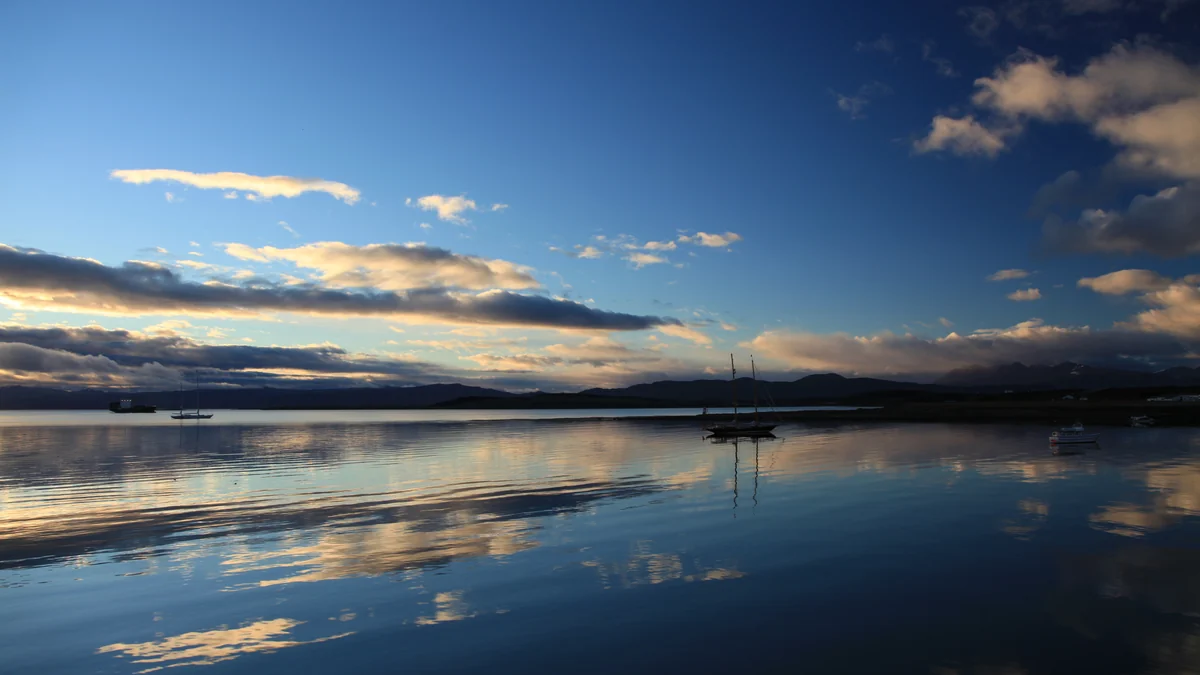
Ushuaia cruise port has two quite different jobs. For large South America ships it is a dramatic day call beneath the Martial Mountains; for many expedition passengers it is the practical beginning or end of an Antarctic voyage. That distinction changes the sensible plan. A visitor with eight hours ashore can choose one major Tierra del Fuego experience, while a turnaround passenger must also manage luggage, embarkation instructions and a flight or hotel.
The commercial pier projects into Ushuaia Bay directly beside the city. Once through the controlled port gate, the waterfront, shops and museums are close enough to reach on foot. The harder choices begin beyond town: Tierra del Fuego National Park, the End of the World Train, Beagle Channel navigation and the Martial Glacier all pull in different directions. Trying to collect them in one call usually produces more transport than experience.
Ushuaia Cruise Port at a Glance
| Port name | Ushuaia Cruise Port |
|---|---|
| Main cruise area | Commercial pier on Ushuaia Bay beside the city centre |
| Cruise region | South America / Galapagos |
| Country / Territory | Argentina |
| Currency | Argentine peso (ARS) |
| Language | Spanish, English |
| Port role | Day Call, Departure / Turnaround |
| Disembarkation | Docked |
| Walkability | High |
| Shuttle required | No |
| Main transport | Walking Route, Taxi, Local Bus, Boat, Organised Excursion |
| Best DIY option | Waterfront, city centre and Maritime Museum |
| Main caution | Wind, fast-changing weather and trying to combine two major out-of-town experiences |
Weather & Best Times to Visit Ushuaia
January to March
Typical high: 11–14°C
Typical low: 4–7°C
Rain / conditions: Long daylight but frequent wind, showers and rapid changes between sun and low cloud.
April to June
Typical high: 4–9°C
Typical low: -1–3°C
Rain / conditions: Cooling quickly; shorter days and a growing chance of frost or snow.
July to September
Typical high: 3–8°C
Typical low: -2–1°C
Rain / conditions: Winter conditions, snow or ice and reduced daylight; most conventional cruise calls are outside this period.
October to December
Typical high: 8–13°C
Typical low: 2–6°C
Rain / conditions: Spring is bright but exposed; strong wind can alter boat and mountain plans.
Weather guide: CruisePing summary based on NASA POWER climate data for the Ushuaia and Beagle Channel area. Check the latest forecast.
In Ushuaia, wind often matters more than the temperature. A Beagle Channel sailing can be the highlight in settled conditions yet the first plan to weaken when operators face rough water. Low cloud also reduces the value of the Martial Mountains. Keep one good land-based alternative—usually the former prison museums or a compact city route—rather than treating every booked element as immovable.
Where Cruise Ships Dock in Ushuaia
Ushuaia’s main cruise pier sits on the central waterfront. Ships normally berth rather than tender, although a busy Antarctic season can produce changing berth positions and tightly managed access. The provincial tourism authority publishes an official cruise schedule, but passengers should still use the ship’s final gangway information because expedition vessels, regional ships and large international calls share the harbour.
The city-facing end of the pier is convenient, but the working-port area is not a public promenade. Security controls can create a longer walk than the map implies, especially with luggage. Day-call passengers can normally leave on foot; turnaround passengers should follow the operator’s transfer and baggage instructions rather than assuming a taxi can drive to the gangway.
The port’s central position is a genuine advantage. It makes an independent museum-and-waterfront day robust, and it gives passengers a useful fallback when wind cancels a boat trip or a late arrival squeezes the call. The same advantage can tempt people to start a second distant excursion too late. Once you have returned to the centre, keep the final part of the day local.
Choosing Between the National Park, Train and Beagle Channel
Tierra del Fuego National Park is the strongest first choice for landscapes on land. The official park lies west of Ushuaia and protects forest, coast, peatland and the end of National Route 3 around Lapataia Bay. A half-day tour can include several viewpoints without demanding a strenuous hike, but the quality depends on how much time is spent outside the vehicle. Ask whether the itinerary includes short walks or mainly photo stops.
The End of the World Train is a structured heritage experience on the approach to the park. Ushuaia’s official tourism site places its station about eight kilometres from the city and lists a return journey of roughly two hours. It works best when the history appeals in its own right. It should not be treated as a fast substitute for exploring the park: adding transfers, boarding and the rail journey can consume much of a short call.
A Beagle Channel navigation gives the most direct sense of Ushuaia’s maritime setting. Routes vary, commonly focusing on islands, birdlife, the Les Eclaireurs lighthouse area or longer wildlife itineraries. The key is not the longest advertised route but the sailing that fits the ship call with a serious margin. Wildlife and sea conditions are never guaranteed, and an independently booked boat does not carry the cruise line’s return protection.
CruisePing would normally choose either the park—possibly with the train—or the Beagle Channel, then use remaining time in town. Combining a full land circuit and a substantial boat trip is only sensible on a long, well-timed call with both elements booked as one protected itinerary.
Getting Around Ushuaia Independently
The waterfront grid and Avenida San Martín are straightforward on foot, although the city rises sharply north from the bay. The Maritime Museum in the former prison is walkable from the pier; the climb becomes more noticeable if you continue into higher residential streets. Pavements can be uneven and wind makes even a modest gradient feel more demanding.
Taxis are the practical independent option for the Martial Glacier base or a tailored national-park circuit. Agree the route, waiting arrangement and payment method before departure. Argentine prices can move quickly, so an exact fare quoted months in advance is less useful than a current written agreement. For a one-way drop, confirm how you will return because mobile coverage and taxi availability are not equally reliable at every trailhead.
Local buses are useful within the city but are not the simplest way to build a cruise-day park itinerary. The national park, train and longer lake routes are better handled by a tour, private driver or operator whose timetable was designed around visitors. This is not a failure of independent travel; it is an acknowledgement that the valuable part of the day lies outside the urban bus network.
Best Cruise-Compatible Things to Do from Ushuaia
Tierra del Fuego National Park
Best for: Forest, coast and a clear sense of the landscape beyond Ushuaia.
Best way: Half-day guided excursion, private driver or carefully pre-arranged transfer.
Watch: Do not judge the trip only by Lapataia Bay; ask how many walking stops are included and confirm current park access.
End of the World Train
Best for: A heritage-led journey connected to the former prison railway.
Best way: Pre-booked rail ticket combined with a park transfer or excursion.
Watch: The station is outside town and the train uses a substantial block of time; coordinate every transfer.
Beagle Channel navigation
Best for: Sea-level views, islands and possible bird or marine-wildlife encounters.
Best way: Book a sailing from the tourist harbour that finishes well before all-aboard.
Watch: Wind can alter or cancel routes, and longer wildlife trips are poor choices on a short call.
Maritime and Prison Museums
Best for: A weather-proof look at Ushuaia’s maritime, penal and Antarctic history.
Best way: Walk from the cruise pier and allow enough time for the large former-prison complex.
Watch: The combined museum site is much bigger than a quick single-gallery visit.
Ushuaia waterfront and city centre
Best for: A low-risk independent route with views, local food and flexible timing.
Best way: Walk from the port gate along the bay and through the central streets.
Watch: The commercial centre can feel busy on multi-ship days; the better moments are along the water and in focused museums.
Martial Glacier area
Best for: Mountain scenery close to the city and a more active half-day.
Best way: Taxi or organised transfer to the base, then choose a walk suited to conditions.
Watch: Low cloud, snow, mud and steep ground can remove the expected view; arrange the return before setting off.
Escondido and Fagnano lakes
Best for: A longer road journey through Fuegian scenery.
Best way: Protected full-day excursion on a long port call or as a pre/post-cruise tour.
Watch: Road time is significant and this should not be combined with a substantial Beagle Channel sailing.
CruisePing Recommended Port Day
For a first day call, CruisePing would choose Tierra del Fuego National Park as the main event, using either a small-group tour or a private vehicle that includes several short stops rather than a rushed coach circuit. Return to the centre with at least ninety minutes for the waterfront and the Maritime Museum or a relaxed meal. The city is too conveniently placed to justify spending the whole call staring through a coach window.
Passengers who care more about wildlife and maritime scenery should substitute a short Beagle Channel navigation for the park, not bolt it on afterwards. Select a departure with a conservative finish time and keep the museum as the weather fallback. A cruise-line excursion earns its premium when the sailing is long or when the ship’s call is tight.
For turnaround passengers, the best plan may be simpler: museum, waterfront and an early lunch after depositing luggage, or a national-park tour on a separate hotel night. Embarkation day is not the moment to test whether a remote taxi will return on time. Ushuaia rewards arriving a night early far more than trying to squeeze the city between airport and gangway.
DIY or Organised Excursion?
Ushuaia itself is an excellent DIY port. The waterfront, central streets and former prison complex need no organised tour. The decision changes at the edge of the city. The national park has multiple dispersed stops, the train has fixed departures, and Beagle Channel boats are weather- and timetable-dependent. Organisation is valuable when it joins those moving parts rather than simply providing a guide for a walkable centre.
CruisePing would book independently for a short boat trip only when the operator publishes a return that leaves generous slack and the cancellation terms are clear. For a full park-and-train combination, a cruise-line or established local excursion is often the cleaner answer. For the lakes or a long wildlife route, return protection matters more than saving a modest amount.
A private driver can be the best middle ground for two to four passengers. It permits longer at the viewpoints you care about and less time at souvenir stops. Give the driver a firm latest return to central Ushuaia, not merely the ship’s all-aboard time, and keep enough cash or card flexibility for a market where payment arrangements change.
Ushuaia as an Antarctic Turnaround Port
Expedition operators often treat Ushuaia as a logistical gateway rather than an ordinary port of call. Baggage collection, biosecurity briefings, charter flights, hotel meeting points and staggered embarkation can control the day. Read every operator document before booking independent sightseeing. Some companies collect luggage at a hotel while passengers remain free for several hours; others require attendance at a specific briefing or transfer.
An extra night before sailing is worthwhile. Weather can disrupt flights into a city with limited alternatives, and a delayed arrival may put the whole expedition at risk. A pre-cruise stay also lets you visit the park or take a channel trip without watching the clock. After an Antarctic voyage, a post-cruise night can be equally useful if disembarkation is early and the flight departs much later.
The airport is close to the city in distance, but a short road transfer does not remove check-in deadlines or the possibility of congestion during large ship movements. Keep travel documents, medication and one layer of warm clothing with you rather than in collected luggage. The pier can be windy even when the city streets feel sheltered.
Mobility, Clothing and Practical Comfort
The central waterfront is manageable for many passengers, but ramps, port surfaces, wind and the climb into town deserve respect. The former prison museum is indoors but extensive. National-park viewpoints range from roadside stops to uneven paths, while the Martial area is a genuine hill or mountain outing rather than a city stroll.
Wear layers that can handle cold wind, light rain and sudden sun. A bulky winter coat without a waterproof outer layer is less useful than adaptable clothing. Sunglasses and sunscreen still matter at southern latitudes, particularly on water. Secure hats on the pier and boat decks.
Passengers with limited mobility should ask exactly how a tour handles each stop: coach steps, gravel, boardwalks and toilet access vary. A city-and-museum plan may deliver more enjoyment than a scenic excursion whose advertised viewpoints require repeated boarding and short, awkward walks.
How Call Length Changes the Choice
A short call of five or six hours should remain binary: city and museums, or one protected half-day excursion. The national park plus train can already fill the usable time once gangway and road transfers are included. A boat trip should have a published finish that leaves a large margin.
With eight to ten hours, the park or channel can be followed by a serious city visit, but this is still not a licence to book two full excursions. Long austral daylight makes the day feel spacious; all-aboard does not move with the sunset.
An overnight or turnaround stay changes the answer completely. Use one full day for the national park and another half-day for the channel or museums. Ushuaia becomes far more satisfying once it is released from the ship’s clock.
Comparing Tierra del Fuego National Park Tour Styles
A coach panorama, a small-group nature tour and a private vehicle can all reach Tierra del Fuego National Park, but they produce different days. Large coaches usually cover several headline stops efficiently and are often the safest match for a tight ship schedule. Small groups tend to allow more time outside, while a private vehicle can adjust the order if cloud, wind or crowds weaken a planned viewpoint. Before booking, ask how much of the advertised duration is road time and whether the itinerary includes actual short walks rather than repeated photographs from the vehicle.
The End of the World Train should be chosen because the railway story interests you, not because it appears to be the fastest way to “do” the park. The train follows a structured timetable and adds its own boarding process. A combined train-and-park excursion can work well for passengers who value interpretation and a seated journey, but it leaves less freedom for bays, forest paths and spontaneous stops. Independent visitors should not assume that buying a train ticket solves the transport between the city, station, park entrance and return to the ship.
Lapataia Bay and the coastal end of the park often provide the most recognisable sense of reaching the end of the road, while forest and peatland stops explain more of the landscape. A tour that promises every named viewpoint may spend less time at each than a more selective route. CruisePing would favour an itinerary that clearly states its walking level and includes two or three meaningful stops. In poor weather, sheltered forest sections may remain worthwhile even when distant mountain views disappear behind cloud.
Beagle Channel Trips: Choose the Route, Not Just the Boat
Beagle Channel departures vary from short lighthouse-and-island circuits to longer wildlife or estancia-style outings. The shortest navigation is normally the easiest to fit around a cruise call because it returns to the tourist harbour near the city centre. Longer routes can add more wildlife potential and a stronger sense of the channel, but they also increase exposure to wind, schedule changes and the risk that the day becomes entirely boat based after arriving by ship. Read the route description carefully rather than assuming every Beagle Channel excursion includes the same islands or landing opportunities.
Wildlife should be treated as possible rather than guaranteed. Seasonal movement, sea state and route permissions affect what is seen, and a responsible operator will not promise close encounters on demand. The better planning question is whether the scenery and navigation remain worthwhile if the wildlife is distant. Passengers who become seasick should also remember that a smaller sightseeing boat behaves differently from a cruise ship. Medication needs to be taken early enough to work, and warm layers are useful even when Ushuaia itself feels mild.
A cancelled sailing does not ruin the port day because the Maritime Museum, waterfront and central streets are close together. Keep the operator’s cancellation procedure and meeting point available offline, then switch quickly rather than waiting through several revised departure times. CruisePing would avoid booking a channel trip that ends close to all-aboard, even when the harbour is beside the ship. Weather delays, passenger disembarkation and pier control can consume the margin that looked generous on paper.
Using Ushuaia as an Expedition Turnaround Port
An Antarctic embarkation day is governed by the expedition operator, not by the apparent proximity of your hotel to the pier. Luggage collection, biosecurity briefings, document checks and group transfer arrangements may occur before the published boarding time. Follow the operator’s instructions even when you can see the vessel from the waterfront. Walking independently to the security gate with large cases can create more difficulty than it saves, particularly when access points change around several expedition ships.
Flight disruption is the strongest argument for arriving early. Ushuaia has limited alternatives if weather or an aircraft problem interrupts the route, and a same-day connection offers little recovery time. A pre-cruise stay also separates sightseeing from embarkation: use the spare day for the park or channel, then keep boarding day light. Book accommodation with a realistic cancellation policy and confirm how luggage is handled if the ship transfer departs after hotel checkout.
After a voyage, avoid assuming an early arrival means immediate freedom. Disembarkation can be organised by group, and onward flights may leave many hours later. A post-cruise city plan is easiest when luggage storage is confirmed in advance. The museum and waterfront suit a half-day without another long transfer, while a major excursion is less attractive after an uncertain release time. Ushuaia rewards passengers who buy schedule resilience first and activities second.
Port-Day Pitfalls and Value Choices
- Booking both a long national-park circuit and a substantial Beagle Channel sailing without enough transfer margin.
- Treating the train as if it leaves from the city centre; its station is outside Ushuaia.
- Using the ship’s all-aboard time as the target return from a remote route.
- Ignoring wind when choosing between sea, mountain and museum plans.
- Scheduling independent sightseeing on embarkation day before checking baggage and briefing requirements.
- Accepting an exact taxi price from an old article instead of agreeing a current fare and return arrangement.
Ushuaia Port-Day Checklist
- Confirm whether the call is a day visit, embarkation, disembarkation or a mixture of roles.
- Choose one major out-of-town priority: national park/train, Beagle Channel, Martial area or lakes.
- Check the operator’s latest luggage, transfer and biosecurity instructions.
- Carry windproof and waterproof layers even in summer.
- Keep the final part of the call in central Ushuaia.
- Recheck boat status and mountain visibility on the morning of arrival.
Useful Official Links
- Official Tierra del Fuego cruise schedule
- Ushuaia official tourism
- Tierra del Fuego National Park
- Maritime Museum of Ushuaia
- End of the World Train information
Ushuaia Cruise Port FAQs
Can you walk from Ushuaia cruise port?
Yes. Once through the controlled port exit, the waterfront, central shopping streets and Maritime Museum are reachable on foot. The city climbs away from the bay, so a route that looks short can still involve a noticeable gradient.
Is the End of the World Train close to the ship?
No. The station is outside central Ushuaia on the road towards Tierra del Fuego National Park. Treat the rail journey and its transfers as a planned excursion rather than a quick walk-up attraction.
Can I do the national park and a Beagle Channel boat trip in one day?
Sometimes on a long call, but it is rarely the calmest first-time plan. Both experiences have fixed logistics and the boat is weather-sensitive. CruisePing would normally choose one as the main event and use the city for the remaining time.
What happens if a Beagle Channel trip is cancelled?
Use the former prison museums, waterfront and city centre, or switch to a short land tour if capacity remains. Keep cancellation terms and the latest operator contact details available.
Should Antarctic passengers arrive early?
A pre-cruise night is strongly sensible. Flights and weather can disrupt a tight same-day connection, while an extra day allows Ushuaia to become part of the trip rather than an anxious transfer point.
Is Ushuaia suitable for passengers with limited mobility?
The immediate centre can work well, but the working pier, wind, gradients and excursion surfaces vary. Ask the cruise line or operator about vehicle steps, walking distances and accessible toilets for each specific tour.
CruisePing Port Verdict
Ushuaia is one of the rare ports where the city, the surrounding landscape and the voyage beyond the harbour all carry equal weight. Its central berth makes independent exploration easy, but the defining experiences sit in different directions and cannot all be compressed into one sensible day.
For most first-time day visitors, CruisePing would choose the national park or a short Beagle Channel sailing, then finish locally. For Antarctic turnaround passengers, we would buy time rather than another excursion: arrive a night early, follow the operator’s logistics precisely and let Ushuaia be the gateway rather than the gamble.
Ready to browse our article library?
Continue through CruisePing’s South America / Galapagos cruise ports, browse ports in Argentina, or return to the main CruisePing article library for planning guides, comparisons and practical cruise advice.