
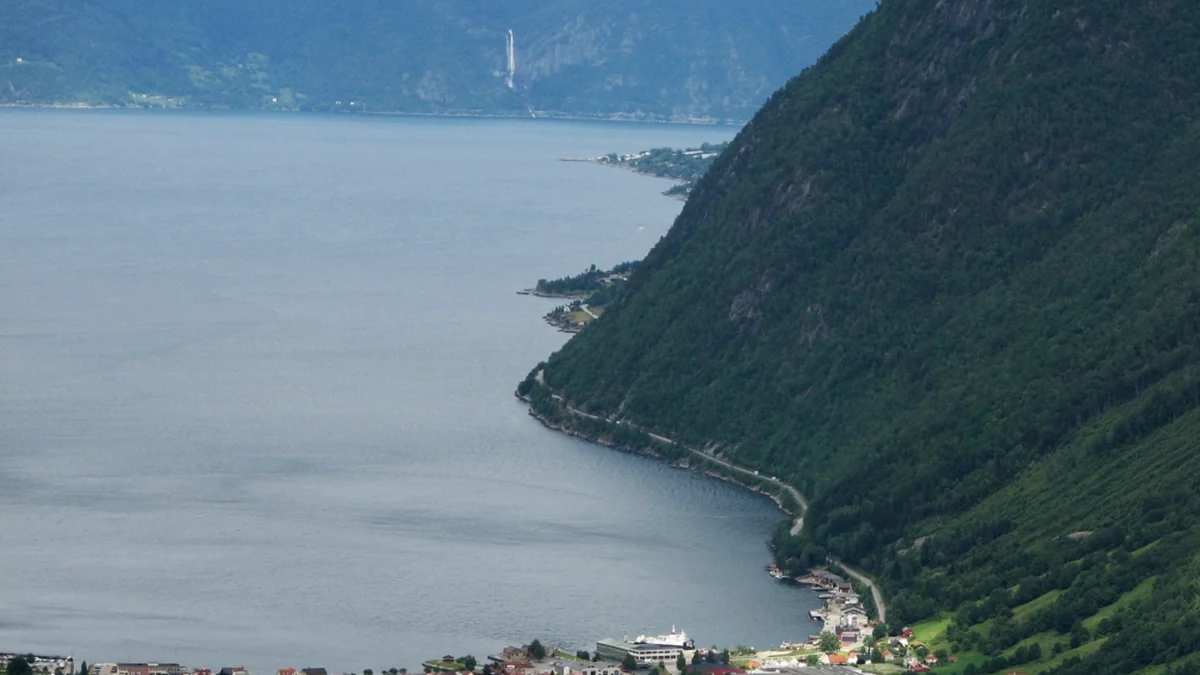
Vik Norway cruise port is Vikøyri in Sogn, on the southern shore of the Sognefjord. It is not Vík on Iceland’s black-sand south coast—an error that has appeared in cruise databases and even destination imagery. The Norwegian port is a small tender call built around fjord scenery, wooden shoreline buildings and two unusually important medieval churches.
Vik works best when passengers resist comparing it with Flåm. There is no single blockbuster railway beside the landing. Instead, the day can stay local around Hopperstad Stave Church, Hove Stone Church and Vikøyri, or become a vehicle-based excursion over Vikafjellet, to Storesvingen or into a wider Sognefjord circuit. The local option is not the consolation prize; it is the most distinctive use of a short call.
Vik Norway Cruise Port at a Glance
| Port name | Vik Norway Cruise Port |
|---|---|
| Main cruise area | Tender landing at Vikøyri on the southern shore of Sognefjord |
| Cruise region | Fjords & Norway |
| Country / Territory | Norway |
| Currency | Norwegian krone (NOK) |
| Language | Norwegian, English |
| Port role | Day Call |
| Disembarkation | Tender |
| Walkability | Medium |
| Shuttle required | No |
| Main transport | Walking Route, Tender, Local Bus, Taxi, Organised Excursion, Ferry |
| Best DIY option | Vikøyri heritage walk and Hopperstad Stave Church |
| Main caution | Confusing Vik in Sogn with Vík in Iceland and overcommitting to long fjord transfers |
Weather & Best Times to Visit Vik Norway
January to March
Typical high: 3–7°C
Typical low: -2–2°C
Rain / conditions: Cold, wet and sometimes snowy, with limited conventional cruise activity.
April to June
Typical high: 9–18°C
Typical low: 2–10°C
Rain / conditions: Longer daylight, spring waterfalls and quickly changing mountain conditions.
July to September
Typical high: 14–20°C
Typical low: 7–12°C
Rain / conditions: Mild fjord weather, but rain and low cloud remain common.
October to December
Typical high: 4–11°C
Typical low: 0–6°C
Rain / conditions: Cooler, wetter and darker; mountain roads can become wintry.
Weather guide: CruisePing summary based on NASA POWER climate data for the Vik in Sogn and central Sognefjord. Check the latest forecast.
Cloud base decides whether a viewpoint excursion is worth the road time. When Storesvingen and Vikafjellet are clear, the elevated view adds real scale to the Sognefjord. In low cloud, the churches, Vikøyri and a short fjord-level walk are the stronger choices. Tender operations also depend on conditions, so do not build a separate public-boat itinerary that assumes an exact landing time.
Where Cruise Ships Arrive in Vik
Cruise Norway lists Vik as a Sognefjord cruise destination. Most mid-sized and large ships should be expected to anchor and tender passengers to Vikøyri, while small-vessel arrangements can differ. The landing is in a working village waterfront rather than a purpose-built terminal complex. Ship-specific instructions are therefore more reliable than a generic berth description.
The tender places passengers close to the village, but the two headline churches are not both on the quay. Visit Norway describes Hopperstad Stave Church as around a twenty-minute walk from the harbour. That is manageable for many passengers, although the route and any onward village loop add distance.
Tender timing is the first constraint. Excursion groups may receive priority, and the last tender can be earlier than passengers expect. Note the return point before walking inland; the village waterfront is small, but ferries and local boats can make the quay busier than its scale suggests.
Walking Vikøyri and the Heritage Route
Vikøyri’s value lies in the relationship between settlement, farmland, churches and fjord. A local walk can include the traditional shore buildings, Hopperstad Stave Church, Hove Stone Church and burial mounds. The official heritage walk contrasts the timber stave tradition with the stone church, giving a much better story than viewing either building in isolation.
Hopperstad is among Norway’s oldest surviving stave churches, with origins around the twelfth century. Opening and guided access are seasonal, so a passenger should check the call date rather than assume the interior will be available. Even when closed, the exterior and surrounding landscape justify the walk.
Hove Stone Church adds a different architectural language and is easy to overlook when excursion marketing concentrates on Hopperstad. CruisePing would make room for both if the route and opening arrangements work. The village then becomes a coherent cultural port day rather than a sequence of unrelated photographs.
Getting Beyond Vik Independently
Vik sits on a transport corridor of ferries, express boats and mountain roads, but those services were not designed around an unpredictable tender landing. The existence of a public boat does not make a same-day connection cruise-safe. Compare every departure with the ship’s tender timetable and include the possibility that the first passengers reach shore later than scheduled.
Storesvingen viewpoint and Vikafjellet require road transport. A pre-booked excursion or driver is more sensible than hoping for a taxi after landing, because the local market is small and cruise-day capacity can disappear quickly. The same applies to longer combinations involving Balestrand, Fjærland, glaciers or the Nærøyfjord.
Bicycles or e-bikes can extend the local radius, but gradients and wet roads matter. The best independent route is usually cultural rather than ambitious: village, churches, riverside or shoreline, then back to the tender with time to spare.
Best Cruise-Compatible Things to Do from Vik Norway
Hopperstad Stave Church
Best for: One of Norway’s oldest stave churches and Vik’s defining heritage sight.
Best way: Walk from the landing or join a local heritage tour.
Watch: Interior access is seasonal; the walk is longer than the village map first suggests.
Hove Stone Church
Best for: A contrasting medieval stone church and a quieter part of Vik’s story.
Best way: Combine with Hopperstad on a guided or carefully mapped walk.
Watch: Check access and avoid dropping it merely because excursion descriptions focus on the stave church.
Vikøyri heritage area
Best for: Traditional buildings, village scale and the connection between farm and fjord.
Best way: Explore on foot from the tender landing.
Watch: Do not expect a dense shopping district; this is a place to look closely rather than collect attractions.
Storesvingen viewpoint
Best for: A high view over Vik and the Sognefjord.
Best way: Pre-booked coach, minibus or taxi.
Watch: Low cloud can remove the reason for going, and the road time must fit the tender call.
Vikafjellet mountain route
Best for: Mountain scenery and a stronger contrast with the fjord shore.
Best way: Organised excursion or private vehicle.
Watch: Weather changes rapidly and snow can linger near the road even in summer.
Wider Sognefjord or Fjærland excursion
Best for: A larger scenic day involving boats, glaciers or another fjord community.
Best way: Use a ship-protected or fully coordinated excursion.
Watch: Public schedules rarely provide enough flexibility for a late tender or changed all-aboard time.
CruisePing Recommended Port Day
For most first-time visitors, CruisePing would keep Vik local. Walk or take a local transfer to Hopperstad, include Hove Stone Church if access permits, and return through Vikøyri. This gives the port an identity that is different from every other Norwegian fjord stop.
Choose Storesvingen or Vikafjellet only when the weather is clear and transport is already secured. The elevated scenery is worthwhile, but not if the day becomes a rushed coach ride beneath cloud. A long glacier or Nærøyfjord excursion should be booked for the experience itself, not because a small village feels insufficient.
Keep the final hour at fjord level. Tender queues, changing wind and a small landing make a late independent connection a poor bargain. The shoreline view from Vik is not wasted time; it is the landscape the call was chosen for.
DIY or Organised Excursion?
Vik’s best local day is independent, especially for passengers comfortable with a moderate walk. The churches and village do not require a coach, and staying close gives maximum resilience if the tender is delayed. A guided heritage walk can add value because the architecture and burial landscape are easy to pass without context.
Organisation becomes important the moment the plan crosses Vikafjellet or depends on another boat. The problem is not that Norway’s transport is unreliable; it is that the tender and public timetable may not be synchronised. CruisePing would pay for a protected wider-fjord excursion rather than create a fragile chain of separate tickets.
A taxi to Storesvingen can be an effective middle option for a small group, but arrange it before arrival and make the weather decision as late as the cancellation terms allow. In low cloud, redirect the time to the heritage route.
Walking and Mobility Reality
The tender itself may exclude some passengers or require assistance, depending on sea conditions and cruise-line policy. Once ashore, Vikøyri is calm, but the walk to Hopperstad adds distance and slight gradients. Wet surfaces can be more significant than steepness.
Passengers with limited mobility should look for a local shuttle, taxi or excursion that stops at the churches. Confirm whether entry includes steps and whether the vehicle remains nearby. A panoramic village drive is preferable to accepting a walking tour whose pace cannot be changed.
The mountain and viewpoint excursions involve repeated coach boarding and potentially uneven stops. A clear fjord-level day can still be excellent, so mobility limitations do not make Vik a weak call; they simply make transport planning more important.
How Call Length Changes the Choice
A short Vik call belongs to the village and churches. Tendering and the walk to Hopperstad use enough time that a mountain transfer would dominate the visit.
A longer call can support Storesvingen or Vikafjellet, provided the weather is clear. Only the longest, protected itineraries should be used for Fjærland or a multi-leg Sognefjord day.
The Local Heritage Day in Detail
Begin at Vikøyri, where the preserved shoreline buildings and village scale establish the character of the call before any vehicle transfer. A local heritage walk is useful because the waterfront can otherwise look like a pleasant but brief tender landing. Follow the marked or visitor-information route where available, then continue towards Hopperstad Stave Church. The walk is long enough to feel purposeful but short enough to remain recoverable if tendering has taken longer than expected.
Hopperstad is the headline church because of its stave construction and medieval form, while Hove Stone Church offers a contrasting material and atmosphere. Seeing both makes the local day more coherent than visiting Hopperstad alone and immediately returning to the tender. Opening arrangements can be seasonal, so the exterior, landscape and route still need to make sense if interior access is limited. Do not rely on a timetable copied from a previous summer.
The village day works particularly well when low cloud hides the higher viewpoints. Add a café stop, shoreline walk and time around the churches rather than waiting for a mountain excursion to improve. This route also suits passengers who have already taken railway or panoramic coach trips elsewhere in the fjords. Vik’s cultural landscape adds something different to an itinerary that may already contain several long scenic transfers.
Viewpoints and Mountain-Road Excursions
Storesvingen is attractive because it gives an elevated view without automatically turning the call into a full-day road expedition. Its value depends on visibility: when the valley and fjord are clear, the change in perspective is substantial; when cloud sits low, the drive may produce little more than a misty lay-by. A flexible taxi or local tour should be able to adjust the order rather than rigidly visiting the viewpoint first.
Vikafjellet introduces a more mountainous landscape and can add snow patches, waterfalls or high-country scenery even in the cruise season. Road and weather conditions change, and passengers should not assume every advertised stop is reachable on every call. The strongest excursion combines the drive with a clear local element, such as a church or village stop, so the day does not depend entirely on one panorama.
Longer routes towards Fjærland or other Sognefjord destinations should be judged by travel time and redundancy. They may be beautiful, but they can repeat scenery already experienced during the ship’s sail-in while removing the most distinctive local sights. CruisePing would only choose a long transfer when it reaches a genuinely different attraction and the operator has a protected return. A full coach circuit is not automatically better value than two churches and one excellent viewpoint.
Tender Timing and Independent Transport
Vik is a small destination with limited capacity. A bus that appears adequate on an ordinary weekday may not absorb a shipload of independent passengers, and taxis can be reserved by excursions. Pre-booking becomes more important when the desired plan leaves the village. Confirm where the driver will meet you after tendering and how they handle a late first boat ashore.
Public ferries and buses are part of local life, not a dedicated cruise shuttle network. Their timetables may create interesting possibilities, but a single missed connection can consume the day. Use them only when there are later return options and when the tender schedule leaves real slack at both ends. Do not confuse seeing a ferry at Vikøyri with having a cruise-compatible round trip.
For limited mobility, the local route should be broken into stages. The tender itself, uneven village surfaces and the walk to Hopperstad may be more tiring together than each looks separately. A taxi to the church followed by a mostly downhill or shorter village walk can preserve the best sights. Ask whether the tender landing has steps and whether assistance is available on the actual ship, because conditions differ by vessel.
What Vik Adds to a Fjord Itinerary
Vik is particularly valuable on an itinerary that already includes Flåm, Olden or Geiranger because it changes the emphasis from engineered scenic attractions to settlement history and lived-in fjord landscape. The stave and stone churches, orchards and village waterfront explain how communities occupied the Sognefjord rather than simply viewing it. That difference is a reason to stay local, not evidence that the port lacks enough to do.
Check the tourist information point or ship reception for any call-day cultural demonstrations, local guides or temporary transport. These can add genuine value without committing to a long excursion, but they should be treated as welcome opportunities rather than assumed parts of every Vik call.
Port-Day Pitfalls and Value Choices
- Publishing or booking the port as Vík, Iceland rather than Vik in Sogn, Norway.
- Assuming a public express boat will wait for a delayed tender.
- Walking to Hopperstad without checking seasonal interior access.
- Booking a high viewpoint when low cloud has already removed the view.
- Treating the local village day as inferior and spending the whole call in transit.
Vik Norway Port-Day Checklist
- Confirm the itinerary country and the Norwegian spelling/location.
- Check whether the call is tendered and note the last-tender time.
- Verify Hopperstad and Hove opening or guided-tour availability.
- Pre-book any taxi or mountain excursion.
- Use the forecast to decide between high viewpoints and the heritage route.
- Wear waterproof footwear for wet roads and paths.
Useful Official Links
- Cruise Norway – Vik destination
- Visit Norway – Vik tourist information
- Hopperstad Stave Church
- Vik cultural heritage walk
- Fjord Norway – Vik
Vik Norway Cruise Port FAQs
Is this Vik in Iceland?
No. This guide covers Vikøyri in Sogn, Norway, on the Sognefjord. Cruise databases have sometimes labelled the destination incorrectly, so check the country and surrounding itinerary.
Do cruise ships dock in Vik?
Most larger calls should be treated as tender arrivals, although small-ship arrangements can vary. Use the cruise line’s final information rather than relying on a generic port symbol.
Can you walk to Hopperstad Stave Church?
Visit Norway describes it as roughly a twenty-minute walk from the harbour. Allow additional time for the church, Hove and the return, and consider wet surfaces or mobility needs.
Is there enough to do without an excursion?
Yes. Vikøyri, Hopperstad and Hove form a distinctive local heritage day. Passengers interested only in grand viewpoints may prefer an excursion, but the village route is not filler.
Can I take a public boat to another Sognefjord village?
Possibly, but only if the current timetable creates a large margin around the tender operation. A protected excursion is safer when another boat is essential to the day.
What should I do in low cloud?
Stay close to fjord level and prioritise the churches and village. Storesvingen and Vikafjellet lose much of their value when the view is covered.
CruisePing Port Verdict
Vik is a small port with a clear purpose: it puts the Sognefjord’s cultural landscape within walking distance of the tender. Its churches and village provide a stronger identity than a generic coach circuit.
CruisePing would do the heritage route locally and add a viewpoint only when weather and pre-booked transport make it easy. The biggest planning error is not underestimating Vik; it is misidentifying the port or turning a rare village call into a fragile chain of connections.
Ready to browse our article library?
Continue through CruisePing’s Fjords & Norway cruise ports, browse ports in Norway, or return to the main CruisePing article library for planning guides, comparisons and practical cruise advice.