
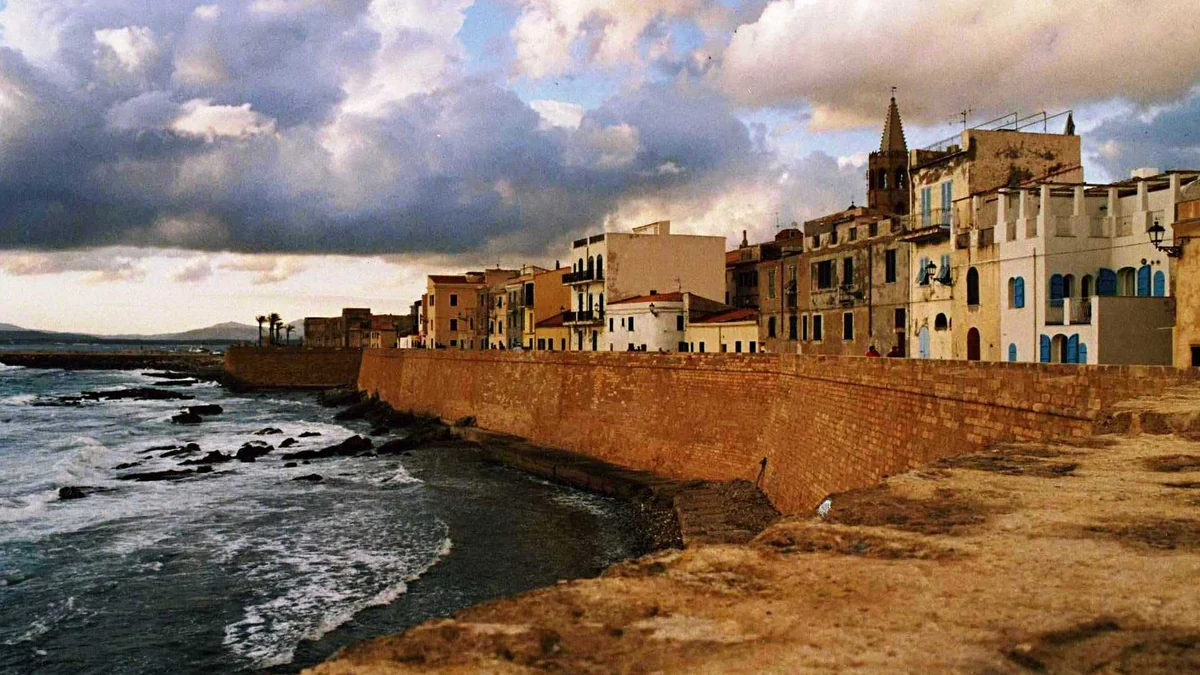
Alghero cruise port places passengers beside one of Sardinia’s most distinctive historic centres. Most cruise calls use tenders into the marina, close to the old Catalan walls, towers and seafront bastions. Once ashore, the central sights form a compact walking circuit, while the wider bay opens a second choice: Neptune’s Cave and Capo Caccia, a Nuragic archaeological site, or a nearby beach.
Alghero works best when the old town remains the anchor rather than the activity squeezed around a distant excursion. Neptune’s Cave is exceptional, but access depends on sea conditions, timed admission and either a boat crossing or the 654-step Escala del Cabirol. Palmavera and Capo Caccia also require transport. For a first visit, protect two or three hours for the walls, cathedral lanes and San Francesco, then add only one outward journey whose return is clear.
Alghero Cruise Port at a Glance
| Port name | Alghero Cruise Port |
|---|---|
| Main arrival area | Tender landing in or near Alghero marina, beside the old town |
| Cruise region | Mediterranean |
| Country / Territory | Sardinia |
| Currency | Euro (EUR) |
| Languages | Italian, Algherese Catalan and English in visitor areas |
| Port role | Day Call |
| Disembarkation | Tender |
| Walkability | High around the old town and bastions |
| Shuttle required | No for central Alghero |
| Main transport | Walking route, tender, boat, taxi, public bus and organised excursion |
| Best first-time plan | Old town and bastions, followed by one cave, archaeology or beach extension |
| Main caution | Neptune’s Cave access is weather-dependent and the land route involves 654 cliff steps |
Weather & Best Time to Visit Alghero
January to March
Typical high: 13–17°C
Typical low: 6–9°C
Rain / conditions: Cool and changeable, with rain, wind and occasional rough seas around Capo Caccia.
April to June
Typical high: 18–28°C
Typical low: 10–18°C
Rain / conditions: Increasingly warm and bright; late spring suits the old town, archaeology and coastal walks.
July to September
Typical high: 27–31°C
Typical low: 19–22°C
Rain / conditions: Hot, dry and busy, with strong sun on the bastions, beaches and Escala del Cabirol.
October to December
Typical high: 15–25°C
Typical low: 8–17°C
Rain / conditions: Warm early autumn often gives way to wetter, windier conditions and less dependable boats.
Weather guide: CruisePing summary based on NASA POWER climate data for Alghero and the north-west Sardinian coast. Check the latest forecast.
Wind and sea state have a direct effect on the headline excursion. The official Neptune’s Cave information warns that visits can be suspended in adverse conditions, including the boat approach and cliff access. Keep the old town, San Francesco, the archaeological museum and the waterfront as a complete fallback rather than treating them as fragments left after a cancelled cave trip. In summer, do the exposed bastion circuit or Capo Caccia steps before the strongest afternoon heat.
Where Cruise Ships Arrive in Alghero
Alghero is not a large cruise terminal port. Ships generally anchor in the bay and tender passengers towards the marina, though the precise landing and traffic pattern vary with the vessel and harbour operations. The great advantage is location: the walls and Torre della Maddalena are immediately visible, with the old town beginning beside the waterfront.
Tendering makes the first and last parts of the day less predictable than the map suggests. Record the final boarding time, check whether independent passengers need tender tickets and allow for a queue when several tours return together. A ten-minute walk from the old town to the landing does not remove the possibility of a longer wait for the next boat.
The harbour is also the departure point for seasonal trips to Neptune’s Cave. Do not assume that being beside the excursion boat makes the connection safe. Confirm the cave service, separate cave admission, expected duration and a return that leaves time for the cruise tender. The cave’s official site advises checking operation because adverse sea conditions can suspend visits.
Once ashore, no shuttle is needed for the central day. The marina edge is largely level, while the old town contains stone paving, occasional steps and narrow lanes. The seafront bastions provide the easiest orientation: walking them reveals the harbour, Capo Caccia direction and the dense historic core inside the walls.
The Old Town and Bastions on Foot
Alghero’s old town is the strongest independent choice because it is compact without feeling slight. Begin along the waterfront walls, moving between towers and broad bastions with views over the roadstead. The route works as an orientation walk, a photography circuit and a practical way to identify the marina before entering the lanes.
Inside the walls, the street pattern carries Alghero’s Catalan inheritance. Street signs often include the local Catalan form, and the cathedral, civic buildings and churches sit within a short radius. The pleasure is cumulative rather than dependent on one monument: honey-coloured stone, enclosed lanes, small squares, coral shops and repeated glimpses back to the sea.
The Monumental Complex of San Francesco deserves more than a passing exterior photograph. Its church, cloister, crypt and Catalan-Gothic bell tower create one of the clearest architectural stops in the historic centre. Opening and tower access vary, so check the official listing rather than designing the whole route around a climb that may not operate during the call.
The MŪSA Archaeological Museum gives useful context when the day remains local or when rain weakens the coastal plan. Alghero’s coral connection is interpreted at MACOR, the Coral Museum, while Porta Terra and San Giovanni Tower can add height and defensive history. Choose one indoor site properly rather than entering several for ten minutes each.
Allow at least two hours for a meaningful old-town circuit, and closer to three with San Francesco, a museum or lunch. The centre is small enough to revisit the tender landing without losing the day, which makes it especially valuable after a late arrival or a weather cancellation.
Neptune’s Cave by Sea or Land
Neptune’s Cave is Alghero’s headline natural attraction, cut into the limestone at Capo Caccia. The cave is reachable by sea from Alghero harbour or by land to the Escala del Cabirol. These are not interchangeable versions of a simple transfer; each creates a different cruise-day risk.
By boat from Alghero harbour
The official getting-there guidance describes regular seasonal boat trips from Alghero harbour, with the coastal journey taking about forty minutes. The approach beneath Capo Caccia is part of the attraction, and boat arrival avoids the 654 cliff steps. It is usually the better fit for passengers who value scenery or cannot manage a demanding staircase.
The weaknesses are operational. Boat service is vulnerable to wind and swell, the boat fare does not include cave admission, and the timing must work with both the cave slot and the cruise tender. Ask whether the advertised excursion includes waiting during the cave visit, whether the vessel returns directly to Alghero and what happens if the cave closes after departure.
A boat cancellation need not damage the call. Stay in the old town, then consider a short taxi or local beach only after the operator confirms that no later sailing is realistic. Chasing a replacement road transfer can consume more time than it saves.
By road and the Escala del Cabirol
The land route reaches Capo Caccia by taxi, excursion or public transport. The official cave information places the headland roughly 25 kilometres from central Alghero and warns that seasonal parking and shuttle arrangements apply. A timed cave booking is only one part of the plan; passengers must also arrive early enough for any park shuttle and the descent.
The Escala del Cabirol contains 654 steps cut into the cliff. Every step descended must be climbed on the return, often in strong sun and reflected heat. The route offers superb views, but it is not a mobility substitute for the boat. Passengers with knee, balance, heart or heat concerns should choose another plan rather than relying on determination at the top.
The land option provides greater control over road transport than a sea excursion, yet the cave itself still closes when conditions make access unsafe. A private driver should wait or provide a precise pickup, and the return to Alghero must leave room for traffic, the walk to the tender and the tender queue.
Capo Caccia, Palmavera and the Wider Bay
Capo Caccia is worthwhile even when the cave is not the objective. The limestone headland, viewpoints and Porto Conte landscape show why north-west Sardinia feels so different from a simple beach resort. A taxi or small-group tour can combine the promontory with one archaeological stop, but the route should not become a list of roadside photographs.
The Palmavera Nuragic Complex is the most natural historical extension. Its towers, enclosure and meeting hut introduce Sardinia’s Nuragic civilisation in the landscape where it developed. The site lies outside central Alghero and needs a taxi, tour or carefully checked bus connection. Allow enough time to read the site rather than treating ancient masonry as a fifteen-minute pause.
Palmavera pairs better with Capo Caccia than with a rushed old-town museum programme. One possible route is an early drive to the archaeological complex, a headland viewpoint and a return to Alghero for the bastions. The cave can replace the viewpoint only when admission and access have been secured.
Anghelu Ruju, described by Alghero Experience as a major prehistoric necropolis, provides a different archaeological choice closer to the airport side of the district. It is less naturally combined with Capo Caccia and should be selected for genuine prehistoric interest, not added because a driver says it is nearby.
The Porto Conte park area also contains coves and beaches, but transport back matters. A beach that appears close on a map may sit beyond a long access road without a waiting taxi. For a cruise call, Maria Pia or the Lido area near Alghero is the easier swimming choice; farther coves make more sense as part of a pre-arranged circuit.
Best Cruise-Compatible Things to Do from Alghero
Alghero Old Town and Bastions
Best for: The strongest low-risk first visit, combining architecture, sea views and local atmosphere.
Best way: Walk directly from the tender landing and add San Francesco or one museum.
Watch: Stone surfaces, midday heat and the temptation to rush the centre before a distant tour.
Neptune’s Cave by Boat
Best for: Coastal scenery and cave access without the 654-step staircase.
Best way: Use a verified harbour departure with cave admission and cruise return timing understood.
Watch: Sea-state cancellation, separate tickets and a late return to the cruise tender.
Neptune’s Cave by Land
Best for: Fit passengers who want the Escala del Cabirol and control over road transport.
Best way: Pre-book the cave slot and use a taxi or organised transfer that accounts for seasonal shuttle rules.
Watch: Six hundred and fifty-four steps each way, heat and closure despite reaching Capo Caccia.
Palmavera Nuragic Complex
Best for: Sardinian archaeology and a destination that cannot be replicated in the old town.
Best way: Combine it with Capo Caccia by taxi or small-group tour.
Watch: Public transport may not produce a comfortable cruise-day return.
Capo Caccia Viewpoints
Best for: Limestone cliffs, Porto Conte scenery and a panoramic road extension.
Best way: Use a fixed-duration taxi circuit or excursion.
Watch: Poor visibility and excessive photo stops can reduce the time left in Alghero.
Maria Pia or Lido Beach
Best for: A straightforward swim after the old town.
Best way: Use a short taxi or local bus and return before the final tender rush.
Watch: Summer crowds, limited shade and slower transport late in the afternoon.
CruisePing Recommended Port Day
Begin with the bastions and old town while the lanes are quieter. Walk from the marina to the waterfront walls, enter the historic centre for the cathedral quarter and San Francesco, then return towards the harbour. This establishes a complete Alghero visit before any weather-sensitive extension.
On a long call with settled seas, take a pre-checked boat to Neptune’s Cave after the central walk, provided its scheduled return leaves a wide tender margin. A land-based cave visit works better as the first major activity because the road, park shuttle and staircase can consume more time than expected. Do not attempt both sea and land approaches.
Passengers less interested in caves should hire a taxi for Palmavera and a Capo Caccia viewpoint, agreeing the total duration and drop-off in Alghero. Finish with lunch, the bastions or a short waterfront pause rather than adding a distant beach.
When wind closes the cave, keep the day local without apology. San Francesco, MŪSA, MACOR and the old walls can fill the central hours, while Maria Pia offers an uncomplicated beach extension in good weather. Alghero is one of the Sardinian calls where the fallback is strong enough to become the preferred plan.
Alghero DIY or Organised Excursion?
The historic centre should be done independently unless a specialist guide is the reason for booking. The tender lands close to the sights, the waterfront gives easy orientation and the route can be shortened at any point. A generic walking tour adds less value than a focused history, food or Catalan-heritage guide.
Neptune’s Cave needs a more deliberate choice. The harbour boat is independently bookable, but a cruise-compatible excursion may be worth the premium when it coordinates cave access and return. The land route is safer with a taxi or tour that understands the timed admission, seasonal shuttle arrangements and the need to wait through the visit.
Palmavera and Capo Caccia are also reasonable private-taxi or small-group choices. Public buses can be useful, but a timetable that provides one outward and one tight return is not robust enough for a cruise day. Verify the exact service date rather than assuming summer frequency.
Most first-time passengers are better served by a DIY old-town morning and one organised outward element. The expensive mistake is buying transport for the whole call, then seeing Alghero only through the vehicle window.
Alghero Cruise Port Checklist
- Confirm the tender landing, ticket system and final boarding time before leaving the marina.
- Check the official Neptune’s Cave operating notice on the morning of the call.
- Distinguish the cave admission ticket from the separate boat or seasonal shuttle fare.
- Choose either the sea approach or the 654-step land approach; do not try to combine them.
- Agree taxi duration, waiting and the exact return point for Palmavera or Capo Caccia.
- Carry water and sun protection for the bastions, archaeological sites and cliff staircase.
- Keep the final part of the day in Alghero rather than relying on the last possible road or boat connection.
Useful Official Links
For the headline excursion, use the official Neptune’s Cave website and its sea and land access guidance. The Alghero Experience attractions portal covers San Francesco, MŪSA, Palmavera and other cultural sites. Check current regional buses through ARST Sardinia and use the ship’s programme for tender operations.
Alghero Cruise Port FAQ
Do cruise ships dock in Alghero?
Most cruise calls anchor and tender passengers into the marina area. The exact landing and priority system vary, so follow the ship’s instructions for the sailing.
Is Alghero walkable from the tender?
Yes. The old town, bastions, cathedral quarter and central museums are close to the marina. Stone paving and occasional steps require care, but no shuttle is needed for the main route.
Can I visit Neptune’s Cave on a cruise day?
Yes when the call is long enough and the cave is operating. Choose a harbour boat or a road transfer with timed admission, then leave a wide margin for the tender. Sea conditions can cancel access.
How difficult are the steps to Neptune’s Cave?
The Escala del Cabirol has 654 steps cut into the cliff, followed by the climb back up. It is strenuous in heat and unsuitable for many passengers with mobility, balance, knee or cardiovascular limitations.
Is the boat ticket included with cave admission?
No. The official cave information states that the boat ticket and any land shuttle are separate from cave admission. Confirm every component before paying.
What should I do if Neptune’s Cave is closed?
Stay in Alghero for the bastions, San Francesco and a museum, then add a nearby beach or short taxi only when transport is clear. Avoid replacing the cave with a rushed cross-island journey.
Is Palmavera worth visiting?
Yes for passengers interested in Sardinia’s Nuragic civilisation. It works best with a taxi or small tour and can be paired with Capo Caccia, while the old town remains a separate walking block.
Can I visit Bosa or Sassari from Alghero?
Both are possible on a long call with controlled transport, but neither is the best first-time choice. They consume the time that makes Alghero itself attractive and create a more exposed road return.
CruisePing Port Verdict
Alghero offers an unusually strong local day for a tender port. The walls, Catalan lanes, churches and marina sit together, so passengers can see the character of the destination without a coach or a complicated transfer.
For a first call, walk the old town before adding one major extension. Choose Neptune’s Cave when access and weather are secure, or combine Palmavera with Capo Caccia for a road-based alternative. A cave cancellation is not a failed day: Alghero’s historic core is the part worth protecting, not the consolation prize.
Ready to browse our article library?
Looking beyond Alghero? Explore more ports in the Mediterranean region, or narrow it to Sardinia in particular. For cruise comparisons, planning shortcuts and value guides, head over to our main article archive.