
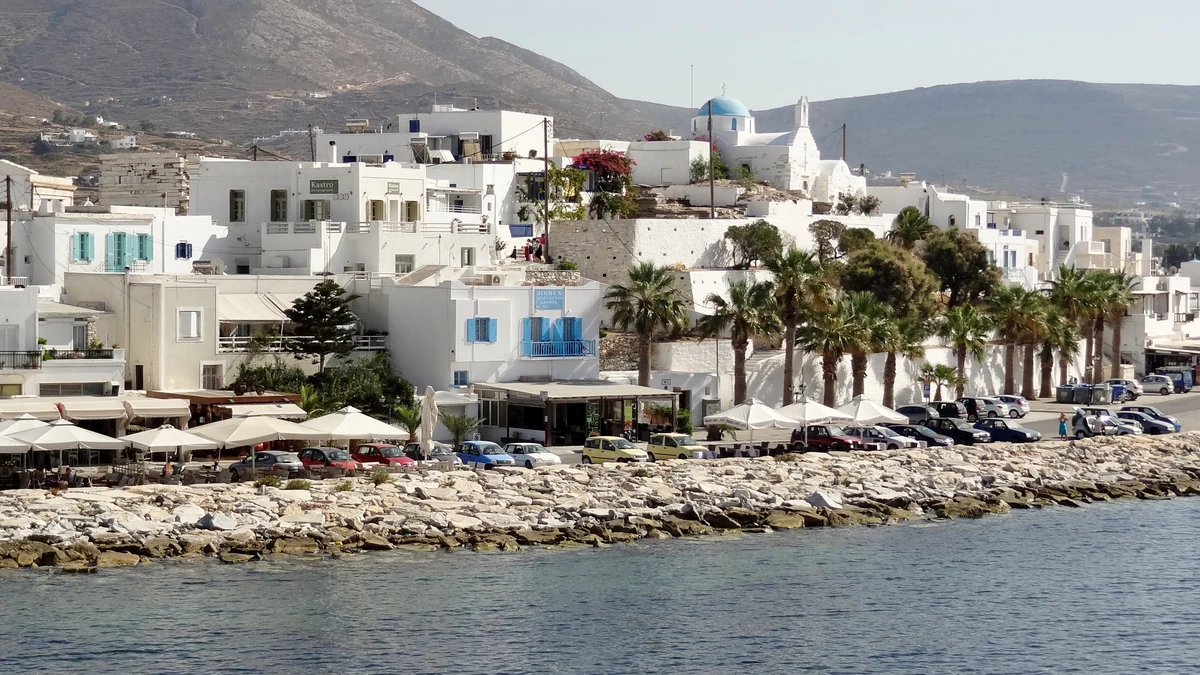
Paros cruise port normally means a tender arrival near Parikia, the island capital and main ferry harbour. The Church of Panagia Ekatontapiliani, old-town lanes, Frankish Castle remains and waterfront are all close enough for an independent visit. This makes Paros a forgiving call when wind or tender timing shortens the day.
The temptation is to treat Parikia only as a transport hub and rush to Naoussa, Lefkes, a beach or Antiparos. Each can be worthwhile, but island buses and taxis become busy in summer, and the meltemi wind can affect tenders and local boats. The strongest first-time plan usually gives Parikia a proper morning, then adds either Naoussa, an inland village route or a nearby beach. Attempting all three creates more waiting than discovery.
Paros Cruise Port at a Glance
| Port name | Paros Cruise Port |
|---|---|
| Main arrival area | Tender landing around Parikia harbour; exact point set by local operation |
| Cruise region | Greece / Greek Islands |
| Country / Territory | Greek Islands |
| Currency | Euro (EUR) |
| Languages | Greek; English widely used in tourism |
| Port role | Day Call |
| Disembarkation | Tender |
| Walkability | High in Parikia; variable in villages and beaches |
| Shuttle required | No for Parikia |
| Main transport | Walking, KTEL bus, taxi, private driver, local boat and organised excursion |
| Best first-time plan | Parikia and Ekatontapiliani, plus Naoussa or a beach |
| Main caution | Meltemi wind, tender deadlines and summer competition for buses and taxis |
Weather & Best Time to Visit Paros
January to March
Typical high: 14–17°C
Typical low: 9–11°C
Rain / conditions: Mild but windy and unsettled, with rain and limited seasonal visitor services.
April to June
Typical high: 19–28°C
Typical low: 13–20°C
Rain / conditions: Warm, bright and increasingly dry; late spring is excellent for village walking.
July to September
Typical high: 27–30°C
Typical low: 21–23°C
Rain / conditions: Hot, dry and busy, with frequent meltemi winds and intense sun.
October to December
Typical high: 16–25°C
Typical low: 11–19°C
Rain / conditions: Often pleasant in early autumn, followed by increasing wind, rain and reduced services.
Weather guide: CruisePing summary based on NASA POWER climate data for Paros and the central Cyclades. Check the latest Paros forecast before the call.
On Paros, wind can be more decisive than temperature. The meltemi may cool exposed streets while making tendering, beach conditions and local boat trips less comfortable. Secure hats, expect dust on open roads and do not build the day around the last possible sea transfer. In peak heat, explore Ekatontapiliani and Parikia early, then use a shaded lunch or beach during the afternoon.
Where Cruise Passengers Come Ashore
Paros does not have a large dedicated cruise terminal. Ships generally anchor and tender passengers towards Parikia, which is also the island’s busy ferry port. The tender landing may be adjusted around ferry movements, wind and local harbour operations. Listen to the ship’s announcement and photograph the exact collection point.
Parikia immediately feels like a transport centre because ferries, buses, taxis and hire vehicles converge near the waterfront. That activity should not obscure the old town behind it. Panagia Ekatontapiliani is a short walk inland, while narrow lanes and castle remains begin close to the harbour. There is no need to join the taxi queue before seeing the capital.
The KTEL bus station is convenient for onward travel, but summer departures can attract queues. Confirm the platform and buy a ticket according to current local practice. A bus labelled for Naoussa or Lefkes may make intermediate stops, so ask about journey time and the latest safe return rather than reading only the departure column.
Tender calls require conservative timing. Wind can slow transfers even if the morning landing was smooth. Return to Parikia before the final scheduled tender, not to a distant bus stop at that time. If the ship shortens the call, keep the whole visit in Parikia and resist the urge to salvage the original island circuit.
Parikia: More than a Ferry Port
Parikia rewards passengers who walk away from the traffic. The old town contains whitewashed lanes, small chapels, shops and sections of the Frankish Castle built with reused ancient material. It is not as polished as some Cycladic resort centres, and that mixture of ordinary town and historic fabric is part of its appeal.
The waterfront provides orientation, but the inner streets offer shade and detail. Follow a loose loop rather than a single shopping lane: move inland towards Ekatontapiliani, cross through the old quarter, find the castle area and emerge at the sea. This keeps the route interesting and makes it easy to shorten if the tender schedule changes.
Parikia also contains museums and archaeological remains, subject to opening. These are useful for visitors interested in Paros beyond beaches and white houses. A focused museum visit can replace a hot midday bus journey, particularly when wind makes the island’s exposed coast less inviting.
Livadhia beach lies within reach north of the centre and can support an easy final swim. It is not the island’s most dramatic beach, but convenience matters on a tender day. A simple local beach reached on foot is often more relaxing than waiting for transport to a famous bay and checking the time throughout the swim.
Panagia Ekatontapiliani
Panagia Ekatontapiliani is Parikia’s most important monument and one of the principal early Christian complexes in Greece. The name is commonly translated through the tradition of the “hundred doors”, but the value of the visit lies in the architecture, chapels, baptistery and long religious history rather than a literal door count.
The church is close to the harbour and should be visited early, before excursion groups or peak heat. Dress respectfully, keep voices low and avoid interrupting worship. Photography and access to particular spaces may be restricted. The complex is a living religious site, not simply an archaeological attraction.
Allow enough time to move through the courtyard and understand the different building phases. A rushed photograph from the entrance misses the calm that makes the site such a strong contrast to the ferry port. Official local tourism information provides background, but opening should be checked on the date, particularly around services and feast days.
For passengers with limited mobility, Ekatontapiliani is one of the more practical major sights on the island because it is close to the landing. Thresholds and historic surfaces remain, so ask locally about the easiest entrance. Pairing the church with a flat waterfront route creates a worthwhile day without buses.
Naoussa: Beautiful, Busy and Worth Planning
Naoussa on the north coast is the island’s most photographed harbour settlement, with fishing boats, white lanes, restaurants and Venetian fortress remains at the water. It is genuinely attractive, but in high season it can be busy and expensive. The best visit explores beyond the first harbour photograph and allows time for the surrounding lanes.
KTEL buses connect Parikia and Naoussa, with current schedules published by KTEL Paros. Frequency varies by season, and cruise passengers should identify both a preferred return and an earlier fallback. At peak times, a bus may fill or traffic may slow the journey. Join the queue before the departure you need, not at the last minute.
A taxi provides more control but demand can outstrip supply when ferries and cruise tenders arrive. Pre-booking is useful if possible. Agree the collection point carefully because central Naoussa streets can be restricted and a driver may wait outside the pedestrian area. Save the location offline.
Naoussa pairs well with Parikia but not with every inland village. Spend two or three hours in the harbour, lunch or walk, then return. A beach such as Kolymbithres may be added by local boat or road, but this creates another transport leg. Choose Naoussa plus beach only on a long call with reliable conditions.
If wind makes the harbour uncomfortable or boat connections stop, remain in the town rather than chasing another beach. The lanes, churches, shops and cafés still justify the journey. A rigid plan built around a small boat is weaker than a flexible visit centred on Naoussa itself.
Lefkes and the Interior
Lefkes offers a different Paros: a hillside village with narrow lanes, traditional houses, churches and views across the island. It is quieter than Parikia and Naoussa outside peak periods and reveals the interior landscape that a beach-only visit misses. The village is pedestrian in character and contains gradients and steps.
Public buses may serve Lefkes, but schedules should be checked closely because frequency can be lower than on the Parikia–Naoussa route. A private driver can combine Lefkes with selected villages such as Marpissa or Prodromos, then return through the coast. Keep the itinerary selective; stopping for ten minutes in four villages adds little.
The Byzantine Road is associated with walking routes between Lefkes and Prodromos. A cruise-day hike should be attempted only with clear route knowledge, suitable weather and arranged transport at the finish. The old stone path can be uneven and exposed, and the apparent distance does not include time finding the correct entrance or waiting for a bus.
Lefkes is an excellent choice for repeat visitors or passengers who prefer architecture and landscape to resort crowds. Pair it with Parikia, not Naoussa and Antiparos. The inland route should feel like a deliberate alternative, not the third item on an island checklist.
Beaches: Choose Convenience or Character
Paros has many beaches, but the best cruise choice is not automatically the one ranked highest online. Livadhia is close to Parikia and protects the tender return. Marcello and Krios may be reached by seasonal boat or road. Kolymbithres near Naoussa is known for granite formations, while Golden Beach lies farther away and appeals to windsurfers.
Local boats are pleasant when operating, but a beach transfer by sea should not be scheduled to return on the last service. Wind can alter routes, and the same conditions that create excellent windsurfing can make a small passenger boat less comfortable. Ask where the return lands and whether tickets guarantee a particular sailing.
Taxis should be arranged both ways for distant beaches. A busy beach bar may help call one, but that is not a reliable cruise plan. Record the driver’s number, set a collection time and keep enough margin for traffic into Parikia. Public buses are viable only when the current timetable includes an early fallback.
At the beach, use local flags and advice. The Cycladic sea can be rough and cool despite strong sun. Shade may be limited and sunbed availability seasonal. Carry water, secure valuables and allow time to remove sand and dress before joining the tender queue.
Antiparos: Attractive but Connection-Heavy
Antiparos lies close across the channel, but reaching it from a cruise tender in Parikia usually requires road transport to the ferry point, the crossing itself and onward movement on the smaller island. Each leg is simple in isolation; together they create a connection-heavy day with limited recovery if one service is missed.
The main town of Antiparos offers white lanes, cafés and a relaxed atmosphere. The cave lies farther south and introduces additional transport and steps. Attempting both town and cave from a cruise ship is suitable only on a long call with a private driver or carefully verified services.
Choose Antiparos when it is the clear priority, perhaps for a repeat visitor who has already seen Parikia and Naoussa. Do not add it because the island looks close from a map. The most common failure is to underestimate the return chain and arrive back in Parikia with no buffer for the ship tender.
An organised excursion can control the transfers, but read whether it actually lands on Antiparos or simply cruises nearby. Boat tours may include swimming and small islands instead of the town. Both can be enjoyable; they are different products and should not be confused by a broad “Antiparos” title.
Best Things to Do from Paros Cruise Port
Parikia Old Town
Best for: A low-risk independent day directly from the tender.
How to do it: Link the waterfront, Ekatontapiliani, old lanes and castle area.
Watch: Ferry traffic near the harbour and slippery paving.
Panagia Ekatontapiliani
Best for: Paros’s most significant religious and historic site.
How to do it: Walk from the landing early and visit respectfully.
Watch: Services, dress and changing access to parts of the complex.
Naoussa
Best for: A picturesque harbour, dining and classic Cycladic lanes.
How to do it: Use a current KTEL bus or pre-arranged taxi with an earlier fallback.
Watch: Crowds, traffic and taxi shortages in high season.
Lefkes
Best for: Inland village architecture and a quieter island perspective.
How to do it: Use a verified bus or private village route.
Watch: Hills, lower bus frequency and exposed walking paths.
Paros Beaches
Best for: Swimming, windsurfing or a relaxed afternoon.
How to do it: Choose a beach according to transport reliability, not fame alone.
Watch: Meltemi wind, small-boat changes and unconfirmed taxi returns.
Antiparos
Best for: Repeat visitors and a dedicated smaller-island day.
How to do it: Use a controlled excursion or verify every road and ferry connection.
Watch: The multi-leg return to Parikia and the ship tender.
CruisePing Recommended Paros Port Day
Start in Parikia. Walk to Ekatontapiliani before the largest groups arrive, then explore the old-town lanes and castle area. This gives the island’s capital proper attention and protects the day if wind later affects buses or boats. Take a short coffee near the harbour while checking the current transport situation.
Choose one afternoon extension. Naoussa is the best first-time option for passengers wanting another town; Lefkes suits those seeking a quieter inland experience; a nearby beach suits anyone prioritising relaxation. Leave Parikia only after identifying the intended return and an earlier fallback.
Return to Parikia with at least ninety minutes before the final tender deadline in busy summer conditions. Use the remaining time for the waterfront, Livadhia beach or shopping near the harbour. This margin is not wasted: ferry congestion, a full bus or wind-slowed tender can use it quickly.
On a short or windy call, stay entirely in Parikia. Ekatontapiliani, the old town, a museum or church, lunch and a swim provide enough variety. The quality of Paros does not depend on reaching Naoussa, and the island capital is more than the place where the tender happens to land.
DIY or Organised Excursion?
Parikia is straightforward independently. Naoussa and Lefkes can also be reached by bus when current schedules suit the call. The official island tourism site lists public transport, while KTEL provides timetables and ticket information. Take screenshots because mobile data can weaken away from town.
A taxi or private driver is worthwhile for a village circuit, distant beach or group of three or four people. Set priorities before departure. A driver who promises “the whole island” may deliver repeated photo stops and little time on foot. Ask for approximate time at each place and preserve a firm return to Parikia.
Boat excursions are the most weather-sensitive option. They can give beautiful coast and swimming, but the departure point, vessel type, route and return should be explicit. A ship excursion offers return protection; an independent boat should finish well before the final tender and have a road-based fallback.
Passengers with limited mobility should note that picturesque Cycladic lanes frequently include steps, narrow passages and irregular paving. Parikia’s waterfront and Ekatontapiliani are the most practical core. A private panoramic drive can show Naoussa and villages while reducing walking, but vehicle access ends outside many historic centres.
Food, Shopping and Island Manners
Paros is a good place for seafood, grilled fish, local cheeses, chickpea dishes and island wines. Harbour restaurants in Naoussa can be expensive at peak times, while Parikia offers a wider range close to the tender. Ask what is fresh and whether fish is priced by weight before ordering.
Shops sell ceramics, jewellery, textiles, food products and familiar Cycladic souvenirs. Quality and origin vary. A white-and-blue design may be made anywhere, so ask about the maker if local production matters. Avoid carrying fragile ceramics through a crowded tender queue without proper packaging.
Churches and monasteries require respectful dress and behaviour. Residential lanes are photogenic but remain people’s homes; do not block doorways or photograph residents at close range without permission. In busy Naoussa, give working fishermen and delivery vehicles room around the harbour.
Island pace can be slower than the ship timetable. Tell restaurant staff when you need to leave, pay before the last moment and do not assume a bus will wait for a delayed meal. The tender deadline belongs in the plan before wine is ordered, not after dessert.
Useful Official Links
Use these official and authoritative pages to check details that can change before a Paros call, including arrival arrangements, transport, opening information and local access.
- Port Authority of Paros and Antiparos
- KTEL Paros bus timetables
- KTEL Paros ticket information
- Official Panagia Ekatontapyliani website
- Imagine Paros guide to Parikia
- Imagine Paros guide to Lefkes
- Visit Greece guide to Paros
Frequently Asked Questions
Where do cruise tenders land in Paros?
They normally land around Parikia harbour, but the exact point can change with ferry and wind conditions. Follow the ship’s announcement and identify the return queue.
Can you walk around Paros cruise port?
Yes. Parikia old town, Ekatontapiliani, the waterfront and castle area are within a compact walking route from the usual landing.
How do you get from Parikia to Naoussa?
Current KTEL buses and taxis connect the towns. Check the day’s timetable, join the return queue early and keep an earlier fallback in case a bus is full.
Is Lefkes worth visiting on a cruise day?
Yes for village architecture and inland scenery, particularly for repeat visitors. Use a verified bus or private driver and allow for hills and lower service frequency.
Can you visit Antiparos from a cruise ship?
It is possible on a long call, but requires road and ferry connections before returning to the ship tender. Treat it as the main excursion and preserve a large buffer.
What happens if Paros is very windy?
Tendering and local boats may be slowed or changed. Keep the day in Parikia, use road transport only if the return is secure and avoid relying on the last small-boat service.
Which Paros beach is easiest from the tender?
Livadhia is convenient from Parikia. More famous beaches require bus, taxi or boat and should be chosen according to return reliability rather than appearance alone.
Is Paros suitable for passengers with reduced mobility?
The Parikia waterfront is relatively manageable, and Ekatontapiliani is close. Old lanes, villages and beaches can involve steps, uneven paving and inaccessible boat boarding.
CruisePing Verdict
Paros gives cruise passengers a real choice because the tender destination is worthwhile before any island travel begins. Parikia combines a major church, historic lanes, working harbour and nearby beach, so the call survives wind, delay or a shortened schedule better than ports dependent on one long excursion.
The best day adds one extension, not three. Naoussa, Lefkes, a beach or Antiparos each reveals a different island, but transport and tendering impose limits. Give Parikia the morning, choose the afternoon according to conditions, and return early enough to let the meltemi remain part of the scenery rather than a threat to the ship.
Ready to browse our article library?
Looking beyond Paros? Explore more ports in the Greece / Greek Islands region, or narrow it to Greek Islands in particular. For cruise comparisons, planning shortcuts and value guides, head over to our main article archive.