
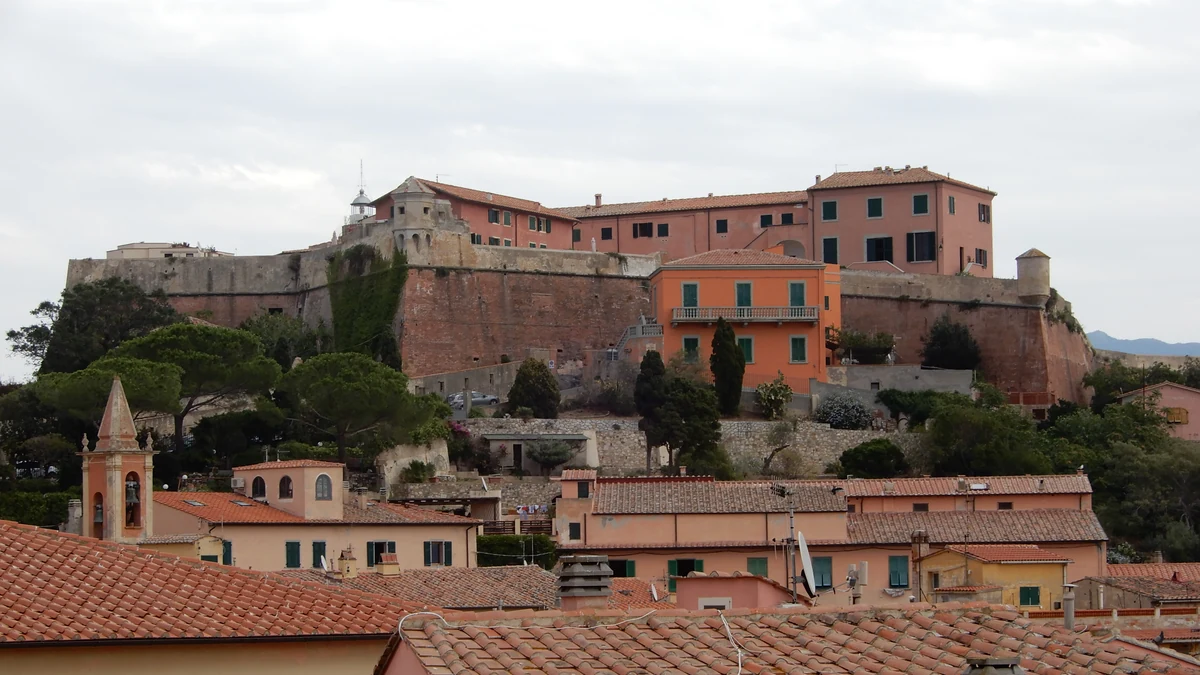
Portoferraio cruise port sits inside the broad northern bay of Elba, with ferries, yachts, Medici fortifications and the old town sharing the same waterfront. The port authority confirms that cruise ships can use the deep-water quay in the historic centre, while larger vessels may anchor in the protected roadstead. Either way, passengers arrive beside the island capital rather than at a remote terminal.
Portoferraio is also where the temptation to “see Elba” needs narrowing. Napoleon’s town residence, the forts and Le Ghiaie beach can all form a strong local day. San Martino, Marciana Marina, Capoliveri and Porto Azzurro are realistic only when one is chosen deliberately. Crossing the island to collect villages and beaches turns an easy port into a road-timing exercise.
Portoferraio Cruise Port at a Glance
| Port name | Portoferraio Cruise Port |
|---|---|
| Main arrival area | Portoferraio harbour beside the historic centre, or a tender into the bay |
| Cruise region | Mediterranean |
| Country / Territory | Italy |
| Currency | Euro (EUR) |
| Languages | Italian; English is common in tourism |
| Port role | Day Call |
| Disembarkation | Docked or tender, depending on ship size and berth availability |
| Walkability | High in the harbour and old town; steep within the fortified centre |
| Shuttle required | Normally no for central Portoferraio; ship instructions control secure-port access |
| Main transport | Walking, local bus, taxi, hire car, boat and organised excursion |
| Best first-time plan | Medici old town and one Napoleonic site, followed by Le Ghiaie beach or a short Elba extension |
| Main caution | Steep streets, timed villa visits, seasonal buses and trying to cross too much of Elba in one call |
Weather & Best Time to Visit Portoferraio
January to March
Typical high: 12–16°C
Typical low: 6–9°C
Rain / conditions: Cool and changeable, with rain, wind and reduced seasonal beach or boat services.
April to June
Typical high: 17–27°C
Typical low: 10–18°C
Rain / conditions: Mild to warm, increasingly dry and comfortable for fortifications, villas and coastal walking.
July to September
Typical high: 26–31°C
Typical low: 19–23°C
Rain / conditions: Hot, bright and busy, with intense sun on stone climbs and crowded island roads.
October to December
Typical high: 14–24°C
Typical low: 8–17°C
Rain / conditions: Pleasant early autumn can give way to wetter, windier conditions and shorter opening hours.
Weather guide: CruisePing summary based on NASA POWER climate data for Portoferraio and northern Elba. Check the latest forecast for the call.
Summer heat changes the order of the old-town route. The Medici walls, Forte Falcone and upper streets are exposed, so climb before lunch and leave the waterfront or Le Ghiaie for later. The distances are modest, but pale stone, steps and limited shade can make the ascent tiring.
Wind affects tenders and small boats more than it affects a local city day. If the ship anchors, protect the final tender margin. If a coastal boat is cancelled, Portoferraio still offers enough history and beach access to avoid a long substitute taxi across the island.
Where Cruise Ships Arrive in Portoferraio
The Port of Portoferraio is divided between working ferry berths, the historic harbour and the roadstead. The port authority identifies Alto Fondale, beside the historic centre, as a berth used by ferries and cruise ships. Larger ships can anchor in the wide, sheltered bay and tender passengers ashore. Your ship’s daily notice is therefore the only reliable source for the exact gangway or landing.
Docked passengers can normally walk into the waterfront quickly, although ferry traffic and port controls may channel the route. Tender passengers usually arrive near the central harbour and should note the last boat time before beginning the climb into town. A map pin for the ship’s return gate is useful because Portoferraio has several quays and the ferry port remains busy throughout the day.
The advantage is immediate access to the destination. Cafés, the Darsena Medicea, the old-town entrance and bus connections are close. There is no reason to take the first taxi merely to “get into town”. Save road transport for a specific villa, beach or island village after the central plan is established.
Reading Portoferraio as a Fortified Harbour
Cosimo I de’ Medici transformed Portoferraio into a fortified harbour in the sixteenth century. The walls, bastions and forts follow the contours above the water, so the town is best understood by climbing through it rather than photographing the ramparts from the quay. Forte Stella, Forte Falcone and the Linguella complex frame the harbour from different positions.
The route is atmospheric but not level. Streets become stepped or steep, surfaces can be polished and exposed sections are hot in summer. Passengers with limited stamina can take a taxi towards an upper point and walk downhill, or concentrate on the lower harbour and museum areas. Do not let a “high walkability” label hide the vertical effort.
The fortifications reward a slow route with pauses over the bay. They also give the day resilience: even when a museum is closed or a bus fails to fit, the relationship between walls, harbour and island remains visible. A rushed circuit that treats each fort as a separate attraction misses the point.
Napoleon in Portoferraio: Town Residence or Country Villa?
Napoleon lived on Elba from 1814 to 1815, and Portoferraio offers two principal residences associated with his exile. Palazzina dei Mulini stands in the upper old town and fits naturally with the forts. Villa San Martino lies inland and requires a bus, taxi or tour. Their roles overlap, but the cruise-day logistics are different.
For a first visit, the Mulini residence is usually the better fit because it adds historical focus without sacrificing the town. Opening arrangements, ticketing and room access should be checked through the official museum network. Allow time to reach the upper site; the walk is part of the visit but can be strenuous in midday heat.
San Martino makes sense for visitors whose main interest is Napoleon or who prefer a vehicle-based outing. Autolinee Toscane lists an urban connection between Portoferraio and the villa, but current service times must be checked for the call. A taxi with waiting time can be easier for two to four passengers, especially when a bus would leave a long gap before the return.
A Strong Walking Route through the Old Town
Begin at the Darsena Medicea, where the harbour shape and defensive walls are easiest to read. Continue through the lower streets towards the Linguella area, then choose whether to climb directly towards the upper town or loop through the central lanes. Starting early avoids the hottest part of the ascent and gives flexibility if the Mulini residence uses timed entry.
At the top, combine the Napoleonic site with one fort rather than trying to inspect every military structure in detail. Forte Falcone offers the broadest sense of Portoferraio’s position, while Forte Stella and its lighthouse provide another landmark above the harbour. Access and opening can vary, so the views and street route should carry the plan even if an interior is unavailable.
Descend towards the seafront and continue to Le Ghiaie if weather suits a beach stop. The route returns naturally towards the port and avoids a late uphill leg. For a shorter call, remove the beach or one museum; do not cut the return margin by crossing town repeatedly.
Le Ghiaie and the Beaches Closest to the Port
Le Ghiaie is the easiest beach addition because it lies within walking distance of central Portoferraio. Its pale pebbles and clear water can turn a historical morning into a balanced island day without a taxi. Water shoes improve comfort, and passengers should check sea conditions before swimming near rocks or boat lanes.
Padulella, Capo Bianco and Sottobomba continue the northern beach sequence, with summer bus services serving parts of the coast. These beaches are attractive but become less practical as walking, road access and return transport accumulate. Choose one; the purpose is a swim and coastal view, not a beach-collection exercise.
Facilities and access change by season. A beach club shown online may be closed outside summer, while public sections can fill quickly in July and August. Keep valuables minimal and leave enough time to dry, change and walk back through the port gates without rushing.
Using Elba Buses without Building a Fragile Day
Autolinee Toscane publishes urban and extra-urban routes for Elba, including connections from Portoferraio towards San Martino, Marciana, Marina di Campo, Porto Azzurro, Rio and Capoliveri. This makes independent travel possible, but the network is designed for island movement rather than a cruise passenger’s all-aboard deadline.
Check the exact date because several coastal routes are seasonal. Identify the outward stop, the return stop and at least one earlier return. Tickets, validation and service notices should be confirmed before boarding. A route number alone is not a plan if the return frequency is sparse.
The most robust bus extensions are single destinations with a direct return, such as San Martino or a nearby beach. A transfer between two island lines may appear efficient on a journey planner but creates a chain of risk. When the timetable requires precision, a taxi or organised excursion may be better value than saving a few euros.
Choosing One Elba Excursion beyond Portoferraio
Elba has enough villages, coves and mountain roads for several land holidays. A cruise call should select one direction. Marciana Marina and the north-west coast offer a scenic harbour-and-road experience. Capoliveri and Porto Azzurro provide hill-town or eastern-island character. Marina di Campo favours a beach-centred day.
A private taxi tour is most useful when it specifies the route, stopping time and return rather than advertising a vague “island highlights” circuit. Elba’s roads bend around headlands and settlements; kilometre totals understate journey time. Ask how much of the excursion will be spent in the vehicle and which stop is the genuine priority.
Cruise-line excursions can be sensible for the far side of the island or a multi-stop panorama because the return responsibility is simplified. They are less compelling when the itinerary duplicates Portoferraio’s old town and a nearby beach, both of which are easy independently.
Mount Capanne and High-Commitment Scenery
Mount Capanne is Elba’s highest summit and the cableway from Marciana can create a memorable clear-weather day. It is also a high-commitment choice from Portoferraio: road transfer, operating hours, wind and visibility all have to align. The open basket-style lift may not suit passengers uncomfortable with heights or limited enclosure.
Treat the mountain as a replacement for Portoferraio, not an addition. Confirm whether the cableway is operating, how long the road transfer takes and what the excursion does if cloud covers the summit. A ship or private tour with a conservative return is stronger than combining local buses and a late lift descent.
On hazy or windy days, the value falls sharply. The Medici town, Napoleon sites and north-coast beaches remain better than spending hours reaching a summit without a view. Save Capanne for a long call with a forecast that justifies the effort.
Food, Shopping and the Ferry-Port Pace
Portoferraio’s harbour supports residents, ferries and visitors, so eating areas range from quick bars to longer seafood lunches. The most convenient tables around the Darsena can be busy when ferries turn around. A side street or upper-town lunch may be quieter, though it requires accepting the climb before eating.
Elban wines, seafood, schiaccia briaca and local products provide a stronger souvenir than generic island merchandise. Buy liquids and food with the ship’s reboarding rules in mind. Shops may close or reduce hours outside the main season, so do not postpone a specific purchase until the final minutes.
For a tender call, keep the last meal close to the landing. For a docked call, verify the correct quay and security gate before settling at a distant waterfront table. Portoferraio feels compact, but ferry barriers can force a longer route than the straight-line map suggests.
How to Scale the Day to Your Call Length
A short call is best kept entirely in Portoferraio: harbour, old town, one Napoleonic site and perhaps Le Ghiaie. A standard seven- or eight-hour call can add San Martino or one island village, provided the return is fixed. A long call can support a fuller private island circuit, but central Portoferraio still deserves protected time.
If arrival is delayed, remove the road extension first. The town does not need a bus to become worthwhile, and compressing the fortifications, museum and beach will only make the local part less enjoyable. If a timed museum ticket is missed, switch to walls and viewpoints rather than waiting through a large gap.
When weather weakens the beach or mountain options, lean into history. When museums are closed, lean into the harbour and coast. Portoferraio’s strength is that several good versions of the day start beside the ship; there is no need to defend an ambitious island itinerary after its conditions have disappeared.
Best Cruise-Compatible Things to Do from Portoferraio
Medici old town and fortifications
Best for: Understanding Portoferraio’s harbour and getting the strongest local views
How to do it: Walk uphill early, choosing one fort and the connecting streets
Watch: Steps, heat, polished surfaces and variable interior access
Palazzina dei Mulini
Best for: Napoleon history without leaving central Portoferraio
How to do it: Combine it with the upper-town route and check official opening
Watch: Timed access, closing days and the climb from the harbour
Villa San Martino
Best for: A deeper Napoleonic visit and vehicle-based excursion
How to do it: Use a checked bus, taxi or organised tour with a fixed return
Watch: Sparse service gaps and time lost waiting for transport
Le Ghiaie beach
Best for: An easy swim close to the ship after a cultural morning
How to do it: Walk from the old town and carry water shoes
Watch: Pebbles, seasonal facilities and crowding in high summer
Marciana Marina or western Elba
Best for: A scenic road trip and a different island harbour
How to do it: Choose a private or organised route with limited stops
Watch: Winding roads and an excursion that spends too long in transit
Capoliveri and Porto Azzurro
Best for: Eastern Elba villages and a fuller island contrast
How to do it: Use a taxi or tour rather than a complex bus chain
Watch: Traffic, parking and squeezing both towns into a short call
CruisePing Recommended Portoferraio Port Day
Start with Portoferraio itself. Walk the Medici harbour, climb to the upper town and visit Palazzina dei Mulini if current opening fits. Choose Forte Falcone or another strong viewpoint rather than trying to enter every defensive site. This gives the day a clear historical and visual core.
After descending, decide between Le Ghiaie and one road extension. First-time visitors on a normal call are usually better served by the nearby beach because it preserves flexibility and makes the return simple. Dedicated Napoleon enthusiasts can replace the beach with San Martino; repeat visitors can use a taxi for one island village.
Finish around the Darsena with enough time to locate the correct tender or berth gate. Portoferraio rewards passengers who notice the town wrapped around the harbour. Leaving immediately for a full-island coach circuit can turn the best part of the call into scenery seen through a window.
DIY or Organised Excursion on Elba?
Portoferraio is one of Elba’s strongest DIY calls. The old town, forts, Mulini residence and Le Ghiaie require no organised transport, while official bus information makes selected extensions possible. For most first-time passengers, independent walking plus one simple add-on is the best-value approach.
Pay for an organised excursion when Mount Capanne, the far western coast or several island villages are the reason for visiting. A guided route also helps passengers who cannot manage the steep town but want island context without negotiating taxis. The itinerary should still state road time and the main stop plainly.
CruisePing would not pay for a generic panorama that spends little time in Portoferraio. The organised option earns its price only when it reaches a destination that is genuinely awkward independently or provides useful Napoleonic interpretation.
Portoferraio Planning Mistakes to Avoid
The port becomes difficult when an island-wide ambition is added to a steep local walking day.
- Leaving town before seeing it: the Medici harbour and upper fortifications are among Elba’s main sights, not filler before a coach tour.
- Assuming every bus is year-round: use the dated Autolinee Toscane timetable and keep an earlier return.
- Combining both Napoleon residences casually: San Martino adds transport and should replace another major element.
- Underestimating gradients: take a taxi uphill and walk down if the old-town climb would use too much energy.
- Chasing several beaches: Le Ghiaie or one north-coast beach is enough for a cruise day.
- Ignoring ferry barriers: check the correct berth or tender route before the final waterfront stop.
Portoferraio Cruise Day Checklist
Choose the local core first, then decide whether Elba beyond the town is worth the road time.
- Confirm whether the ship is docked or tendering and note the return point.
- Check current opening for Palazzina dei Mulini and Villa San Martino.
- Use the dated Elba bus timetable, including an earlier return service.
- Carry water for the fortification climb and water shoes for pebble beaches.
- Agree taxi waiting time and total price for any island extension.
- Keep the final part of the day around the Darsena or Le Ghiaie.
Useful Official Links
Use these official and authoritative pages to check details that can change before a Portoferraio call, including arrival arrangements, transport, opening information and local access.
- Port of Portoferraio official information
- Autolinee Toscane services on Elba
- Palazzina dei Mulini, Napoleon’s town residence
- Forte Falcone visitor information
- Official Portoferraio museum itinerary
- Visit Tuscany guide to Portoferraio
Portoferraio Cruise Port FAQ
Do cruise ships dock in Portoferraio?
Some ships berth at the deep-water quay near the historic centre, while larger vessels may anchor in the bay and tender. Check the ship notice for the exact arrangement.
Can you walk from Portoferraio cruise port to the old town?
Yes. The historic centre begins beside the harbour, but the fortifications and Napoleon residence involve steep streets and steps.
Which Napoleon site is best on a cruise day?
Palazzina dei Mulini is the easiest because it fits the central walking route. Villa San Martino is worthwhile for keen visitors but needs road transport.
Is there a beach near Portoferraio cruise port?
Le Ghiaie is within walking distance and is the simplest beach choice. Other north-coast beaches require a longer walk, seasonal bus or taxi.
Can you tour Elba by public bus?
Selected destinations are possible, but services and seasonal routes must fit the ship. Avoid multi-leg journeys without an earlier fallback return.
Is Mount Capanne realistic from Portoferraio?
It can be on a long call with a reliable transfer, operating cableway and clear weather. Treat it as the main excursion rather than adding it to a full town day.
What is the best first-time plan?
Use the morning for the Medici old town and one Napoleonic site, then choose Le Ghiaie or one controlled road extension before returning to the harbour.
CruisePing Port Verdict
Portoferraio gives cruise passengers a complete island day without demanding an island-wide tour. The harbour, forts and Napoleon story are concentrated enough to explore independently, and Le Ghiaie adds a beach without weakening the return plan.
Elba beyond the capital is worth seeing, but only one direction at a time. Choose San Martino, a western harbour or an eastern village because it matters to you, not because a coach brochure lists all three. The strongest first visit keeps Portoferraio as the destination, not merely the bus station.
Ready to browse our article library?
Looking beyond Portoferraio? Explore more ports in the Mediterranean region, or narrow it to Italy in particular. For cruise comparisons, planning shortcuts and value guides, head over to our main article archive.