
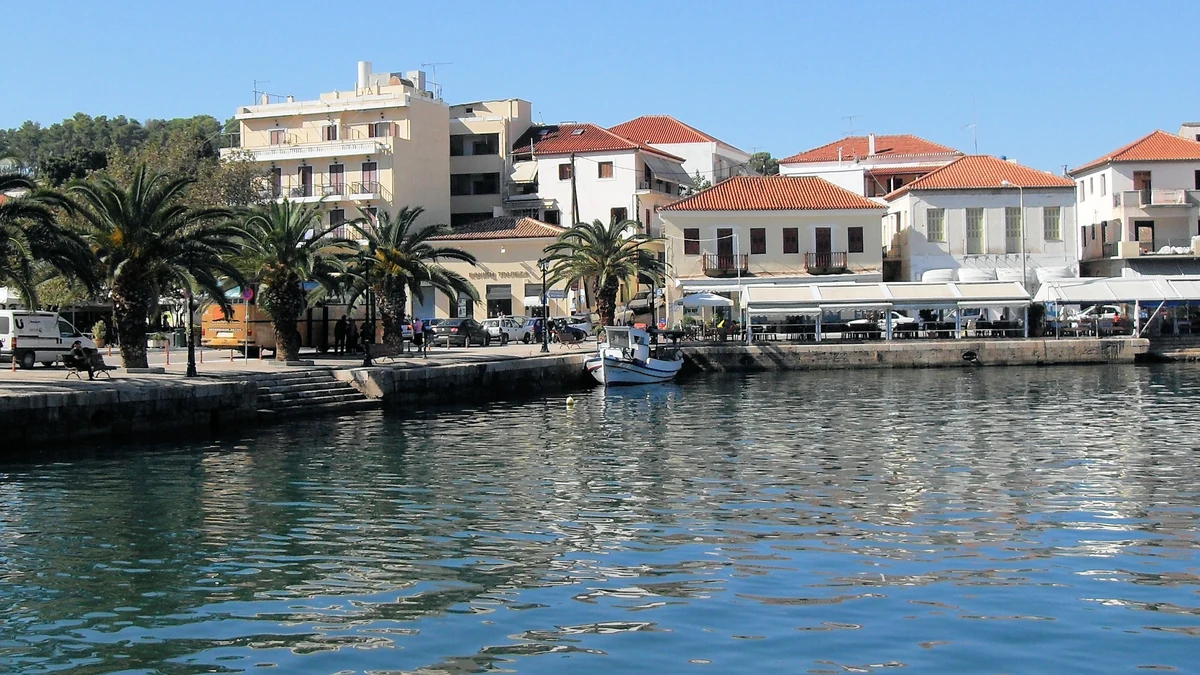
Pylos cruise port opens onto Navarino Bay, a broad natural harbour where landscape, naval history and Mycenaean archaeology sit unusually close together. The tender landing or harbour puts passengers beside a small, shaded town rather than a large terminal. Pylos itself is pleasant and manageable, but the Palace of Nestor, Voidokilia beach and Methoni each require a deliberate road plan.
The strongest day is not a sweep of western Messinia. First-time visitors should choose one major extension and keep Pylos as the flexible core. History-led passengers can pair Niokastro with the Palace of Nestor; scenery-led passengers can use Voidokilia and a bay viewpoint; repeat visitors may choose Methoni. Trying to fit all three leaves too much of the call on rural roads and too little at the places that justify the journey.
Pylos Cruise Port at a Glance
| Port name | Pylos Cruise Port |
|---|---|
| Main arrival area | Tender landing or harbour area beside central Pylos on Navarino Bay |
| Cruise region | Greece / Greek Islands |
| Country / Territory | Greece |
| Currency | Euro (EUR) |
| Languages | Greek; English is common in tourism |
| Port role | Day Call |
| Disembarkation | Usually tender into Pylos harbour, with small-ship docking possible by call |
| Walkability | High around Pylos town; low for the main archaeological and beach excursions |
| Shuttle required | No in central Pylos, but road transport is needed beyond town |
| Main transport | Walking, taxi, private tour, limited local bus and organised excursion |
| Best first-time plan | Pylos and Niokastro, then the Palace of Nestor or Voidokilia as one focused extension |
| Main caution | Tender timing, archaeological opening, summer heat and weak return options from remote beaches |
Weather & Best Time to Visit Pylos
January to March
Typical high: 14–18°C
Typical low: 7–10°C
Rain / conditions: Mild but unsettled, with rain, wind and quieter seasonal visitor services.
April to June
Typical high: 19–29°C
Typical low: 11–19°C
Rain / conditions: Increasingly warm and dry; late spring is particularly comfortable for forts and archaeology.
July to September
Typical high: 28–33°C
Typical low: 20–24°C
Rain / conditions: Hot, bright and dry, with strong exposure at ruins, beaches and castle walls.
October to December
Typical high: 16–27°C
Typical low: 9–20°C
Rain / conditions: Warm early autumn followed by more rain, wind and shorter daylight later.
Weather guide: CruisePing summary based on NASA POWER climate data for Pylos and Navarino Bay. Check the latest forecast for the call.
In midsummer, place Niokastro, the Palace of Nestor or Methoni before the beach and lunch. These sites have exposed stone, limited shade and uneven ground. Voidokilia is also exposed, but swimming and the sea breeze make it a more forgiving later stop when conditions are calm.
Wind can affect tendering and bay boats even when the archaeological sites remain open. A tender delay should trigger a shorter land route rather than a compressed beach-and-palace combination. Pylos town is a worthwhile fallback with shade, cafés and bay views close to the return landing.
Where Cruise Passengers Arrive in Pylos
Cruise calls commonly anchor in Navarino Bay and tender passengers towards the central harbour, although smaller ships may use local berthing arrangements. The landing is close to Pylos town and its main square. Record the final tender time, the exact queue position and whether tickets or numbered tender groups apply on the return.
The bay is sheltered compared with an open-roadstead anchorage, but wind and ship operations still affect tender frequency. Do not schedule an independent taxi to depart within minutes of the published arrival. A driver should have the ship name, mobile number and a meeting point that remains accessible if the tender uses a different section of the harbour.
Once ashore, the town requires no shuttle. The harbour, central square and Niokastro area are accessible on foot for reasonably mobile passengers. The practical transport question begins only when leaving for Chora, the Palace of Nestor, Voidokilia or Methoni.
Pylos Town and the Shape of Navarino Bay
Pylos is arranged around a waterfront and a tree-shaded central square, with cafés and streets climbing gently behind it. The town is small enough for a relaxed orientation before or after an excursion. Its setting matters: Sfaktiria island and the entrances to Navarino Bay help explain why this harbour became strategically important.
A local walk can combine the square, waterfront, memorials and views towards the bay. It is not a monumental urban destination, but its scale suits a tender call and makes it easy to preserve the final hour. Passengers who have had several intensive archaeological days may prefer this slower version with Niokastro and lunch.
The bay’s history includes the Battle of Navarino in 1827, when allied fleets defeated Ottoman-Egyptian forces during the Greek War of Independence. A guided boat or historical explanation adds meaning, but do not assume a bay cruise operates on every call. Land views and museum material can carry the story without another weather-dependent transfer.
Niokastro: The Best Local Historical Visit
Niokastro, the “new castle” of Pylos, stands at the southern side of town overlooking the bay. The official Greek culture listing identifies the fortress and its associated museums as a substantial archaeological and historical site. It is the easiest major attraction to combine with the tender landing because no long road transfer is required.
Allow time for the walls, courtyards, museum spaces and views rather than treating the castle as a quick photo stop. Surfaces can be uneven, and the site involves gradients and exposure. Check current opening, ticketing and which museum areas are accessible, especially outside the main season.
Niokastro works well as the fixed element of a flexible day. Visit it first during hot weather, then decide whether remaining time supports the Palace of Nestor, Voidokilia or simply Pylos. If tendering is delayed, the castle still gives the call a clear historical centre without creating return risk.
The Palace of Nestor and Chora
The Palace of Nestor near Ano Englianos is the most important archaeological excursion from Pylos. The official heritage site describes a major Mycenaean palace complex associated by tradition with Nestor. A modern protective roof helps visitors understand the plan while shielding the remains, but the site is inland and requires road transport.
Combine the palace with the Archaeological Museum of Chora only when current opening and transport support both. The museum provides context for finds and Mycenaean life, while the palace gives the spatial experience. If time is limited, prioritise the palace and avoid losing a large share of the visit to a lunch or shopping stop in between.
A taxi or private guide is the most controllable independent option. Agree waiting time and the return route before leaving Pylos. Public transport is not sufficiently robust to assume without a date-specific check, and a rural site is not the place to discover that the next bus misses the final tender.
Voidokilia Beach and the Gialova Lagoon
Voidokilia is a near-perfect semicircular bay north of Pylos, backed by dunes and close to the Gialova lagoon. It is one of the region’s signature landscapes and an excellent cruise-day choice for passengers who value scenery and swimming more than a second archaeological site.
The beach is not an urban resort with guaranteed rows of facilities. Carry water, shade and anything needed for changing, while respecting protected areas around the lagoon and dunes. Swimming conditions should be assessed on arrival. Passengers with limited mobility should ask how close the vehicle can approach and what surface remains.
Return transport must be fixed. A taxi that drops passengers without waiting or a confirmed collection can leave them in a weak position, particularly when mobile coverage, demand and summer traffic fluctuate. Voidokilia pairs naturally with a brief Palace of Nestor visit only on a long call; for most passengers, one or the other should be the day’s main road extension.
Old Navarino Castle and the Cave Viewpoint
The ruins of Old Navarino Castle rise above the northern entrance to the bay near Voidokilia. The viewpoint can be exceptional, but the route involves a rougher climb, heat and exposed terrain. It is not a casual add-on for passengers expecting a paved scenic overlook.
Confident walkers should obtain current local guidance about access and route condition. Carry water, wear proper shoes and allow enough time to descend without rushing. The climb should not be attempted late in the call or immediately after a long beach stop when heat and fatigue are already high.
Most cruise passengers can enjoy the bay from lower viewpoints and the beach without climbing to the castle. The higher route is worth choosing when hiking is the purpose of the day, not because a tour description suggests every nearby landmark can be combined.
Methoni Castle as a Separate Excursion Choice
Methoni lies south of Pylos and is dominated by a vast seaside fortress connected to the Bourtzi tower by a stone causeway. It offers a different visual experience from Niokastro: larger, more exposed and closely tied to Venetian and Ottoman control of the sea routes.
The road journey is manageable by taxi or tour, but the castle requires time on foot. Shade is limited, distances inside are greater than the entrance view suggests and surfaces are uneven. Start early in summer and carry water. Check current opening rather than assuming the exterior causeway is always accessible.
Methoni should replace the Palace of Nestor or Voidokilia, not be added to both. A good plan uses Methoni as the main excursion, returns to Pylos for lunch and leaves Niokastro optional. Passengers interested primarily in Mycenaean Greece should choose Nestor instead; those drawn to maritime fortresses may find Methoni more memorable.
Boat Trips on Navarino Bay
Local boats may offer bay tours, swimming trips or historical routes around Sfaktiria and nearby waters. These can reveal the scale of Navarino and provide relief from road travel, but availability is seasonal and may not align with a cruise tender schedule.
Ask where the excursion departs, whether the boat returns to the same harbour and how much margin remains before the ship’s final tender. Two small-boat operations in sequence create linked weather risk. Avoid an independent bay cruise that finishes close to the last tender, even when both piers appear adjacent.
A short morning or early-afternoon trip can work on a long call, particularly for repeat visitors who have seen the palace. For first-time passengers, Niokastro and one land extension are usually more dependable. The bay is already visible throughout the local day, so a boat should add access or interpretation rather than merely duplicate the harbour view.
Taxis, Guides and Rural Return Planning
Pylos has fewer spontaneous transport options than a major Greek city. For any road excursion, pre-booking is prudent. Give the driver the ship name, expected tender landing and final all-aboard, then agree a return time that includes the tender queue rather than only arrival in town.
A licensed guide is most valuable at the Palace of Nestor, where the archaeological plan and Linear B context can be difficult to absorb quickly. A driver-only taxi is sufficient for Voidokilia or Methoni when passengers are comfortable exploring independently. Confirm whether admission, waiting and parking are included in the price.
Do not rely on finding a taxi at a remote beach or archaeological site. Even when a rank exists in Pylos, availability can tighten when a ship arrives. The return is strongest when the same vehicle waits or collects at a written time and place.
Building the Day around Tender and Heat
On a standard call, take an early tender, visit Niokastro and then make one road excursion. History-focused passengers should go to the Palace of Nestor; beach-focused passengers should choose Voidokilia. Return to Pylos with at least ninety minutes before the final tender window and use the square or waterfront for lunch.
On a short call, keep Niokastro and town as the complete plan. On a long call, Methoni or a combined palace-and-museum route becomes more realistic, but only with private or organised transport. The call length shown on an itinerary does not include tender queues, meeting time and the final boat buffer.
If the first tender is late, remove the road extension rather than cutting each visit. If heat is severe, move the exposed site to the morning and shorten the castle walk. Pylos offers enough close to the landing that scaling down is a sensible decision, not a missed opportunity.
Best Cruise-Compatible Things to Do from Pylos
Niokastro
Best for: A substantial fortress and museum visit within walking reach of the harbour
How to do it: Go early, check current opening and allow time for views over Navarino Bay
Watch: Heat, uneven ground, gradients and variable museum access
Palace of Nestor
Best for: Mycenaean archaeology and the region’s most important ancient site
How to do it: Use a pre-booked taxi, guide or organised excursion
Watch: Rural transport, opening hours and overloading the route with beaches
Voidokilia beach
Best for: The iconic bay shape, swimming and a landscape-led day
How to do it: Arrange a waiting taxi or fixed collection and carry supplies
Watch: Limited facilities, protected dunes and uncertain return transport
Methoni Castle
Best for: A large maritime fortress and dramatic causeway
How to do it: Make it the principal half-day excursion from Pylos
Watch: Exposed walking, summer heat and trying to combine it with Nestor
Pylos town and waterfront
Best for: A relaxed tender day with shade, cafés and bay history
How to do it: Walk from the landing and combine it with Niokastro
Watch: Underestimating how satisfying the local plan can be
Navarino Bay boat trip
Best for: Water-level views and the scale of the historic harbour
How to do it: Choose an early, clearly timed local departure
Watch: Linking a late excursion boat to the ship’s final tender
CruisePing Recommended Pylos Port Day
Take an early tender and walk to Niokastro while the stone is cooler and the site is quieter. Give the fortress enough time to understand the bay and its history. After that, use a pre-arranged taxi for either the Palace of Nestor or Voidokilia, chosen according to whether archaeology or landscape matters more.
Return directly to Pylos and keep the final part near the harbour. The shaded square is well suited to lunch or coffee, while the waterfront provides a last view across Navarino. This sequence puts the most controllable local sight first and avoids finishing the day at a remote site.
Repeat visitors can replace the palace or beach with Methoni. CruisePing would not combine Nestor, Voidokilia and Methoni on an ordinary call. Each is worth more than a hurried photograph, and the rural roads offer few comfortable recovery options if the timetable slips.
DIY or Organised Excursion from Pylos?
Pylos town and Niokastro are straightforward independently. The main decision is transport beyond town. A pre-booked taxi can make the Palace of Nestor or Voidokilia an excellent DIY extension, but spontaneous public transport is not a strong basis for a fixed tender return.
An organised excursion is sensible for passengers who want archaeological interpretation, Methoni or a multi-stop route with protected logistics. It is also useful when taxi supply is limited. Check how much time is spent at the principal site and whether the tour returns directly or pauses for shopping.
The best value is often a hybrid: independent Pylos plus one private taxi excursion. This keeps control of the local hours while paying only for the road leg that genuinely needs arranging.
Pylos Port-Day Pitfalls
Remote beaches and rural archaeology are rewarding only when the return vehicle is treated as part of the attraction.
- No fixed collection at Voidokilia: do not assume a taxi will appear when you are ready to leave.
- Trying to combine Nestor and Methoni: choose the archaeological palace or the major fortress unless the call is unusually long.
- Starting exposed sites at midday: place Niokastro, Methoni or Nestor early in hot weather.
- Ignoring tender time: arrival back in Pylos must precede the final boat queue by a comfortable margin.
- Relying on old opening information: Greek archaeological sites can change hours seasonally or because of operational conditions.
- Adding a late bay boat: avoid linking an independent small boat with the ship’s last tender.
Pylos Cruise Day Checklist
Decide between palace, beach and Methoni before leaving the harbour.
- Record the tender landing and final tender deadline.
- Check official opening for Niokastro and the Palace of Nestor.
- Pre-book a taxi and confirm waiting or collection at remote sites.
- Carry water, sun protection and secure shoes for castles and ruins.
- Keep an earlier return than the last theoretically possible road journey.
- Finish in Pylos town rather than at the farthest attraction.
Useful Official Links
Use these official and authoritative pages to check details that can change before a Pylos call, including arrival arrangements, transport, opening information and local access.
- Municipality of Pylos-Nestor
- Castle of Pylos and Niokastro
- Archaeological Museum in Niokastro
- Palace of Nestor official description
- Archaeological Museum of Chora
- Visit Greece guide to the Peloponnese
Pylos Cruise Port FAQ
Do cruise ships dock in Pylos?
Many calls anchor in Navarino Bay and tender passengers to the central harbour, although smaller ships may use local berths. Follow the ship notice for the actual call.
Can you walk from Pylos cruise port to Niokastro?
Yes, the fortress is close enough for reasonably mobile passengers, though the route and site involve gradients, heat and uneven surfaces.
Is the Palace of Nestor worth visiting?
Yes, especially for passengers interested in Mycenaean Greece. It requires a taxi, guide or organised excursion and should be the main road extension.
Can you visit Voidokilia beach independently?
Yes with a pre-arranged taxi or vehicle. Do not rely on finding return transport at the beach, and carry water and shade.
Can Pylos and Methoni be combined?
Yes on a normal or long call by taxi or tour. Methoni should replace the Palace of Nestor or Voidokilia rather than being added to both.
What is the best short-call plan?
Stay in Pylos, visit Niokastro and use the square and waterfront. This avoids rural road risk and still gives a complete local day.
Is Pylos suitable for limited mobility?
The town centre is manageable, but Niokastro, archaeological sites and beach approaches can be uneven. Ask for exact drop-off and accessible-route information.
CruisePing Port Verdict
Pylos is a small port with three genuinely different ways to spend the day: fortress and bay history, Mycenaean archaeology, or the landscape around Voidokilia. Pick one road extension and let Niokastro anchor the local part.
The port loses its ease only when remote sites are stacked without a dependable vehicle. Keep the final hours in Pylos, protect the tender and give the Palace of Nestor, Methoni or the beach enough time to justify leaving town.
Ready to browse our article library?
Looking beyond Pylos? Explore more ports in the Greece / Greek Islands region, or narrow it to Greece in particular. For cruise comparisons, planning shortcuts and value guides, head over to our main article archive.