
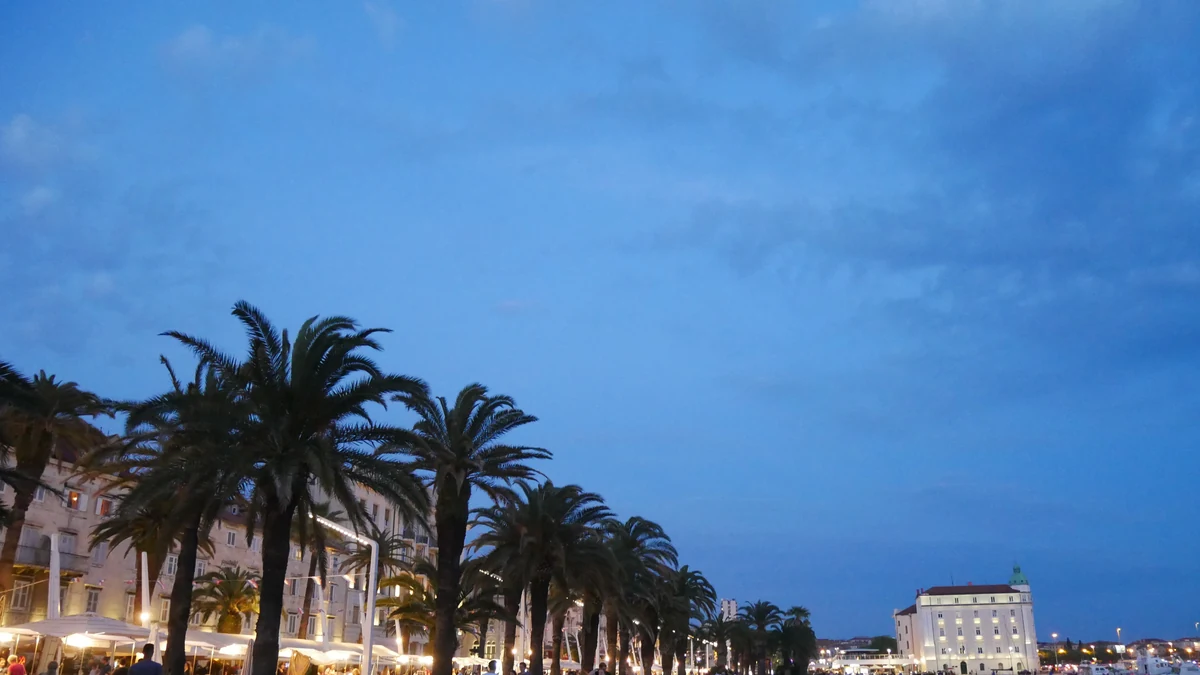
Split cruise port places most passengers within a short waterfront walk of the Riva and Diocletian’s Palace. The port is busy with ferries, buses and local traffic, but it is not a distant industrial gateway. Once the safe pedestrian route is followed, the historic centre begins almost immediately and can support a full day without organised transport.
That convenience makes the main decision editorial rather than logistical: how much of Split to protect before leaving for Trogir, Krka or an island. For a first visit, the palace, old town and Marjan or Bačvice are the stronger use of a normal call. A day trip earns its place when passengers have seen Split before or when a specific site matters more than the city beside the ship.
Split Cruise Port at a Glance
| Port name | Split Cruise Port |
|---|---|
| Main arrival area | Passenger port immediately east of the Riva, or a tender landing near the waterfront |
| Cruise region | Mediterranean |
| Country / Territory | Croatia |
| Currency | Euro (EUR) |
| Languages | Croatian; English is widely used in tourism |
| Port role | Day Call|Turnaround |
| Disembarkation | Docked at the passenger port or tender, depending on ship and berth |
| Walkability | High from the usual passenger port to the Riva and old town |
| Shuttle required | Normally no for central Split; berth instructions vary |
| Main transport | Walking, local bus, taxi, ferry, boat, private tour and organised excursion |
| Best first-time plan | Diocletian’s Palace and old town, then Marjan, Bačvice or one focused excursion to Trogir |
| Main caution | Palace crowds, heat, port traffic and sacrificing an excellent walk-off city for an over-ambitious day trip |
Weather & Best Time to Visit Split
January to March
Typical high: 11–16°C
Typical low: 5–9°C
Rain / conditions: Cool and changeable, with rain, strong bora winds and quieter visitor services.
April to June
Typical high: 17–29°C
Typical low: 10–19°C
Rain / conditions: Warm and increasingly dry, with good walking conditions before peak summer crowds.
July to September
Typical high: 27–32°C
Typical low: 20–24°C
Rain / conditions: Hot, bright and busy, with intense sun on stone streets and congested excursion routes.
October to December
Typical high: 13–25°C
Typical low: 7–18°C
Rain / conditions: Often pleasant in early autumn, followed by more rain, wind and shorter daylight.
Weather guide: CruisePing summary based on NASA POWER climate data for Split and central Dalmatia. Check the latest forecast for the call.
In July and August, visit the palace substructures, cathedral area and steeper Marjan sections early. The stone lanes retain heat and become crowded when excursion groups arrive. Bačvice or a waterfront lunch can take the more exposed middle of the day.
The bora can affect tenders, ferries and exposed viewpoints even when central Split remains walkable. If a boat or island excursion is cancelled, the old town, museums and lower Marjan paths provide an unusually strong fallback within walking distance of the ship.
Where Cruise Ships Arrive in Split
Split Port Authority manages a large passenger harbour used by ferries, cruise ships and local traffic. Cruise vessels may berth at the passenger port or anchor and tender, depending on size and berth allocation. The live ship notice and port schedule are more useful than a generic online map because the walking distance changes with the assigned quay.
From the usual cruise and ferry area, the Riva is close, but passengers must follow marked pedestrian paths through a working transport hub. Buses, taxis, luggage, ferry vehicles and crowds converge around the terminal approaches. Do not cut across vehicle lanes to save a few minutes.
Tender passengers should note the exact return landing and final boat time. Docked passengers should photograph the berth name or gate. The port is compact enough to feel obvious on arrival, yet several piers and ferry terminals can look similar after a long day.
Diocletian’s Palace: A Living City rather than a Single Monument
The historical complex of Split with Diocletian’s Palace is recognised by UNESCO. The Roman imperial residence became the framework for medieval and modern streets, houses, churches, shops and public spaces. Passengers do not enter one enclosed palace; they move through a living urban fabric built into ancient walls.
Begin at the Bronze Gate from the Riva or enter through another gate and use the Peristyle as the orientation point. The substructures, cathedral complex, Temple of Jupiter and narrow lanes all compete for attention. Choose interiors according to interest and queues rather than buying every ticket simply because the sites are close.
The palace is at its best before the largest groups arrive or later in the afternoon. Early light, working deliveries and quieter lanes reveal more of the city than a midday procession behind a guide flag. A short guided walk can be worthwhile because layers of Roman, medieval and Venetian history are easy to overlook.
A Cruise-Compatible Old-Town Walking Route
Walk from the passenger port along the waterfront to the Riva, then enter through the Bronze Gate into the palace basements or continue to the Peristyle. Visit the cathedral area early if the tower or treasury is a priority. Dress appropriately for religious interiors and expect steps or narrow passages.
Leave through the Golden Gate to see the Grgur Ninski statue and the northern wall, then loop through the streets towards Narodni trg and the western old town. This route shows how the palace connects with later Split rather than treating the Roman core as an isolated attraction.
Return to the Riva for a pause before deciding on Marjan, a beach or a museum. The walking loop is easily shortened, and most points remain close to the port. That flexibility is why Split is such a strong independent call: a queue or closed interior does not destabilise the whole day.
Cathedral, Bell Tower and Palace Substructures
The Cathedral of Saint Domnius occupies the former mausoleum of Diocletian, creating one of the palace’s most striking historical transformations. The complex may include separate admissions for the cathedral, crypt, treasury, baptistery and bell tower. Check what a ticket covers and choose according to time and mobility.
The bell tower gives central views but involves a climb and exposed sections. It is not essential for passengers who plan to visit Marjan or another viewpoint. The substructures beneath the palace are easier to integrate into the route and help explain the layout above, although surfaces and stairs still require care.
Crowds can turn a short interior into a long wait. Visit the priority site first and keep secondary admissions optional. Split’s exterior spaces remain rich enough that missing one tower or room does not diminish the day.
Marjan Hill: How Far Should a Cruise Passenger Go?
Marjan rises west of the old town and provides paths, viewpoints, chapels and pine-covered space away from the palace crowds. The first useful viewpoint near the steps above Varoš is reachable within a manageable extension for fit walkers and gives a broad view over Split and the harbour.
A complete Marjan circuit is a different commitment. Paths extend towards beaches and the western tip, and the climb can be hot. Decide whether the aim is one viewpoint, a woodland walk or a beach connection. For most first-time passengers, the lower viewpoint and a short section of path are enough.
Taxis can reduce the uphill effort, but access points and road restrictions need checking. Passengers with limited mobility should ask for a specific drop-off rather than “Marjan”, which describes a large area. Keep the return route simple and avoid emerging on the far side of the hill late in the call.
Bačvice and Beaches near Split Cruise Port
Bačvice lies east of the passenger port and is the easiest urban beach to add. It is sandy, shallow in places and closely connected with picigin, the local ball game played in the water. The walk is straightforward compared with distant coastal beaches, though port roads and heat should still be considered.
The beach is busy in summer and is not the most secluded Dalmatian swimming experience. Its value is convenience. Passengers can visit the palace in the morning, swim or have lunch near Bačvice and return to the ship without depending on a rural bus or taxi.
Kašjuni and other beaches around Marjan offer clearer scenery but require more transport or walking. Choose them when beach quality matters more than city time. Do not spend an hour crossing Split for a crowded swim when Bačvice would have met the purpose close to the berth.
Trogir as the Best Short Excursion from Split
Trogir is a compact UNESCO-listed town on a small island west of Split, known for its Romanesque cathedral, lanes and waterfront. It is the most natural cultural excursion for repeat visitors because it provides a distinct historic setting without the longer commitment of Krka or inland Dalmatia.
Road traffic between Split and Trogir can be heavy, particularly around the airport corridor. Local buses exist, but passengers must identify the correct station, stopping pattern and return. A taxi, private transfer or organised tour offers more control, especially on a short call.
Allow at least two hours in Trogir itself. A tour that provides only a brief guided circuit and shopping stop may not justify leaving Split. First-time passengers should usually stay local; Trogir is strongest when it replaces part of Split rather than being added after a complete palace and Marjan day.
Krka National Park: A Full Excursion, Not a Side Trip
Krka National Park is a popular excursion from Split, with waterfalls, river landscapes and managed visitor routes. The journey, park entrance, internal transport and walking make it a full-day commitment. Current access rules and swimming restrictions must be checked through the park rather than inferred from older photographs.
A ship excursion or reputable organised tour is the sensible approach for most cruise passengers. Private transport can work on a long call, but the driver and ticket arrangement need precision. Public buses are a weak fit when the visit depends on onward park transfers and a fixed all-aboard.
Krka is worth choosing when nature is the main priority and Split has been visited before. It is not the default “extra” after a palace morning. The strongest park day leaves the port early, spends meaningful time on the trails and returns directly without an improvised coastal stop.
Island Boats, Blue Lagoon and Ferry Temptations
Split’s harbour is a major ferry hub, and island names such as Hvar, Brač and Šolta make independent travel look easy. Scheduled ferries are designed for transport, however, and their return times may not align with a cruise call. A delayed sailing can compromise the ship even when the sea distance is short.
Local excursions to the Blue Lagoon or nearby islands are more cruise-compatible when they depart early and return well before all-aboard. Ask about the vessel, shade, swimming access, exact return and weather policy. Avoid products whose advertised end time leaves only a narrow walk or tender margin.
Passengers wanting an island day should treat it as the entire plan. Do not combine a ferry to Hvar with a complete Split walking route. Hvar and Brač deserve their own itinerary calls or land stays, while Split already provides a high-value city day beside the berth.
Salona, Klis and the Inland Historical Route
The Roman ruins of Salona lie near Solin, while Klis Fortress rises above the approach to Split. Together they form a strong history-led excursion that contrasts with the palace: Salona shows the earlier provincial capital, and Klis explains the strategic landscape beyond the coast.
A private tour or taxi is the easiest way to combine them. Site opening, heat and walking surfaces should be checked, and the route needs enough time for more than photographs. Klis is exposed and can be windy; Salona covers a broad archaeological area with limited shade.
This pairing is especially good for repeat visitors or archaeology enthusiasts. First-time passengers should not sacrifice Diocletian’s Palace entirely, because the relationship between Salona, Klis and Split makes more sense after the city centre has been seen.
Local Buses and Taxis without Losing Port Time
Promet Split operates the local bus network, which can support trips to Solin, parts of Marjan and connections around the metropolitan area. Use the current journey planner and verify the stop because several terminals and roadside stops surround the port. Tickets and validation rules should be checked before travel.
For Trogir, Klis or a beach, a taxi may be worth the cost when shared. Agree the price or ensure the meter is used, and set a collection rather than relying on spontaneous availability. Ride-hailing can be convenient but surge demand and port restrictions may change the pickup point.
The central old town needs neither bus nor taxi. Do not board transport simply because it is waiting outside the port. Every vehicle leg should have a named purpose that justifies leaving one of the Mediterranean’s strongest walk-off centres.
Split as a Turnaround or Pre-Cruise City
Some passengers embark or disembark in Split rather than visiting only for the day. The passenger port is close to the intercity bus and railway area, but luggage, summer traffic and accommodation access can complicate the final kilometre. Confirm the terminal or berth and do not assume a taxi can stop beside every old-town address.
Staying at least one night gives time for the palace after day visitors leave and reduces pressure on airport transfers. Split Airport lies near Trogir, and road time can vary considerably with traffic. Build a large buffer for embarkation rather than using a nominal off-peak journey time.
For a post-cruise stay, store luggage through a reputable facility and verify opening. The old town has many steps and restricted vehicle access, so choose accommodation based on actual luggage route rather than straight-line distance from the Riva.
A Split Call-Length Strategy
On a five-hour call, stay entirely in central Split: palace, old town, Riva and one viewpoint or café. On a standard call, add lower Marjan or Bačvice. On a long call, Trogir, Salona and Klis or a boat trip become possible, but each should replace a substantial part of the city day.
If arrival is delayed, remove the excursion first. Split is not a port where passengers need to salvage the day by rushing elsewhere. If heat is severe, use the palace substructures and shaded lanes before a waterfront or beach break.
When the ship tenders, add more final margin than a docked call. When it docks, verify the actual quay before calculating the walk. The centre is close, but a berth at the far end of the passenger harbour can make a last-minute return longer than expected.
Best Cruise-Compatible Things to Do from Split
Diocletian’s Palace and old town
Best for: The essential first visit and one of the Mediterranean’s strongest walk-off experiences
How to do it: Enter early, choose priority interiors and loop through the later old town
Watch: Crowds, heat and treating the palace as a single ticketed building
Marjan viewpoint
Best for: A panorama over Split and a break from palace crowds
How to do it: Walk to the lower viewpoint or use a taxi for a defined higher drop-off
Watch: Turning a short viewpoint walk into an exhausting full hill circuit
Bačvice beach
Best for: A convenient swim close to the passenger port
How to do it: Walk east after the old town and keep the return simple
Watch: Summer crowding and expecting a secluded island beach
Trogir
Best for: A compact second UNESCO town for repeat visitors
How to do it: Use a taxi, private transfer or carefully checked bus
Watch: Airport-corridor traffic and tours with too little independent time
Salona and Klis
Best for: Roman archaeology and fortress views beyond central Split
How to do it: Book a focused private or organised half-day route
Watch: Exposed sites, road time and sacrificing the palace on a first visit
Krka National Park
Best for: A nature-led full excursion and waterfall landscapes
How to do it: Use a ship or reputable organised tour with current park admission
Watch: Long logistics, seasonal crowding and outdated swimming expectations
CruisePing Recommended Split Port Day
Walk directly to Diocletian’s Palace and give the Roman and medieval core the morning. Visit one priority interior—such as the substructures or cathedral complex—then loop through the Golden Gate and later old town. This is the experience most likely to be weakened if postponed until excursion groups and midday heat peak.
After lunch, choose lower Marjan for views or Bačvice for an easy swim. Both keep the day close to the ship and can be shortened if needed. Repeat visitors can replace the afternoon with Trogir or Salona and Klis, using a fixed road return.
CruisePing would stay in Split on a first call. The city beside the port is more valuable than a coach day assembled from several distant “highlights”. Pay for an excursion only when Trogir, Krka or a specialist historical route is the actual priority.
DIY or Organised Excursion in Split?
Central Split should be done independently unless a specialist guide is wanted. The Riva and palace are close to the passenger port, and the old town’s compact layout rewards wandering. A guided palace tour can add interpretation, but transport is unnecessary.
An organised excursion becomes useful for Krka, a Blue Lagoon boat, or a combined Salona and Klis route. Trogir can be independent by bus or taxi, though traffic makes a fixed transfer attractive. Check that an excursion leaves enough time in the headline place rather than collecting short roadside stops.
The default CruisePing choice is DIY Split plus one local extension. That preserves flexibility, lowers cost and avoids abandoning the walk-off advantage that makes this port unusually easy.
Split Pitfalls and Value Choices
The common mistake is spending money to leave a destination that many other ports would require a long transfer to reach.
- Crossing active port lanes: follow marked pedestrian routes around ferries, buses and terminal traffic.
- Buying every palace ticket: choose the interiors that match your interests and avoid queue-driven sightseeing.
- Overcommitting to Marjan: set a turnaround point before a viewpoint walk becomes a full hill circuit.
- Taking the last island ferry: scheduled services can be delayed and are not protected by the cruise ship.
- Underestimating Trogir traffic: retain an earlier return or use a controlled transfer.
- Expecting to swim at Krka: current park rules, not old photographs, determine permitted access.
- Returning to the wrong pier: photograph the berth or tender landing in the large passenger harbour.
Split Cruise Day Checklist
Protect the walk-off city first and add only one transport-dependent element.
- Confirm berth or tender landing and the correct port gate.
- Start the palace route before the largest groups and strongest heat.
- Check official opening for chosen interiors rather than buying a blanket plan.
- Use current Promet information for buses and retain an earlier return.
- Confirm boat excursion return, weather policy and exact passenger-port pier.
- Carry water and secure footwear for palace stone and Marjan paths.
- Keep the last hour on the Riva or close to the port.
Useful Official Links
Use these official and authoritative pages to check details that can change before a Split call, including arrival arrangements, transport, opening information and local access.
- Split Port Authority cruise technical information
- Split port sailing schedule
- Promet Split local buses
- Visit Split guide to the Riva
- Visit Split guide to Diocletian’s Palace
- Visit Split guide to Marjan
- UNESCO Historical Complex of Split
Split Cruise Port FAQ
Can you walk from Split cruise port to Diocletian’s Palace?
Yes from most passenger berths. Follow the marked route through the busy ferry port; the Riva and palace are close once clear of the terminal area.
Do cruise ships dock or tender in Split?
Both occur. The arrangement depends on ship size and berth allocation, so check the ship notice and photograph the return point.
How long do you need for Diocletian’s Palace?
Allow at least two to three hours for a useful first route, more if visiting several interiors or taking a guided tour.
Is Trogir worth visiting from Split?
Yes for repeat visitors or a long call. Road traffic can be significant, so protect the return and allow enough time to explore rather than only photograph the waterfront.
Can you visit Krka National Park on a cruise day?
Yes on a long call with an organised or well-planned private excursion. Treat it as the main day and verify current park access and ticket arrangements.
Is there a beach near Split cruise port?
Bačvice is the closest practical beach and can be walked from the port. It is convenient rather than secluded and becomes busy in summer.
Should first-time visitors take an island boat trip?
Usually not at the expense of Split itself. Choose a boat only when an island or swimming day is the priority and the return is comfortably before all-aboard.
Is Split good for a turnaround stay?
Yes. The port is close to the centre, but airport traffic, luggage and old-town vehicle restrictions make a pre-cruise night and generous transfer buffer sensible.
CruisePing Port Verdict
Split is a port where the headline destination begins beside the ship. Diocletian’s Palace, the later old town and the Riva form a complete first visit, with Marjan or Bačvice adding scenery without weakening the return.
Trogir, Krka and the islands are worthwhile, but they should replace Split time for a clear reason. Most first-time passengers are better served by walking into the palace early, choosing a few meaningful interiors and finishing close to the harbour rather than spending the day chasing Dalmatia through traffic.
Ready to browse our article library?
Looking beyond Split? Explore more ports in the Mediterranean region, or narrow it to Croatia in particular. For cruise comparisons, planning shortcuts and value guides, head over to our main article archive.