
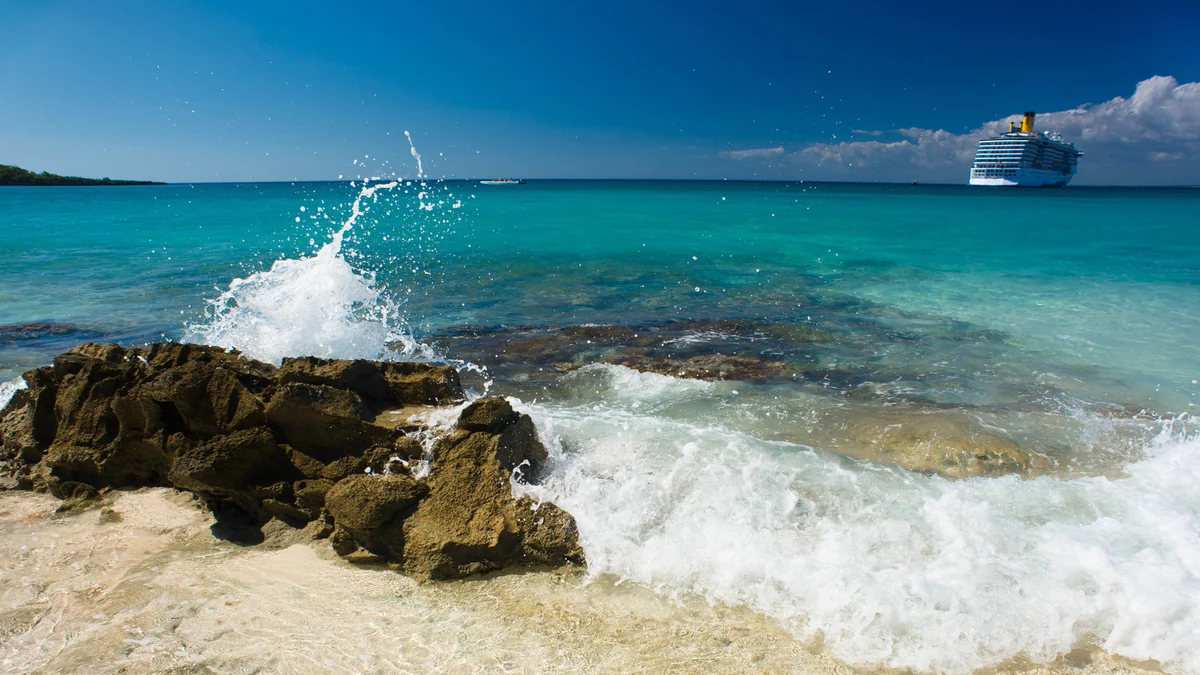
Isla Catalina cruise port is a tender beach call off the south-east coast of the Dominican Republic. Cruise lines normally establish a temporary operating area with loungers, food, drinks and activities for their passengers, so the day is shaped more by the ship’s programme than by permanent island infrastructure.
The Dominican Republic tourism authority describes Isla Catalina as a largely undeveloped island close to La Romana, known for calm water, reefs, diving and snorkelling. Portions of the beach are used by cruise excursions, while the broader shoreline remains public. That distinction is important: facilities seen on one ship’s call may not be present in the same form on another.
The simplest plan is usually the strongest: tender ashore, choose shade, swim early, understand what the cruise line includes and return before the last tender queue. Passengers wanting La Romana or Altos de Chavón need a separately organised mainland excursion and should not assume the island tender creates an easy independent connection.
Isla Catalina Cruise Port at a Glance
| Port name | Isla Catalina Cruise Port |
|---|---|
| Main arrival area | Cruise-line-designated beach landing on Isla Catalina |
| Cruise region | Caribbean & Bahamas |
| Country / Territory | Dominican Republic |
| Currency | Dominican peso (DOP) |
| Languages | Spanish; English used in cruise operations |
| Port role | Tender beach day-call port and La Romana excursion gateway |
| Disembarkation | Tender to a cruise-line-designated beach landing |
| Walkability | High along the beach area; no conventional town or road network for visitors |
| Shuttle required | No public shuttle; mainland movement is by organised excursion |
| Main transport | Tender, walking, excursion boats and organised mainland coaches |
| Best first-time plan | Choose a beach and snorkelling day, or one separately organised mainland excursion |
| Main caution | Facilities, food, shade and water activities vary by ship and operating arrangement |
Weather & Best Time to Visit Isla Catalina
January to March
Typical high: 27–29°C
Typical low: 20–24°C
Rain / conditions: Warm and relatively dry; trade winds can still delay tenders or reef boats.
April to June
Typical high: 29–31°C
Typical low: 23–26°C
Rain / conditions: Hotter with short downpours and strong sun on the undeveloped beach.
July to September
Typical high: 30–32°C
Typical low: 25–27°C
Rain / conditions: Very warm with tropical-storm risk and possible changes to the ship-controlled beach operation.
October to December
Typical high: 28–31°C
Typical low: 22–26°C
Rain / conditions: Wetter at first, with sea conditions more important than the temperature alone.
Weather guide: CruisePing seasonal summary for the La Romana coast. Check the latest coordinate forecast close to the call.
Tendering and the Ship-Controlled Beach Area
Tender tickets and landing order can reduce the usable morning. Passengers with an early snorkelling departure should follow the excursion meeting instruction rather than joining the general tender queue. Those staying on the beach gain little by competing for the first boat if shade and loungers are allocated by the line.
At the landing, identify the tender point, first-aid location, toilets and final return time before walking along the beach. The shoreline can look continuous, but a long walk away from the controlled area creates a hot return and may move passengers beyond lifeguarded or serviced water.
Tender accessibility depends on steps, movement between vessels and sea state. A wheelchair-accessible beach setup does not remove the transfer problem. Ask the cruise line before sailing, not at the gangway.
Beach Time Without Guessing the Inclusions
Some calls provide a buffet, basic drinks, loungers and entertainment as part of the day; others package elements differently. Read the daily programme and ask staff what is included before ordering or taking equipment. Do not rely on a video from another cruise line.
Shade is limited and high-value. Families and passengers sensitive to heat should secure a base promptly, then swim before the sun is strongest. Reef-safe sun protection, water shoes and a dry bag are more useful than carrying a large amount of beach equipment through the tender.
The water is often calm on the sheltered side, but conditions can change. Stay within marked swimming areas and follow local or ship staff guidance. The island’s appeal is its lack of development; that also means fewer independent services when something is forgotten.
Snorkelling and Diving
Catalina Wall, the Aquarium and the Captain Kidd wreck area are associated with the island’s diving reputation. Cruise passengers should distinguish a proper boat dive from casual beach snorkelling: the entry method, depth, certification and current can be completely different.
A ship snorkelling excursion is useful when it supplies a boat, guides, flotation equipment and a named reef site. Ask whether the activity begins from the beach or from another boat, and how much of the advertised duration is transfer time.
Do not stand on coral, feed fish or chase wildlife for photographs. The official destination description emphasises the reefs; the value of the experience depends on visitors leaving them intact.
La Romana and Altos de Chavón
La Romana is the nearest mainland destination and the gateway for excursions to Altos de Chavón, caves, golf resorts and the wider south-east coast. A mainland day requires a boat transfer from the ship or island plus road transport, depending on the cruise line’s operation.
Altos de Chavón is a modern cultural and architectural complex above the Chavón River, not an untouched colonial town. It can be attractive for views, craft shops and the archaeological museum, but passengers should know what they are booking rather than treating the recreated village as historic La Romana.
A mainland excursion is most worthwhile for passengers who do not want a beach day. Combining several hours ashore in La Romana with a full Catalina beach programme usually produces two shortened experiences and repeated transfers.
Cotubanamá, Saona and Protected Landscapes
The wider region includes Cotubanamá National Park and Saona Island, but Catalina is a separate island. Excursion names can blur those places. Check the route and landing points before paying, particularly when a description promises caves, mangroves, natural pools or starfish.
Longer boat trips are exposed to sea conditions and may not suit passengers with back problems or limited mobility. A scenic photograph does not show the boarding ladder, spray or time spent in a fast boat.
Never handle starfish or remove marine life. Choose an operator whose guidance protects the habitat rather than one that guarantees close-contact photographs.
CruisePing Recommended Isla Catalina Day
For most first-time visitors, use the line’s beach area, swim or snorkel in the morning, eat under the confirmed inclusion rules and leave enough time for an unhurried tender. One guided reef trip can improve the day; several overlapping water activities rarely do.
Choose a mainland excursion only when La Romana or Altos de Chavón matters more than the island. Treat it as the whole port day, confirm every transfer and keep the beach as a brief bonus rather than a second headline plan.
What the First Hour Looks Like
The ship first clears local formalities, then tenders begin according to excursion groups, loyalty priority or ticket arrangements. A listed arrival of 08:00 does not mean every passenger can be on the sand at 08:05. Build the plan from the likely landing time rather than the itinerary headline.
On arrival, crew or local staff usually direct passengers towards the line’s designated beach sector. Listen for the final tender instruction immediately. It may be earlier than the ship’s all-aboard time because boats need repeated journeys.
Passengers who miss the first tender lose little on a simple beach day. Those with a separately timed dive or boat trip should use the excursion meeting process so the operator manages the transfer.
Temporary Facilities and Service Limits
Cruise-line beach operations can include kitchens, bars, toilets, entertainment and equipment stores that exist only for the call. Opening times are tied to the ship. A late tender arrival may therefore have less time to order food or collect hired equipment than the beach itself suggests.
Ask where drinking water is available and whether the buffet closes before the final tender. Do not leave lunch until the last operating period. Passengers with allergies should discuss ingredients with the line in advance because the island offers fewer alternative outlets than a town port.
Cash, card and onboard-account rules can vary by operator. Carry one backup payment method and avoid relying on a weak mobile signal for authentication.
Choosing the Right Part of the Beach
The busiest area is normally closest to the landing, food and entertainment. Walking farther can find more space, but it also increases the distance to toilets, staff and the tender. Families and passengers with medical needs are usually better close to services.
Look at the water entry before moving all belongings. Some stretches are soft sand; others can be rocky or affected by wash. The featured photograph shows a rocky shoreline section, which is a useful reminder that the entire island is not one continuous resort beach.
Keep outside excursion-only zones and respect any barriers protecting vegetation. The lack of roads and buildings is part of Catalina’s value.
Families and Mobility
Children should use flotation equipment appropriate to their ability and remain within the marked swimming area. Tender beaches can feel contained, but the shoreline is open and small boats may operate nearby.
For limited mobility, the critical questions are the tender step, transfer between moving vessels, beach landing and sand. Ask whether a beach wheelchair is available and whether it must be reserved. A companion should not assume crew can provide lifting beyond published assistance.
A shaded lounger near the landing is often a better plan than a boat excursion for passengers who tire easily. The island can still provide a strong sense of place without a long route.
Snorkel Equipment and Boat Standards
Check mask fit before leaving the beach or marina. A leaking mask can waste most of a short guided session. Fins should be the right size, and flotation aids should be offered to less confident swimmers.
For a boat trip, ask about shade, passenger capacity, ladder design and emergency equipment. A fast transfer can be rough even when the snorkelling site is sheltered. Passengers with neck or back problems should disclose that before boarding.
Use a guide who explains the reef and keeps the group together. The strongest excursion is not the one that lets swimmers approach wildlife most closely; it is the one that protects both visitors and habitat.
When to Stay on the Island
Stay on Catalina when the call is short, the ship is tendering slowly, the group wants a beach day or weather makes a longer boat transfer uncertain. The controlled area keeps the route simple and can be shortened without losing a transport booking.
A mainland trip is better when the group has already had several beach calls or wants culture and landscape more than swimming. Make that choice before tender tickets are distributed, because switching later can leave poor departure options.
Mainland Transfer Reality
The Dominican Republic’s air and sea travel guidance is useful national context, but it does not create a public shuttle from Catalina. Cruise-line excursions control the relevant boats and coaches. A La Romana outing may begin from the ship rather than from the beach landing, so follow the excursion ticket exactly.
Ask whether the tour returns directly to the ship or to the island beach. That answer determines whether there is any realistic swimming time after the mainland visit. A direct ship return often means the beach section is missed entirely.
Altos de Chavón and La Romana are different stops. A tour may visit the cultural complex without spending meaningful time in the city. Read the itinerary line by line rather than relying on a broad “La Romana highlights” title.
Health, Heat and Limited Backup Services
The absence of dense development means fewer pharmacies, indoor air-conditioned spaces and alternative food outlets. Carry essential medicine and anything needed for allergies or diabetes. Do not assume a ship tender can make an immediate private return for a forgotten item.
Heat builds quickly on open sand. Alternate swimming with shade, drink water before thirst becomes strong and avoid alcohol as the main hydration. Anyone who feels unwell should speak to staff early, while the controlled beach area and tender point are close.
Minor cuts from rock, coral or equipment should be cleaned promptly. Do not touch unfamiliar marine life, and avoid walking barefoot beyond the soft-sand swimming area.
A Sensible Final Hour
Use the final hour to swim close to the landing, dry off, collect belongings and join the tender before the largest queue. This is not wasted beach time: it protects the only transport back to the ship.
Do not begin a hired snorkel session or long shoreline walk late in the call. Return equipment early enough to resolve a deposit or payment problem before staff close the operation.
Keep footwear beside the lounger; hot sand can make the walk back to the tender uncomfortable.
Isla Catalina Checklist
- Read the ship’s tender and facility instructions.
- Confirm what food, drinks, loungers and shade are included.
- Keep the tender landing visible or save its location.
- Check whether snorkelling is beach-based or boat-based.
- Use reef-safe behaviour and follow marked swimming zones.
- Carry water, sun protection and essential medicine.
- Return before the final tender wave.
Useful Official Links
The cruise line controls the practical beach operation; use these official destination sources to understand the island and nearby mainland before choosing an excursion.
- Dominican Republic tourism guide to Isla Catalina
- Official La Romana destination guide
- Official Bayahibe and Cotubanamá gateway guide
- Dominican Republic air and sea travel information
Cruise Port FAQ
Do ships dock at Isla Catalina?
No. Cruise passengers normally travel ashore by tender.
Is there a permanent cruise terminal?
No conventional terminal exists. Guest facilities are largely temporary or controlled by the visiting cruise line.
Is lunch included?
It often is on a line-operated beach day, but the exact food and drink package must be checked for the sailing.
Can I visit La Romana independently?
The tender and transfer operation makes a booked mainland excursion the dependable option.
Is the island good for snorkelling?
Yes, but the quality and entry method depend on the site and sea conditions. A guided boat trip may reach stronger reefs than casual beach snorkelling.
Is it suitable for reduced mobility?
Tender transfer, sand and boat ladders are significant constraints. Ask the cruise line about the exact operation.
CruisePing Port Verdict
Isla Catalina is strongest as an uncomplicated beach and water day. Let the ship’s current arrangements define the practical details, choose one marine activity if it adds real value, and resist turning a tender island into a rushed two-destination itinerary.
Ready to browse our article library?
Looking beyond Isla Catalina? Explore more ports in the Caribbean & Bahamas region, or narrow it to Dominican Republic in particular. For cruise comparisons, planning shortcuts and value guides, head over to our main article archive.