
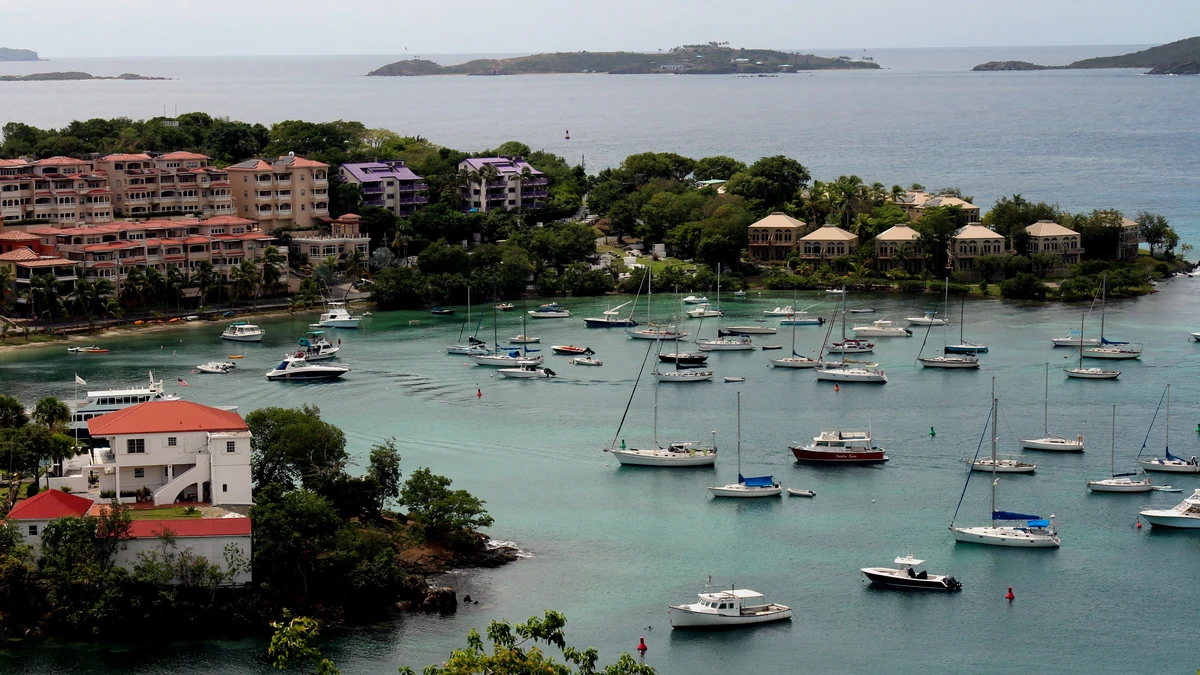
Saint John is often searched as a cruise port, but the island does not operate like a conventional mainstream cruise call. Most large ships dock at Saint Thomas, and passengers reach Saint John by ship excursion, private boat or the public ferry to Cruz Bay. A smaller vessel may anchor or arrange a direct landing, but passengers must follow the sailing’s own instructions rather than assuming that every itinerary uses the same harbour.
The island is worth the extra transport because much of it lies within Virgin Islands National Park. North Shore beaches, forested hills and historic sites create a markedly quieter day than Charlotte Amalie. The practical question is not whether Saint John is beautiful; it is whether the ship’s time in Saint Thomas leaves enough margin for the road-to-ferry-to-road chain in both directions.
Saint John Cruise Port at a Glance
| Port name | Saint John Cruise Port (US Virgin Islands) |
|---|---|
| Main arrival area | Cruz Bay, usually reached by ferry or ship excursion from Saint Thomas; some smaller ships tender directly |
| Cruise region | Caribbean & Bahamas |
| Country / Territory | Virgin Islands (U.S.) |
| Currency | US dollar (USD) |
| Languages | English |
| Port role | Nature and beach excursion island, usually reached from Saint Thomas |
| Disembarkation | Most large-ship passengers arrive by public ferry or ship excursion from Saint Thomas; some small ships tender directly |
| Walkability | High in Cruz Bay; low for North Shore beaches and park sites |
| Shuttle required | No cruise shuttle; ferries, taxis, safari vehicles and excursions are used |
| Main transport | Ferry, taxis, safari taxis, buses, private boats and ship excursions |
| Best first-time plan | Combine Cruz Bay with one North Shore beach, usually Trunk Bay or Cinnamon Bay |
| Main caution | Protect the return ferry and the onward road journey across Saint Thomas |
Weather & Best Time to Visit Saint John
January to March
Typical high: 27–29°C
Typical low: 21–24°C
Rain / conditions: Warm, breezy and generally drier, though north-shore surf can still be active.
April to June
Typical high: 29–31°C
Typical low: 23–26°C
Rain / conditions: Hotter with short showers, increasing humidity and strong beach sun.
July to September
Typical high: 30–32°C
Typical low: 25–27°C
Rain / conditions: Tropical-storm season can disrupt ferries, boats and beach conditions.
October to December
Typical high: 28–31°C
Typical low: 23–26°C
Rain / conditions: Variable showers and humidity, usually becoming breezier towards winter.
Weather guide: CruisePing seasonal planning ranges for Saint John. Check the National Weather Service forecast before travelling.
Sea state matters twice for an independent visit: the passenger ferry must operate, and the chosen beach must remain suitable. A forecast that looks acceptable in Cruz Bay may still produce stronger surf on the north shore. Keep Cruz Bay as a fallback if the park beaches are affected.
How Cruise Passengers Reach Saint John
Passengers docked at Crown Bay or Havensight on Saint Thomas first need to reach a ferry departure point. Red Hook is the usual independent route because services to Cruz Bay are frequent and the crossing is short. The US Virgin Islands Department of Public Works ferry page publishes schedules and fares, but cruise passengers should check it again on the morning of the call.
The journey is a chain: ship to taxi, taxi across Saint Thomas, ferry queue, crossing, then a taxi or bus on Saint John. The return repeats every stage and ends with port security. A schedule showing a 20-minute ferry crossing does not mean Saint John is 20 minutes from the ship.
A ship excursion removes much of that connection risk. Some tours collect by boat close to the cruise terminal; others use road and ferry transport. Read the itinerary carefully, especially the amount of actual beach time and whether snorkel equipment is included. The higher price can be justified on a short call because the cruise line manages the return.
Passengers on a small ship landing directly at Cruz Bay can plan the island more simply. Confirm the last tender or boat time and do not assume that a public ferry schedule applies to the ship’s own operation.
Cruz Bay: The Island’s Practical Base
Cruz Bay is compact, colourful and useful rather than monumental. The ferry dock, taxi ranks, restaurants, shops and the National Park visitor centre lie within a manageable area. It is the place to confirm the return ferry, buy water and ask about current beach access before committing to the North Shore Road.
Open-sided safari taxis commonly take groups to beaches. Fares may be shared or destination-based, so confirm the price and whether the driver will collect later. At busy times, returning taxis often fill quickly. Do not wait until the final reasonable departure because a full vehicle can force another delay.
Cruz Bay also works as a low-risk day for passengers who decide against the ferry chain or arrive later than planned. A meal, harbour walk and short taxi to a nearby viewpoint can be enjoyable without creating another timed connection. Keep the ferry terminal visible during the final hour.
Best Things to Do on Saint John
Trunk Bay
Trunk Bay is the island’s best-known beach, with white sand, clear water and an underwater snorkel trail. It has more visitor facilities than many park beaches, including restrooms, showers and rentals when concessions are open. The National Park Service publishes current hours and fees, which should be checked rather than inferred from an old excursion review.
Its popularity is the disadvantage. Cruise groups and day visitors can make the beach busy by late morning. Arrive early, choose a fixed meeting point and leave before the taxi queue becomes part of the return plan. There is no lifeguard, so attractive photographs should not override the day’s actual sea conditions.
Cinnamon Bay
Cinnamon Bay offers a longer beach, space to spread out and a more open landscape. It can suit passengers who prefer a less concentrated experience and do not need the classic Trunk Bay photograph. Facilities and concessions can change after storms or maintenance, so use the National Park operating information close to the visit.
The extra road distance is modest but still matters on the return. Agree whether the taxi is collecting at a specific time or whether the group must join the public taxi flow. A private collection is useful for families, mobility needs and short calls.
Hawksnest and Other North Shore Beaches
Hawksnest is closer to Cruz Bay and can be a sensible compromise when time is limited. Facilities are simpler, but the shorter transfer protects the ferry margin. Maho Bay, farther along the shore, is known for calm-looking water and turtle sightings, although wildlife must be given space and conditions are never guaranteed.
Do not plan multiple beaches merely because they sit along one road. Loading, unloading and finding a return vehicle consume time. One good beach plus Cruz Bay is more reliable than a rushed beach checklist.
Annaberg and Island History
The Annaberg Sugar Plantation ruins add historical context to a day otherwise dominated by beaches. The site helps explain plantation agriculture, enslaved labour and the island’s colonial economy. It is best included on a guided island tour or with a private driver because it lies beyond the closest beaches.
A responsible visit should not reduce the site to scenic stonework. Read the National Park interpretation and allow enough time to understand what the remains represent. Pairing Annaberg with one beach makes a stronger island day than trying to cover every viewpoint.
Reef Bay and Longer Hikes
Saint John has rewarding trails, but most cruise passengers should avoid building the day around a long hike unless the ship calls directly and the route is professionally arranged. Heat, steep ground, transport at the far end and the ferry chain make independent timing fragile. The National Park getting-around guidance is useful for understanding which areas are served by road transport.
Shorter walks near established roads are easier to control. Carry water and do not assume that mobile coverage will be continuous. After heavy rain, trail surfaces can remain slippery even when the beach forecast looks good.
Saint John Cruise Port: DIY or Organised Excursion?
Independent travel is realistic when the Saint Thomas call is long, the ship docks early and the group is comfortable using taxis and ferries. The strongest DIY plan is Red Hook to Cruz Bay, one North Shore beach and an early return. Save the outbound and return schedules as screenshots.
A ship excursion is the better choice on a shorter call, for passengers anxious about connections or when the itinerary uses a dedicated boat. It may also provide snorkel supervision and equipment. Compare actual time at Saint John rather than comparing only the headline price.
Private boat charters can be excellent for groups, but immigration and territorial boundaries matter if the route approaches the British Virgin Islands. Use a licensed operator and confirm exactly where the boat collects and returns cruise passengers.
CruisePing Recommended Saint John Day
Leave the Saint Thomas terminal promptly for Red Hook using a licensed taxi. Take the next suitable ferry to Cruz Bay, confirm the intended return service and then continue by taxi to Trunk Bay or Cinnamon Bay. Spend the main part of the day at one beach rather than moving between several.
Return to Cruz Bay early enough for lunch or a drink before the ferry. The aim is to be on Saint Thomas with a large road buffer, not to catch the final ferry that appears possible on paper. Traffic across the island and queues at the cruise terminal belong inside the plan.
When the ship offers a direct boat excursion with reasonable time ashore, that is often the stronger choice. The independent version saves money only if every transfer works smoothly; the organised version buys control over the most vulnerable connections.
Mobility, Families and Beach Safety
Cruz Bay is walkable but has uneven surfaces, traffic and heat. Safari taxis often require a high step and may not secure wheelchairs. Passengers with mobility needs should arrange a private accessible vehicle or use a ship excursion that confirms equipment and beach access in writing.
Trunk Bay has accessible features, but sand, water entry and transport still need separate assessment. Ask the National Park Service about current ramps and facilities. A companion who can walk from the taxi is not proof that the complete beach visit is accessible.
Families should carry sun protection, water and a small amount of food even when concessions are expected to open. Children need a named meeting point because beach crowds and curved shorelines make visual supervision harder. There are no lifeguards at many park beaches.
Planning the Saint Thomas Side of the Journey
The correct taxi plan depends on where the ship docks. Havensight is east of Charlotte Amalie and generally better placed for the drive to Red Hook than Crown Bay, but traffic can erase the apparent advantage. Ask the taxi dispatcher for Red Hook ferry terminal, not simply “the ferry”, and confirm whether the fare is per person. Shared safari taxis may wait for additional passengers before leaving.
Charlotte Amalie has also supported passenger ferries to Cruz Bay at various times, but the service pattern is less useful as a default cruise plan. Use only a departure that appears on the current official schedule and still leaves a strong return option. A convenient outward crossing is not enough if the afternoon service does not fit the ship.
On the return, tell the Saint Thomas driver the cruise terminal and ship name. Crown Bay and Havensight are not interchangeable, and some itineraries use another berth. Carry the daily programme or a screenshot showing the exact location. The road leg should end at the security entrance with time to spare, not at the theoretical all-aboard minute.
If Your Ship Calls Directly at Saint John
A direct small-ship call removes the Saint Thomas ferry problem but can introduce tender uncertainty. Confirm whether passengers land at Cruz Bay, use a ship’s marina platform or join a pre-arranged boat. The last return time may be earlier than the public ferry schedule and can move if swell increases.
With a direct arrival, a guided island circuit becomes more realistic. A driver can combine a North Shore beach, Annaberg and scenic overlooks without the cross-island Saint Thomas transfer. Even then, do not fill the schedule completely: taxis can be scarce when several boats or ferries arrive together, and beach pickup remains the weak point.
Passengers who land somewhere other than Cruz Bay should establish how to reach the taxi network before assuming an independent plan will work. Saint John has few roads and no large transport hub outside the main settlement. The ship’s own excursion may be the only controlled option from an unusual landing.
Food, Money and Responsible Visiting
Cruz Bay has the widest choice of restaurants and shops, making it the practical place to eat before the return ferry. A beach lunch can be pleasant, but concessions do not operate at every site and opening can change. Carry water and enough food to avoid extending the taxi trip solely to find a meal.
US dollars and cards are widely used, although taxis, ferries and small businesses may prefer cash or handle cards differently. Keep separate money for the return journey. A purchase should never leave the group without the fare needed to reach Red Hook and the ship.
Much of the island is protected because its landscapes and marine habitats are vulnerable. Use designated paths, take litter back to Cruz Bay and keep distance from turtles and rays. Reef-safe behaviour includes avoiding contact with coral and following closures, even when another visitor ignores them.
Saint John’s history includes Indigenous settlement, Danish colonial rule, plantation slavery and emancipation. Sites such as Annaberg deserve more than a photograph. Read the park interpretation and avoid framing the ruins as romantic scenery without acknowledging the people whose forced labour sustained the plantation economy.
Before leaving Cruz Bay, check that everyone is present, dry enough to travel and carrying their own documents. A group that reaches the ferry queue together is easier to manage than one searching for a final shop or restroom at boarding time.
When conditions deteriorate, remain in Cruz Bay or return to Saint Thomas rather than substituting an unfamiliar beach. A shortened Saint John visit is still better than turning a weather change into a missed connection.
Keep the return ferry ticket accessible rather than buried with wet towels and beach equipment during boarding carefully.
Saint John Cruise Port Checklist
- Confirm whether the ship docks at Saint Thomas or lands directly at Saint John.
- Check the current Red Hook–Cruz Bay ferry schedule in both directions.
- Allow for taxi travel across Saint Thomas, not only the ferry crossing.
- Choose one North Shore beach and a specific return pickup time.
- Check National Park alerts, facilities and fees.
- Carry small US-dollar notes for taxis and minor purchases.
- Save schedules and booking contacts offline.
- Return to Saint Thomas well before the final workable connection.
Useful Official Links
Ferry and park information matter most because Saint John is normally an inter-island cruise excursion rather than a walk-off port.
- USVI passenger ferry schedules and fares
- Virgin Islands National Park
- National Park transport guidance
- Current park and concession hours
- Trunk Bay visitor information
- US Virgin Islands tourism guide to Saint John beaches
Saint John Cruise Port FAQ
Do cruise ships dock on Saint John?
Most large ships do not. Passengers usually travel from Saint Thomas by ferry or excursion boat. Some smaller vessels may arrange a direct tender or landing.
How long is the ferry from Red Hook to Cruz Bay?
The scheduled crossing is about 20 minutes, but cruise passengers must also allow for taxis, queues, boarding and the return road journey on Saint Thomas.
Can Saint John be visited independently?
Yes on a suitably long call. Use the current ferry schedule, visit one main beach and return early rather than relying on the last plausible connection.
Which beach is best for a first visit?
Trunk Bay is the classic choice because of its scenery, snorkel trail and facilities. Cinnamon Bay offers more space, while Hawksnest reduces the road distance from Cruz Bay.
Is there an entrance fee?
Virgin Islands National Park itself is generally open, but Trunk Bay charges an amenity fee and individual facilities or activities may have separate costs.
CruisePing Port Verdict
Saint John offers one of the most rewarding nature-and-beach days available from a Saint Thomas cruise call, but the transport chain must be treated as part of the excursion. The beauty of Trunk Bay does not remove the need to cross two islands and a stretch of water before all-aboard.
Independent passengers should keep the plan deliberately narrow. One beach, Cruz Bay and an early ferry home make sense. When the call is short or the group dislikes connection risk, a ship-operated Saint John excursion is money spent on the part of the day that is hardest to control.
Ready to browse our article library?
Looking beyond Saint John? Explore more ports in the Caribbean & Bahamas region, or narrow it to Virgin Islands (U.S.) in particular. For cruise comparisons, planning shortcuts and value guides, head over to our main article archive.