
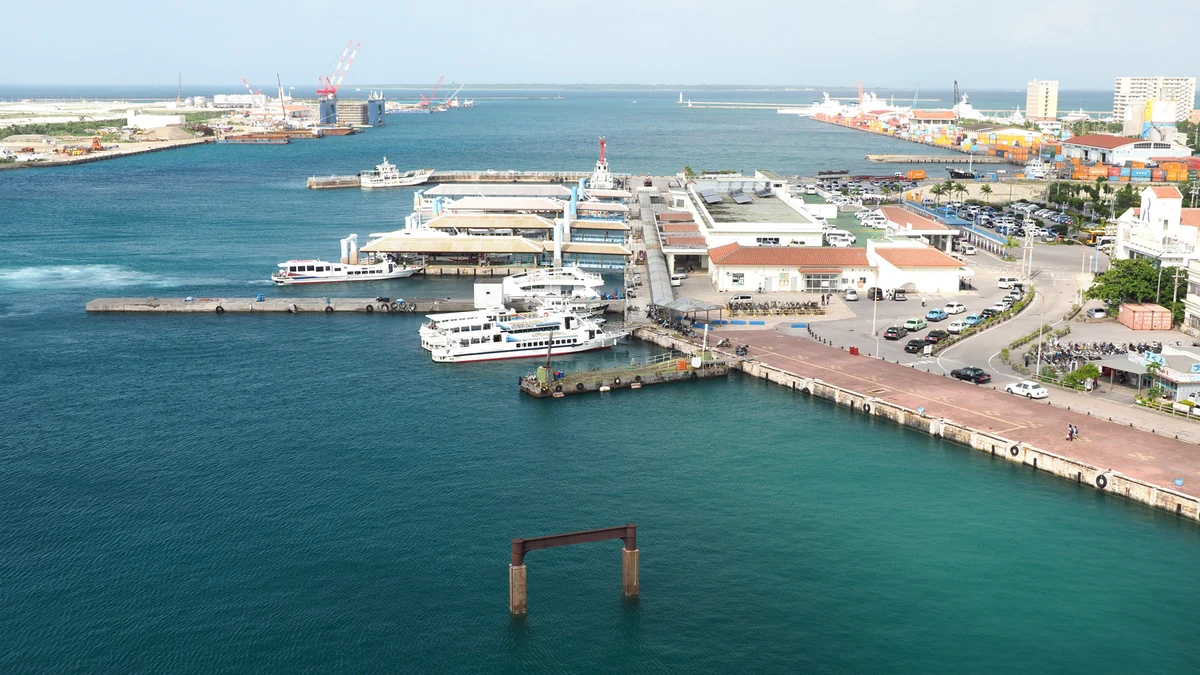
Ishigaki cruise port introduces passengers to the transport hub of the Yaeyama Islands. The new cruise berth is separated from the downtown ferry terminal, while Kabira Bay, beaches and northern viewpoints require a road journey.
The island offers two tempting but competing plans: explore Ishigaki itself, or add another island by ferry. First-time visitors usually get a stronger and safer day by choosing Ishigaki, where a driver can combine Kabira Bay with one or two landscape stops without another marine timetable.
Ishigaki Cruise Port at a Glance
| Port name | Ishigaki Cruise Port |
|---|---|
| Main arrival area | Ishigaki new-port cruise terminal, around 2 km south-west of the remote-islands ferry terminal |
| Cruise region | Asia |
| Country / Territory | Japan |
| Currency | Japanese yen (JPY) |
| Languages | Japanese; English and other visitor languages are available at some tourism facilities |
| Port role | Cruise gateway to Ishigaki Island and the wider Yaeyama archipelago |
| Disembarkation | Usually docked at the new-port cruise terminal south-west of central Ishigaki; shuttle arrangements vary |
| Walkability | Low from the cruise terminal to central Ishigaki; high within the compact town and ferry-terminal district after transfer |
| Shuttle required | A shuttle may link the cruise berth with the city or remote-islands terminal; confirm the final service |
| Main transport | Shuttle buses, taxis, private drivers, local buses, ferries, excursion coaches and marine tours |
| Best first-time plan | Take a pre-booked island tour to Kabira Bay and one further viewpoint, then return through central Ishigaki |
| Main caution | The cruise berth and the remote-islands ferry terminal are different places, and an extra-island trip adds another timed connection |
Weather & Best Time to Visit Ishigaki
Ishigaki has a subtropical climate with a mild winter and a long warm season. Spring and late autumn are often comfortable for touring, while summer brings the strongest heat, humidity and tropical-cyclone risk. Check the current forecast, warnings and marine conditions. Heat, strong ultraviolet radiation, squalls and typhoons can alter beaches, ferries and glass-bottom boats at short notice.
| Month / season | Typical high | Typical low | Rain / conditions |
|---|---|---|---|
| December–February | 22°C | 17°C | Mild and breezy, with cloudy spells and cooler sea conditions |
| March–May | 27°C | 21°C | Warm with increasing humidity and seasonal rain |
| June–September | 32°C | 27°C | Hot, humid and exposed to typhoons, intense sun and sudden showers |
| October–November | 28°C | 23°C | Warm, often more settled, though early autumn storms remain possible |
Winter
A land tour works well, but exposed beaches and boat decks may feel cool in wind. Carry a light waterproof layer.
Spring
This is a good period for Kabira Bay and an island circuit. Keep an indoor or town fallback for rain.
Summer
Start early, use shade and shorten exposed stops. Follow all beach, ferry and typhoon warnings.
Autumn
Visibility and temperature can be excellent after the peak heat. A late storm still matters more than a monthly average.
Arriving at Ishigaki Cruise Port
The national cruise-port guide identifies Ishigaki as the gateway to the Yaeyama Islands. Large cruise ships generally use the new-port area, which is not the same as the busy remote-islands ferry terminal in central Ishigaki.
A shuttle may carry passengers into town. Confirm whether it stops at the ferry terminal, another central location or a temporary area, and photograph the final departure time. Walking the port road is not a sensible default when controlled transport is offered.
Private guides need the exact cruise berth or shuttle stop. Give them the ship name as well as the port name, because the ferry terminal is the more familiar passenger landmark and can cause a two-kilometre misunderstanding.
Kabira Bay
The official Ishigaki destination guide presents Kabira Bay as one of the island’s principal landscapes. Its white sand, islets and coral water make it the strongest first-time excursion, normally around thirty to forty minutes by road from central Ishigaki.
Swimming is not permitted in the bay, a detail that surprises passengers who arrive expecting a beach day. Glass-bottom boats offer the usual close view of coral and fish, but their operation depends on wind and visibility.
Allow time to walk the viewing area without rushing directly from vehicle to boat. The scenery is the main attraction. A short glass-bottom trip adds context, while two separate marine activities can make the stop feel operational rather than peaceful.
Banna Park and Southern Viewpoints
Banna Park rises behind the city and provides an easy landscape contrast to Kabira. A driver can use selected observatories rather than attempting the whole park. Check walking distance and steps because “viewpoint” can describe anything from a roadside platform to a longer path.
The southern part of Ishigaki also includes beaches, cultural sites and city views. These combine well with central Ishigaki after Kabira, keeping the final route near the ship rather than extending to the far north.
A short call should finish with Banna or the town, not begin another cross-island journey after lunch. This preserves flexibility if the glass-bottom boats or traffic create delay.
Beaches and Swimming
Maesato is among the more accessible developed beaches near the city, while Fusaki, Sukuji and Yonehara lie farther around the island. Facilities, lifeguards, jellyfish nets and swimming zones differ, so choose a beach for its current safety arrangements rather than its photograph.
Yonehara is known for coral and snorkelling but also requires caution around currents and reef conditions. Independent snorkelling should not replace a cancelled guided trip unless the beach is officially open and the group has appropriate equipment.
For a simple swim, use a managed beach with facilities and a confirmed taxi return. Keep the ship card and cash in a waterproof pouch and avoid leaving medicine or documents unattended on the sand.
Taketomi and the Outer Islands
Ishigaki’s central ferry terminal offers frequent regional connections, making Taketomi look like an easy addition. The practical chain is longer: cruise shuttle to town, ferry check-in, sea crossing, local movement on Taketomi, return ferry and the final shuttle back to the cruise berth.
A ship excursion or carefully researched independent visit can work on a long call. Use a ferry with more than one viable return behind it, and confirm the final cruise shuttle before buying tickets. Weather can interrupt ferries even while roads on Ishigaki remain usable.
Iriomote requires more time and local transport after the ferry. It is better treated as a dedicated excursion than as a spontaneous extension. The attraction list should not hide the number of connections between the passenger and the gangway.
Central Ishigaki and the Remote-Islands Terminal
Central Ishigaki is compact, practical and useful at the end of the day. The ferry-terminal area has shops, cafés, tour counters and the well-known 730 intersection within walking distance.
The Ishigaki City information for cruise passengers includes current guidance on cash and foreign-currency exchange. It is a reminder not to assume every bank provides a tourist exchange service.
Use central Ishigaki for lunch and shopping after the island tour, when the group is already moving back towards the cruise shuttle. Do not leave a large purchase or restaurant queue until the final departure window.
Taxis, Drivers and Local Buses
Taxis can be limited when several ships or flights arrive. Pre-book a driver for Kabira and agree the route, waiting time and total fare. A small group often gains more control from a taxi than from a large coach with many short stops.
Local buses serve major areas but do not create a high-frequency circle tour. They are useful for passengers who have checked the exact timetable and are visiting one destination. A missed return can remove the margin for the shuttle from town to the ship.
Save attraction names in Japanese and keep the port-shuttle card offline. The driver should know whether the return is to the new cruise terminal or to a central shuttle point.
Payments, Food and Shopping
Japanese yen is essential for small shops, buses and some local operators. Cards are widely accepted in established businesses, but passengers should not rely on foreign-currency exchange after leaving the port.
Yaeyama soba, Ishigaki beef, tuna and tropical produce make lunch worthwhile. A full beef restaurant meal can take longer than expected, so reserve or choose a place able to serve within the port schedule.
Local textiles, salt, sweets and awamori are easier cruise purchases than fresh produce. Follow the ship’s food and alcohol rules, keep receipts and pack bottles securely.
Marine Activities and Reef Care
Ishigaki offers diving, snorkelling, manta encounters and glass-bottom boats. Use a recognised operator that checks conditions and provides a direct cruise return. Manta sightings are never guaranteed, and a responsible trip does not chase wildlife beyond safe limits.
Do not touch coral, feed fish or stand on the reef. Wear reef-safe protection where requested and follow local rules on fins and entry points. A guided experience is usually safer and less damaging than choosing an unstaffed beach from a map.
Divers should confirm certification, depth, equipment and surface intervals. The ship deadline and any later flight make a compressed dive programme unsuitable.
Mobility and Accessibility
The new cruise terminal may offer level facilities, but the shuttle, tour vehicle and attraction paths determine the real access. Ask whether the Kabira viewing area and glass-bottom boat can accommodate the passenger’s specific mobility equipment.
A scenic road tour can work well without a boat. Use paved viewpoints, a managed lunch stop and central Ishigaki. Avoid describing a tour as accessible solely because the attraction can be reached by coach.
Heat, glare and repeated vehicle steps can be tiring. Keep the number of stops modest and allow seated, air-conditioned breaks.
Ishigaki Cruise Port Timing
Visit Kabira first, when traffic and boat queues are more manageable, then work south towards the city. This route means a weather cancellation is discovered early enough to substitute Banna Park or another land stop.
Passengers taking a ferry should identify at least two acceptable returns and the final cruise shuttle. The ferry arrival time is not the same as reaching the ship; walking, ticket gates and shuttle queues remain.
Keep the last hour close to central Ishigaki or the cruise berth. A far-north lighthouse or beach should never be the final attraction on a standard call.
CruisePing Recommended Ishigaki Port Day
Pre-book a taxi or small tour to Kabira Bay, adding one glass-bottom boat if conditions are good. Continue to Banna Park or a managed beach, then return through central Ishigaki for lunch or shopping.
Choose Taketomi only when the call is long, ferry conditions are stable and the return chain is explicit. Do not combine Taketomi with a full Ishigaki road circuit.
When wind cancels marine activities, keep Kabira for the view and strengthen the land route. Ishigaki still provides a worthwhile day without entering the water.
Common Ishigaki Cruise Port Mistakes
- Confusing the new cruise berth with the remote-islands ferry terminal.
- Expecting to swim at Kabira Bay.
- Taking a ferry without protecting the final cruise shuttle.
- Waiting until arrival to secure an island taxi.
- Treating the northern island as a quick extension after lunch.
- Snorkelling at an unstaffed beach without checking currents and warnings.
- Relying on foreign-currency exchange instead of carrying yen.
- Returning to town at the last moment when the ship is still two kilometres away.
A Better Kabira Bay Excursion
Kabira is strongest when it is treated as the centre of the day rather than one item in a long island circuit. Allow time for the viewing terraces, the shoreline and one glass-bottom boat if conditions are suitable. The visit should not be reduced to a coach photograph and immediate departure.
Boat queues can build after several tour coaches arrive. A private driver can reverse the route, visit a nearby viewpoint first and return when the landing is quieter. Ask whether tickets are timed and whether the boat can operate in the day’s wind.
The Japan National Tourism Organization guide to Ishigaki gives useful wider-island context. Use it to select one complementary landscape rather than interpreting every listed attraction as a realistic cruise-day stop.
Northern Ishigaki and Cape Hirakubozaki
The far north offers open scenery and Cape Hirakubozaki, but it creates the longest road commitment on the island. It should be the main extension after Kabira, not something added late because the driver says there is still time.
Facilities can be limited and the final road back is vulnerable to traffic or a slow stop. Carry water, confirm toilets and leave the north early enough to finish in central Ishigaki.
A first-time group often gains more from Kabira, Banna and town than from reaching the furthest cape. Distance is not the same as value, particularly when the ship uses a shuttle outside the city centre.
Taketomi Ferry Contingency Planning
Passengers choosing Taketomi should write down three separate deadlines: the intended return ferry, the last acceptable backup ferry and the final cruise shuttle. The plan fails if any one of these is treated as optional.
Check whether the return ferry arrives at the same terminal and whether tickets can be changed. Wind may alter services, while a bicycle or local-bus delay on Taketomi can remove the intended sailing.
Do not plan a final ferry that reaches Ishigaki only minutes before the shuttle. The walk through the terminal, possible ticket gates and transfer back to the cruise berth all sit between ferry arrival and the gangway.
A Short-Call Ishigaki Plan
For a short call, use Kabira Bay and central Ishigaki, or remain closer with Banna Park, town and a managed beach. Do not cross to another island simply because the ferry journey itself is short.
When glass-bottom boats stop, Kabira remains worthwhile for the view. Replace the boat with Banna or a cultural stop instead of driving to an unplanned beach with uncertain safety facilities.
Finish around the remote-islands terminal and 730 intersection, then take the confirmed cruise shuttle. This provides food and shopping while preserving a straightforward final connection.
Language, Addresses and Meeting the Driver
Save Kabira Bay, the new cruise terminal and the central ferry terminal in Japanese. The names are familiar locally, but a translation avoids confusion when a driver or dispatcher speaks limited English.
Private drivers may be unable to enter the same controlled area as ship buses. Agree a numbered gate, terminal sign or shuttle stop and exchange a vehicle photograph before the call.
Keep the driver’s number offline and give the ship name. “Ishigaki port” can mean several passenger and working areas, so the return instruction must identify the cruise berth or authorised shuttle point precisely.
Crowds, Heat and Queue Decisions
Several ships can concentrate demand at Kabira, taxis and the town shuttle. Begin early and be willing to skip a secondary stop. Waiting forty minutes for a restaurant or boat can cost more than the attraction adds.
Summer heat and humidity make exposed viewpoints tiring. Use the vehicle as a cooling break, carry water and avoid placing all walking after lunch.
The day should become simpler as it progresses. If the first half runs late, return towards town rather than defending every item on the original route.
Ishigaki Cruise Port Checklist
- Confirm the new-port berth and shuttle.
- Reserve a taxi for Kabira Bay.
- Decide whether the day stays on Ishigaki.
- Carry Japanese yen.
- Check glass-bottom boat and beach conditions.
- Save the port and attractions in Japanese.
- Protect the final shuttle from town.
- Use a managed beach for swimming.
- Keep a land fallback for strong wind.
Useful Official Links
Use these official pages for the cruise port, island attractions, cruise-passenger information and current weather.
- Ishigaki Port: Cruise Port Guide of Japan
- Official Okinawa guide to Ishigaki Island
- Ishigaki City information for cruise passengers
- Japan National Tourism Organization Ishigaki guide
- Japan Meteorological Agency Ishigaki forecast
Ishigaki Cruise Port FAQ
Where do large cruise ships dock in Ishigaki?
They generally use the new-port cruise terminal south-west of central Ishigaki. Shuttle arrangements vary.
Is Kabira Bay a swimming beach?
No. It is a protected scenic bay where glass-bottom boats are a common activity.
Can I visit Taketomi independently?
Yes on a suitable call, but the plan must include the town shuttle, ferry timetable, island transport and return to the cruise berth.
Do I need to pre-book a taxi?
It is strongly advisable when a cruise ship is in port, especially for Kabira Bay.
What currency is used?
Japanese yen. Carry cash for smaller businesses and buses.
Is Ishigaki suitable for limited mobility?
A vehicle-based scenic day can work, but boat boarding, beaches and some viewpoints require individual checks.
CruisePing Port Verdict
Ishigaki cruise port gives passengers enough variety without needing to leave the island. Kabira Bay, one further landscape stop and central Ishigaki form a complete day with a manageable return.
CruisePing would resist the ferry unless the call is long and the connections are unusually clear. The island itself already delivers the colour, culture and subtropical scenery passengers came to see.
Ready to browse our article library?
Looking beyond Ishigaki? Explore more ports in the Asia region, or narrow it to Japan in particular. For cruise comparisons, planning shortcuts and value guides, head over to our main article archive.