
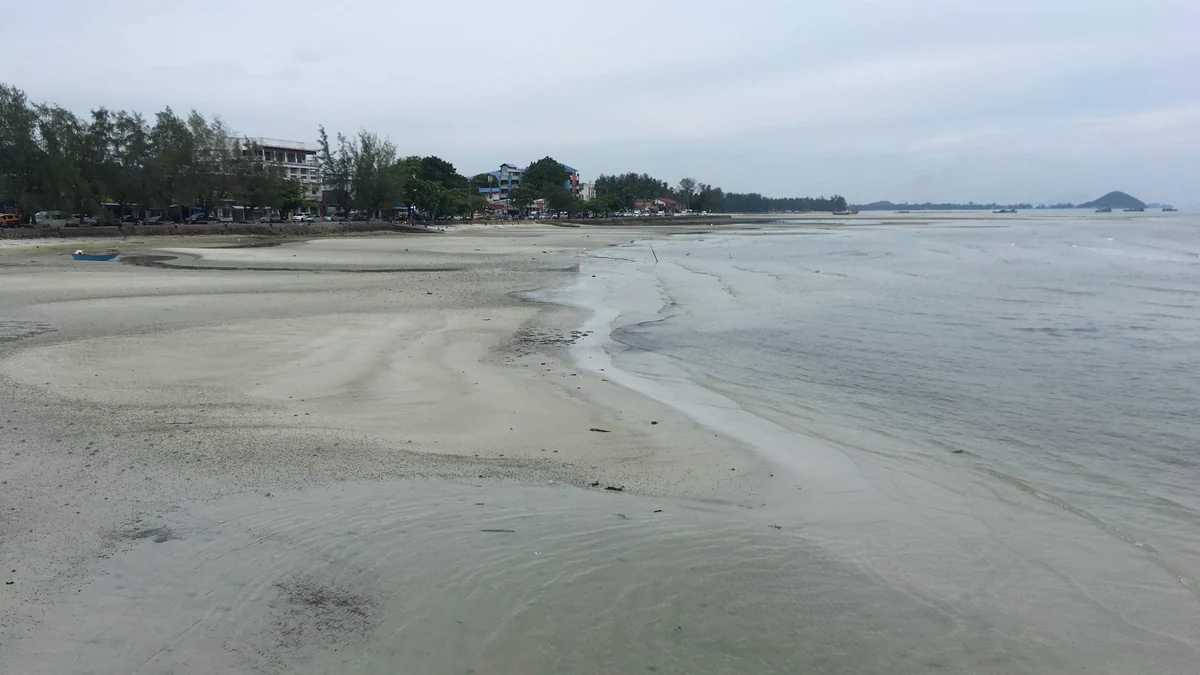
Ko Samui cruise port is a tender call where the landing point matters. Most large ships anchor off the west coast and send passengers to Nathon Pier, while many of the island’s best-known beaches and temples are on the north, east or south coast. The day therefore begins with a sea transfer and continues with a road journey.
For a first visit, the strongest plan is a controlled half-island route rather than an attempt to circle every attraction. Big Buddha, Wat Plai Laem and one beach make a balanced day when transport is confirmed and the return to Nathon allows for traffic and the final tender queue.
Ko Samui Cruise Port at a Glance
| Port name | Ko Samui Cruise Port |
|---|---|
| Main arrival area | Nathon Pier on Ko Samui’s west coast, reached by ship tender |
| Cruise region | Asia |
| Country / Territory | Thailand |
| Currency | Thai baht (THB) |
| Languages | Thai; English is widely used in established tourism businesses |
| Port role | Tender gateway to beaches, temples, waterfalls and a full island circuit |
| Disembarkation | Tender from the ship to Nathon Pier; sea conditions can alter timing or landing arrangements |
| Walkability | Moderate in Nathon; low for Chaweng, Lamai, temples and the interior |
| Shuttle required | Road transport is needed for the main sights; a ship shuttle may not replace a tour or taxi |
| Main transport | Pre-booked drivers, taxis, songthaews, minivans, ship coaches and excursion boats |
| Best first-time plan | Use a confirmed driver for Big Buddha, Wat Plai Laem and one beach, returning to Nathon early |
| Main caution | Island roads, tender queues and a distant beach can combine into a slow return |
Weather & Best Time to Visit Ko Samui
Ko Samui stays warm throughout the year, but rainfall does not follow exactly the same pattern as Phuket or Thailand’s Andaman coast. The wettest period often falls later in the year, while sea state can matter as much as rain because passengers must tender. Check the current Ko Samui forecast before the call and treat wind, thunderstorms and visibility as operational issues, not merely beach comfort.
| Month / season | Typical high | Typical low | Rain / conditions |
|---|---|---|---|
| January–March | 30°C | 24°C | Generally drier and sunny, with warm seas and occasional breezy days |
| April–June | 33°C | 26°C | Hotter and humid, with short showers and strong midday heat |
| July–September | 32°C | 25°C | Mixed sunshine and showers; sea conditions vary by coast |
| October–December | 30°C | 24°C | Often the wettest period, with heavier rain, rougher water and local flooding possible |
January to March
This is usually the easiest period for a beach-and-temple route. Even on a clear day, carry water and sun protection because temple courtyards and tender queues offer limited shade.
April to June
Heat can make a long island circuit feel much harder than its mileage suggests. Begin with exposed temple stops, then move to the beach or a shaded lunch rather than climbing viewpoints at midday.
July to September
A shower may be brief, but wind can affect tendering and small-boat excursions. Keep a land-based route available if a marine-park or snorkelling departure is cancelled.
October to December
Heavy rain can slow roads and reduce waterfall or beach access. A shorter north-coast plan with temples and an indoor lunch is more resilient than a full circuit during unsettled weather.
Arriving at Nathon Pier
Current cruise-line port information describes Ko Samui as a tender destination, with passengers commonly landing at Nathon. The Celebrity Cruises Ko Samui page and the Princess destination guide both reinforce that arrival pattern, but the ship’s daily notice remains the final authority.
Nathon is a working island town rather than a purpose-built resort compound. Banks, pharmacies, cafés and shops are available, and the waterfront can support a modest local day. Most passengers, however, will need a vehicle within the first hour because the headline temples and beaches are spread around the island.
Before leaving the pier, photograph the tender landing, note the final tender time and confirm whether a driver will return to the same gate. A verbal promise to meet “at the port” is too vague if barriers, parking controls or crowds change during the afternoon.
Big Buddha and Wat Plai Laem
Big Buddha at Wat Phra Yai and nearby Wat Plai Laem form the clearest cultural pairing for a first visit. They are on the north-east side of Ko Samui, so the route from Nathon crosses a substantial part of the island before sightseeing begins.
Dress respectfully with shoulders and knees covered, remove shoes where required and expect hot paving. Temple visits are active religious experiences rather than decorative photo stops. A driver who knows the correct entrances saves time and reduces unnecessary walking between parking areas.
Do not attach several distant beaches merely because both temples can be seen efficiently. Once the north-east corner is reached, either continue to a north-coast beach or move towards Chaweng; adding the deep south creates a different and much longer day.
Choosing a Beach: Chaweng, Lamai or the North Coast
Chaweng offers the broadest resort infrastructure and the liveliest beach scene, but traffic and development can make arrival and departure slow. Lamai is farther south and suits passengers who want a slightly more relaxed base, although it lengthens the road return to Nathon.
Bophut and the north-coast beaches can combine more naturally with Big Buddha and Wat Plai Laem. They may not provide the same long sweep of sand as Chaweng, but they reduce backtracking and make a temple-and-beach day easier to control.
Agree the exact beach entrance and collection point before the driver leaves. Beach names can refer to long coastal strips with several hotel accesses. Use a named hotel, restaurant or road junction rather than “meet us at Chaweng”.
Na Muang Waterfalls and the Island Interior
Na Muang’s waterfalls are a popular inland stop, especially after rain, but water level, path condition and crowding vary. The attraction should not be treated as a guaranteed swimming stop. Footwear with grip matters more than sandals chosen for the beach.
A waterfall route makes most sense with the south or south-east coast, not as an extra after a north-east temple circuit. Choose the interior deliberately, because the roads and walking turn it into a different itinerary.
Avoid animal attractions that cannot demonstrate strong welfare standards. A waterfall visit does not require elephant riding, staged wildlife encounters or a package that bundles several experiences without clear information about how animals are kept.
Mu Ko Ang Thong Marine National Park
The Tourism Authority of Thailand guide to Mu Ko Ang Thong describes a protected archipelago of limestone islands west of Ko Samui. It is an appealing marine excursion, but it is not a casual add-on to a tender call.
The day requires another boat, weather suitability and a reliable connection between the cruise tender and the excursion departure. A ship-sponsored trip or a carefully contracted operator is preferable because a delay offshore can threaten the final tender.
Passengers who mainly want Ko Samui itself should stay on the island. A marine-park excursion can consume almost the entire call and leaves little resilience if the first tender is late or the return boat is affected by sea conditions.
Nathon as a Low-Risk Local Day
The Tourism Authority of Thailand overview of Ko Samui helps place Nathon within the wider island. The town works for passengers who prefer not to spend hours in a vehicle: old shopfronts, markets, food stalls and the waterfront provide a modest introduction to everyday island life.
Use a local day to eat Thai food, buy practical items and take a short taxi to a nearby west-coast viewpoint or beach. Keep expectations realistic: this is a calm fallback and mobility option, not the island’s most dramatic sightseeing programme.
Taxis, Drivers and Songthaews
A pre-booked private driver is usually the most efficient independent choice for two to four passengers. Confirm the total price, route, waiting time, currency and pier return in writing. Pay the final balance after the vehicle has returned to Nathon unless the booking terms require otherwise.
Songthaews operate as shared pickup vehicles on parts of the island, but routes, fares and availability are not designed around cruise deadlines. They can suit a simple one-direction trip, yet they are a weak foundation for a multi-stop circuit with a fixed tender cutoff.
Ride-hailing availability and pickup rules can change. Do not build the final return around summoning an unknown vehicle from a remote beach. Retaining the same driver is normally worth the extra cost because it removes the most fragile part of the day.
Food, Markets and Payments
Thai baht is the practical currency for markets, small restaurants, taxis and entrance donations. Cards are common in larger resorts, but a card terminal should not be assumed at a temple stall, roadside café or local beach vendor.
Nathon and Fisherman’s Village both offer useful lunch options. Choose a restaurant that fits the route rather than crossing the island for a famous venue. Ask about spice level and allergies, especially where sauces contain fish, shellfish, peanuts or coconut.
Carry water in the vehicle and avoid leaving bags visible during stops. A compact day bag with medicine, tender card, sunscreen and dry clothing is easier to manage than beach gear spread across several passengers.
Mobility and Tender Practicalities
The tender is the first accessibility test. Passengers may need to step across a moving gap, use a gangway and climb into a small craft. The cruise line can explain its own boarding rules, but a general accessibility label for the island does not guarantee that the transfer is suitable.
Big Buddha involves steps, and some temple surfaces are hot or uneven. A driver-based route can still work for limited mobility if the group selects viewpoints and accessible courtyards rather than promising every summit or shrine interior.
Beach wheelchairs and step-free facilities are not consistent across public accesses. A resort day arranged in advance is often more reliable than arriving at an unnamed beach and hoping that seating, shade and toilets are close to the road.
CruisePing Recommended Ko Samui Port Day
Take an early tender and meet a pre-booked driver at Nathon. Travel first to Big Buddha and Wat Plai Laem while the heat and visitor numbers are lower, then continue to Bophut or Chaweng for lunch and beach time.
Leave the beach with enough margin for cross-island traffic and return to Nathon well before the final tender. Use any spare time around the waterfront rather than asking the driver to insert one more distant stop.
This route gives Ko Samui a clear identity without turning the day into a vehicle tour. Passengers who prioritise waterfalls should replace the north-east temples with Na Muang and a south-coast beach instead of combining both sides.
Common Ko Samui Cruise Port Mistakes
The most common mistake is planning from a hotel map rather than from Nathon Pier. A beach that looks central on an island brochure may require a long cross-island drive from the cruise landing.
Another error is accepting a cheap one-way fare without securing the return. A driver who disappears at Chaweng can leave passengers negotiating in traffic while the tender deadline approaches.
Finally, do not assume sunshine at the pier guarantees a smooth marine excursion. Local wind and thunderstorms can affect small boats even when the road network and beaches remain open.
Temple Dress, Beach Facilities and Day Bags
Carry a lightweight layer or sarong that covers shoulders and knees without becoming heavy in tropical heat. Temple staff may provide coverings, but relying on borrowed clothing can slow a group and may not fit comfortably. Socks are useful where footwear must be removed from hot paving.
For beach time, ask whether the chosen access has toilets, showers, lockers and shaded seating. A public strip of sand and a hotel day pass offer different levels of comfort, and the correct choice depends on mobility, children and how long the group intends to stay.
Keep the day bag small enough for tender boarding. Medicine, sunscreen, water, a dry phone pouch, cash and the ship card matter; bulky towels and several changes of clothing make every vehicle and boat transfer harder.
Shortened Calls and Weather Fallbacks
If clearance or tendering removes an hour, reduce the route immediately. Big Buddha, Wat Plai Laem and a nearby lunch still produce a worthwhile call; continuing to Lamai or Na Muang may not.
During heavy rain, use Nathon, one temple complex and a sheltered meal. Waterfalls may look attractive in wet weather, but slippery access and flashier runoff can make them less suitable, not more.
A cancelled tender call cannot be solved independently. Follow the cruise line’s instructions and do not arrange an operator who expects payment despite the ship being unable to land.
Tender Clothing and the Return Boat
Expect shoes or clothing to become damp during tender boarding. Keep a light dry layer in the day bag and leave enough time to board calmly; the final boat is not the place to discover that wet steps or a high swell are difficult for one member of the group.
Ko Samui Cruise Port: DIY or Organised Excursion?
DIY works best with a pre-booked driver, a short route and passengers comfortable managing the tender independently. It provides flexibility at temples and beaches and can be good value for a small group.
A ship excursion is stronger for Mu Ko Ang Thong, a complex island circuit, limited mobility or any plan involving another boat. The protection is operational rather than magical: passengers must still check what is included, how much walking is required and whether a beach stop has facilities.
Avoid a tour whose attraction list is longer than the usable time ashore. Ko Samui is better understood through two or three places than through a rushed circuit of photo stops.
Protecting the Return to Nathon
Place Nathon Pier in every driver’s phone before departure and keep the ship name visible. The island has several piers and ferry facilities, so “the cruise port” is not sufficiently precise.
Aim to reach the pier before the final advertised tender window. Tender queues, security and the boat trip are part of the return, and the last tender should be treated as an emergency boundary rather than the planned connection.
If traffic stalls, abandon shopping or a final viewpoint first. Do not ask a driver to compensate with unsafe speed on narrow island roads.
Ko Samui Cruise Port Checklist
A Ko Samui call is easier when the landing, route and return have been settled before the first tender reaches Nathon.
- Confirm Nathon Pier and the final tender time in the ship’s daily information.
- Choose either a north-east temple-and-beach route or a south-island waterfall route.
- Agree the vehicle price, route, waiting and return point in writing.
- Carry Thai baht, sun protection, water and clothing suitable for temples.
- Use a named beach access and a precise collection landmark.
- Keep a shorter land-based alternative for rain or rough seas.
- Return to Nathon before the final tender queue becomes the plan.
Useful Official Links
For Ko Samui, check tender information, island weather and any marine-park plan before committing to a route across the island.
- Celebrity Cruises guide to Ko Samui and Nathon tendering
- Princess Cruises destination guide to Ko Samui
- Tourism Authority of Thailand: Ko Samui
- Tourism Authority of Thailand: Mu Ko Ang Thong
- Thai Meteorological Department: Ko Samui forecast
Ko Samui Cruise Port FAQ
Do cruise ships dock in Ko Samui?
Most large cruise ships anchor offshore and tender passengers to Nathon Pier. The ship confirms the exact landing and tender schedule.
Can you walk from Nathon to the main beaches?
No. Nathon is walkable locally, but Chaweng, Lamai, Bophut and the main temples require road transport.
Is Chaweng or Lamai better for a cruise day?
Chaweng has more facilities and fits a north-east route; Lamai is quieter for some visitors but creates a longer return to Nathon.
Can you visit Ang Thong Marine Park?
Yes when a suitable excursion is offered, but it requires another boat and should be booked as the main purpose of the call.
What currency is used?
Thai baht. Carry cash for drivers, markets, temple donations and small food businesses.
Is Ko Samui suitable for limited mobility?
A driver-based route can work, but tender boarding, steps, hot surfaces and inconsistent beach access need individual checking.
CruisePing Port Verdict
Ko Samui rewards a selective route. Big Buddha, Wat Plai Laem and one beach provide a stronger first visit than a complete island circuit assembled from hurried photo stops.
The decisive practical step is retaining reliable transport back to Nathon. Once the vehicle and tender margins are protected, the island becomes a relaxed and varied cruise day rather than a race across the map.
Ready to browse our article library?
Looking beyond Ko Samui? Explore more ports in the Asia region, or narrow it to Thailand in particular. For cruise comparisons, planning shortcuts and value guides, head over to our main article archive.