
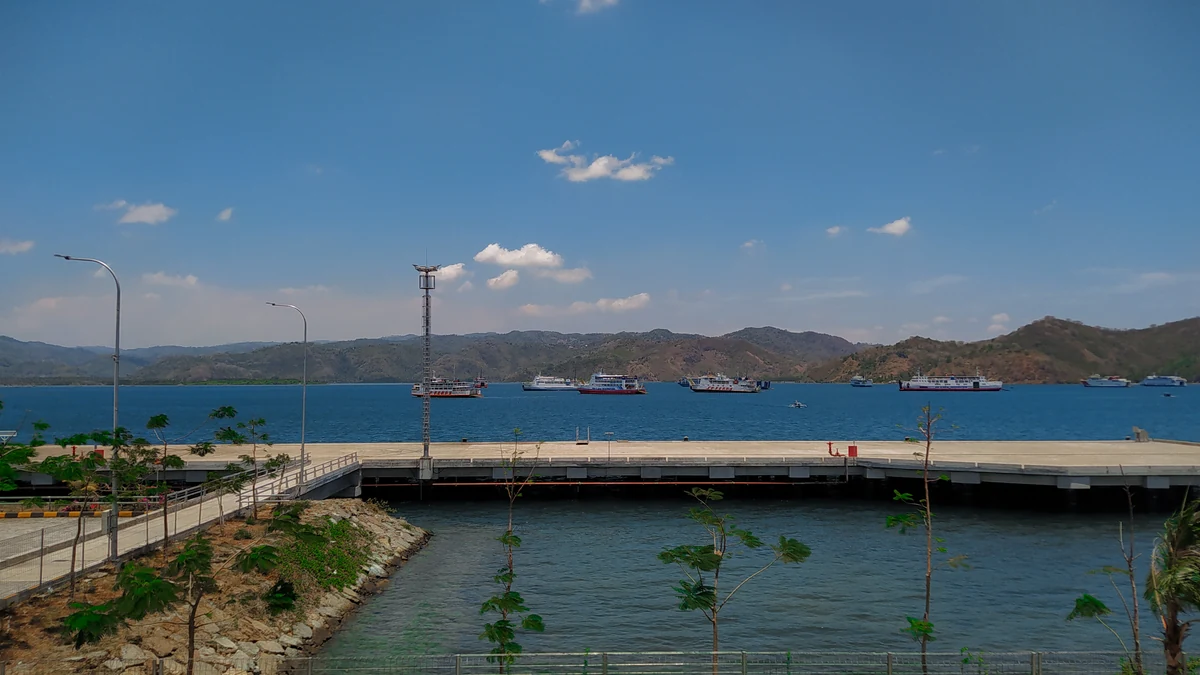
Lembar cruise port is the planning name used for Lombok calls on the island’s south-west coast, but many modern cruise ships use Gili Mas Passenger Terminal rather than the older ferry harbour. The difference affects the first road connection and makes the ship’s berth notice more useful than a generic Lembar map.
Lombok is large enough that a cruise day needs one direction. The strongest first-time choices are a Mataram–Senggigi route for culture and coast, or a south Lombok route towards Mandalika and nearby beaches. Trying to include both creates long road time and a fragile return.
Lembar Cruise Port at a Glance
| Port name | Lembar Cruise Port (Lombok) |
|---|---|
| Main arrival area | Gili Mas Passenger Terminal or another Lembar harbour arrangement on south-west Lombok |
| Cruise region | Asia |
| Country / Territory | Indonesia |
| Currency | Indonesian rupiah (IDR) |
| Languages | Indonesian and Sasak; English is used by established guides and tourism businesses |
| Port role | Gateway to Mataram, Senggigi, Sasak craft villages and the south Lombok coast |
| Disembarkation | Often docked at Gili Mas; an older Lembar berth or tender arrangement is possible for some calls |
| Walkability | Low; the terminal and commercial harbour are separate from the island’s principal attractions |
| Shuttle required | Yes for almost every useful port-day plan |
| Main transport | Ship coaches, private drivers, taxis, minibuses and organised excursions |
| Best first-time plan | Choose either Mataram–Senggigi culture and coast or a south Lombok–Mandalika route, not both |
| Main caution | Lombok’s attractions are widely separated, and older “Lembar” advice may not match a Gili Mas berth |
Weather & Best Time to Visit Lembar
Lombok has a tropical wet-and-dry pattern. The drier months suit road touring and beaches, while the wetter season brings greener scenery, sudden downpours and occasional disruption on exposed roads. Check the BMKG forecast for Mataram and the marine outlook when the ship or excursion uses tenders or local boats.
| Month / season | Typical high | Typical low | Rain / conditions |
|---|---|---|---|
| December–March | 31°C | 24°C | Wet and humid, with heavy showers, thunderstorms and slippery rural roads |
| April–June | 31°C | 23°C | Transition to drier weather, with warm days and greener landscapes |
| July–September | 30°C | 22°C | Usually dry, sunny and breezy, with dusty roads and strong midday sun |
| October–November | 32°C | 24°C | Very warm, with humidity and storm frequency rising towards the wet season |
December to March
A driver-based cultural route is easier to adapt than a beach circuit during heavy rain. Waterfalls may be fuller, but access tracks and steps can become slippery.
April to June
This period often gives a useful balance of green scenery and improving road conditions. Carry rain protection without building the day around shelter.
July to September
Dry weather favours beaches and village visits, but heat can build quickly in open craft courtyards and temple grounds. Begin the most exposed stop early.
October and November
Keep the route compact and avoid relying on a final long cross-island drive. A thunderstorm can slow traffic even when the port remains operational.
Gili Mas, Lembar and the Correct Arrival Point
The official Indonesia Travel Port of Lombok page describes Lembar as Lombok’s established cruise gateway. More recent Pelindo reporting on Indonesian cruise infrastructure identifies Gili Mas as an operating terminal able to receive large cruise ships.
Gili Mas lies near Lembar but is not the old public ferry quay. Drivers, guides and passengers should use the full terminal name from the ship’s notice. A collection arranged only for “Lembar port” can go wrong when access gates or parking areas differ.
The terminal has basic passenger facilities, but it is not a self-contained destination. Arrange transport before leaving the ship or use the line’s excursion area. Walking out to find a cheap taxi wastes time and may not be permitted through the port road.
Mataram, Mayura and West Lombok Culture
Mataram and adjoining urban areas offer temples, markets, mosques and craft businesses. A city route gives context to Lombok as a predominantly Muslim island with Balinese Hindu and Sasak influences, rather than presenting it simply as a quieter version of Bali.
Mayura Water Palace, Lingsar Temple or selected craft villages can form a practical loop when opening and access are checked. Dress modestly, accept a sash where required and allow the guide to explain shared religious spaces rather than treating them as photo backdrops.
A market stop should be chosen for food and local life, not inserted as a compulsory sales visit. Ask the guide how much time is allocated and whether purchases are expected.
Banyumulek, Weaving and Craft Villages
Banyumulek is known for pottery, while other villages specialise in weaving and traditional building. The West Nusa Tenggara tourism page for Banyumulek provides a useful official reference for the pottery community.
A good visit includes explanation and time to watch a process rather than a rapid walk through a showroom. Ask whether demonstrations are part of normal village work or staged for coach groups, and buy only when the item and price are genuinely attractive.
Large ceramics are awkward to carry and may not be suitable for air travel after the cruise. Textiles and smaller locally made pieces are easier purchases, but provenance should still be discussed.
Senggigi and the West-Coast Route
Senggigi lies north of Mataram and offers beaches, hotels and coastal views. It combines naturally with a west-Lombok cultural loop, although the road journey from Gili Mas still requires a disciplined return.
The official Indonesia Travel Lombok destination guide introduces the wider island and helps distinguish Senggigi from the Gili islands farther north-west.
Choose a resort day when reliable facilities and a fixed vehicle matter more than exploring several villages. A public beach may be more atmospheric but can provide less predictable shade, toilets and return transport.
Mandalika and South Lombok
The official ITDC guide to The Mandalika describes a developed tourism zone on Lombok’s south coast. Kuta Lombok, Tanjung Aan and surrounding viewpoints can make a strong scenic day from Gili Mas when traffic and the return are controlled.
This route should be treated as the day’s main commitment. The south-coast road, beach access and lunch already fill a substantial block; adding Senggigi or northern waterfalls creates unnecessary crossing of the island.
Check whether the tour focuses on beaches, the resort zone or the motor-racing circuit. “Mandalika” can describe a broad area, and passengers should know what the vehicle will actually visit.
Why the Gili Islands Are Usually a Poor Cruise-Day Fit
Gili Trawangan, Gili Air and Gili Meno are north-west of Lombok and require a long road transfer followed by another boat. Their appeal is clear, but the connection chain is weak for a short call from the south-west cruise terminal.
A ship excursion may make the route possible, yet passengers should check how much time remains on the island after driving and boat boarding. A photograph of turquoise water does not show the hours spent reaching it.
For a first visit, Senggigi or south Lombok gives more usable time and a simpler return. Save the Gilis for a longer island stay unless the cruise line has designed the entire day around them.
Waterfalls and the Rinjani Temptation
Northern waterfalls and Mount Rinjani are too distant for a casual addition. Road times are long, and trail access adds another physical commitment. Rinjani itself is a multi-day trekking destination, not a cruise-port climb.
A waterfall excursion should state the village, walking distance, steps and seasonal water conditions. Photographs taken after heavy rain can create unrealistic expectations during the dry season.
Passengers seeking green landscapes can use a nearer rice-field or village route. The best cruise day is not the one that reaches the farthest point on Lombok.
Drivers, Guides and Road Conditions
A pre-booked driver is the best independent tool for Lombok. Agree the exact terminal, route, total price, waiting, parking and return time. A low headline fare may exclude admissions or expect lengthy shopping stops.
Road surfaces range from modern highways to narrow village lanes. Travel time depends on traffic, ceremonies, weather and slow vehicles. Build a buffer around the return rather than trusting the fastest mapping estimate.
English ability varies. Save destination names and the terminal address in Indonesian, and keep the driver’s number available offline in case mobile data weakens outside urban areas.
Food, Money and Local Etiquette
Indonesian rupiah is essential for small restaurants, markets, village fees and purchases. Larger hotels may accept cards, but a rural lunch should not depend on one payment terminal.
Lombok food can be spicy and often includes chicken, fish, coconut and sambal. Ask clearly about allergies and spice. A guide who orders a shared meal can help, but the group should confirm price before eating.
Dress modestly in villages and religious places. Beach clothing belongs at the coast, not in mosques or family courtyards. During Ramadan or prayer periods, follow local guidance on eating, access and photography.
Mobility and Heat
The terminal transfer is straightforward when a coach meets the ship, but attractions may involve uneven courtyards, vehicle steps, sand and toilets away from the parking area. Ask for a route description rather than a generic “easy” rating.
A driver-based Mataram and craft-village day is generally easier to modify than a waterfall or beach circuit. Select fewer stops and arrange seating in shade while other members explore.
Carry water and use air-conditioned travel as recovery time. Dry-season wind can hide how quickly dehydration develops on exposed temple and beach stops.
CruisePing Recommended Lembar Port Day
For culture and coast, take a confirmed driver from Gili Mas to one craft village, a carefully chosen Mataram religious or heritage site and Senggigi for lunch and sea views. Return south before late traffic builds.
For beaches, drive directly towards Mandalika, use one south-coast beach and add a village or viewpoint only when it lies on the same route. Do not cross back through Mataram for an unrelated attraction.
Both plans reveal Lombok more clearly than a long transfer to the Gili islands. The choice should reflect the group’s priorities, not the number of stops advertised.
Lembar Cruise Port: DIY or Organised Excursion?
DIY works well with a reputable pre-booked driver and a route confined to one side of the island. It allows more time at villages and beaches and avoids generic coach shopping stops.
A ship excursion is stronger for distant waterfalls, a complex cultural programme, limited mobility or any route where the operator must protect access through the port gate. The organised option should still disclose shopping and walking.
Public transport is not suitable for a multi-stop cruise day from Gili Mas. It may be inexpensive, but it is not designed around the berth, luggage-free tourists or an all-aboard deadline.
Lombok Distance Reality Check
Gili Mas is well placed for south-west Lombok, but the island is larger than a resort map suggests. Mataram is a meaningful road transfer, Senggigi lies farther north and Mandalika requires a separate drive towards the south coast. These routes should not be added together simply because each appears in a shore-excursion brochure.
Ask the driver for door-to-door time from the terminal, not the distance in kilometres. Village traffic, ceremonies, road works and heavy rain can change a short-looking journey. The return estimate should include the port approach and any internal security shuttle.
A practical rule is to place the farthest stop first and finish progressively closer to Gili Mas. This prevents a beach lunch or craft demonstration from leaving the group at the wrong end of the island late in the day.
Community Visits and Buying Locally
Village tourism works best when the community controls the visit and receives a clear benefit. Ask who runs the demonstration, whether photography is welcome and whether the schedule allows residents to continue ordinary work.
A guide should explain the difference between Sasak weaving, pottery and mass-produced souvenirs. Buying directly from a maker can be worthwhile, but passengers should never feel obliged to purchase after a demonstration.
Check size, weight and customs restrictions before buying pottery, wood or plant-based products. A smaller piece with a known maker is often a better souvenir than a large object that is difficult to carry and may not be locally produced.
Common Lembar Cruise Port Mistakes
The first mistake is arranging collection at the old Lembar ferry terminal when the ship is at Gili Mas. Use the precise passenger terminal named by the cruise line.
The second is combining Senggigi, Mandalika and a northern waterfall. These are separate directional strategies, not neighbouring attractions.
The third is allowing a driver to add unrequested shopping stops. Agree the route and the maximum time at any demonstration before leaving the terminal.
Terminal Facilities and the Last Stop
Gili Mas may provide toilets, waiting space and local stalls, but passengers should not assume every service operates for every call. Buy essential water before a long excursion and use the terminal facilities when the vehicle returns.
Keep the final shopping stop close to the port and optional. A craft outlet on the return route can use spare time, while a detour through Mataram should never be required to collect a commission or complete the tour.
Rain and Shortened-Call Alternatives
During heavy rain, replace beach viewpoints and rough village paths with a compact Mataram route and an established restaurant. The day remains useful without forcing an exposed coast stop.
If the call loses an hour, keep one cultural site and one craft village or beach. Remove the farthest attraction immediately rather than reducing every visit to a hurried photograph.
A ship moved from Gili Mas to a tender arrangement may lose additional time. Recalculate from the moment passengers actually reach the road, not from the printed arrival time. Ask the guide to name the terminal aloud before the vehicle leaves its final stop, then repeat it to the group.
Protecting the Return to Gili Mas
Give the driver the ship name and full terminal name before the vehicle leaves. Gili Mas and Lembar are related port areas but not interchangeable gates.
Plan to reach the terminal early enough for security and any internal shuttle. A traffic delay near Mataram or a religious procession can be difficult to recover on the final road leg.
Use spare time at the terminal or a nearby approved stop. Do not turn an early return into a last-minute detour that crosses the port approach road again.
Lembar Cruise Port Checklist
A Lombok call becomes manageable once the correct terminal and one directional island route are fixed.
- Confirm whether the ship uses Gili Mas, an older Lembar berth or a tender operation.
- Choose the Mataram–Senggigi route or the south Lombok–Mandalika route.
- Agree driver price, shopping stops, admissions and terminal return in writing.
- Carry Indonesian rupiah, water and modest clothing for villages and religious sites.
- Treat the Gili islands and northern waterfalls as dedicated long excursions.
- Keep a rain-friendly cultural fallback and reduce the route if the call shortens.
- Return to the correct Gili Mas or Lembar gate with a conservative road margin.
Useful Official Links
For Lombok, check the exact terminal first, then use official island and destination sources to choose a route that stays on one side of the island.
- Indonesia Travel: Port of Lombok
- Pelindo: current Indonesian cruise-terminal infrastructure
- Indonesia Travel: Lombok destination guide
- West Nusa Tenggara tourism website
- ITDC: The Mandalika
- BMKG forecast for Mataram
- BMKG marine forecast for the southern Lombok Strait
Lembar Cruise Port FAQ
Is Gili Mas the same as Lembar cruise port?
Gili Mas is the newer passenger terminal near the established Lembar harbour area. The ship’s documents should be used for the exact gate.
Can you walk from the terminal?
Not to the main attractions. Road transport is required for Mataram, Senggigi, villages and the south coast.
Can you visit the Gili islands?
Sometimes through a dedicated excursion, but the road-and-boat connection is long and fragile for a normal cruise call.
Which route is best for a first visit?
Choose Mataram and Senggigi for culture and coast, or Mandalika for a south-Lombok beach day.
What currency is needed?
Indonesian rupiah. Carry cash for village purchases, small restaurants, fees and tips.
Is Lombok suitable for limited mobility?
A private driver can create a manageable route, but individual temples, villages and beaches need checking for steps, sand and uneven ground.
CruisePing Port Verdict
Lembar is a gateway rather than a destination to explore on foot. Its value lies in choosing one coherent Lombok route and giving that route enough time.
For most passengers, Mataram–Senggigi or south Lombok–Mandalika is a better use of the call than chasing the Gili islands. Confirming Gili Mas at the start removes the most avoidable logistical error.
Ready to browse our article library?
Looking beyond Lembar? Explore more ports in the Asia region, or narrow it to Indonesia in particular. For cruise comparisons, planning shortcuts and value guides, head over to our main article archive.