
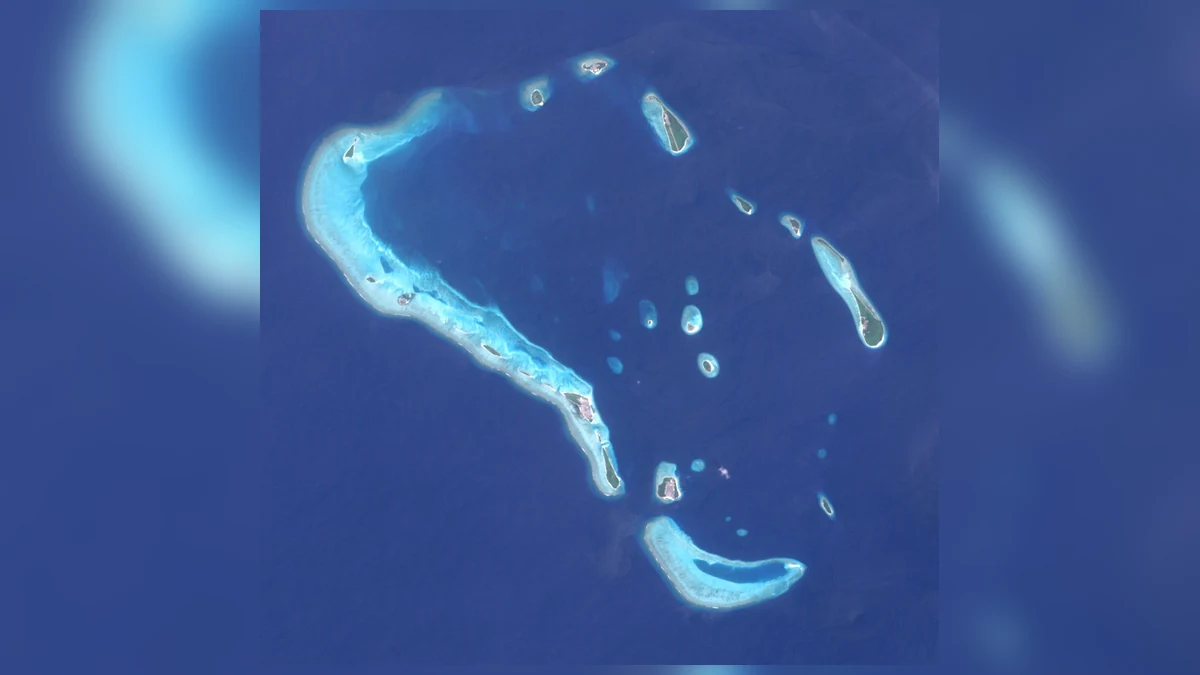
Uligamu cruise port is not a conventional terminal call. It is a small northern Maldivian island where the ship normally remains offshore and local boats bring passengers ashore, subject to sea conditions and the arrangements made for that sailing. The appeal is the opposite of Malé: a quiet inhabited island, a working harbour, low-rise homes and a shoreline that can be explored without turning the day into a long transfer.
There is no dense catalogue of formal attractions to work through. Uligamu is better treated as a chance to see everyday island life, spend time beside clear water and understand how a remote community functions at the edge of the Maldives. The strongest plan is deliberately modest: confirm the landing arrangements, walk slowly, accept that organised activities may be limited, and leave enough time for the boat back to the ship.
Uligamu Cruise Port at a Glance
| Port name | Uligamu |
|---|---|
| Main arrival area | Local harbour or ship-arranged landing on Uligamu; the exact tender point can vary |
| Cruise region | Indian Ocean |
| Country / Territory | Maldives |
| Currency | Maldivian rufiyaa (MVR); small US-dollar notes may sometimes be accepted, but do not rely on this |
| Languages | Dhivehi; English is used in tourism and official clearance |
| Port role | Remote day call and occasional clearance point for visiting vessels |
| Disembarkation | Tender or local launch; entirely ship- and weather-dependent |
| Walkability | High once ashore because the inhabited area is compact |
| Shuttle required | No for the village; boats or arranged transport are needed for activities beyond the island |
| Main transport | Walking, ship tender, local boat and pre-arranged excursion craft |
| Best first-time plan | A guided or self-guided village and shoreline walk, with beach or lagoon time if conditions allow |
| Main caution | Do not assume a full resort-style excursion programme, cash facilities or a fixed landing timetable |
Why Uligamu Feels Different from a Resort Island
A resort island is designed around visitors. Uligamu is an inhabited island whose harbour, streets and shoreline serve the community first. That difference is the point of the call, but it also changes the passenger’s expectations. There may be no formal arrival hall, line of taxis, large souvenir market or beach club waiting at the landing. Services can be simple and opening patterns may respond to the ship rather than operate to a fixed visitor timetable.
The official Visit Maldives introduction to Maldivian culture explains how the country’s traditions have been shaped by the island environment and the sea. On Uligamu, that relationship is visible in the harbour activity, compact settlement, boats, shaded lanes and the practical use of a very small land area. The day works best when passengers observe rather than expect the island to perform for them.
Arrival and Clearance Reality
Uligamu has an official role in receiving visiting vessels. The Maldives Customs office at Uligam specialises in clearance for tourist yachts, and the national vessel guidance identifies Uligan Yacht Harbour as a clearance location for tourist-carrying vessels. A cruise call is still governed by the ship’s own port agent, immigration and tender plan, so yacht procedures should not be read as a promise that every passenger will land through the same facility.
The important passenger message is simple: use the place name on the daily programme, listen for tender-ticket instructions and do not assume that a map pin marks the precise gangway-to-shore route. A tender cancellation or shortened landing is possible when wind, swell or operational clearance makes the call impractical. This is a port where the ship’s announcement on the day carries more weight than a generic itinerary description written months earlier.
The Harbour Is Part of the Visit
The harbour is not merely the point to hurry through. It shows how supplies, fishing craft, inter-island movement and official vessel calls connect a remote community to the rest of the country. Pause long enough to understand the layout before setting off. Note the tender return point, any numbered meeting marker and whether passengers are being released independently or kept with a local guide.
Photography should remain discreet around working boats, officials and residents. Ask before photographing people at close range, and avoid blocking harbour access while waiting for a picture. If the ship uses a temporary pontoon, steps or a low local boat, passengers with reduced mobility should assess the transfer before leaving the ship; a compact island does not automatically mean an easy disembarkation.
Walking Around Uligamu
Once ashore, walking is the most useful form of transport. The settlement is small enough that a slow circuit can reveal the mosque, homes, community buildings, shaded areas and the transition from village street to coast without a vehicle. Roads and paths may be uneven, sandy or wet, and strong sun can make a short distance feel longer than it looks on a map.
There is little benefit in walking fast. The value comes from noticing details: water storage, planting, boat maintenance, local shopfronts and the way buildings are protected from heat and salt air. A guide can add context, but passengers should not worry that they are “missing” a major monument by wandering independently. The island itself is the main subject.
Beach and Lagoon Time
Clear water and a pale shoreline are the obvious draw, but Uligamu is not a managed private-resort beach. Before swimming, confirm which stretch is appropriate for visitors, whether shoulders and thighs should remain covered away from any designated tourist beach, and whether currents, coral or boat movements create a local hazard. Reef shoes can help where broken coral or rough sand replaces a soft entry.
Treat beach time as a flexible part of the day rather than a guaranteed package. Wind may make one side of the island more comfortable than another, and a local guide may redirect passengers to protect privacy or avoid working areas. Carry water, sun protection and a light cover-up; shade can be limited, and the reflected glare from sand and sea is stronger than the air temperature suggests.
Snorkelling and Boat Activities
A snorkelling trip, reef visit or short boat outing can be the most memorable use of a longer call, but it should be booked through the cruise line or a clearly identified local operator working with the call. There is no advantage in improvising a private boat after arrival unless the ship has explicitly permitted independent arrangements and the operator can state the route, equipment, timing and return point.
Ask what is included before boarding: mask and fins, flotation aid, drinking water, shade, guide supervision and a realistic return buffer. Reef conditions vary with wind and current, and visibility is not guaranteed. Passengers who mainly want a calm island experience may get more from the village and shore than from adding another transfer to a day already dependent on tenders.
Local Culture, Dress and Conduct
Uligamu is a Muslim local island, not an enclosed resort. Clothing that covers shoulders and knees is the safest default in the village, particularly around the mosque and community buildings. Swimwear belongs only on a clearly designated bathing area, and alcohol should remain on the ship. These are not decorative rules; they recognise that passengers are entering a residential community.
The island council’s official Uligan contact page is a useful reminder that this is a governed local community rather than a cruise attraction. Keep voices moderate, do not enter private yards, and accept a polite “no” to photographs. Small purchases and respectful conversations are more valuable than treating the village as a backdrop.
Food, Water and Money
Passengers should not rely on finding a restaurant that can serve a shipload of visitors. A small shop, refreshment stop or ship-arranged tasting may be available, but the choice and hours can vary. Eat breakfast before going ashore, carry water where permitted and regard any local snack as an addition rather than the day’s only meal.
The Maldivian rufiyaa is the national currency. Some tourism-linked transactions may be quoted in US dollars, yet card acceptance, change and cash machines cannot be assumed on a small island. Bring modest denominations and clarify the price before purchasing. Large notes are inconvenient where a business has limited change, and phone-based payment systems used by residents may not be accessible to an overseas visitor.
Mobility, Heat and Tender Steps
The island’s flat scale helps, but the hardest part of the day may be the ship-to-boat and boat-to-shore transfer. Tender steps move with the sea, and a local craft may have a high side or narrow boarding point. Passengers who need a wheelchair, rollator or firm handrail should ask the ship’s accessibility team what the actual landing requires rather than relying on the general description of Uligamu as walkable.
Once ashore, heat and humidity are more important than distance. Build in shade, drink before feeling thirsty and turn back early if the return route is unclear. A short village circuit completed comfortably is better than an ambitious shoreline walk that leaves a passenger overheated at the far end of the island.
CruisePing Recommended Port Day
For most first-time visitors, CruisePing would choose the simplest version of Uligamu: land with the ship’s first practical tender wave, orientate at the harbour, take a guided village circuit if one is offered, then use the remaining time for a suitable beach or lagoon stop. This keeps the day rooted in the island rather than searching for a headline attraction that does not exist.
A pre-booked reef or boat trip is worthwhile only when it is the main priority and the operator is integrated with the ship’s timing. Do not stack a boat excursion, long swim and full village circuit into a short call. The low-risk fallback is a harbour-and-village walk followed by shade near the landing.
Independent Exploration or Organised Activity?
Independent walking is entirely reasonable once passengers have been released ashore and the boundaries are clear. It suits people interested in local life, photography and a quiet shoreline. An organised guide is more valuable here than it might appear, because interpretation turns ordinary-looking buildings and working spaces into a coherent picture of island life.
Use an organised arrangement for snorkelling, offshore reefs, sandbanks or any plan involving a second boat. The main benefit is not luxury; it is accountability for equipment, sea conditions and the return. CruisePing would not hire an unverified boat simply because someone offers one at the landing.
Port-Day Pitfalls to Avoid
The most common mistake is expecting a miniature resort day. Uligamu may offer beautiful water, but not the infrastructure, privacy or range of facilities found on a private resort island. A second mistake is assuming that “small” means no planning is needed. Tender allocation, respectful dress, drinking water and the return point still matter.
Do not wander into residential compounds, photograph people without permission or treat a mosque as an attraction that can be entered casually. Avoid leaving the harbour without understanding how the last tender will be called. Finally, do not wait until the return queue to discover that purchases must be paid in a form you do not have.
Weather & Best Time to Visit Uligamu
| Month / season | Typical high | Typical low | Rain / conditions |
|---|---|---|---|
| January to March | 30–31°C | 25–26°C | Usually the drier monsoon; strong sun and calmer periods are common, though showers remain possible |
| April | 31–32°C | 26–27°C | Hot transition month with humidity, variable winds and short heavy showers |
| May to November | 29–31°C | 25–26°C | Southwest monsoon brings wetter, windier and more changeable sea conditions |
| December | 29–30°C | 25–26°C | Transition towards the drier season; conditions can change quickly |
Climate guidance comes from the Maldives Meteorological Service. Check the latest forecast before the call. On Uligamu, wind and swell matter more than a small change in temperature because they control tender comfort, snorkelling access and whether a beach lies on the sheltered side of the island.
Frequently Asked Questions
Do cruise ships dock at Uligamu?
Most cruise passengers should expect the ship to remain offshore and use tenders or local launches. The exact landing and whether passengers may go ashore depend on the ship, port agent, clearance and sea conditions.
Can I explore without an excursion?
Usually yes, once the ship has confirmed that independent exploration is permitted. The inhabited area is compact, but follow any local guidance about residential areas, beaches and the final tender.
Is Uligamu a beach day?
It can include beach or lagoon time, but it is not a private-resort beach call. Facilities, changing areas, shade and swim zones may be limited, so treat swimming as one part of a local-island visit.
Will cards work?
Do not assume they will. Carry a small amount of suitable cash, use modest notes and ask the price and accepted currency before buying.
Useful Official Links
- Maldives Customs — Uligam regional office
- Maldives Customs vessel clearance information
- Uligan Island Council
- Maldives Immigration traveller declaration
- Maldives Meteorological Service
CruisePing Port Verdict
Uligamu rewards passengers who value place over spectacle. The island is small, the infrastructure is modest and the sea may rewrite the programme, yet that is precisely why the call can feel more revealing than a polished resort stop. Walk slowly, behave as a guest and choose one water activity only if it is properly organised.
CruisePing’s preference is a village-and-shoreline day with the harbour kept firmly in view. It is low stress, faithful to the character of the island and resilient if a planned swim or boat trip has to change.
Ready to browse our article library?
Explore more ports in the Indian Ocean, narrow the library to Maldives cruise ports, or return to the main CruisePing article library.