
Astoria cruise port sits beside the Columbia River near the riverfront trail, west of the compact downtown core. Ships usually dock at the Port of Astoria rather than tendering, and the local operation is designed around a pier welcome, shuttle transport and independent access to a small historic city. The port is easy to understand, but the weather and distances between the main choices still need planning.
A first visit does not require a full coast excursion. The Riverwalk, Columbia River Maritime Museum, downtown streets and river views make a coherent local day. Fort Clatsop adds important Lewis and Clark history, while Cannon Beach and the wider Oregon coast become separate excursion decisions. The strongest plan chooses one level of ambition and keeps a generous return in case rain, traffic or shuttle demand slows the day.
Astoria Cruise Port at a Glance
| Port name | Astoria |
|---|---|
| Main arrival area | Port of Astoria, commonly Pier 1 |
| Cruise region | Alaska / North America / Canada |
| Country / Territory | USA |
| Currency | US dollar (USD) |
| Languages | English |
| Port role | Day-call port on Pacific coast, Alaska and repositioning itineraries |
| Disembarkation | Docked |
| Walkability | Moderate; the Riverwalk begins near the port, but downtown and attractions require distance or transport |
| Shuttle required | Not essential for strong walkers, but useful for downtown and wet weather |
| Main transport | Port shuttle, walking, seasonal heritage trolley, taxi and organised coach |
| Best first-time plan | Riverwalk, maritime museum and downtown, with the Astoria Column only if transport is secure |
| Main caution | Coastal rain and wind can change walking and trolley plans quickly |
A Working River Port with a Strong Sense of Place
Astoria’s identity comes from the Columbia River, maritime trade and the difficult river entrance known as the Columbia Bar. Even passengers who never enter a formal attraction can see ships, bridge infrastructure, fishing activity and weather moving across a broad estuary. The port is not a sealed cruise compound; it opens into a waterfront where the city’s working and visitor functions overlap.
The official Port of Astoria cruise information records the city’s long history as a port of call. Local volunteers and businesses often shape the welcome, but services vary by ship day. Treat the current pier announcement as the operational source for shuttles, vendors and return procedures.
Arrival at the Pier
Most ocean cruise passengers dock at a deep-water pier, commonly Pier 1, and walk through a simple port arrival area. Note the gangway location, any shuttle ticket desk and the point where private tours meet. The riverfront can be windy even when downtown feels sheltered, so keep a waterproof layer accessible rather than packed beneath purchases.
The pier may host local stalls, information and transport. Browse after securing the day’s plan, not before a timed tour. When several coaches load at once, the roadway and pedestrian route can become busy; follow the marked path and do not step into operational areas for a bridge photograph.
Using the Pier as a Decision Point
Before leaving Pier 1, identify the day’s three anchors: the nearest shuttle stop, the preferred return route and the ship’s final boarding time. Port volunteers and visitor information can help distinguish a coach excursion meeting point from the public shuttle queue. That matters because the pier is spacious enough for several transport streams to appear similar when a ship is alongside.
If poor weather is already moving across the river, take the shuttle towards downtown or the museum and walk back only if conditions improve. In clearer weather, begin on foot and use the shuttle for the return. This simple reversal avoids committing to a wet exposed walk twice.
The Port Shuttle: Useful, Not Automatically Necessary
The Port of Astoria’s pier-side information says passenger coaches run approximately every 30 minutes while a ship is in port and carry riders between the pier and downtown. It also publishes a current fare range, but passengers should verify the charge and stops on their call rather than treating an online figure as permanent.
The shuttle is valuable in rain, for passengers with limited walking range and for anyone wanting to save energy for downtown. Strong walkers can use the Riverwalk, but the distance is not negligible and the return can feel longer into wind. A good compromise is to shuttle one way and walk the other when conditions are favourable.
Walking and the Riverfront Trolley
The Travel Astoria Riverwalk guide follows the waterfront past working areas, viewing points, businesses and museums. It is the city’s natural organising route. Sections are level, but surfaces, rail crossings and weather exposure vary. Allow time to stop for ships, birds and bridge views rather than treating it as a direct pavement between attractions.
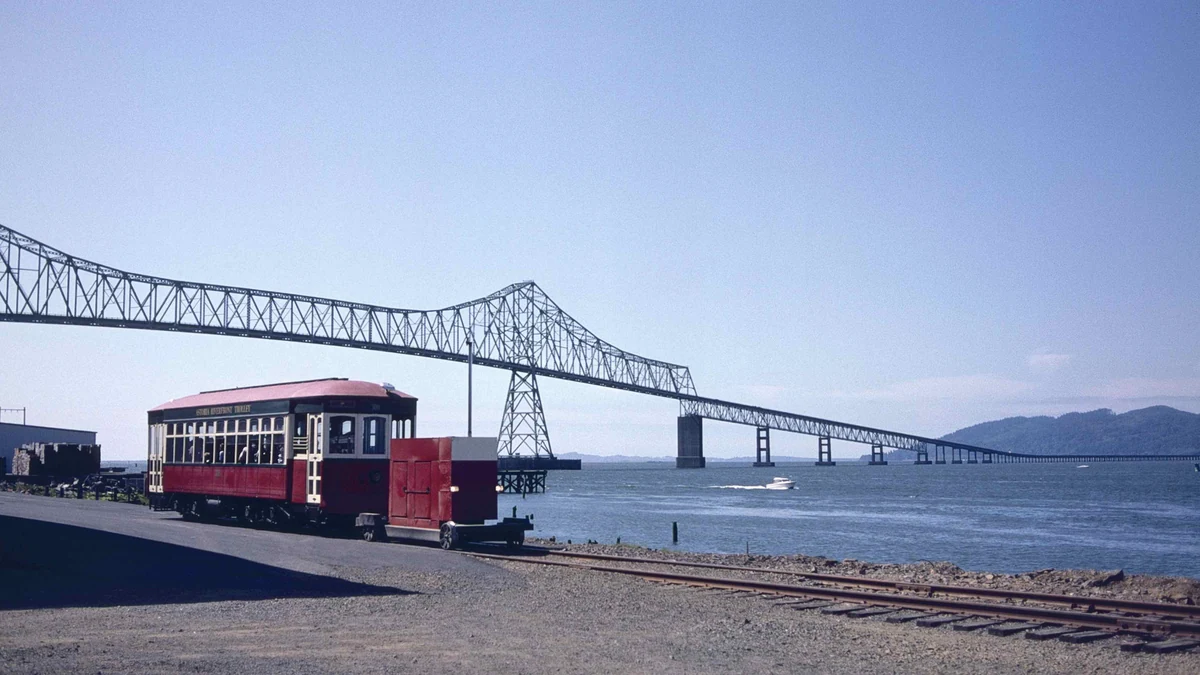
The seasonal heritage trolley, “Old 300”, can add character and reduce some walking. Official local tourism information notes that operation is seasonal and weather-dependent. The trolley uses a single track and may involve waiting, so it should be enjoyed as an experience rather than relied upon as the only return transport.
Building a One-Way Riverwalk Route
The Riverwalk is best used as a line rather than an out-and-back attraction. Walk from the pier towards the maritime museum and central waterfront, pause for the river views, then decide whether to continue into downtown or use the shuttle back. That keeps the strongest sights in sequence and reduces repeated ground.
Watch for rail activity and follow marked crossings. The waterfront includes working and visitor spaces, so the most direct-looking route is not always the correct pedestrian route. On a windy day, walking east with the weather behind you and returning by shuttle can be more comfortable than forcing a symmetrical circuit.
Columbia River Maritime Museum
The Columbia River Maritime Museum is the strongest indoor anchor for a first visit. It explains navigation, fishing, rescue, weather and the Columbia Bar, giving context to the river visible outside. It pairs naturally with the Riverwalk and remains valuable in rain.
Allow enough time to engage with the exhibits rather than passing through for shelter. Check current admission and opening directly with the museum. A passenger especially interested in maritime history could make this the main attraction and use the rest of the call for the riverfront and lunch.
Why the Museum Changes the Rest of the Day
The museum gives meaning to details that are easy to overlook outside: pilot boats, navigation aids, commercial traffic and the exposed river mouth. Visit it before a long waterfront walk if maritime history is a priority. The river scene then becomes easier to read rather than remaining a backdrop.
On a rainy call, the museum can carry more of the day. Allow enough time for exhibits without assuming the weather will clear immediately, then add a short downtown meal and shuttle return. On a bright call, keep the museum visit selective so the city and river views still receive time.
Downtown Astoria
Downtown offers historic commercial buildings, cafés, independent shops and streets rising from the river. The grid is compact, but the slope becomes noticeable south of the waterfront. Choose a few blocks and let the city’s architecture, food and river relationship provide the interest.
The downtown stop works well between the museum and shuttle return. It also gives passengers a chance to spend locally without depending on pier vendors. Do not push uphill without a destination simply because a viewpoint appears close on the map; Astoria’s contours are more demanding than the riverfront.
A Compact Downtown Circuit
From the waterfront, climb only as far as your chosen blocks require. A practical circuit uses the lower commercial streets for architecture, shops and food, then returns towards the river rather than continuing uphill without a destination. This protects energy for the pier walk and avoids turning a relaxed town visit into a gradient test.
Choose lunch close to the route and note the nearest shuttle pickup before sitting down. A queue at a popular restaurant can consume the same time as another attraction. If the wait is long, move to a second option rather than sacrificing the return margin for one specific meal.
The Astoria Column
The Astoria Column stands on Coxcomb Hill and provides a broad view over the city, river and surrounding landscape when the weather is clear. It is not a comfortable walk from the pier for most cruise passengers because the final climb is steep and the route consumes valuable time. Use a taxi, tour or ship-arranged transport.
The view is weather-sensitive. Low cloud, rain or strong wind may reduce the reward, and the internal spiral staircase is not suitable for every visitor. The hillside grounds can still offer a perspective without climbing to the top, but confirm the return vehicle before being dropped off.
Fort Clatsop and Lewis and Clark History
Fort Clatsop, part of Lewis and Clark National Historical Park, lies outside central Astoria and needs road transport. The National Park Service describes the reconstructed fort, visitor facilities, ranger programmes and trails connected to the expedition’s winter encampment. Its official hours and seasons page should be checked because seasonal opening and holiday closures apply.
This is the best organised or pre-arranged outing for passengers whose main interest is American exploration history. It deserves time for interpretation rather than a ten-minute photograph. Combine it with one local waterfront stop, not with every central attraction and a coast drive.
Cannon Beach and the Oregon Coast Decision
Cannon Beach, coastal viewpoints and other Pacific locations appear on shore-excursion programmes because they show a different landscape from the river city. They also require a substantial road journey and are vulnerable to traffic, weather and short calls. An organised excursion is normally the sensible way to attempt them.
Choose the coast when scenery is the clear priority and Astoria itself is secondary. Do not add Cannon Beach to a DIY morning simply because the map looks manageable. The port-day value comes from a properly timed coast route or a local Astoria day, not from rushing both.
Fort Clatsop and the Coast Are Different Days
Fort Clatsop is a history-led half-day; Cannon Beach is a scenery-led coastal excursion. They should not be combined merely because both require road transport. Fort Clatsop offers interpretation and woodland context, while the coast depends more heavily on visibility, beach conditions and road timing.
For a standard call, select the one that matches the reason for leaving Astoria. A tour that tries to include both can reduce each stop to a photograph and leave little time for the city. Passengers who have never visited Astoria may gain more from one external excursion plus a short waterfront finish than from a full-day coach loop.
Best Things to Do from Astoria Cruise Port
Astoria Riverwalk
Best for: River views, ships and an easy introduction to the city
Best way: Walk from the pier or combine with a one-way shuttle
Watch: Wind and rain can make the exposed return tiring
Columbia River Maritime Museum
Best for: Maritime history and a strong indoor weather-proof anchor
Best way: Reach it by Riverwalk, shuttle or trolley depending on the call
Watch: Check current opening and allow real exhibit time
Downtown Astoria
Best for: Food, architecture and independent shops
Best way: Use the shuttle or continue from the museum
Watch: Streets rise quickly away from the river
Astoria Column
Best for: Panoramic views in clear weather
Best way: Taxi or organised transport
Watch: Steep access, wind and the internal staircase
Fort Clatsop
Best for: Lewis and Clark history and ranger interpretation
Best way: Pre-arranged transport or excursion
Watch: Road time means it should replace, not supplement, several local stops
CruisePing Recommended Port Day
CruisePing would begin on the riverfront, visit the maritime museum and continue into downtown for lunch or a short walk. Use the port shuttle one way if it improves the timing. Add the Astoria Column only when a return taxi or tour is confirmed and visibility is good.
For a history-led day, replace the central circuit with Fort Clatsop and retain a brief riverfront stop near the ship. For a coast-led day, book an organised excursion and accept that Astoria will be seen mainly from the pier. Each option is strong; combining all three is not.
DIY or Organised Excursion?
Astoria is easy to explore independently when the plan stays local. The Riverwalk, shuttle, downtown and museum create a route that does not need a guide. DIY also lets passengers respond to rain by moving indoors or taking the next shuttle.
Use an organised excursion for Fort Clatsop if transport is uncertain, and for Cannon Beach or a broader coast route. A private taxi can work for the Column or a short customised circuit, but agree the return and waiting terms. Ride-hailing availability should not be assumed to match a large city.
Food and Local Spending
Seafood, cafés, bakeries and breweries can make lunch part of the Astoria experience, but opening hours and ship-day demand vary. Select a place within the route rather than crossing town for a single recommendation. A quick meal near downtown or the museum protects the return.
Local stalls at the pier can be useful for gifts, but compare fragile or bulky purchases with the remaining walk. Keep receipts where the ship requires them and remember that Oregon weather can make carrying paper bags uncomfortable. A small waterproof tote is more practical than relying on a vendor bag.
Mobility and Accessible Planning
The docked arrival avoids a tender, but gangway slope can change with tide and ship position. Ask for assistance where needed. The Riverwalk is generally the easiest terrain, while downtown hills and the Column create greater difficulty.
Passengers using wheelchairs should confirm shuttle lift access and museum routes. The trolley is a heritage vehicle and may not meet every mobility need. A shuttle-and-museum day can still deliver the port’s main story without uphill walking.
Weather and Clothing Strategy
Astoria’s maritime climate means layers matter more than a single temperature forecast. Wind off the river, drizzle and heavier rain can arrive during the same call. Wear a waterproof outer layer with a hood, carry a warm mid-layer and choose shoes that grip wet surfaces.
Umbrellas are less useful in strong wind and crowded shuttle queues. Protect phones and paper tickets. When conditions improve, the waterfront can become beautiful quickly, so a flexible local plan often outperforms a long excursion booked solely for scenery.
A Rain Plan and a Repeat-Visitor Plan
Heavy rain favours the maritime museum, a shuttle-supported downtown lunch and only short waterfront sections. Do not wait at the pier hoping for a complete change in conditions when the indoor route is already worthwhile. Keep a dry layer available for the final walk from the coach or museum.
Repeat visitors can reverse the emphasis: arrange the Column when visibility is good, spend longer in a neighbourhood café, or choose Fort Clatsop if the first call stayed local. Astoria rewards a slower second visit because the river traffic and weather are different every time.
Return Planning
The port shuttle’s approximate frequency is not a promise that every departure has immediate capacity. Leave downtown early enough to wait for another coach if the first is full. Passengers walking back should account for headwind, photo stops and the final port-security route.
A tour returning from Fort Clatsop or the coast should be booked through a provider who understands the ship schedule. Keep the port address and ship contact available offline. The bridge and river make the pier easy to recognise from a distance, but they do not shorten the final road or foot journey.
Weather & Best Time to Visit Astoria
| Month / season | Typical high | Typical low | Rain / conditions |
|---|---|---|---|
| March to May | 13–17°C | 5–9°C | Cool, changeable and often wet; spring calls need full rain layers |
| June to August | 18–21°C | 10–13°C | Mild rather than hot, with brighter periods and persistent coastal wind |
| September to October | 17–20°C | 8–11°C | Often pleasant but rapidly changeable; rain risk increases through autumn |
| November to February | 9–12°C | 3–6°C | Cool, wet and windy with short daylight |
The US National Weather Service Astoria climate book provides local normals and records. Check the current Astoria climate and forecast information near the call. River wind and rain intensity matter more to the route than a small difference in temperature.
Port-Day Pitfalls to Avoid
Do not assume the trolley is running simply because it appears in a guide. Do not walk to the Column without understanding the hill. Do not attempt Cannon Beach independently without a robust transport and return plan. These errors all come from treating map distance as the only measure.
The better approach is to choose one transport layer: local walking and shuttle, a short taxi circuit, or an organised out-of-town excursion. Carry waterproof clothing from the gangway and leave downtown before the last comfortable shuttle window.
Frequently Asked Questions
Can I walk from the cruise pier into Astoria?
Yes, using the Riverwalk, but downtown is not immediately beside the gangway. The port shuttle is useful for saving time or avoiding poor weather.
Is the Astoria trolley reliable for a cruise day?
It is seasonal and weather-dependent. Enjoy it when operating, but keep the shuttle or walking as a fallback.
Can I visit Fort Clatsop independently?
Yes with pre-arranged transport, but the national park lies outside town. An excursion can be simpler and protects the ship return.
Is Cannon Beach worth the drive?
It is worthwhile for passengers prioritising Oregon coast scenery, but it should normally be the main excursion rather than an add-on to a full Astoria day.
Useful Official Links
- Port of Astoria cruise visitors
- Port of Astoria pier-side activities and shuttle
- Travel Astoria Riverwalk guide
- Lewis and Clark National Historical Park
- Fort Clatsop hours and seasons
- National Weather Service Astoria climate
CruisePing Port Verdict
Astoria is a port where staying local is a positive choice, not a compromise. The riverfront and maritime museum explain why the city exists, while downtown adds food and architecture without a long transfer. Fort Clatsop and the coast are worthwhile when they are chosen deliberately.
CruisePing would take the river-and-museum day on a first visit and keep the Column as a weather-dependent bonus. It is practical, distinctive and easy to adapt when the Pacific Northwest changes the forecast.
Ready to browse our article library?
Explore more ports in Alaska, North America and Canada, narrow the library to USA cruise ports, or return to the main CruisePing article library.