
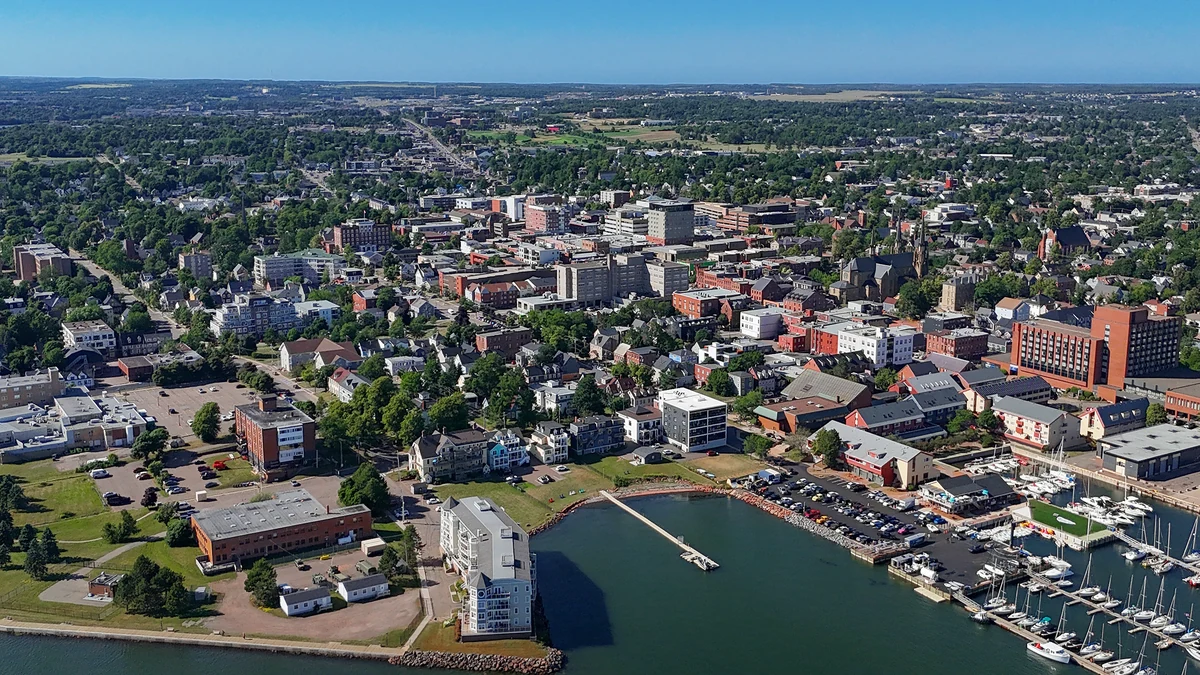
Charlottetown cruise port offers one of the easiest walk-off city days in Atlantic Canada, while also serving as the starting point for Prince Edward Island’s red-cliff coast, farmland and Anne of Green Gables country. Ships berth close to the historic centre, so passengers can step from the waterfront into a compact grid of streets, restaurants, churches, public buildings and cultural venues.
The main choice is whether to spend the day in Charlottetown or use most of it on an island excursion. Both are valid, but they should not be compressed into one overfilled itinerary. A city day is flexible and largely independent. Green Gables and the North Shore require organised transport and enough time to travel across the island without sacrificing the return buffer.
Charlottetown Cruise Port at a Glance
| Port name | Charlottetown Cruise Port |
|---|---|
| Main arrival area | Port Charlottetown cruise berths beside the waterfront and Peake’s Quay area |
| Cruise region | Alaska / North America / Canada |
| Country / Territory | Canada |
| Currency | Canadian dollar (CAD) |
| Main languages | English; French is also spoken |
| Port role | Walk-off day call and gateway to Prince Edward Island |
| Disembarkation | Normally docked at the cruise terminal; berth arrangements remain call-specific |
| Walkability | High for the waterfront and historic centre |
| Shuttle required | No for central Charlottetown; transport is required for Green Gables and island touring |
| Main transport | Walking, ship excursion, local coach or small-group tour, taxi and rental vehicle |
| Best first-time plan | Choose either a relaxed city heritage day or one North Shore / Green Gables circuit with town time afterwards |
| Main caution | Island excursion distances and busy call days can reduce the time available for the city |
The Port Puts You Straight into the City
Port Charlottetown’s passenger information explains the facilities and arrival context around the waterfront. The cruise terminal is close to Peake’s Quay and the lower end of the historic centre, so there is no long transfer before sightseeing. That proximity makes Charlottetown a good port for passengers who prefer to decide after seeing the weather.
Note the berth and gangway before walking away, particularly when more than one ship is present. The route into town is straightforward, but the return can feel less obvious when market stalls, tour buses and crowds fill the waterfront. Keep the final hour flexible. A central location is useful only when passengers resist using every available minute away from the ship.
Choose the City or the Island Before Leaving the Waterfront
Charlottetown’s central streets can comfortably fill a port day with history, architecture, food and waterfront time. A North Shore excursion, by contrast, is a transport-led day with timed stops. Trying to complete Green Gables, several beaches, a long lunch and a full city walk tends to produce short visits and too much coach time.
The port’s shore-excursion overview is a useful starting point for the island choices. Read the route, not only the title. “Island highlights” may include several quick roadside stops, while a Green Gables-focused trip gives more time at the principal site. Choose depth or variety deliberately.
A Strong Charlottetown Walk Begins at the Waterfront
Start with the harbour and Peake’s Quay while the area is quieter, then move up Great George Street towards the historic core. The route gives a clear sense of the city’s scale and connects the waterfront with St Dunstan’s Basilica area, civic spaces and the Confederation Centre precinct. The compact grid makes detours easy without losing orientation.
Download or review the official Charlottetown maps before arrival. A planned loop prevents repeated climbing between the waterfront and upper streets. It also lets passengers with limited stamina choose the most important block first and return downhill gradually rather than discovering late that the ship is below them.
Great George Street Organises the Historic Core
Great George Street provides the most coherent visual connection between harbour and historic Charlottetown. Churches, older commercial buildings and civic architecture appear within a few blocks. The interest lies in the ensemble rather than one isolated monument. Walk slowly enough to notice changes in scale and materials, then branch towards Queen Street or Victoria Row for cafés and shops.
Traffic and crossings still require attention; this is a functioning provincial capital, not a pedestrian heritage park. Some interiors may be closed for services, events or restoration. A city walk should not depend on entering every building. Exterior architecture, interpretation and the street pattern remain worthwhile even when a headline interior is unavailable.
Confederation History Needs Context, Not Just a Photograph
Charlottetown’s association with the meetings that led towards Canadian Confederation is central to its visitor story. Public buildings and cultural institutions around the historic core help explain that role, but access arrangements can change. Check current openings rather than assuming a particular chamber or exhibition is available on the call date.
A guided walk can be valuable for visitors who want the political history explained clearly. Independent passengers should use official interpretation rather than relying on a few plaques and a remembered schoolbook summary. The city’s importance comes from debate, negotiation and place, not simply from posing outside one building.
Victoria Row and Queen Street Suit the Flexible Part of the Day
Restaurants, cafés, small shops and seasonal street activity make the central commercial area a natural place to pause. This is where the city plan can expand or contract. After an island tour, choose a quick meal and short browse. On a full city day, allow more time for local food, galleries and people-watching.
Do not assume every restaurant can absorb a sudden coach arrival. Popular lunch periods can create queues, especially on multi-ship days. Eating slightly early or late protects sightseeing time. Prince Edward Island seafood and potatoes are obvious themes, but the best cruise-day meal is one that fits the schedule rather than the longest menu.
Green Gables Is the Main First-Time Island Excursion
Parks Canada’s Green Gables Heritage Place information should be checked for current hours, access and visitor services. The site connects the landscape and farmhouse setting with Lucy Maud Montgomery’s work and the international afterlife of Anne of Green Gables. It attracts visitors with very different levels of familiarity, from lifelong readers to passengers who simply want an iconic island stop.
The journey from Charlottetown means Green Gables should be treated as a main activity. A good tour allows time for the house, grounds and interpretation without turning the visit into a ten-minute photograph. Ask whether admission is included and whether the route also covers Cavendish or North Shore scenery. The more stops added, the less time remains at the site itself.
North Shore Scenery Is More Than a Green Gables Add-On
Prince Edward Island’s north coast brings together red sandstone, dunes, beaches and agricultural landscape. A scenic circuit can be worthwhile even for passengers with little interest in Anne. The best routes explain how land, sea and settlement connect rather than stopping at unrelated viewpoints.
Coastal conditions change quickly, and erosion barriers must be respected. A beach photo stop may involve sand, boardwalks or steps. Ask how much walking is included and whether the coach can approach the viewpoint. In poor weather, a tour with cultural or food stops offers a better fallback than an itinerary built entirely around open-coast photographs.
A Small-Group Tour Can Offer Better Island Proportion
Large coaches are efficient and provide ship-linked return protection, but their routes may be fixed and stops brief. A small-group tour can spend longer at one coast or community and adapt more readily to crowds. The important question is not group size alone; it is whether the operator has a realistic route and understands the ship deadline.
Ask for the total driving time, the number of stops and the planned return to the port. A private tour is poor value when passengers use the freedom to add too many destinations. Give the guide a priority list headed by one essential place, then let them shape the order around traffic and conditions.
Rental Cars Require More Administration Than the Map Suggests
Prince Edward Island is easy to understand on a map, which can make self-driving attractive. The cruise day still includes reaching the rental office, paperwork, vehicle checks, parking at attractions, refuelling and return. Inventory may be limited when several ships are scheduled. A car works best for experienced independent travellers with a deliberately simple route.
Check the port’s current cruise schedule to understand whether the waterfront may be especially busy, but verify the ship’s own timing separately. Do not plan a full island loop. Green Gables and one coastal area, or a shorter south-shore circuit, is more realistic than collecting distant points across the province.
City Mobility Is Good, but Gradients and Surfaces Still Count
Central Charlottetown is compact and generally manageable, with pavements and short blocks. The harbour sits below parts of the historic core, so the day includes gentle uphill walking followed by a downhill return. Brick, kerbs, older surfaces and crowded waterfront areas can slow wheelchairs and walkers.
Passengers with reduced mobility can still enjoy the city by choosing a short loop and using a taxi for one distant stop. Island coaches may have high steps and limited storage for mobility devices. Ask about the actual vehicle before booking. Green Gables paths and older buildings also require site-specific access checks.
Rain Does Not Ruin a Charlottetown Day
The city has enough cafés, shops and cultural interiors to create a workable wet-weather route. Use short outdoor links between them rather than abandoning the call. An island coach tour can also remain worthwhile in showers, but a route dominated by beaches and viewpoints loses more than one with history and food.
Carry a waterproof layer because wind can make umbrellas awkward near the harbour. Wet brick and painted surfaces can be slippery. If the forecast is poor, keep the city as a fallback even when an island excursion is booked; a cancelled tour should not leave passengers without a plan.
Food and Local Purchases Fit Best After the Main Decision
Charlottetown’s waterfront and centre make it easy to buy food, crafts and small gifts without a special transport plan. Leave purchases until after the city walk or island tour so bags do not travel all day. Check labels and provenance when buying products presented as local, particularly food that may face ship or home-country import restrictions.
Cards are widely useful, but a little Canadian cash can help with small purchases or tips. Tax and gratuity practices may differ from home. Ask for the bill with enough time to return rather than discovering that a relaxed lunch has consumed the final safe walking margin.
Choose an Island Route with a Clear Centre of Gravity
Prince Edward Island tour titles often combine villages, coast, food, Green Gables and scenic roads. The route can sound richer as more names are added, but the passenger experience becomes increasingly coach-led. Decide what the tour is fundamentally for. Literary heritage, coastal scenery and island food each deserve a different stopping pattern.
Ask the operator to identify the longest stop and total driving time. If no stop lasts long enough to explore, the excursion is a panoramic circuit rather than an in-depth visit. That may be exactly what a first-time visitor wants, but it should be chosen knowingly rather than discovered after departure.
A Green Gables-Led Route
A literature-led tour should protect time at Green Gables and use the drive to explain Montgomery, Cavendish and the island landscape. One or two supporting coast stops are enough. A route that reaches the site late after several photo calls may find the busiest period and then shorten the visit to recover time.
Passengers who know the books may want time for interpretation and grounds rather than a rapid house circuit. Tell a private guide that this is the priority. Those with little interest in Anne should not assume the site will automatically become meaningful without context; a broader island tour may suit them better.
A Coast-and-Landscape Route
A scenic route should include enough time outside the vehicle to experience the red shore, dunes or fishing landscape. Several ten-minute stops can feel repetitive if every view is approached through a coach park. One longer coastal walk plus a village or food stop gives the day a stronger shape.
Wind direction and visibility may make one coast more attractive than another. Small-group operators can sometimes adjust, while large coaches must follow permitted stops. Ask about the poor-weather version before booking. A good tour has an indoor or cultural component rather than simply shortening every beach visit.
Food Tours and Shorter Rural Circuits
A food-focused excursion can provide island context through farms, seafood or local producers without travelling to every headline location. It suits repeat visitors and passengers who prefer conversation to long scenic drives. Confirm how much is tasting, how much is retail and whether dietary needs can be handled.
Short rural circuits also preserve meaningful time in Charlottetown. This is often the best compromise on a call under seven hours: two or three hours beyond the city, followed by a proper historic walk. The city’s proximity to the ship makes this proportion possible, but only when the rural route resists expanding into a full island tour.
Busy Cruise Days Reward an Early Start
When several ships are scheduled, tour coaches, restaurants and Green Gables can become busy at similar times. Leave promptly for a booked excursion and reserve flexible city activities for later. Independent city visitors should walk the most important historic streets first, then use shops and food as adjustable time rather than beginning with a long waterfront browse.
Crowding rarely makes the city unworkable, but it changes pace. Crossings, pavements and restaurant service take longer. A timetable with no spare half-hour will feel rushed even though every place is close. Build the buffer into the city plan as well as the island return.
The simplest city day needs no advance ticket, but one timed cultural visit can give it useful shape. Keep the booking in the middle of the call, leaving the first and final periods flexible for gangway changes, weather and an unhurried walk back through the waterfront.
Best Things to Do from Charlottetown Cruise Port
Historic Charlottetown walk
Best for: Independent visitors and first-time city orientation
Plan: Link the waterfront, Great George Street, civic core and Victoria Row
Watch: Trying to enter every building and underestimating the uphill sections
Green Gables Heritage Place
Best for: Anne readers and iconic PEI sightseeing
Plan: Use a timed tour with meaningful site time and admission clarity
Watch: Long driving and multi-stop routes that rush the farmhouse
North Shore scenic circuit
Best for: Coastal landscapes and island context
Plan: Combine one or two strong viewpoints with local interpretation
Watch: Weather, erosion closures and too many photo stops
Food and waterfront day
Best for: Passengers wanting a low-pressure call
Plan: Walk first, then eat and browse close to the ship
Watch: Lunch queues on busy multi-ship dates
Small-group island tour
Best for: Visitors seeking a more tailored route
Plan: Set one priority and require a conservative port return
Watch: Using flexibility to overfill the day
CruisePing Recommended Port Day
For a first visit centred on Prince Edward Island rather than the city alone, CruisePing would book a focused Green Gables and North Shore tour that returns with at least ninety minutes for Charlottetown. Use that final period for Great George Street, a quick local meal or the waterfront. Do not demand a complete city circuit after a long island route.
Passengers less interested in Anne should stay in Charlottetown or choose a broader scenic tour rather than visiting Green Gables from obligation. The city is strong enough to be the whole day. Its walkability, food and history make it one of the few ports where declining an excursion does not mean accepting a lesser experience.
Weather & Best Time to Visit Charlottetown
Check the Environment Canada Charlottetown forecast before the call. The waterfront can feel cooler and windier than inland streets. Rounded seasonal planning ranges follow.
Summer offers the warmest conditions and fullest visitor services, while late spring and autumn can be cool but attractive. September is popular for cruise calls and can vary from mild sun to wet, breezy weather. Layers are more useful than one heavy coat because conditions change between coach, coast and city.
| Month / season | Typical high | Typical low | Rain / conditions |
|---|---|---|---|
| May | 15°C | 5°C | Cool and changeable; some seasonal services limited |
| June | 20°C | 10°C | Milder with showers and coastal breezes |
| July–August | 24°C | 15°C | Warmest period; busy with occasional humid days |
| September | 19°C | 10°C | Pleasant but variable; cooler evenings |
| October | 12°C | 4°C | Cool, windy and increasingly unsettled |
Practical Questions for a Charlottetown Cruise Call
Can I walk from the ship into town?
Yes. The cruise berths are close to the waterfront and historic centre, making an independent city day straightforward.
Can I visit Green Gables and still see Charlottetown?
Yes, provided the excursion is focused and returns with a genuine city buffer. Expect a short city walk, not a second full itinerary.
Is an island tour essential?
No. Charlottetown has enough history, food, architecture and waterfront interest for a complete day on foot.
Should I rent a car?
Only with an advance booking and a simple route. Collection, return and parking reduce the time advantage that the island’s small map appears to offer.
Useful Official Links
- Port Charlottetown
- Information for cruise passengers
- Port shore-excursion overview
- Official Charlottetown maps
- Green Gables Heritage Place
- Environment Canada forecast
CruisePing Port Verdict
Charlottetown succeeds because both versions of the day are strong. Walk the city independently for history, food and waterfront atmosphere, or spend most of the call on one well-proportioned island route.
Do not use the port’s convenient location as permission to overplan. Green Gables and the North Shore need transport and time; the city needs room to be enjoyed. Choose one as the main event and let the other provide a flexible finish.
Ready to browse our article library?
Explore more ports in the Alaska / North America / Canada region, narrow the library to Canada cruise ports, or return to the main CruisePing article library.