
Honolulu is both a major Hawaiian day call and one of the Pacific’s important embarkation ports. That dual role changes the planning. A transit passenger may want Pearl Harbor, Waikīkī or a cultural route through historic Honolulu; a passenger beginning or ending a cruise must also solve airport transfers, luggage, hotel timing and the exact terminal. The city is easy to recognise but not sensible to treat as one compact attraction zone.
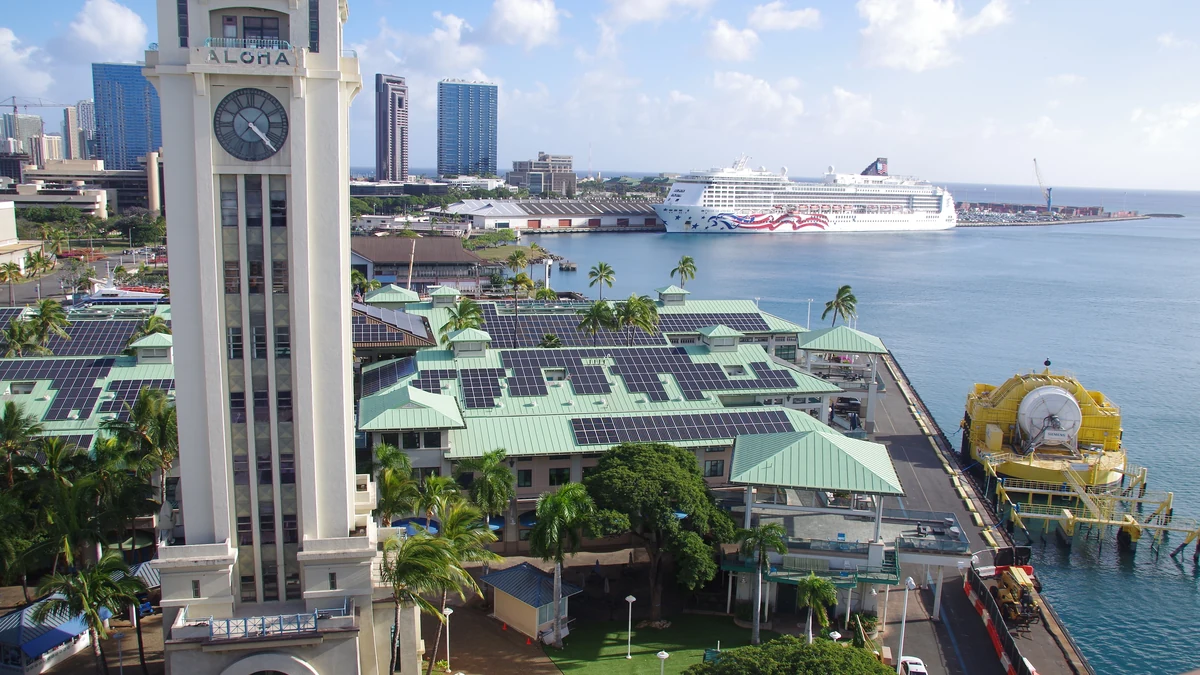
Honolulu Harbor has two cruise terminals. Pier 2 is the primary facility, while Pier 11 beside Aloha Tower is the alternative. Their relationship to downtown, public transport and hotel districts is different enough that the berth should be confirmed before building a walking route. Traffic is the other controlling factor: a short map distance can take far longer during commuter periods, major events or heavy cruise turnover.
Honolulu Cruise Port at a Glance
| Port name | Honolulu, Hawaii |
|---|---|
| Main arrival area | Pier 2 cruise terminal or Pier 11 at Aloha Tower |
| Cruise region | Alaska / North America / Canada |
| Country / Territory | USA |
| Currency | US dollar (USD) |
| Main languages | English and Hawaiian; many Pacific and Asian languages are spoken |
| Port role | Day call and turnaround port |
| Disembarkation | Docked |
| Walkability | Good from Pier 11 to downtown; more limited from Pier 2 |
| Shuttle required | Not always, but transport is useful for Waikīkī, Pearl Harbor and the airport |
| Main transport | Taxi, ride-hailing, TheBus, organised excursion, hotel transfer and rental car |
| Best first-time plan | Choose Pearl Harbor or combine historic Honolulu with Waikīkī |
| Main caution | Confirm the terminal and protect time against urban traffic |
First Confirm Pier 2 or Pier 11
The Hawaiʻi Department of Transportation visitor page identifies Pier 2 as Honolulu’s primary cruise terminal and Pier 11 as the alternate. Pier 11 sits at Aloha Tower Marketplace on the edge of downtown, making the historic core comparatively accessible on foot. Pier 2 lies farther south in an active harbour district; it is still close to central Honolulu by vehicle, but the first and last stages of the day need more deliberate transport.
Do not copy a route from another ship without checking the berth shown in your final documents or onboard information. Terminal assignment affects taxi pick-up, walking time, luggage handling and the most convenient bus stops. At Pier 2, follow the designated ground-transport arrangements rather than asking a driver to stop wherever the ship appears closest. At Pier 11, remember that being beside downtown does not make Waikīkī or Pearl Harbor walkable.
A Day Call and a Turnaround Day Need Different Plans
On a day call, your cabin remains the secure base and the gangway deadline is the dominant clock. You can leave early for Pearl Harbor, take a city-and-beach route or book a full-island excursion. On embarkation or disembarkation day, luggage and check-in windows create a second operation. Trying to complete a major attraction between an early hotel checkout and a cruise check-in can work only when bags are securely handled and transport is reserved.
CruisePing would keep a turnaround day conservative. A pre-cruise hotel gives protection against flight disruption and lets you explore without luggage. After disembarkation, a late flight may support a booked luggage-inclusive tour, a day room or confirmed bag storage, but not an improvised beach visit with suitcases in a vehicle. Verify terminal check-in instructions directly with the cruise line; Honolulu Harbor does not operate as a general public luggage store.
Honolulu Airport Transfers
Daniel K. Inouye International Airport is close to Honolulu Harbor on the map, yet traffic and terminal circulation make journey times variable. Taxi and ride-hailing are the simplest choices for most passengers, particularly with luggage. Pre-booked cruise transfers trade flexibility for a clear meeting process and can be valuable for travellers who prefer assistance. The airport’s official website should be checked for current ground-transport and terminal information.
For an embarkation, allow enough time for baggage collection, the ride and cruise check-in rather than treating the flight’s scheduled landing as the start of a smooth transfer. For a flight home, follow the cruise line’s earliest recommended departure time and add your own tolerance for security queues. TheBus can be economical, but ordinary service is less attractive with large cases and should not be chosen solely because the road distance looks short.
Hotels, Luggage and Pre-Cruise Time
Waikīkī holds the largest concentration of visitor hotels, while downtown and the harbour have fewer conventional resort options. A Waikīkī stay gives beach access and dining but adds a transfer to the cruise terminal. A downtown stay can shorten the harbour journey and improve access to ʻIolani Palace and the Bishop Museum, but it does not reproduce a Waikīkī holiday. Choose the location around what you will do before the cruise, not around a misleading straight-line distance.
Ask the hotel about luggage holding before booking a post-cruise plan. Policies, fees and access are property-specific. Never assume a restaurant, shopping centre or terminal will accept unattended cases. If a tour advertises airport or hotel drop-off, confirm the permitted luggage size, the final drop time and whether your flight terminal is included. The strongest plan removes luggage from the sightseeing decision completely.
Pearl Harbor Requires Reservations and a Timed Strategy
Pearl Harbor National Memorial is the most consequential excursion from the port and should be planned before sailing. The USS Arizona Memorial programme uses timed reservations distributed through Recreation.gov, with limited same-day possibilities that should not anchor a cruise day. Security rules restrict bags, and the memorial programme can be interrupted by weather, harbour operations or safety conditions.
Leave the ship with the correct reservation, approved belongings and a transport plan that accounts for traffic. A taxi or ride-hailing vehicle gives direct travel but may face demand peaks. TheBus is possible for confident independent visitors with time, while an organised excursion simplifies the transfer and may combine other Pearl Harbor sites. Check the National Park Service conditions page close to arrival rather than relying on an old tour description.
Choose Which Pearl Harbor Sites Matter
Pearl Harbor is not one single attraction. The National Park Service visitor centre and USS Arizona Memorial form the central historic experience. The Battleship Missouri, Pacific Fleet Submarine Museum and Pearl Harbor Aviation Museum are separate ticketed sites with their own time requirements and, in some cases, shuttle transfers within the secured area. A visit to all of them is a full day rather than a quick shore excursion.
For a first cruise call, prioritise the Arizona programme and visitor-centre interpretation, then add one major paid site only if the schedule genuinely permits. Military-history enthusiasts may prefer the Missouri or aviation museum over a beach stop; mixed-interest parties may be happier returning to Honolulu after the memorial. Read bag rules before leaving the ship and do not take a missed reservation lightly: staff cannot simply recreate a full boat programme around your cruise timetable.
Historic Honolulu Is a Strong Independent Alternative
Downtown Honolulu contains the civic and royal history that a Waikīkī-only visit misses. ʻIolani Palace, the King Kamehameha I statue, Kawaiahaʻo Church, the Hawaiʻi State Capitol and Honolulu Hale sit within a walkable central district. Pier 11 passengers are particularly well placed to begin here; from Pier 2, take a short taxi or appropriate bus rather than walking through industrial approaches.
Reserve a palace tour through the official ʻIolani Palace website if the interior is important. Opening days and tour formats vary, and respectful behaviour is required in a place central to the history of the Hawaiian Kingdom. A self-guided outdoor circuit remains worthwhile when tickets are unavailable. Combine it with Chinatown or the waterfront, but avoid turning sacred and political history into a ten-minute photo stop between shopping appointments.
Bishop Museum Adds the Deepest Cultural Context
Bishop Museum holds major collections relating to Hawaiʻi and the wider Pacific. It is north-west of downtown and requires transport from either cruise terminal, but it can make a more coherent half-day than a scattered city tour. Exhibitions, planetarium programmes and opening hours change, so use the museum website to decide how much time to allow.
The museum suits repeat visitors, families who want structured learning and anyone seeking more than a scenic overview. It can pair with a brief historic-centre walk, though not comfortably with a full Pearl Harbor visit and Waikīkī beach time. Ride-hailing is usually the simplest independent transfer. Confirm accessible entrances and any exhibition closures if mobility or a particular collection is central to the visit.
Waikīkī Is a District, Not a Single Beach Stop
Waikīkī stretches along a busy hotel and retail corridor. The beach is divided into sections with different widths, breakwaters, surf conditions and levels of activity. A driver asked simply for “Waikīkī Beach” may deliver you to a convenient hotel frontage rather than the quieter or more swimmable section imagined. Choose an approximate area—central Waikīkī, Kūhiō Beach or the Kapiʻolani Park end—and arrange the return from a recognisable pick-up point.
From the harbour, expect an urban transfer rather than a walk. Traffic can be slow in both directions, especially late afternoon. Beach facilities and food are plentiful, but changing and shower arrangements are not equivalent to a private resort day. Protect valuables, observe lifeguard advice and do not assume calm-looking water is harmless. A two- or three-hour Waikīkī visit works well after historic Honolulu; it is a poor add-on after an already full Pearl Harbor programme.
Diamond Head Needs Advance Entry Planning
Diamond Head State Monument provides a famous coastal panorama, but non-resident entry and parking are reservation-controlled. The hike includes heat, stairs, tunnels and exposed sections; it is not a casual viewpoint reached directly from a taxi. Use the official reservation system and check the current State Parks guidance before committing.
Allow transport to the trailhead, check-in, the climb, time at the summit and a planned return vehicle. Early slots reduce heat but may clash with disembarkation. A late-morning climb can be uncomfortable even when the harbour feels breezy. CruisePing would pair Diamond Head with Waikīkī, not with Pearl Harbor. Passengers with knee, balance, cardiac or heat concerns should consider a coastal or cultural day instead of treating the summit as compulsory.
TheBus Is Useful, but It Is Not an Excursion Coach
Oʻahu’s public bus network is extensive and can support downtown, Waikīkī, Pearl Harbor and some island journeys. Current fares, routes and live information belong on TheBus official website. The system is most useful when the day contains one or two urban destinations and the passenger is comfortable reading stops and building a generous return margin.
Buses stop frequently and traffic affects them too. Large luggage is awkward, and a route that looks direct may involve walking at both ends. For Pearl Harbor, confirm the correct stop and reservation time; for Waikīkī, note the return direction and avoid waiting until the final possible bus. A taxi or ride-hailing vehicle can be worth the cost when four people are travelling or when a missed connection would compromise the gangway.
Rental Cars Are Better for an Island Day than a City Day
A rental car makes sense for a deliberately planned Oʻahu circuit beyond Honolulu, such as the windward coast or North Shore. It is less attractive for a day focused on Pearl Harbor, downtown and Waikīkī because depot transfers, parking and traffic replace simple point-to-point travel. Rental locations may be at the airport or in Waikīkī rather than beside the terminal, so collection and return must be counted.
Do not attempt a complete island loop merely because the road rejoins Honolulu. Congestion, beach stops and weather can expand the journey. Leave nothing visible in the car, obey parking restrictions and download navigation. For a turnaround passenger staying several nights, a car may be useful after leaving the city; for a single cruise call, an organised island tour often provides more sightseeing and less operational friction.
Best Things to Do from Honolulu Cruise Port
Pearl Harbor National Memorial
Best for: First-time visitors prioritising twentieth-century history
Plan: Reserve the USS Arizona programme and choose at most one additional major site
Watch: Timed entry, bag rules and traffic
Historic Honolulu
Best for: Independent visitors interested in Hawaiian history
Plan: Walk ʻIolani Palace, the civic district and waterfront from a central drop-off
Watch: Palace tours require booking and respectful timing
Waikīkī
Best for: Beach time, food and an easy resort atmosphere
Plan: Choose a specific beach section and pre-plan the return
Watch: Afternoon traffic and protecting belongings
Bishop Museum
Best for: Deeper Hawaiian and Pacific context
Plan: Allow a focused half-day and use direct transport
Watch: Opening days and the temptation to over-combine
Diamond Head
Best for: Active visitors wanting a summit panorama
Plan: Book a non-resident slot and pair with Waikīkī
Watch: Heat, stairs, tunnels and transfer time
Oʻahu scenic tour
Best for: Repeat visitors or long calls
Plan: Use a reputable circuit with a defined return
Watch: Traffic makes a full-island checklist fragile
CruisePing Recommended Port Day
For a first day call, CruisePing would choose Pearl Harbor when a USS Arizona reservation is secured: travel directly after disembarkation, give the memorial and visitor centre proper attention, then return to historic Honolulu for a palace-and-civic-district walk. Finish near the harbour rather than adding Waikīkī late. This route gives the day historical coherence and reduces exposure to the worst afternoon beach-corridor traffic.
Without a Pearl Harbor reservation, start with ʻIolani Palace or Bishop Museum, eat in central Honolulu and spend the final part of the day at a chosen Waikīkī section only when the return is comfortable. For embarkation day, the recommendation changes: arrive in Honolulu at least a day early, keep luggage at the hotel and travel to the confirmed terminal with a reserved margin. Sightseeing should not sit between a same-day flight and cruise check-in.
A Practical Honolulu Day by Call Length
Six hours or less
Keep to one zone. From Pier 11, historic Honolulu is the strongest low-risk choice; from Pier 2, use a taxi to the civic district or Waikīkī and return early. Pearl Harbor is reasonable only with a compatible timed reservation and direct transport. Do not attempt Diamond Head plus beach plus downtown.
Seven to nine hours
This supports Pearl Harbor followed by one compact city element, or historic Honolulu followed by two or three hours in Waikīkī. The extra time should become margin and depth, not an island loop. Check when the ship requires passengers back, not merely the published departure time.
A long or overnight call
Long calls can support the North Shore, windward Oʻahu or an evening in Waikīkī. Even then, make one side of the island the main destination. Overnight passengers should verify gangway hours and late transport rather than assuming unrestricted access throughout the night.
Mobility, Heat and Accessibility
Honolulu’s central pavements are generally manageable, but kerbs, heat, road crossings and long museum distances accumulate. Pier 2 is less naturally walkable than Pier 11. Confirm accessible taxi or transfer capacity for wheelchairs and scooters before the call; ordinary ride-hailing vehicles may not accommodate larger devices. Pearl Harbor and major museums publish their own accessibility information and should be contacted for specific needs.
Diamond Head is the obvious high-exertion choice. Waikīkī sand and beach access can also be difficult, though paved waterfront areas offer alternatives. Carry water and sun protection even on cloudy days. Air-conditioned indoor sites can feel cool after outdoor heat, so a light layer is useful. Build seated pauses into a cultural route rather than waiting until fatigue forces the group to abandon the final transfer.
Food and Shopping without Losing the Day
Honolulu offers excellent food across downtown, Chinatown, Kakaʻako and Waikīkī. The useful choice is geographical: eat where the day already places you. Crossing the city for one famous restaurant can waste an hour in traffic and queues. Reservations help for destination dining, while casual plate lunches, noodles, poke and bakery stops suit a port call. Check current opening days because some downtown businesses are quiet at weekends.
Ala Moana Center is convenient for major shopping but can absorb the entire remaining call. Local markets and independent shops offer more character, yet fresh food and plant products may be subject to agricultural controls. Leave shopping until after the main attraction only when you are already near the terminal. At Pier 11, Aloha Tower is convenient for a final pause; at Pier 2, do not assume there will be a comparable public retail zone at the terminal door.
Return-Time Management in Honolulu Traffic
Honolulu’s return risk is congestion rather than distance alone. A journey that took twenty minutes in the morning may take much longer later. Build a larger buffer after Pearl Harbor, Waikīkī or an island circuit, and tell the driver the pier number rather than only “cruise terminal”. Save the terminal location offline and check the ship’s shuttle or taxi instructions before leaving.
Ride-hailing estimates are not guarantees of pickup. Major attractions, rain and cruise disembarkation can create sudden demand. From a distant point, begin the return while another option still exists. A ship excursion offers return protection but not immunity from itinerary changes; it may shorten stops to preserve the sailing. Independent passengers carry that responsibility themselves, so the final hour should take place near the harbour, not at the far end of Waikīkī.
Passengers staying in Waikīkī before or after the cruise should also separate hotel transfer time from sightseeing time. Valet queues, one-way streets and large-coach loading can add delay even when the hotel and terminal appear close. Confirm whether a private transfer meets inside the lobby or at a designated street zone, and give the driver the ship, pier and check-in window. On disembarkation morning, wait until the whole party and all cases are ready before summoning a vehicle; repeated cancellations can make the next car slower and more expensive.
For families or groups, compare one larger reserved vehicle with several ride-hailing cars. Splitting the party can create mismatched terminal arrivals and leave one person holding cruise documents or medication needed by another. Passports, boarding papers and essential medicines should remain in hand luggage, not in a case sent separately to a hotel or airport. These small operational choices matter more on a turnaround day than squeezing in one additional city stop.
Weather & Best Time to Visit Honolulu
Use the National Weather Service Honolulu forecast close to arrival. Honolulu is generally warm year-round, with a drier urban south shore than Oʻahu’s windward side. A city forecast therefore does not describe conditions at the North Shore, Koʻolau viewpoints or every beach. Trade showers can be brief, while winter swells may change swimming safety even under blue skies.
The warmest months are usually late summer and early autumn; winter brings slightly cooler nights and a greater chance of rain. Heat reflected from pavements makes downtown and Diamond Head feel hotter than the stated air temperature. Carry water, reef-conscious sun protection and a light waterproof. For Pearl Harbor, weather can affect memorial-boat operations; for an island tour, ask how the operator adapts when cloud obscures windward lookouts.
| Month / season | Typical high | Typical low | Rain / conditions |
|---|---|---|---|
| January–March | 27°C | 19°C | Warm with occasional rain; larger winter surf on exposed coasts |
| April–June | 29°C | 21°C | Generally drier with strong sun and trade winds |
| July–September | 31°C | 23°C | Hot and often dry in Honolulu; humid periods possible |
| October–December | 29°C | 21°C | Warm with increasing chance of showers and variable surf |
Practical Questions for a Honolulu Cruise Call
Which Honolulu cruise terminal will my ship use?
Pier 2 is the primary terminal and Pier 11 at Aloha Tower is the alternate. Check final cruise documents and onboard instructions because the terminal changes walking and transfer plans.
Can I walk from the ship to Waikīkī?
No practical cruise-day route makes that sensible. Use a taxi, ride-hailing vehicle, TheBus or organised transfer and protect the return against traffic.
Do I need to reserve Pearl Harbor?
Reserve the USS Arizona Memorial programme through Recreation.gov if it is central to your day. Same-day availability should be treated as a possibility, not a plan.
How early should I fly into Honolulu for a cruise?
CruisePing recommends arriving at least one day before embarkation. This protects the sailing from flight disruption and makes terminal transfer and luggage much easier.
Can the cruise terminal store my bags?
Do not assume so. Arrange storage through a hotel, a verified provider, a luggage-inclusive excursion or the cruise line, and confirm limits before travel.
Is TheBus suitable with cruise luggage?
It can be inexpensive, but ordinary buses are less comfortable with large cases and may involve walking. A taxi or reserved transfer is usually the stronger turnaround choice.
Useful Official Links
- Hawaiʻi DOT Honolulu Harbor visitor information
- Pier 2 ground-transport information
- Daniel K. Inouye International Airport
- Pearl Harbor National Memorial
- USS Arizona Memorial reservations
- TheBus
- ʻIolani Palace
- Bishop Museum
- Diamond Head reservations
- National Weather Service Honolulu forecast
CruisePing Port Verdict
Honolulu rewards terminal-specific planning. Pier 11 opens naturally into historic downtown; Pier 2 requires a more deliberate first transfer. Pearl Harbor deserves reservations and most of a half-day, while Waikīkī, Diamond Head and the museums each work better when treated as real choices rather than decorative additions.
For turnaround passengers, the winning move happens before the ship arrives: fly in early, separate luggage from sightseeing and confirm the pier. For day-call passengers, choose one major story—Pearl Harbor, Hawaiian history, beach or island scenery—and finish closer to the harbour than the traffic map suggests is necessary. Honolulu offers abundance; discipline is what turns it into a good port day.
Ready to browse our article library?
Explore more ports in the Alaska / North America / Canada region, narrow the library to USA cruise ports, or return to the main CruisePing article library.