
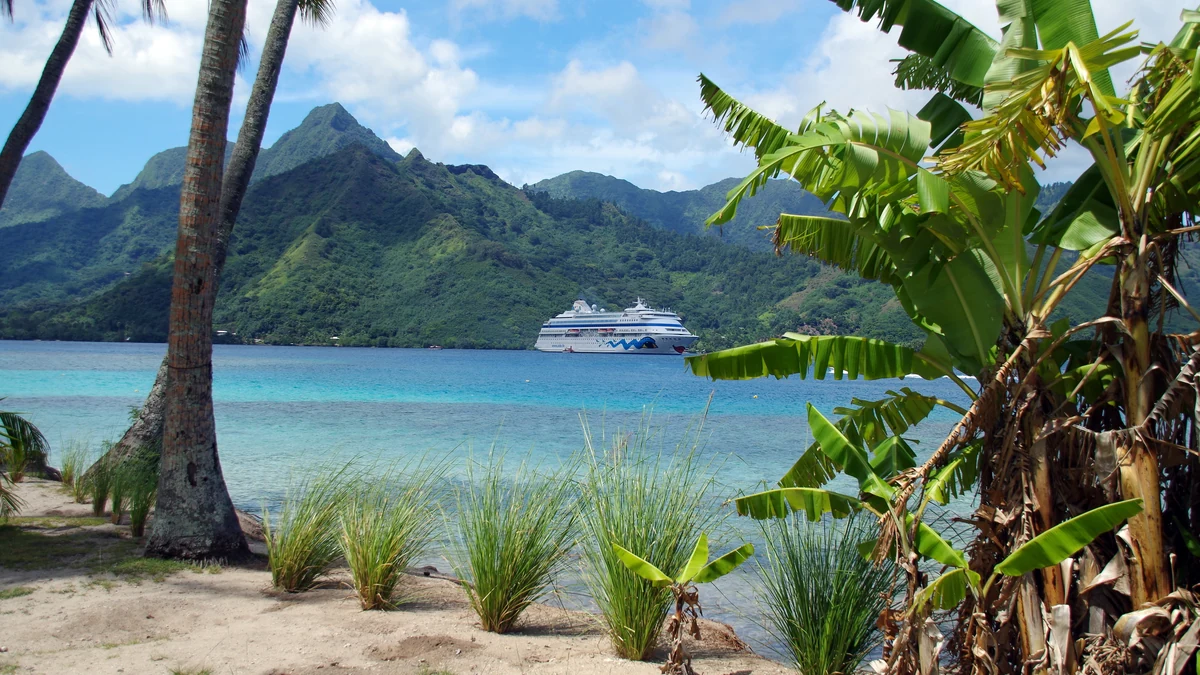
Moorea cruise port is a tender call where the landing point matters almost as much as the island itself. Ships commonly anchor in the deep water of Opunohu Bay and tender towards Papetoai, placing passengers beside Moorea’s dramatic north-west landscape rather than at the inter-island ferry terminal in Vaiare. That is excellent for lagoon trips and the Opunohu interior, but it is not a transport hub with dependable buses waiting to circulate around the island.
The useful decision is therefore not “what can I see on Moorea?” but “which one version of Moorea fits this call?” A lagoon excursion, an inland Belvedere and plantation route, or a controlled beach day can each work. Combining all three usually creates rushed transfers and weakens the experience. Confirm the tender landing in the ship’s instructions and check the official Papetoai landing information before relying on a map built around the ferry port.
Moorea Cruise Port at a Glance
| Port name | Moorea, French Polynesia |
|---|---|
| Main arrival area | Tender landing near Papetoai, usually from an anchorage in Opunohu Bay |
| Cruise region | Australasia / Pacific Islands |
| Country / Territory | French Polynesia |
| Currency | CFP franc (XPF) |
| Languages | French and Tahitian; English is common in organised tourism |
| Port role | Day call |
| Disembarkation | Tender |
| Walkability | Limited beyond the immediate landing area |
| Shuttle required | No universal shuttle; arranged transport is normally needed |
| Main transport | Ship excursions, pre-booked lagoon boats, 4WD or minibus tours, taxis, rental vehicles and e-bikes |
| Best first-time plan | Choose either a lagoon day or an Opunohu interior circuit, then keep the final hour close to the landing |
| Main caution | Transport is dispersed and the island bus is not reliable enough for a tightly timed multi-stop plan |
Start with the Tender, Not the Island Map
Tendering controls the real start and finish of a Moorea day. Passengers may spend time waiting for a boat, transferring across open water and clearing the landing before a tour can depart. The final tender deadline can also be substantially earlier than the ship’s published sailing time. Sea conditions, passenger volume and priority arrangements for ship excursions all influence the sequence. Treat the time printed in the daily programme as the operational boundary, not as a suggestion.
Papetoai is well placed for Opunohu Bay, but it is on the opposite side of the island from Vaiare ferry terminal. An operator who normally collects hotel guests at Vaiare may not automatically serve the cruise landing. Send the ship name, date, expected tender point and final return requirement when booking. A vague promise to “meet at the port” is not enough on an island with several quays and activity collection points.
Papetoai and Opunohu Bay Put You in the Scenery Immediately
The approach through Opunohu Bay is part of the call. Steep volcanic ridges rise behind the water, Mount Rotui divides Opunohu from Cook’s Bay, and the north-west coast carries the island’s strongest combination of lagoon and mountain scenery. The renewed Papetoai landing was designed to receive cruise passengers and provide space for local tourism providers, artisans and transport. It is an arrival point rather than a self-contained resort zone.
That distinction matters. You can enjoy the view and browse whatever stalls are operating, but the main beaches, Belvedere road, eco-museum and marine sites are spread around the bay and coast. Passengers who step ashore without transport should not assume a fleet of metered taxis will remain available throughout the day. Secure the main movement first; use the landing area as the safe beginning and end of the plan.
The Lagoon Is the Strongest First-Time Choice
Moorea’s lagoon is the clearest expression of the island for many first-time visitors. A well-run boat trip can combine the outline of the bays, shallow turquoise water, a motu stop and snorkelling without consuming the day in road transfers. Tahiti Tourisme describes a boat excursion as the best way to experience the lagoon, and many cruise-compatible departures are designed around the Papetoai or north-coast area. The exact wildlife encounters and stops vary with conditions and operator practice.
Choose the trip by duration, collection point, shade and return discipline rather than by the longest list of promised animals. Ask whether equipment is supplied, whether the boat has a canopy, how much swimming is involved and what happens if the tender runs late. Reef-safe behaviour matters: do not stand on coral, chase marine life or treat a feeding stop as a guaranteed natural encounter. A shorter, well-timed lagoon trip is better than a full-day itinerary that returns close to the last tender.
Opunohu Belvedere Is the Best Land-Based Overview
The Opunohu Belvedere sits around 240 metres above sea level and looks across the interior crater towards both Opunohu and Cook’s bays. The road climbs through agricultural land and dense vegetation, turning the viewpoint into more than a quick photographic stop. A 4WD, minibus or private car circuit can add marae, plantation scenery and local produce without attempting a complete island lap.
This is the best alternative for passengers who prefer landscape and culture to a boat. It also works in mixed weather when the lagoon is choppy, although low cloud can hide the ridges. The viewpoint itself can become busy when several tour vehicles arrive together, and the most useful guides explain the relationship between the valleys, cultivation and Polynesian sites rather than simply stopping for photographs. Allow the interior to be the day’s main subject, not an item squeezed between beach visits.
Te Fare Natura Adds Meaning to the Landscape
The Te Fare Natura eco-museum in the Opunohu area interprets Moorea’s marine and terrestrial ecosystems. It is especially useful for families, non-swimmers and passengers who want context for the lagoon, reefs, forests and human use of the island. Its location fits naturally into an interior route but is not served directly by dependable public transport, so it should be agreed with the driver or tour operator in advance.
Do not assume the museum will fill a whole port day. Its value comes from pairing interpretation with the landscape outside: the bay, agricultural estate, marae or Belvedere. Check current opening hours and allow for the possibility that a cruise call falls on a closure or a locally adjusted schedule. When the weather is poor, it becomes a useful sheltered component rather than a reason to abandon the island day.
A Beach Day Needs a Named Beach and a Return Plan
Moorea has attractive public beaches, but “take a taxi to a beach” is not a complete plan. Ta’ahiamanu lies on the north coast near Opunohu and offers a realistic scenic option; Temae is farther away near the north-east and airport; hotel day passes and smaller beaches have their own access rules. Facilities, shade and food availability vary. Confirm whether a beach is public, where a driver can collect and whether the chosen site has toilets or somewhere to buy water.
The outward taxi is usually easier than the return. Arrange a collection time and exchange a working contact number before the driver leaves. Ride-hailing should not be treated as a guaranteed rescue. A beach-only day is sensible for passengers who value swimming and low complexity, but it should remain geographically compact. Adding Belvedere, a distant restaurant and an unreserved return vehicle turns a relaxed choice into a fragile one.
Do Not Build the Day Around the Island Bus
Tahiti Tourisme notes that Moorea has a bus service but does not describe it as particularly efficient. Services tend to relate to ferry movements and local demand rather than to a simple high-frequency timetable for cruise visitors. The route around the coastal road can look useful on a map while still leaving long waits, uncertain connections and no direct access to the Belvedere estate. That is too much uncertainty for a tender call.
A bus may work for a single simple journey when local information confirms the departure and return, but it is not the right backbone for a three-stop itinerary. Taxis, pre-booked tours, rental cars, scooters and e-bikes offer more control, each with different risks. E-bikes suit confident riders on limited coastal sections; they do not remove heat, traffic, rain or the need to return before tender operations close.
Hiring a Car Can Work, but Collection Is the Problem
A rental car gives freedom to combine the north coast, Belvedere and selected stops, yet many rental desks are concentrated near Vaiare ferry terminal, the airport or hotels rather than Papetoai. A cheap online rate is not useful if collection consumes an hour in each direction. Ask whether the company delivers to the cruise landing, whether paperwork is completed there and where the vehicle must be returned. Get that promise in writing.
Driving is on the right. The main coastal road is straightforward, but side roads can be narrow, cyclists and scooters share the route, and heavy rain changes visibility quickly. Do not attempt a complete island circuit merely because the road forms a ring. A short, deliberate north-and-interior route gives more margin and more time out of the car. Refuelling, parking and a late handover should all sit inside the return buffer.
A 4WD Tour Is Useful When the Interior Is the Priority
Four-wheel-drive tours are common because they link the Belvedere road, agricultural areas, viewpoints and rougher access without asking passengers to navigate. This can be the most efficient land choice for a first call, particularly when the guide is locally knowledgeable and the group is collected at Papetoai. The ride can be bumpy, exposed and difficult for passengers with back, hip or mobility problems, so vehicle type matters.
Ask how many people share the vehicle, whether passengers face sideways, how high the step is and whether the itinerary includes commercial tasting stops. Tastings can be enjoyable, but they should not replace the main landscape. A good operator adapts to cloud and traffic rather than racing through a fixed checklist. The practical advantage is not access to a secret island; it is controlled transport from the correct tender point.
Food, Water and Cash Are Small but Important Details
Tourist operators and established restaurants normally understand card payments, but smaller stalls, taxis and local purchases may be easier in CFP francs. Carry a modest amount rather than relying on finding an ATM after landing. French Polynesia uses the CFP franc, and prices can feel high because many goods are imported. Confirm whether lunch and drinks are included in a lagoon or 4WD tour before comparing headline prices.
Heat and reflected sun on the water increase dehydration. Take water from the ship, use strong sun protection and carry a light rain layer even when the morning is clear. A leisurely restaurant lunch works only when transport is controlled; service pace and the final tender do not always align. For a short call, a booked tour meal or simple local lunch near the route is usually safer than travelling to a famous restaurant on the far side of the island.
Mobility Changes the Best Choice
Tender steps, boat movement and uneven landing surfaces are the first mobility test. Lagoon boats may require stepping across a gap, climbing a ladder after swimming or wading ashore at a motu. Four-wheel-drive vehicles can have high steps and rough suspension. Passengers should ask about the actual transfer rather than accepting “easy” as a universal description. Crew assistance does not make every tender or excursion accessible.
A private minibus or taxi circuit can be more comfortable than a marine trip and still deliver strong scenery. Te Fare Natura and selected viewpoints may offer a less physically demanding day, though access details should be checked directly. Passengers who remain near Papetoai will have a limited range, so reduced mobility is another reason to arrange transport before arrival rather than hoping to negotiate after the tenders unload.
Rain Does Not Automatically Ruin Moorea
Moorea’s mountains create fast-changing cloud and showers. Rain can make the vegetation richer, expose waterfalls and cool an inland tour, while a brief squall may pass before the next stop. Lagoon visibility and comfort are more sensitive to wind and sea state than to a simple rain icon. Operators may alter routes for safety, and the ship may delay or suspend tendering when conditions at the anchorage or landing deteriorate.
Build a weather hierarchy rather than one all-or-nothing plan. Lagoon first in settled conditions; interior circuit when the water is rough but roads remain safe; Te Fare Natura and a shorter coastal route when cloud sits low; Papetoai and an early return if tender operations become uncertain. Check Météo-France Polynésie and, more importantly, listen to the ship’s operational announcements.
Avoid the Temptation to Visit Tahiti from Moorea
The ferry between Moorea and Papeete is useful for residents and land-based travellers, but it is a poor default cruise-day experiment from a ship already anchored at Moorea. Reaching Vaiare from Papetoai, matching a ferry, crossing the channel and reversing the sequence creates several independent failure points before the final tender. The same logic applies to an ambitious island flight or any arrangement that assumes the ship will wait for public transport.
Moorea itself has more than enough for one call. Save Papeete for its own port day or a pre-cruise stay. The exception would be an organised, cruise-protected transfer explicitly sold for the call, which is unusual and still sacrifices the island the ship came to visit. Good port planning removes unnecessary links; it does not collect transport experiences for their own sake.
CruisePing Recommended Port Day
For a first visit in settled weather, book a four-to-five-hour lagoon excursion collected at the confirmed tender landing. Choose a boat with shade, clear swimming information and a return scheduled comfortably before the final tender. After the trip, use any remaining time for Papetoai, a drink or a short north-coast stop rather than arranging another long transfer.
For non-swimmers or passengers who prefer the land, take a pre-booked minibus or 4WD circuit through Opunohu Valley to the Belvedere, adding a marae, agricultural stop or Te Fare Natura according to opening hours. Keep the route on the north and interior side of Moorea. The common mistake is trying to add a distant beach after the main excursion; the stronger day finishes slowly near the landing.
Weather & Best Time to Visit Moorea
Moorea is warm throughout the year. The more useful distinction is between the wetter, more humid austral summer and the somewhat drier, cooler period from roughly May to October. Even in the drier season, showers can form against the mountains, while wind and swell can affect the tender and lagoon independently of the temperature. The table is for planning clothing and activity type, not for predicting a specific call.
Protect against sun even under cloud, and keep electronics and medication dry during the tender. A marine excursion should be judged using the live wind and sea report supplied by the operator and ship. An inland route needs footwear that can cope with wet ground and vehicle steps.
| Month / season | Typical high | Typical low | Rain / conditions |
|---|---|---|---|
| January–March | 30°C | 24°C | Hot, humid and among the wetter months; heavy showers possible |
| April–June | 29°C | 23°C | Warm with gradually easing humidity and mixed showers |
| July–September | 28°C | 22°C | Usually drier and slightly cooler; trade winds can roughen the lagoon |
| October–December | 29°C | 23°C | Increasing warmth and humidity with variable tropical showers |
Practical Questions for a Moorea Cruise Call
Where do cruise tenders land?
Many calls tender towards Papetoai from Opunohu Bay, but passengers must follow the ship’s final landing instructions because operations can change.
Can I walk to the Belvedere?
No. The viewpoint is inland and uphill; arrange a tour, taxi or suitable rental vehicle.
Is there a reliable public bus?
There is an island bus service, but it is not a dependable high-frequency network for a tightly timed cruise itinerary.
Should I choose the lagoon or an island tour?
Choose the lagoon for Moorea’s defining marine scenery; choose the interior route for mountain views, culture and less dependence on swimming.
Can I find a taxi after landing?
Some taxis and providers may be present, but supply is limited and dispersed. Pre-booking is safer, especially for the return.
What currency should I carry?
The local currency is the CFP franc. Cards are common in established tourism businesses, but cash is useful for smaller purchases and transport.
Useful Official Links for Moorea
Use these sources to confirm the landing, current vessel information, transport limitations, attraction details and live weather.
- Papetoai cruise landing information
- Port Autonome vessel forecasts
- Getting to and around Moorea
- Opunohu Belvedere
- Moorea lagoon planning
- Te Fare Natura eco-museum
- Moorea destination information
- Météo-France French Polynesia
CruisePing Port Verdict
Moorea is not difficult because it lacks choices; it is difficult because its best choices pull in different directions. Papetoai and Opunohu favour the lagoon and interior, while the ferry terminal and several beaches lie elsewhere. Passengers who arrange one strong route have an exceptional island day. Passengers who improvise several transfers can spend too much of it waiting beside the coastal road.
Our first choice in settled weather is the lagoon; when swimming is not the goal, the Opunohu interior is stronger. The essential discipline is to book from the actual tender landing, retain a generous return buffer and stop adding attractions once the main experience is secured.
Ready to browse our article library?
Explore more ports in the Australasia / Pacific Islands region, narrow the library to French Polynesia cruise ports, or return to the main CruisePing article library.