
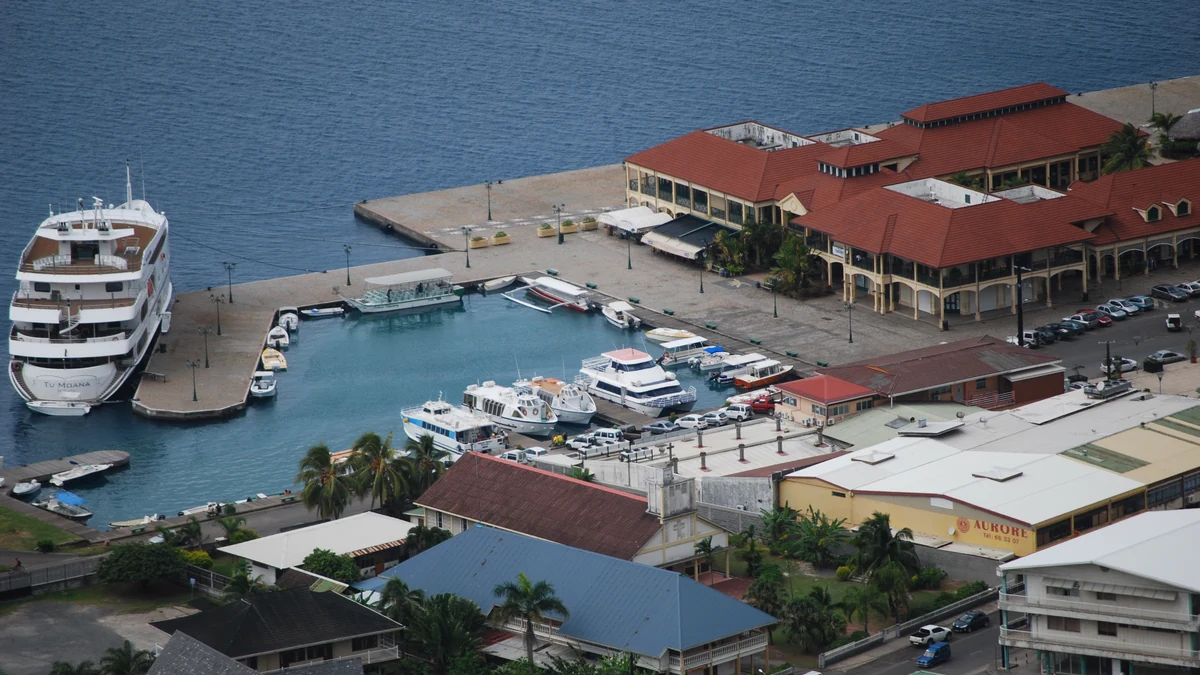
Raiatea cruise port is centred on Uturoa, the small administrative town beside the lagoon shared with Tahaʻa. Many ships dock close to the centre, while some calls may tender according to vessel size and operations. The arrival is convenient, but Uturoa itself is only the starting point. Raiatea’s strongest day choices are the sacred Taputapuātea landscape and Faaroa River, or a lagoon-and-Tahaʻa excursion focused on water, vanilla, pearls and motu scenery.
Those two routes are both excellent and should usually remain separate. The land route travels south and east around Raiatea; the marine route leaves Uturoa across the shared lagoon. A late attempt to combine them creates duplicated transport and no room for weather. Confirm the ship’s docking or tender instruction, then use the Uturoa tourist office information and operator collection details to secure one main strategy.
Raiatea Cruise Port at a Glance
| Port name | Raiatea, French Polynesia |
|---|---|
| Main arrival area | Uturoa waterfront, by dock or tender according to the ship |
| Cruise region | Australasia / Pacific Islands |
| Country / Territory | French Polynesia |
| Currency | CFP franc (XPF) |
| Languages | French and Tahitian; English common in organised tourism |
| Port role | Day call |
| Disembarkation | Usually docked; some ships tender |
| Walkability | Good within compact Uturoa, limited for major sights |
| Shuttle required | Not for town; arranged transport essential beyond it |
| Main transport | Ship excursions, lagoon boats, minibuses, 4WD tours, taxis, rental cars and bicycles |
| Best first-time plan | Choose Taputapuātea and Faaroa by land, or a booked Tahaʻa lagoon day |
| Main caution | Uturoa is small and independent transport beyond town is limited, so waiting to book ashore can leave few useful choices |
Confirm Dock or Tender Before Meeting an Operator
Uturoa’s waterfront can receive ships and passenger craft, but the actual arrangement depends on vessel and port operations. A docked call gives immediate access to town; a tender call adds boarding queues and an earlier final boat. The ship’s daily programme is authoritative. Send the vessel name and date to any independent operator and ask for a named collection point rather than accepting “at the port”.
The passenger welcome and tourist office sit in the central waterfront area, which helps resolve last-minute questions. It does not guarantee spare tour capacity. Raiatea receives fewer independent transport options than Papeete, and popular lagoon boats can be committed to cruise lines or hotels. Pre-book the main excursion, then use Uturoa as the flexible part of the day.
Uturoa Is Convenient but Deliberately Small
Uturoa offers shops, a market, cafés, banks, local services and a compact waterfront. It is useful for an early walk, a final meal or a low-mobility call, but it does not contain Raiatea’s principal cultural landscape or best lagoon sites. Cruise days sometimes create artisan stalls and additional welcome activity, while Sunday and holiday opening can be much quieter.
A town-only day can still be pleasant when weather cancels boats or passengers want no vehicle. Walk slowly, look for local produce and pearl products, and use the waterfront view towards Tahaʻa. Set expectations correctly: Uturoa is a working island centre, not a preserved colonial city or a resort beach. Its strength is proximity to the ship and connection to the island’s larger choices.
Taputapuātea Is the Essential Cultural Journey
The marae complex of Taputapuātea on Raiatea’s south-east coast is one of Polynesia’s most significant sacred landscapes and a UNESCO World Heritage Site. The visit is not simply a group of stones beside the sea. It connects voyaging, genealogy, ceremony and political relationships across the Polynesian triangle. A knowledgeable guide is valuable because the site’s meaning is not obvious from appearance alone.
The road journey from Uturoa uses a substantial part of the day and should be treated as the main route. Dress respectfully, remain on permitted paths and follow guidance about sacred areas. Check current access through the official Taputapuātea information and avoid reducing the stop to a rushed photograph. The landscape, reef pass and orientation towards the sea deserve time.
Faaroa River Complements the Sacred-Island Route
The official Faaroa River information describes it as the only navigable river in French Polynesia. It runs through tropical vegetation on Raiatea’s east side and can be explored by small boat, kayak or paddle outing according to conditions. The river fits naturally with Taputapuātea because both lie away from Uturoa on the island’s eastern and southern route, though the exact sequence depends on operator logistics.
A river trip adds a close, green landscape to the open ceremonial coast. Ask whether the excursion uses a motorboat or paddle craft, how passengers board, and whether a botanical garden or walking stop is included. Water level and weather affect operation. A combined land-and-river tour can be excellent, but only when it is sold as one coherent itinerary rather than assembled from separate providers with uncertain meeting times.
The Faaroa Belvedere Is a Road-Tour Option, Not a Casual Walk
The road crossing Raiatea’s south can reach viewpoints above Faaroa, giving a broader sense of the island’s valleys and lagoon. It is an inland driving stop rather than something passengers can reach from the port on foot. Road and weather conditions should be checked, especially after heavy rain. A 4WD or minibus tour may include it with agricultural and cultural stops.
The viewpoint is most useful when it supports the day’s story. A route that links island geography, cultivation, the river and Taputapuātea offers more than a series of elevated photographs. Passengers prone to motion sickness should prepare for bends and vehicle movement. Do not add the crossing merely to claim both sides of the island if it leaves too little time at the heritage site.
A Tahaʻa Lagoon Day Is a Different Kind of Excursion
Raiatea and Tahaʻa share the same lagoon, making boat trips from Uturoa one of the port’s defining alternatives. Excursions may combine coral gardens, snorkelling, motu lunch, pearl farming, vanilla cultivation or a rum stop. The attraction is the relationship between water and island production, not simply the number of commercial visits. Choose an operator with a route designed around the ship’s arrival and return.
Marine conditions, current and coral access matter. Ask about shade, ladders, swimming distance, footwear and whether non-swimmers can enjoy the trip. Coral-garden drift snorkels can involve current and shallow reef, so they are not universally easy. A Tahaʻa day should remain the main plan; returning to Uturoa and then attempting Taputapuātea is normally too much.
Pearl Farms Need Clear Expectations
Cultured-pearl visits explain grafting, oyster care, grading and the long process behind French Polynesian pearls. They also end in a shop. That commercial element is legitimate, but passengers should distinguish education from sales pressure. Ask whether the farm is on Raiatea, Tahaʻa or a motu, and how it fits the route. Prices vary by size, surface, lustre, colour and setting.
For a significant purchase, request documentation and understand exchange, tax and customs arrangements. A lower price does not automatically mean poor quality, nor does an expensive setting prove superior pearl grade. Passengers uninterested in shopping should choose a marine tour that devotes more time to snorkelling or landscape. The stop should add understanding, not merely fill the interval before lunch.
Vanilla Is Best Understood on Tahaʻa
Tahaʻa is widely associated with vanilla cultivation, and many lagoon excursions include a small plantation or demonstration. The visit can explain hand pollination, curing and why genuine vanilla is labour-intensive. Farm scale and presentation vary. Buy sealed, correctly labelled products and check home-country biosecurity rules before carrying plant material or food ashore after the cruise.
Vanilla, pearls and rum can make a tour sound like a sequence of shops. A strong operator balances them with the lagoon, village landscape and local explanation. Ask how long the group spends in the boat, at commercial stops and in the water. Passengers who do not swim may find the production route particularly appealing, but should still confirm boat boarding and shade.
Snorkelling Quality Depends on the Exact Site
The shared lagoon contains shallow coral, passes and motu areas with different currents and visibility. “Snorkelling in Tahaʻa” is therefore not one standard experience. Ask for the named area or type of site, whether the trip is drift or stationary snorkelling, and what equipment is supplied. Reef-safe practice is essential: do not stand on coral or allow a guide to promise unrestricted contact with wildlife.
Wind and rain can change visibility without cancelling the whole day. Operators may move to a sheltered site, which is preferable to forcing the advertised location. Passengers who need flotation or prescription masks should arrange them in advance. A marine excursion remains worthwhile for non-snorkellers only when the boat, motu and land visits provide enough value outside the water.
Land Transport Should Be Reserved Before Arrival
Taxis and tour vehicles are limited compared with a major capital. A driver may be present at the waterfront, but relying on an unbooked vehicle for Taputapuātea risks either no availability or a rushed price negotiation. Reserve through a recognised operator, hotel, cruise line or tourist office contact, and confirm whether the quote includes waiting, guide services and all stops.
Rental cars and scooters can be available, but office location, delivery and return timing matter. Driving is on the right. The coastal road is manageable, yet distances, villages and roadside stops make a complete circuit slower than expected. A pre-booked private vehicle is particularly useful for families or passengers who need flexible mobility, provided the driver understands the final ship time.
Cycling Is for a Local Route, Not the Whole Island
Uturoa and nearby coastal stretches can be explored by bicycle or e-bike, but heat, rain, road traffic and distance limit cruise-day ambitions. Taputapuātea is not a casual ride for most passengers. An e-bike does not remove exposure or the need to secure the vehicle. Ask where helmets are supplied and whether the rental can meet the ship.
A short ride can reveal waterfront and village life beyond the immediate shops, especially on a long call. Turn back early and keep a repair contact. Riders should avoid using headphones and be prepared for dogs, drainage edges and changing road width. Cycling works when it is the chosen experience, not as an improvised substitute after the lagoon tours sell out.
Food Fits Best Inside the Main Excursion
Lagoon trips often include a motu lunch or picnic, while land tours may stop at a local restaurant. Confirm what is included, whether dietary needs can be met and how drinking water is handled. Food in Uturoa provides a useful final-hour option, but opening varies and service can be slow when several groups arrive together. Carry CFP francs for small vendors even when cards are generally accepted.
French Polynesian flavours, fresh fish, coconut, fruit and French influence are part of the day. A meal should support the route rather than require a separate cross-island transfer. Passengers with allergies should communicate in advance and carry translated information in French. Do not rely on a remote motu kitchen to improvise complex requirements after the boat leaves.
Rain Can Favour Land or Water in Different Ways
Raiatea’s tropical weather is local and changeable. A passing shower may barely affect a lagoon trip, while strong wind and swell can alter boat routes. Heavy rain can make the river fuller but also affect paddling, roads and visibility from the Belvedere. The operator’s route-specific decision is more useful than a general island icon on a phone.
Keep a land and marine hierarchy. Choose the lagoon in settled conditions; choose Taputapuātea and a minibus route when the water is rough but roads are safe; remain around Uturoa if both systems become uncertain. The ship’s tender or gangway remains the final operational constraint. Waterproof valuables and use sun protection even in cloud.
Mobility Must Be Matched to the Vehicle and Boat
Docking at Uturoa can be straightforward, but some calls tender and many excursions involve high vehicle steps, small boats or wet landings. Ask for the exact boarding method. A motorised river boat may be easier than a kayak; a minibus to Taputapuātea may be easier than a 4WD crossing; a lagoon boat with a fixed ladder may be difficult for anyone unable to climb from the water.
Taputapuātea contains outdoor surfaces and heat rather than a single accessible building. A private guide can reduce walking and choose viewpoints, but cultural respect should not be compromised. Passengers who remain in Uturoa can enjoy a simple low-exertion day, yet should know that the town alone represents only a small part of Raiatea’s appeal.
Lagoon Return Timing Needs More Than a Boat-Speed Estimate
A Tahaʻa excursion may finish close to Uturoa, but the return still includes weather, reef passages, passenger transfer, equipment unloading and either a gangway or tender deadline. Ask the operator for the planned arrival at the ship area, not simply the stated tour duration. An independent boat that returns at the exact all-aboard time has provided no usable protection.
The safest marine operators build alternatives for wind and monitor the vessel’s current instructions. Passengers should keep shoes, identification and dry clothing accessible rather than buried under group equipment. When the tour is delayed, skip the final shop or town walk and board. The lagoon is the reason for the excursion; an extra pearl counter is not worth reducing the margin.
CruisePing Recommended Port Day
For a first visit focused on culture, book a small-group land tour to Taputapuātea with a Faaroa River or east-side landscape component. Give the marae enough time for interpretation and return to Uturoa well before all-aboard for the market, waterfront and a drink. This route explains why Raiatea is called the Sacred Island rather than treating it as another beach stop.
For passengers whose priority is water, choose a cruise-compatible Tahaʻa lagoon trip with one strong snorkelling site and one meaningful production visit. Do not add a separate cross-island tour. CruisePing regards these as equal but different days: sacred-island depth or shared-lagoon variety. The weaker choice is waiting ashore and accepting whichever fragmented seats remain.
Weather & Best Time to Visit Raiatea
Raiatea is warm year-round, with a wetter and more humid period broadly from November to April and a somewhat drier, cooler season from May to October. Showers occur in every month, and trade winds affect exposed lagoon routes. River, road and marine conditions may differ on the same day, particularly around the mountainous interior.
Use Météo-France for the Leeward Islands and follow the operator’s final safety call. Take sun protection, water and a light rain layer on both land and boat excursions. Footwear should suit wet decks or outdoor heritage surfaces rather than only the temperature.
| Month / season | Typical high | Typical low | Rain / conditions |
|---|---|---|---|
| January–March | 30°C | 24°C | Hot, humid and wet; heavy tropical showers possible |
| April–June | 29°C | 23°C | Warm with easing rainfall and variable trade winds |
| July–September | 28°C | 22°C | Generally drier and cooler; lagoon wind can still be brisk |
| October–December | 29°C | 23°C | Increasing heat, humidity and rainfall |
Practical Questions for a Raiatea Cruise Call
Do cruise ships dock in Raiatea?
Many use the Uturoa waterfront, while some vessels may tender. Follow the ship’s final instructions.
Can I walk to Taputapuātea?
No. It lies well away from Uturoa and requires an arranged road tour, taxi or rental vehicle.
Should I visit Raiatea or Tahaʻa?
Choose Raiatea for sacred heritage and Faaroa; choose a Tahaʻa lagoon trip for snorkelling, motu scenery, vanilla and pearls.
Is Uturoa enough for a full day?
It supports a pleasant simple call, but the island’s defining cultural and marine experiences lie beyond town.
Can non-swimmers enjoy a lagoon tour?
Often yes, but confirm shade, boat comfort and the amount of value in land or motu stops before booking.
What currency is used?
The CFP franc. Cards are common in established businesses, while cash is useful in markets and small operations.
Useful Official Links for Raiatea
Use these sources to confirm passenger welcome, island attractions, UNESCO context, river information and weather.
- Uturoa passenger welcome information
- Uturoa tourist office
- Raiatea destination information
- Things to do in Raiatea
- Explore Taputapuatea
- UNESCO Taputapuātea
- Faaroa River
- Météo-France Leeward Islands
CruisePing Port Verdict
Raiatea offers two unusually clear identities: the sacred island of Taputapuātea and the marine gateway to Tahaʻa. Uturoa makes both accessible but cannot replace either. The port works best when passengers commit early to one route and let its cultural or lagoon logic shape the day.
For a culturally curious first visit, favour Taputapuātea and Faaroa; passengers prioritising the lagoon should choose a well-designed Tahaʻa boat day. Both require pre-booking and a disciplined return. Raiatea is too significant to experience as a collection of whichever stalls and taxis happen to remain at the quay.
Ready to browse our article library?
Explore more ports in the Australasia / Pacific Islands region, narrow the library to French Polynesia cruise ports, or return to the main CruisePing article library.