
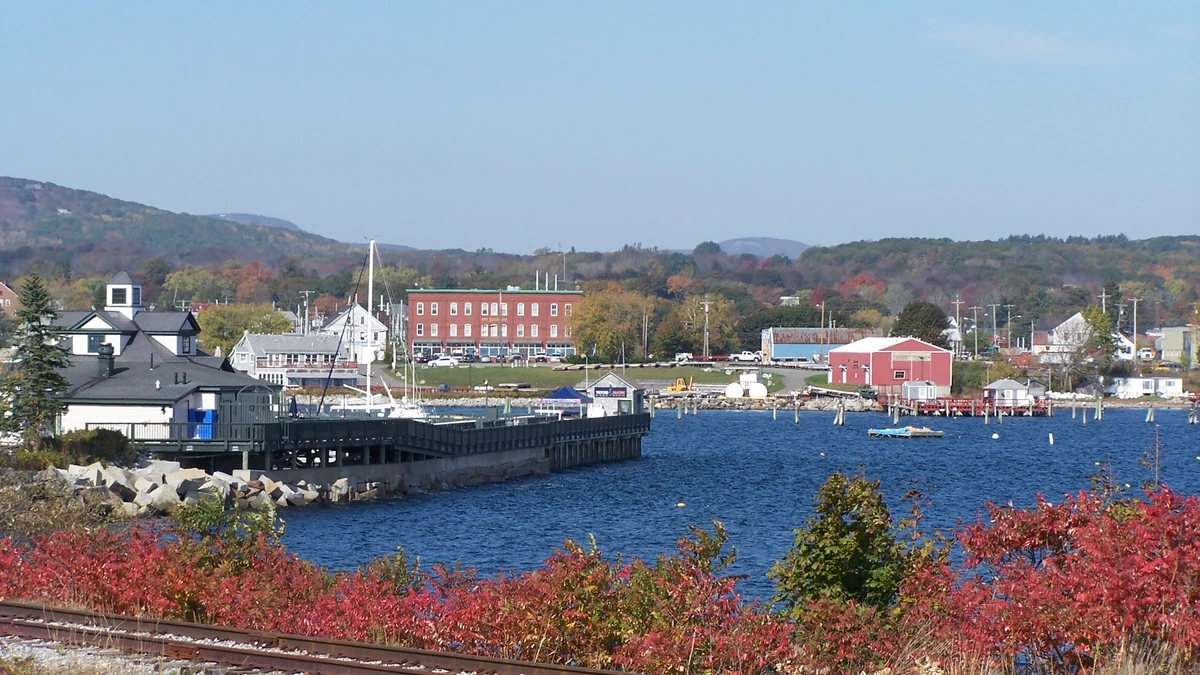
Rockland’s city cruise information confirms that the harbour receives scheduled cruise calls, but Rockland cruise port is still a small working-waterfront arrival rather than a purpose-built cruise complex. Most larger ships anchor in the harbour and use tenders towards the Public Landing and Harbor Park area. That puts passengers close to Main Street, the arts district and two strong maritime museums, while the lighthouse at the end of the breakwater sits in a different part of the harbour.
The best day depends on whether you want a compact walk-off-style town visit or a vehicle-based Midcoast excursion. Rockland can comfortably fill several hours on foot, especially for art and maritime history. Camden, Owls Head and the Rockland Breakwater Lighthouse are realistic alternatives, but they require transport and should not be added casually after a tender delay. Start with the landing time, choose one geographic direction and keep a generous return margin.
Rockland Cruise Port at a Glance
| Port name | Rockland, Maine |
|---|---|
| Main arrival area | Tender landing near Public Landing and Harbor Park; confirm the ship’s final instructions |
| Cruise region | Alaska / North America / Canada |
| Country / Territory | USA |
| Currency | US dollar (USD) |
| Languages | English |
| Port role | Day call |
| Disembarkation | Usually tender for larger cruise ships |
| Walkability | Very good for Main Street, museums and the central waterfront |
| Shuttle required | No for central Rockland; transport required for the breakwater, Owls Head or Camden |
| Main transport | Walking, ship excursions, pre-booked taxis, private tours and rental cars |
| Best first-time plan | Walk the arts and maritime core, then add one booked harbour or regional component if time allows |
| Main caution | Tender timing and limited local vehicle supply make improvised out-of-town plans fragile |
The Tender Puts Central Rockland Within Easy Reach
Tender operations determine the useful length of the day. Boarding order, sea conditions and the ship’s own excursion priorities can delay the first independent passengers ashore, while the final tender normally leaves before the published sailing time. Follow the daily programme rather than relying on a generic port schedule. The City of Rockland also warns that requested calls and times can change, so a public schedule is not a substitute for the ship’s instructions.
Once landed near Harbor Park, the town becomes straightforward. Main Street rises only a short distance inland, the Maine Lighthouse Museum is beside the park, and the Farnsworth Art Museum is within the compact downtown grid. The advantage is that you can begin without negotiating transport. The limitation is that the breakwater lighthouse, Camden and Owls Head are not extensions of the same easy walk.
Rockland Works Best as an Arts-and-Waterfront Town Day
Rockland’s strongest independent route links the working harbour with Main Street’s galleries, shops and cafés. It feels like a real Midcoast town rather than a sealed cruise precinct: fishing boats, ferries and local traffic continue around visitors. Walk slowly north along Main Street, using Museum Street and the waterfront paths as cross-links rather than trying to cover every block.
This version of the day is resilient. A late tender reduces browsing time but does not destroy the plan, and a sudden shower can be absorbed inside a museum or café. It also allows passengers to return to the landing early without abandoning a distant reservation. For a first call, that flexibility is more valuable than assembling a long list of nearby towns simply because they appear close on a regional map.
The Farnsworth Is the Main Cultural Anchor
The Farnsworth Art Museum focuses on Maine’s role in American art and gives Rockland a cultural weight that is unusual for a town of its size. Its collections and changing exhibitions are the clearest reason to make art the centre of the port day. Check current opening days and exhibition access before arrival, especially on shoulder-season calls when hours may be reduced.
Allow enough time to look rather than treating the museum as a quick indoor stop. It sits close enough to the waterfront that you can pair it naturally with lunch, the Lighthouse Museum and a Main Street walk. Art-focused passengers may also find independent galleries and the Center for Maine Contemporary Art nearby, but opening hours vary. Choose one major institution first and regard the smaller galleries as opportunities rather than obligations.
The Lighthouse Museum Explains the Coast You Arrived Through
The Maine Lighthouse Museum stands by Harbor Park and contains a major collection of lighthouse, lifesaving and United States Coast Guard material. Its location makes it the easiest substantial attraction after the tender. Even passengers who do not usually choose museums gain useful context for the lights, fog signals, rescue services and navigation systems that shaped this coast.
This is a different experience from visiting a lighthouse in person. The museum is sheltered, compact and compatible with uncertain weather; the breakwater lighthouse requires transport, a long exposed walk and safe footing. Combining the museum with the Farnsworth creates a strong half-day without leaving central Rockland. It is also a sensible fallback when rain, fog or a shortened call makes an outdoor regional plan less attractive.
The Breakwater Lighthouse Is a Separate Commitment
The city describes the Rockland Breakwater Lighthouse as standing at the end of a 7/8-mile granite breakwater. Reaching the start from the central tender area already requires a vehicle or a long additional walk, and the breakwater itself is uneven, exposed and potentially slippery. The return therefore involves considerably more than the distance suggested by a photograph across the harbour.
Choose it only when the lighthouse is genuinely the priority. Arrange transport both ways, check weather and allow time to walk slowly. It is not a good add-on for passengers with balance problems or anyone trying to fit two museums and lunch into the same short call. In fog, rain or strong wind, the indoor Lighthouse Museum usually provides the better maritime day.
Harbor Park and the Waterfront Trail Suit a Lower-Effort Visit
Passengers who want fresh air without the breakwater can use Harbor Park and sections of the Rockland Harbor Trail. The route gives changing views of the working waterfront, ferries and small craft while staying close to town. Surfaces and continuity vary, so it should be approached as a flexible waterfront wander rather than a perfectly level promenade from end to end.
This works especially well after a museum or lunch. Turn back when the path becomes less comfortable or when the available time begins to tighten. The appeal lies in watching Rockland function as a harbour, not in reaching a single dramatic endpoint. Keep away from operational docks and respect signs around private or commercial property.
Camden and Owls Head Compete for the Same Transport Time
Camden offers a picturesque harbour and compact centre north of Rockland; Owls Head offers a quieter coastal setting and lighthouse area to the south. Either can make a worthwhile regional excursion, but trying to combine both with a full Rockland visit turns the day into a drive-by itinerary. Road traffic, parking and vehicle collection matter more than the map’s short distances suggest.
Use a ship excursion or pre-booked driver when one of these places is the main objective. Confirm exactly where the vehicle meets the tender and whether the quoted duration includes waiting for passengers to land. Independent rental cars can work, but only when collection and return are near the arrival point. A distant rental desk can consume the very time the car was meant to save.
A Harbour Cruise Can Add Scenery Without a Long Road Transfer
Local boat trips, windjammer experiences and short harbour outings may operate when the season and call time align. They can add lighthouse and island views while keeping the day connected to Penobscot Bay. Do not assume that every advertised sailing is cruise-compatible: many departures are designed for overnight visitors and may leave before independent tender passengers reach shore.
Book only after checking the departure point, boarding deadline, duration and cancellation policy. Leave a full buffer between the boat’s return and the ship’s final tender. When conditions are marginal, two layers of marine transport create extra risk: the local boat may alter its route and the cruise ship may also adjust tender operations. A land-based museum plan is the safer fallback.
Food Is Part of the Town, Not a Race for One Famous Lobster Roll
Rockland’s cafés, bakeries and seafood restaurants make lunch an easy part of a central walking day. Lobster is the obvious regional choice, but menus, queues and opening days vary, particularly outside peak summer. Pick a place that fits your route rather than crossing town for a single highly promoted dish. A slower lunch works well when the rest of the itinerary remains within walking distance.
Carry a card and a small amount of US cash for minor purchases or gratuities. Restaurants can become busy when a ship and local events overlap, so eat slightly early or late. Passengers with a fixed excursion should not place a full-service meal immediately before the meeting time. The practical Rockland meal is the one that preserves the afternoon rather than the one with the longest online queue.
DIY Is Strong in Town; Organised Transport Is Stronger Beyond It
Rockland is one of the easier ports in this batch to explore independently, provided the plan stays in the town centre. The museums, harbour and Main Street form a coherent route, signs are understandable and the landing is close. Paying for an organised walking tour is optional rather than essential.
The balance changes once the destination is Camden, Owls Head, a private garden or a more distant coastal site. Taxi supply is finite and cruise-day demand can concentrate quickly. A ship excursion costs more but protects the transport chain; a reputable private tour gives flexibility when it guarantees port collection and return. Do not build an out-of-town day around finding an unreserved taxi after landing.
Mobility Planning Starts with the Tender
The first barrier is the transfer from ship to tender and from tender to the floating or fixed landing. Steps, movement and changing water levels may make the call unsuitable for some mobility devices even though central Rockland itself is relatively manageable. Ask the cruise line about assistance and equipment limits before the day of arrival.
Once ashore, downtown pavements and museum access are easier than the breakwater or uneven waterfront edges. A wheelchair user may be able to enjoy Harbor Park and the main cultural sites with sensible routing, but should verify entrance details directly. The granite breakwater is not the appropriate substitute for a conventional accessible lighthouse visit.
Fog and Rain Should Change the Route, Not Cancel the Day
Midcoast weather can shift quickly. Check the National Weather Service forecast for Rockland and look beyond the temperature to wind, visibility and rain timing. Fog can reduce harbour views while leaving museums and Main Street entirely usable; wind can affect both local boat trips and tender comfort.
Wear layers and bring a waterproof outer shell rather than relying on an umbrella near the waterfront. Smooth-soled shoes are a poor choice for wet granite. When the forecast is unsettled, keep the breakwater and regional driving optional. Rockland’s advantage is that a high-quality indoor day sits immediately beside the landing.
CruisePing Recommended Port Day
For a first visit, spend the morning between the Farnsworth Art Museum and the Maine Lighthouse Museum, then have lunch around Main Street and finish with Harbor Park or a short waterfront walk. This plan uses Rockland’s best distinctive assets, survives tender delays and avoids dependence on scarce transport.
Choose the breakwater lighthouse instead only when lighthouse walking is the main reason for the call and conditions are suitable. Choose Camden or Owls Head only as a pre-arranged regional excursion. Do not try to combine the town museums, the breakwater and another harbour: the distances are modest, but the transport links and return margins are not.
Weather & Best Time to Visit Rockland
Rockland’s cruise season runs through a changeable coastal climate. Late spring can feel cool near the water, summer is generally mild to warm, and autumn calls may bring crisp air, rain or fog. Wind on the tender and waterfront can make the day feel colder than the inland reading.
Use the table as a packing guide rather than a prediction. Layers, a waterproof jacket and shoes with grip are useful across the season. Boat trips and the breakwater should be assessed using the live marine conditions, not only the daily high.
| Month / season | Typical high | Typical low | Rain / conditions |
|---|---|---|---|
| April–May | 14°C | 4°C | Cool and changeable; fog, rain and cold harbour breezes possible |
| June–August | 24°C | 14°C | Mild to warm with occasional humidity, showers and coastal fog |
| September | 20°C | 10°C | Often pleasant early in the month, with cooler nights and increasing variability |
| October–November | 12°C | 3°C | Cool, windy and changeable; rain and early cold snaps possible |
Practical Questions for a Rockland Cruise Call
Where do cruise tenders land in Rockland?
Larger ships normally tender towards the Public Landing and Harbor Park area, but follow the ship’s final instructions because arrangements can change.
Can I walk to the main attractions?
Yes. Main Street, the Farnsworth Art Museum and Maine Lighthouse Museum are within the compact central area.
Can I walk from the tender to the Breakwater Lighthouse?
It is theoretically possible for a very strong walker, but the start of the 7/8-mile breakwater is well away from central Rockland. Pre-arranged transport is the sensible choice.
Is Camden easy to visit independently?
It is a short regional drive, but taxi and rental-car availability can be limited. Book transport in advance and keep a generous return buffer.
What should I do in poor weather?
Use the Farnsworth, Lighthouse Museum, shops and cafés as the core. Avoid committing to the breakwater or a marine trip when conditions are poor.
Do I need US cash?
Cards are widely accepted, but a small amount of cash is useful for tips and minor purchases.
Useful Official Links for Rockland
Use these sources to confirm the ship schedule, museum openings, lighthouse access and live weather.
- City of Rockland cruise information
- Farnsworth Art Museum
- Maine Lighthouse Museum
- Rockland Breakwater Lighthouse
- Visit Maine: Rockland and the Midcoast
- National Weather Service forecast
CruisePing Port Verdict
Rockland rewards restraint. Its central arts-and-maritime district is genuinely walkable and strong enough to fill the call, while the breakwater and neighbouring towns each require a separate transport decision. Treating them as casual add-ons is the main way to weaken the day.
Our preferred first visit stays in town: Farnsworth, Lighthouse Museum, Main Street and the harbour. It is local, distinctive and robust when the tender or weather changes. Travel beyond Rockland only when that one regional destination matters more than the town itself.
Ready to browse our article library?
Explore more ports in the Alaska / North America / Canada region, browse USA cruise ports, or return to the main CruisePing article library.