
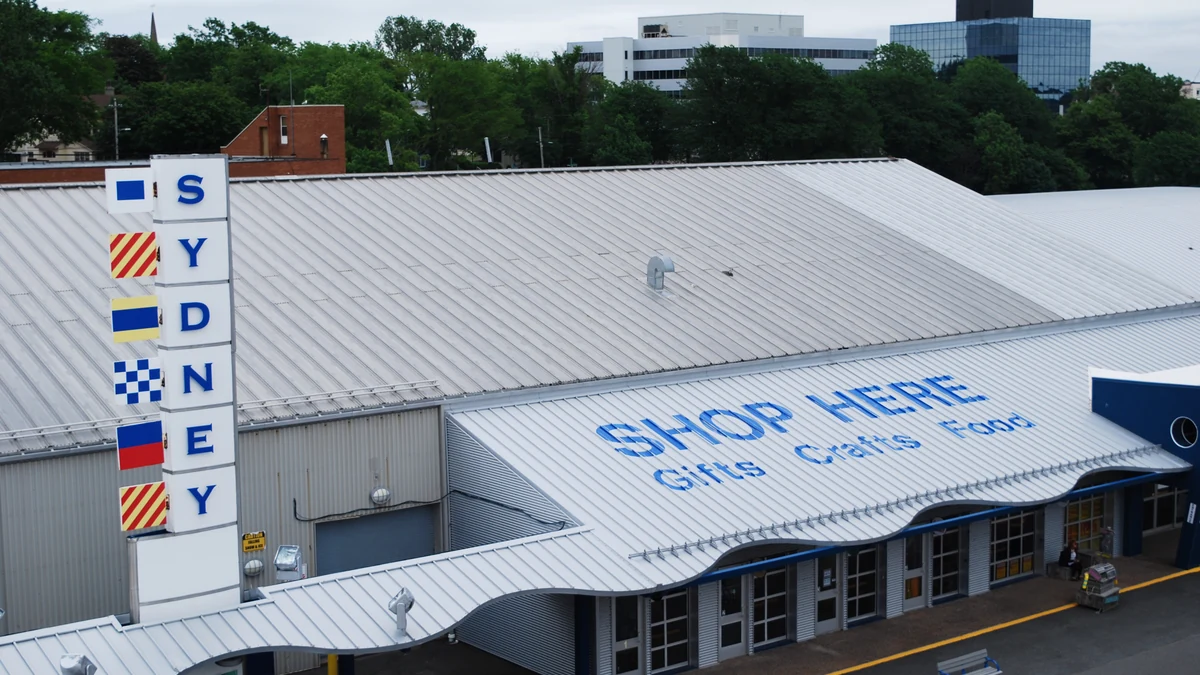
Sydney Nova Scotia cruise port is a docked gateway to Cape Breton Island, with most passengers stepping ashore beside the Joan Harriss Cruise Pavilion and the giant fiddle on the harbourfront. The Port of Sydney publishes the current cruise schedule and port information, but the ship’s daily programme remains the final authority for berth, all-aboard time and any tender arrangements on unusually busy days.
The port is easy; the destination choices are not. Central Sydney can be explored on foot, while the Fortress of Louisbourg, Baddeck, the Bras d’Or Lake region and the Cabot Trail pull in different directions. A strong day chooses either a city-and-culture route or one Cape Breton excursion. Trying to combine Louisbourg, Baddeck and a slice of the Cabot Trail turns a generous call into a coach window.
Sydney Nova Scotia Cruise Port at a Glance
| Port name | Sydney, Nova Scotia |
|---|---|
| Main arrival area | Joan Harriss Cruise Pavilion on Sydney harbourfront; follow ship instructions if an alternative berth or tender is used |
| Cruise region | Alaska / North America / Canada |
| Country / Territory | Canada |
| Currency | Canadian dollar (CAD) |
| Languages | English; Gaelic and Mi’kmaq culture are important to Cape Breton interpretation |
| Port role | Day call |
| Disembarkation | Usually docked |
| Walkability | Good for the pavilion, giant fiddle and central Sydney; regional attractions require transport |
| Shuttle required | No for central Sydney; yes or organised transport for Louisbourg, Baddeck and wider Cape Breton |
| Main transport | Walking, ship excursions, pre-booked coaches or private tours, taxis and limited rental vehicles |
| Best first-time plan | Choose the Fortress of Louisbourg or Baddeck and the Bras d’Or region, then retain time at the harbourfront |
| Main caution | Cape Breton is large: the full Cabot Trail and multiple regional centres do not fit comfortably into a normal port call |
The Cruise Pavilion Is a Genuine Walk-Off Arrival
The Joan Harriss Cruise Pavilion places passengers on Sydney’s harbourfront with visitor information, local vendors and the world’s largest fiddle immediately beside the ship. Unlike many gateway ports, there is no automatic long transfer before the day begins. This makes a central walking plan resilient when the ship arrives late or weather changes.
Do not let the easy gangway create false confidence about the rest of Cape Breton. The pavilion is close to central Sydney, not to Louisbourg, Baddeck or the scenic highlands. Tour coaches need to leave promptly, and independent drivers must know exactly where port collection is permitted.
The fiddle beside the pavilion celebrates Cape Breton’s musical traditions and is the obvious first photograph. Performances, markets and local activity may take place around the pavilion depending on the call. Their timing is not guaranteed, so ask visitor staff what is operating that day.
Use the fiddle as the meeting point for the beginning and end of the route. It is easy to lose time browsing the pavilion before a fixed excursion; regional-tour passengers should save shopping for the return. Independent visitors can begin with the harbourfront, then move inland before coaches and tour groups come back.
Check the Berth and Ship Count Before Assuming a Quiet Port
The Port of Sydney’s cruise schedule is useful for seeing whether other ships are expected, although calls remain subject to change. Multiple arrivals can stretch coaches, taxis, restaurants and the pavilion market. Some operational arrangements may differ when berth demand is high.
Use the schedule as a crowding clue, not as a promise. The cruise line confirms the berth and tour meeting time. When another large ship is present, book regional transport in advance and bring the downtown walking route forward or back to avoid the busiest pavilion period.
Central Sydney Is a Flexible Half-Day, Not a Major Historic City
Sydney’s centre offers harbour views, churches, local history, shops and cafés, but it is not the principal reason most passengers visit Cape Breton. Its value is flexibility: you can walk without a tour, return quickly to the ship and experience the port community rather than spending the full call on a coach.
Set expectations accordingly. Choose a self-guided heritage walk, the harbourfront and one museum or cultural stop. Do not expect the density of Halifax or Quebec City. A central day is particularly sensible for repeat visitors, shortened calls and passengers who prefer low transport risk.
The Fortress of Louisbourg Is the Strongest First-Time Excursion
The Fortress of Louisbourg National Historic Site reconstructs part of the 18th-century fortified town and uses costumed interpretation, buildings and landscape to explain French colonial life and military conflict. It is approximately forty to fifty minutes by road from the cruise port under normal conditions, making it a substantial but manageable excursion.
Allow enough time inside the site. The visitor arrival process, shuttle or walking arrangements, orientation and distances between buildings mean that a ninety-minute stop can feel superficial. A ship excursion controls the road and admission; a private tour can provide more flexibility when it guarantees at least two to three hours at the site and a safe return.
Door to door, allow for the walk from ship to coach, loading a full vehicle, the drive, site arrival and the same sequence in reverse. A tour described as four hours may provide much less than four hours inside the fortress. Ask for the expected on-site duration before comparing prices. Independent drivers should leave the site on a fixed clock time rather than after one final building.
Louisbourg Operating Season and Weather Change the Visit
Parks Canada publishes current hours, services and notices for Louisbourg. Some buildings, demonstrations, restaurants and programmes operate seasonally, and autumn cruise calls may receive a different experience from midsummer visitors. Check the official plan-your-visit information rather than assuming the full programme runs every day.
The exposed coastal setting can be cold, wet and windy. Dress for walking between buildings and bring a waterproof layer. Poor weather does not remove the historical value, but it changes comfort and may reduce outdoor interpretation. A shorter city plan should remain available if the ship or operator reports severe conditions.
Do Not Confuse the Fortress with the Modern Town of Louisbourg
Modern Louisbourg is a separate community near the historic site and harbour. Some tours include coastal viewpoints, lighthouse scenery or a short town stop; others travel directly to Parks Canada. Read the itinerary carefully so that ‘Louisbourg’ does not conceal a visit that spends little time in the fortress.
The town can add maritime context, but it should not reduce the main site to a rushed circuit. If the fortress is the priority, protect its time first. A coastal addition is valuable only when it fits naturally and weather permits.
Baddeck Offers a Different Cape Breton Story
Baddeck sits on the Bras d’Or Lake and provides a scenic village, sailing landscape and links to Alexander Graham Bell. The road journey from Sydney is normally around an hour each way, depending on traffic and the route. This makes it an alternative to Louisbourg, not a companion attraction on most calls.
The Alexander Graham Bell National Historic Site is the strongest interpretive anchor. It explores Bell’s experiments and family life in Cape Breton. Pair the museum with a village walk or lakeside stop rather than adding a long Highland route.
Baddeck is particularly attractive in clear weather, but the museum gives the trip substance when lake views are muted. A cruise-compatible route should not continue far around the Cabot Trail merely to claim a highlands connection. Use the village and Bell site as the day’s complete destination, with one scenic stop on the return if time genuinely permits.
Bras d’Or Lake Excursions Need a Named Focus
The Bras d’Or Lake is vast, and a tour marketed simply as ‘the lake’ can involve long coach time for a few viewpoints. Useful itineraries identify a destination such as Baddeck, the Highland Village or a boat experience and explain how much time is spent there.
Choose the route by content, not by the number of scenic-road kilometres. A cultural museum, village and lakeside lunch can deliver a stronger day than a broad circuit that never leaves the coach. Low cloud and rain can also weaken distant views, so an indoor interpretive stop matters.
The Highland Village Is a Cultural Excursion with a Longer Transfer
The Highland Village Museum at Iona interprets Gaelic settlement through historic buildings, landscape and programmes overlooking the Bras d’Or Lake. It offers a more immersive cultural day than a quick Sydney city tour, but the road transfer and walking surfaces require time.
Operating days are seasonal and the open-air site is exposed to weather. A ship excursion may combine it with scenic stops; verify how much time is actually spent in the village. Passengers with mobility concerns should ask about slopes, distances and transport between buildings.
The Full Cabot Trail Is Not a Sensible Port-Day Goal
The Cabot Trail is one of Canada’s celebrated scenic drives, but the full circuit is far too long and variable for a normal Sydney call. Even a partial route towards the highlands can consume hours and is vulnerable to traffic, roadworks, fog and weather. A marketing phrase such as ‘taste of the Cabot Trail’ should be translated into exact stops and drive time.
Choose a limited section only when mountain scenery is the main priority and the operator is cruise-experienced. Do not expect to reach every famous lookout. Baddeck and a short northward scenic segment may fit a long call, but Louisbourg should not be added to the same day.
Cape Breton Highlands National Park Is Usually Beyond the Safe Range
The dramatic cliffs and hiking trails of Cape Breton Highlands National Park lie well beyond central Sydney. Reaching the park, spending meaningful time there and returning can be possible only on carefully designed long excursions with substantial coach time. Independent day trips are high-risk.
Save serious hiking and the complete highlands experience for a land stay. Cruise passengers who want nature can choose closer coastal routes, Bras d’Or viewpoints or a ship-protected scenic excursion. The strongest port day is not necessarily the one with the greatest distance.
Membertou Adds Living Mi’kmaq Culture Close to Sydney
Membertou Heritage Park presents Mi’kmaq history and living culture within the Membertou community near Sydney. It provides a valuable counterbalance to itineraries that focus only on Scottish and European heritage. Access, programmes and group arrangements should be confirmed in advance.
A guided visit is preferable to an unstructured drop-in because interpretation is central to the experience. Pairing Membertou with Sydney or another nearby cultural stop can create a coherent local day. Treat the community with respect and follow photography guidance.
Cape Breton Music Is Better with Context Than as Background
Fiddle music and Gaelic traditions are prominent in the pavilion and throughout island tourism. Performances arranged for cruise calls can be enjoyable, but the culture is deeper than a brief welcome tune. Tours may include musicians, ceilidh-style events or community venues.
Choose a music-led excursion if performance and storytelling are a genuine priority. Do not assume a scheduled public ceilidh will match the ship’s time. The pavilion staff can advise what is happening locally, while organised events provide the more reliable cruise-compatible option.
The Miners Museum Is a Separate Industrial-Heritage Choice
The Cape Breton Miners Museum in Glace Bay interprets coal mining and the communities shaped by it. It lies outside central Sydney but closer than Baddeck, and some visits include an underground component led by retired miners. Access and seasonal operation need checking.
This is a strong alternative for industrial history, particularly in poor scenic weather. Ask whether the underground experience is included and whether its steps, headroom and surfaces suit your group. It does not combine naturally with a full Louisbourg visit unless the call is long and the tour is designed that way.
Scenic Coastal Tours Need More Than a Lighthouse Photograph
Routes towards the coast may include fishing communities, lighthouses and ocean viewpoints. The quality depends on interpretation and time outside the vehicle. An itinerary with six named photo stops can be weaker than one harbour, one walk and a local guide who explains the fishing economy and changing communities.
Check whether stops have toilets, shelter and accessible surfaces. Autumn wind can be fierce on exposed headlands. A regional coast tour should finish with a direct return to the port, not an uncertain independent taxi from a distant village.
Rental Cars Offer Freedom but Add Collection and Navigation Risk
A rental car can suit repeat visitors or families with a precise Louisbourg or Baddeck plan. Availability near cruise days is limited, and the desk may not be inside the pavilion. Confirm collection, return, insurance, fuel and the time required to reach the vehicle.
Canadian driving is on the right, distances are in kilometres and rural mobile coverage can vary. Download the route, avoid the full Cabot Trail and set a firm turnaround time. A lower headline price is not useful if the collection shuttle and paperwork consume the morning.
When a Taxi Is the Better Vehicle
Taxis can move passengers around Sydney, Membertou and nearby sites, but they should not be assumed available for an all-day regional journey without advance agreement. A one-way fare to a distant attraction leaves the unresolved problem of the return.
For Louisbourg or Baddeck, negotiate a fixed tour with waiting time and port return, or use an established excursion. Record the driver’s contact details and agree what happens if the ship changes its schedule. App-based ride services are not a dependable island-wide transport network.
Food Works in the Pavilion, Downtown or as Part of the Excursion
Seafood, casual cafés and local dishes can fit a central Sydney day, while regional excursions may include lunch at Louisbourg, Baddeck or a community venue. Read inclusions carefully and carry a snack when a long coach departure begins early.
The pavilion can become busy when tours return together. Shopping and a final drink are safer after the regional excursion than before it. Canadian dollars are useful for small purchases, though cards are widely accepted. Restaurant prices may not include tax or gratuity.
Buy Local Work with Clear Attribution
The cruise pavilion and central area sell crafts, jewellery, music and souvenirs. Ask who made an item and where it was produced, especially for work presented as Mi’kmaq, Gaelic or Cape Breton craft. Clear artist attribution matters more than a generic island label.
Save purchases for the final part of the day when possible. That avoids carrying fragile items through a coach tour and keeps the morning departure simple. Allow checkout time before walking back to the gangway.
A Central Walking Day Needs a Deliberate Route
Passengers remaining in Sydney can use the harbourfront, historic churches, local museums, cafés and community landmarks. Obtain a current walking map from the pavilion and choose a loop rather than wandering inland without a clear destination. Traffic and waterfront construction can change the most pleasant route.
A local guide adds context about migration, steel, coal, music and urban change. Without that interpretation, the city can feel quieter than expected. The advantage is complete control over pace and return, making central Sydney a good choice for limited mobility or unstable weather.
Poor Weather Favours Culture Over the Longest Scenic Drive
Cape Breton weather can vary between Sydney, Louisbourg, the Bras d’Or region and the highlands. Check Environment and Climate Change Canada and ask the operator where the forecast is most relevant. Fog can remove the payoff from an ambitious scenic coach route while leaving museums and cultural sites fully worthwhile.
Carry layers and a waterproof jacket even when the ship arrives under blue sky. Autumn temperatures can drop quickly after rain. When weather is doubtful, Louisbourg still offers substantial indoor and sheltered interpretation, while Membertou, the Miners Museum and central cultural stops provide stronger backups than chasing distant lookouts.
Mobility Changes Which Gateway Choice Works
The pavilion and central harbourfront are comparatively accessible, but regional excursions introduce coach steps, long sitting periods and uneven heritage sites. Louisbourg covers a broad area; Highland Village includes slopes and outdoor paths; an underground mining visit has specific physical requirements.
Ask for walking distances, surface types and accessible transport before booking. A panoramic coach route with one well-chosen indoor site may be better than a tour labelled easy but containing several short, steep stops. The long drive to Baddeck can also be tiring even when walking is limited.
DIY Versus Organised Excursion Depends on the Gateway Distance
Sydney itself is easy to explore independently. Louisbourg can be reached with a pre-booked rental car or private driver, but Baddeck, the Highland Village and any Cabot Trail segment benefit more strongly from organised transport and cruise-aware timing. Public transport is not a practical sightseeing network for these routes.
The ship excursion premium buys a protected return and removes the vehicle-supply problem. A private tour offers flexibility when it states exact pickup and return commitments. Independent passengers should not choose the farthest destination merely to avoid a group; a shorter, self-directed Sydney day may be the genuinely better independent option.
CruisePing Recommended Port Day
For a first visit, take a four-to-five-hour excursion to the Fortress of Louisbourg with at least two hours at the site and a direct return. Use the remaining time for the pavilion, giant fiddle and a short harbourfront walk. This gives Cape Breton’s strongest historic experience without an overextended route.
Choose Baddeck and the Alexander Graham Bell site instead when lakeside scenery and invention history appeal more than military heritage. Choose Membertou and central Sydney for a culturally focused, lower-transfer day. Do not attempt Louisbourg, Baddeck and the Cabot Trail together, however generous the ship’s time appears.
For every regional choice, work backwards from all aboard. Reserve at least ninety minutes between the planned arrival at the pavilion and the ship’s deadline, extending that margin for an independent driver or poor forecast. Cape Breton roads are not inherently difficult, but a minor delay becomes serious when the itinerary has already used every spare minute.
Weather & Best Time to Visit Sydney
Sydney has a cool maritime climate with rapid changes in wind, cloud and rain. Summer can be mild to warm, while the important autumn cruise season brings crisp days, strong colour and a greater risk of cold rain or fog. Conditions at Louisbourg or the Bras d’Or Lake may differ from the port.
Use the table for clothing and route planning, then check the live forecast for the actual excursion area. Layers, a waterproof shell and shoes suitable for wet heritage sites are useful throughout the season.
| Month / season | Typical high | Typical low | Rain / conditions |
|---|---|---|---|
| May–June | 18°C | 7°C | Cool to mild with fog, rain and variable coastal wind |
| July–August | 23°C | 13°C | Warmest period, though showers and humid spells occur |
| September | 18°C | 9°C | Pleasant early autumn with increasing rain and cooler evenings |
| October | 12°C | 4°C | Cool, windy and changeable; autumn colour can coincide with cold rain |
Sydney Cruise Port FAQs
Where do cruise ships dock in Sydney, Nova Scotia?
Most use the harbourfront berths beside the Joan Harriss Cruise Pavilion. Follow the ship’s instructions if an alternative arrangement is used.
Can I walk into central Sydney?
Yes. The pavilion is already on the harbourfront and the central area is accessible on foot.
How far is the Fortress of Louisbourg?
Normally about forty to fifty minutes by road each way, before allowing for coach boarding and site access.
Can I visit Baddeck and Louisbourg on the same day?
Not comfortably on most calls. They lie in different directions and each deserves to be the main excursion.
Can I drive the Cabot Trail from the cruise port?
A full circuit is not realistic. Even a partial route requires a carefully timed organised or pre-booked excursion.
What is the best poor-weather option?
Choose Louisbourg for history, or use Membertou, the Miners Museum and central Sydney rather than a long scenic drive dependent on visibility.
Do I need Canadian cash?
Cards are widely accepted, but a small amount of Canadian cash is useful for tips and small local purchases.
Useful Official Links for Sydney
Check these official and local sources when confirming terminal arrangements, opening times and excursion choices:
- Port of Sydney
- Port of Sydney cruise schedule
- Fortress of Louisbourg National Historic Site
- Alexander Graham Bell National Historic Site
- Highland Village Museum
- Membertou Heritage Park
- Cape Breton Miners Museum
- Tourism Nova Scotia day trips from Sydney
- Environment Canada weather
CruisePing Port Verdict
Sydney is a convenient port attached to a large and varied island. The gangway makes the call look easy, but the most famous choices are separated by substantial road time. Louisbourg, Baddeck and the highlands are competing itineraries, not a single attraction list. The easiest planning test is to ask what would still make the day worthwhile if the second advertised destination were removed. When the answer is unclear, the itinerary is probably using distance as a substitute for depth.
Our first choice is the Fortress of Louisbourg, followed by time at the harbourfront. Baddeck is an excellent alternative, while Membertou and central Sydney create the strongest lower-transfer day. The full Cabot Trail belongs to a land journey, not to an anxious race back to the ship. A measured route also gives passengers time to hear local music, speak with makers and recognise Cape Breton as a living island rather than a sequence of coach stops. That balance is the clearest sign of a successful Sydney port day without sacrificing a secure, comfortable and unhurried return to the vessel.
Ready to browse our article library?
Explore more ports in the Alaska / North America / Canada region, browse Canada cruise ports, or return to the main CruisePing article library.