
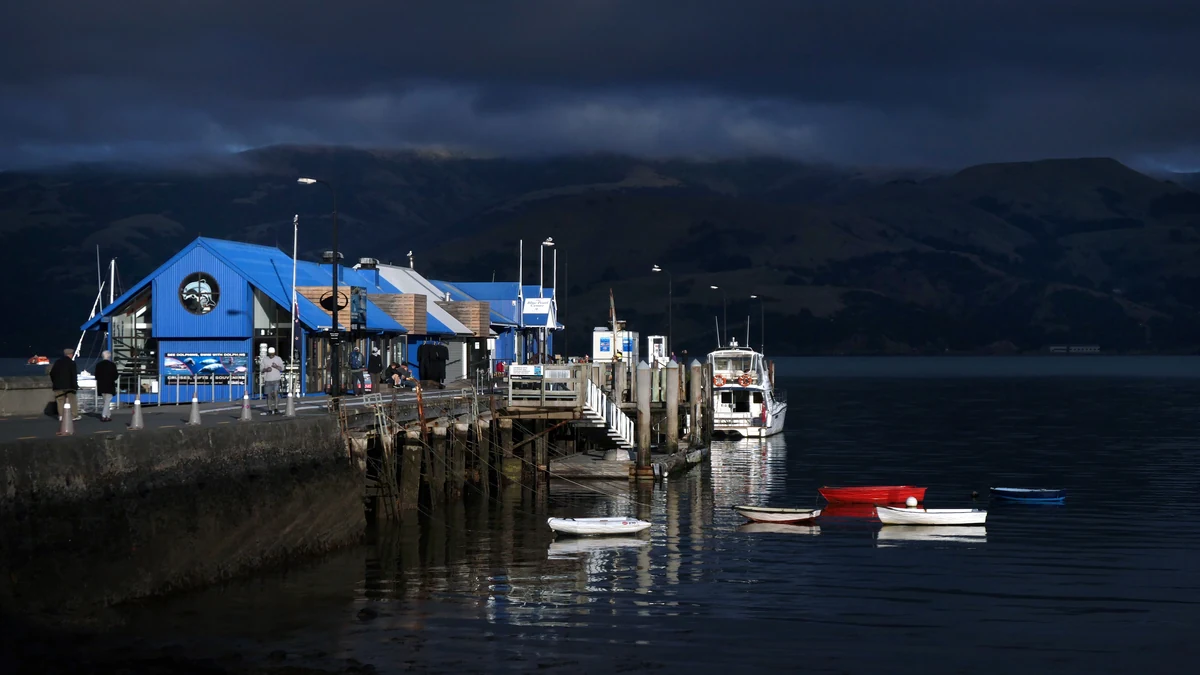
Environment Canterbury’s harbour information confirms that cruise ships using Akaroa Harbour anchor rather than berth, making Akaroa cruise port a tender call from the outset. The landing places you in a compact historic settlement where cafés, the museum, harbour operators and the main waterfront are close together. That gives Akaroa a rare strength: the destination itself can comfortably fill the call without another long transfer.
The temptation is Christchurch. Official destination guidance places Akaroa about 90 minutes by road from Christchurch, before allowing for tendering, coach loading and traffic. Christchurch can be visited, but it turns a distinctive harbour day into a three-hour return transfer. For most first-time passengers, Akaroa’s marine life, French-influenced streets and volcanic harbour offer the stronger balance.
Akaroa Cruise Port at a Glance
| Port name | Akaroa, Banks Peninsula |
|---|---|
| Main arrival area | Tender landing at Akaroa Main Wharf or the call’s designated landing |
| Cruise region | Australasia / Pacific Islands |
| Country / Territory | New Zealand |
| Currency | New Zealand dollar (NZD) |
| Languages | English and te reo Māori |
| Port role | Day call |
| Disembarkation | Tender |
| Walkability | Excellent for the central waterfront and historic village; some attractions climb above town |
| Shuttle required | No for Akaroa; organised transport required for Christchurch or wider Banks Peninsula |
| Main transport | Tender, walking, harbour cruises, organised coaches, private tours and limited local taxis |
| Best first-time plan | Stay in Akaroa, combine the historic village with one pre-booked harbour wildlife experience |
| Main caution | Tender delays and the 90-minute road transfer make Christchurch a high-commitment choice |
The Tender Delivers You to the Destination, Not a Remote Terminal
Once ashore, Akaroa’s useful area runs along Beach Road and Rue Lavaud. The main wharf, harbour operators, shops and cafés are close enough to navigate without a shuttle. Tender priority and sea conditions still affect the first hour, but a delay usually reduces browsing rather than destroying the entire plan.
Follow the ship’s final landing instructions because wharf use and tender sequencing can vary. Independent marine operators should be told that you are arriving by cruise tender. A sensible booking allows for delayed disembarkation and finishes well before the final tender rather than just before the published sailing time.
Akaroa or Christchurch Is the Defining Choice
ChristchurchNZ describes Akaroa as a scenic 90-minute drive from the city. A coach day can show central Christchurch, its rebuilding story, gardens and selected attractions, yet the road crosses Banks Peninsula and every minute must be repeated on the return. A seven-hour call can feel surprisingly short after tendering.
Stay local if the harbour, wildlife and small-town character appeal to you. Choose Christchurch only because there is a specific city experience you value more, not because Akaroa seems too small. The village’s scale is an advantage: it supports a slower and more resilient port day.
Best Things to Do in Akaroa
Official Akaroa day-trip guidance combines marine wildlife, heritage, food and a compact waterfront. The best cruise-day plan normally selects one timed anchor—often a dolphin cruise—then fits the museum, streets and gardens around it. Trying to add Christchurch, a harbour cruise and every local sight is not realistic.
The harbour is the landscape. Even passengers who do not book a boat should walk the waterfront, look back across the flooded volcanic caldera and allow time for the town’s French and British layers rather than treating Akaroa as a transfer depot.
Hector’s Dolphins Are the Signature Experience
Local operators offer roughly two-hour nature cruises, and Akaroa Dolphins is listed by ChristchurchNZ as a family-owned operator exploring for Hector’s dolphins, seals, penguins and seabirds. Wildlife is never guaranteed, but the trip gives the strongest sense of the harbour’s scale and ecology.
Book a departure that tolerates tender delay. Swimming products involve stricter check-in, equipment and physical requirements than observation cruises, so they are less forgiving on a cruise call. A nature cruise is usually the better all-round first choice and leaves more time ashore.
The Historic Village Rewards Slow Walking
Rue Lavaud, Beach Road, old cottages, churches and gardens form an easy independent circuit. The French place names and colonial architecture are part of Akaroa’s identity, but avoid reducing the town to a decorative “French village”. Banks Peninsula has deep Māori history and a more complex sequence of settlement, trade and conflict than the streetscape alone suggests.
Use the museum or a guided walk to add context. Browsing without that layer is pleasant; understanding why this small harbour became important makes the day more memorable.
The Giant’s House Is a Distinctive Uphill Addition
The Giant’s House is known for its mosaic sculptures and garden. It sits above the central waterfront, so the short distance includes a climb. Allow enough time to explore rather than treating it as a quick photograph between a boat and the tender.
It works particularly well for passengers who want a strong land-based attraction without leaving Akaroa. Those with limited mobility should check current access and consider transport for the uphill section.
Akaroa Museum Adds the Context the Streets Need
The Akaroa Museum occupies a central group of heritage buildings and explains local Māori, French, British and maritime history. It is a good opening stop on a poor-weather day and a useful counterweight to the romanticised version of the town.
Check current opening hours, especially on a short or shoulder-season call. A museum visit before a harbour walk helps you notice street names, buildings and landscape features that would otherwise pass as attractive background.
Harbour Cruises and Dolphin Swims Are Not Interchangeable
A general nature cruise prioritises wildlife viewing and scenery. A dolphin swim adds wetsuits, water entry, a greater physical commitment and conditions that may prevent swimming even when the boat still sails. Read the exact product rather than assuming every dolphin tour offers the same experience.
Cold water, ladder access and open-water confidence matter. Passengers who are uncertain should take the observation cruise; there is no loss of authenticity in remaining aboard. The day should be enjoyable, not a test created by the destination’s marketing.
Banks Peninsula Touring Needs a Clear Purpose
Scenic drives can reach hilltop viewpoints, outer bays, farms and local food producers. The roads are winding, and distances that look short on a map can take time. A small-group tour can reveal the volcanic geography more effectively than an improvised taxi, particularly when viewpoints and private-property access are involved.
Do not combine a substantial peninsula drive with a city transfer. They compete for the same road time. If landscape is the priority, remain on Banks Peninsula and keep Akaroa as the return anchor.
Christchurch Is Feasible but Not Casual
A ship excursion gives the cleanest structure because the coach, city route and return are coordinated with the vessel. Independent travel requires pre-booked transport; local taxi supply is not designed to move hundreds of cruise passengers to Christchurch at once. Public transport is not a practical cruise-day solution.
Once in the city, resist a scattered itinerary. Choose a compact core—perhaps the Botanic Gardens, Riverside Market and central rebuild—then return early. The value of Christchurch is diluted if the day becomes a race between distant stops.
Food and Waterfront Time Belong in the Plan
Akaroa’s cafés and restaurants can become busy when a large ship calls. Eat before the peak or reserve where possible if lunch matters. Local seafood fits the setting, but a harbour-view break is more important than pursuing one supposedly essential dish.
A relaxed lunch also creates a natural timing checkpoint. If the tender operation has been slow, shorten the later shopping or garden portion rather than removing the return buffer.
Tendering and Harbour Weather Set the Risk Level
Akaroa Harbour can look sheltered while wind affects the ship’s anchorage or tender route. The cruise line controls operations and may shorten or cancel a call. Do not treat a booked local product as proof that landing will happen.
Carry a light waterproof layer and warm layer even in summer. Boat passengers are more exposed than walkers in the village. In poor visibility, the museum, cafés, shops and Giant’s House can still form a worthwhile local day if the tender itself operates.
Mobility Is Easy in the Centre but Not Uniform
The central waterfront is compact, but kerbs, older surfaces, tender steps and the slope towards the Giant’s House can challenge some passengers. Ask for assisted tender arrangements through the ship before the day. Operators set their own boarding requirements for small boats.
A passenger who avoids hills can still enjoy the wharf, museum, cafés and much of Beach Road. Do not accept a long coach day merely because walking is limited; sitting through three hours of winding road may be less comfortable than a carefully selected local route.
The Town’s French Character Is Only One Layer
Akaroa’s French street names and colonial cottages are highly visible, but the harbour was significant to Ngāi Tahu long before European settlement. The attempted French colonisation, British sovereignty, whaling, farming and tourism all sit within a wider Māori landscape. A guide or museum visit prevents the town from being reduced to decorative shutters and pastries.
Look for interpretation of Takapūneke and Ōnuku as well as the French settlement story. These places carry histories of trade, conflict, diplomacy and continuing mana whenua connections. A respectful cruise visit should recognise that “French Akaroa” is a visitor shorthand, not the whole identity.
Takapūneke and Ōnuku Need Context and Transport
Important Ngāi Tahu sites lie beyond the central shopping streets. Takapūneke is associated with a devastating 1830 attack and has national historical significance; Ōnuku Marae and the surrounding area reflect continuing community life. They are not casual sightseeing stops where visitors should wander without understanding access or protocol.
Use a recognised cultural or historical tour when these places form part of the route. Do not photograph marae buildings, people or ceremonies without permission. A carefully interpreted visit can add essential depth, but it should never be treated as another item to tick off between cafés.
Short Walks Can Add Landscape Without a Peninsula Tour
Akaroa has local reserves, shoreline sections and hillside viewpoints that can extend a village day. The Garden of Tane and nearby streets offer greenery and harbour glimpses, while stronger walkers can select a signed route above town. Conditions, track closures and elevation should be checked before setting off.
Choose one short walk and keep it subordinate to the tender schedule. Banks Peninsula terrain rises quickly, and a route described in kilometres can take longer because of gradient and viewpoints. Carry water and return downhill before the final shopping or lunch stop rather than leaving the hardest walk until late.
Why a Local Akaroa Day Often Beats the Christchurch Transfer
The case for staying local is strongest when the ship’s call is built around Akaroa Harbour rather than Christchurch. Tendering already introduces an uncertain first and last stage, while the road over Banks Peninsula adds a long, winding transfer in each direction. Christchurch can still be worthwhile for passengers with a clear city priority, but it should be chosen because the city itself matters—not because Akaroa is assumed to be too small for a full day. The official Akaroa and Banks Peninsula guide shows how much of the destination is concentrated around harbour wildlife, settlement history, gardens and the volcanic landscape.
A local day also adapts better when tendering starts late. A harbour cruise can be moved, a museum visit shortened, or a village walk reordered without losing two fixed coach journeys. That flexibility has real value in a tender port. It also gives passengers time to understand the place rather than photograph it between transport stages. The harbour, French and British colonial streets, Māori history, working waterfront and surrounding crater rim are linked parts of one story. A hurried town circuit followed by a coach to Christchurch separates them without necessarily improving the day.
Passengers who have visited Christchurch before should be especially cautious about repeating the transfer simply because it is the best-known name on the excursion list. Akaroa offers a different New Zealand experience: smaller scale, closer contact with the harbour and a day that can be paced around weather and mobility. CruisePing would choose Christchurch for a first visit only when the call is long, the transfer is protected and there is a specific central-city plan. Otherwise, an Akaroa harbour experience followed by the museum, waterfront and one carefully chosen uphill or garden stop is the stronger cruise day.
It also keeps spending within the harbour community that receives the ship, while avoiding a transfer that can dominate both the morning and afternoon.
A Long Call Can Support a Two-Part Akaroa Day
With an early landing and late departure, combine a morning harbour cruise with an afternoon museum, village and garden route. The timed boat goes first because later marine departures can conflict with the final tender. The land portion remains flexible if disembarkation is delayed.
On a shorter call, choose either the boat or the fuller heritage route. A 90-minute Christchurch transfer should not be introduced simply because the local plan has been shortened. Less time makes Christchurch less rational, not more.
Independent Bookings Need a Tender Contingency
Local operators know cruise ships, but their standard cancellation policies may not cover a tender call that is cancelled after the vessel arrives. Ask what happens if the ship does not land, if independent passengers are delayed behind excursions, or if the call is shortened. Keep written confirmation.
Book one timed product rather than several. A morning nature cruise followed by a flexible museum is sensible; a dolphin swim, lunch reservation, private drive and Giant’s House ticket create a chain in which one tender delay harms everything.
Food, Shopping and Cash Are Easy but Still Time-Sensitive
Cards are widely accepted and the central village has cafés, bakeries, restaurants, galleries and small shops. Large ships can overwhelm lunch capacity for a short period. Eat slightly early or late, and avoid placing a slow restaurant meal immediately before a boat departure.
Locally made art or food products can be worthwhile, but New Zealand biosecurity rules matter when the cruise continues internationally. Keep receipts and declarations for plant, honey, wooden or animal products. A compact purchase that can be carried safely on the tender is better than a bulky souvenir.
Families and Mixed-Mobility Groups Can Split Without Losing the Day
One member can take a harbour cruise while another uses the museum and waterfront, then the group can meet in the compact centre. This is easier than forcing everyone onto a winding Christchurch coach or a cold-water swim. Agree a meeting place that is not the busy tender queue itself.
Children may enjoy wildlife, beaches and the Giant’s House, but check age limits and boat conditions. Older passengers may prefer a coach panorama of Banks Peninsula. The port’s strength is that different energy levels can still share lunch and the final waterfront walk.
Return Planning Is Simpler Than Christchurch but Not Optional
From central Akaroa the wharf is close, yet several tenders may be loading and weather can slow boarding. Return before the final published time, especially if the ship has asked passengers to collect tender tickets or use assigned groups. Do not assume the last tender will wait for a private boat.
Passengers returning from Christchurch or a peninsula drive need a much larger road buffer. A local village day can tolerate a missed café; a distant coach cannot tolerate a road closure or traffic delay. That difference is the central reason CruisePing prefers Akaroa for most first visits.
Three Sensible Akaroa Day Shapes
Harbour and heritage: take a morning nature cruise, then use the museum and central streets to understand the harbour’s Māori, French, British and maritime history. This is the best balanced first visit. It keeps every component close to the tender and can be shortened if landing is delayed.
Land and gardens: skip the boat, begin with the museum, walk the waterfront and historic streets, then visit the Giant’s House or one signed local garden and viewpoint route. This suits passengers who dislike small boats or want more control over physical effort. It also works better when wind makes the harbour uncomfortable but the tender still operates.
Christchurch transfer: use a ship or protected coach excursion, choose a compact city focus and accept that Akaroa becomes the embarkation point rather than the destination. Do not add a local dolphin cruise before departure or plan an independent return that reaches the wharf close to the final tender.
A long call does not require the most complex option. The harbour-and-heritage day often feels fuller because time is spent experiencing rather than transferring. Decide which of these three shapes you want before choosing individual tickets; the shape controls which bookings genuinely fit together.
CruisePing Recommended Port Day
Our first-choice Akaroa day stays local. Take a pre-booked morning nature cruise that allows for tender delay, then explore the museum, Rue Lavaud, Beach Road and the harbourfront. Add the Giant’s House if its uphill access suits you, and finish close to the tender landing.
This route uses Akaroa’s strongest assets and remains adjustable. Christchurch is a valid alternative for a long call, but it should replace the Akaroa day rather than sit beside it. CruisePing would use a ship excursion for that transfer and preserve a substantial return margin.
Weather & Best Time to Visit Akaroa
Akaroa has a temperate maritime climate. Summer cruise days can be warm in sheltered streets but cool on the water. Spring and autumn are changeable, while wind and low cloud can affect harbour operations in any month.
| Month/season | Typical high | Typical low | Rain/conditions |
|---|---|---|---|
| December–February | 22°C | 12°C | Mild to warm; strong sun, sea breezes and occasional rain |
| March–May | 18°C | 8°C | Cooler and changeable, with crisp mornings and increasing showers |
| June–August | 12°C | 4°C | Cool and often damp; limited cruise season and cold harbour conditions |
| September–November | 17°C | 8°C | Variable spring weather, brisk winds and rapidly changing layers |
Check MetService for Akaroa and the ship’s tender notice. A town forecast does not replace the marine operator’s assessment of harbour wind and visibility.
Practical Questions for an Akaroa Cruise Call
Where do tenders land?
Normally at Akaroa’s main wharf or the designated harbour landing. Follow the ship’s final instructions.
Can I explore without a tour?
Yes. The central waterfront, museum, shops and cafés are easily walkable.
Should I visit Christchurch?
Only when the city is your clear priority and the call is long enough for roughly 90 minutes of road travel each way.
Do dolphin cruises guarantee sightings?
No wildlife tour can guarantee nature. Choose a reputable operator and read its current policy.
Is the Giant’s House walkable?
Yes for many passengers, but it is uphill from the waterfront and needs more time than the short distance suggests.
What currency is used?
New Zealand dollars. Cards are common, with a small amount of cash useful as backup.
Useful Official Links for Akaroa
Use these current sources to confirm arrival arrangements, attraction access, tour timings and live weather before your call.
- Environment Canterbury cruise-ship information
- ChristchurchNZ: Akaroa and Banks Peninsula
- Akaroa day-trip guide
- Akaroa Dolphins listing
- Akaroa Museum
- MetService Akaroa forecast
CruisePing Port Verdict
Akaroa is one of the ports where staying near the tender can produce the richer day. Its harbour wildlife, layered history and walkable centre fit together naturally, while Christchurch introduces a large transfer that must justify itself.
Our advice is to let Akaroa be the destination. Book one harbour experience, understand the town through the museum and leave space to enjoy the waterfront. Choose Christchurch only with intent and protected transport; do not sacrifice a distinctive port simply because a larger city appears on the excursion list.
Ready to browse our article library?
Explore more ports in the Australasia / Pacific Islands region, browse New Zealand cruise ports, or return to the main CruisePing article library.