
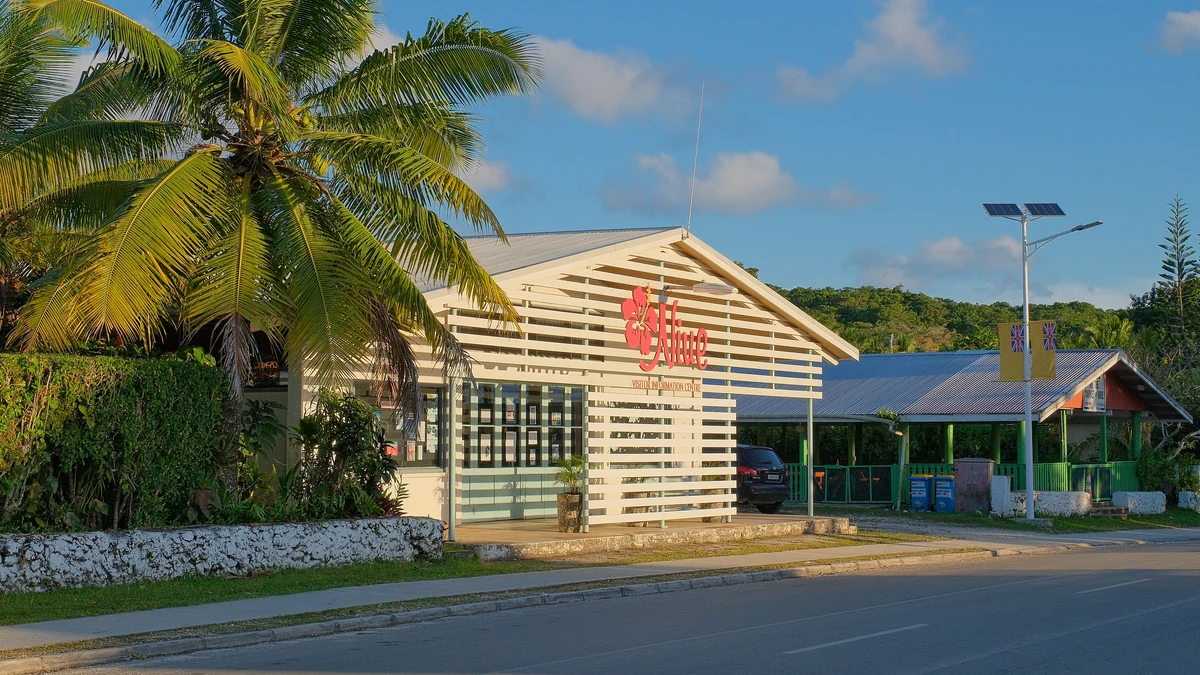
Alofi cruise port is a small open-water tender landing at Sir Robert’s Wharf rather than a conventional terminal. The wharf places you near central Alofi, the visitor information centre and market area, but Niue’s defining swimming chasms, reef pools, caves and coastal tracks are spread around the island. A walk around the capital is easy; a complete Niue day needs pre-arranged transport.
The official Niue activity guide repeatedly encourages advance booking, which matters especially on a cruise call. Hire vehicles and guided tours are limited, tides control some swimming sites, and tender operations can be cancelled by swell. Keep the day compact, respect village and Sunday customs, and treat one island circuit as more realistic than a long list of remote stops.
Alofi Cruise Port at a Glance
| Port name | Alofi, Niue |
|---|---|
| Main arrival area | Tender landing at Sir Robert’s Wharf beside central Alofi |
| Cruise region | Australasia / Pacific Islands |
| Country / Territory | Niue |
| Currency | New Zealand dollar (NZD) |
| Languages | Niuean and English |
| Port role | Day call |
| Disembarkation | Tender |
| Walkability | Good for central Alofi; island attractions require transport and often rough coastal paths |
| Shuttle required | No for the capital; a booked tour or vehicle is needed for most natural sites |
| Main transport | Tender, walking, pre-booked island tours, rental cars and limited local transfers |
| Best first-time plan | Use a pre-arranged half- or full-island circuit built around two or three tide-appropriate coastal sites |
| Main caution | Open-water tendering, limited vehicles, sharp coral terrain and tide-dependent swimming make improvisation unreliable |
Landing Is the First Uncertainty
Niue’s high coral coast has no sheltered cruise terminal. Ship tenders approach the wharf under the crew’s operating limits, and swell can cancel or delay the landing even when the sky is bright. Listen for ship announcements and avoid planning a non-refundable early independent departure.
The wharf itself can involve steps, movement and assistance procedures that vary with the vessel. Passengers with limited mobility should discuss tender eligibility before the call. Once ashore, central Alofi is close, but the same open-water conditions will govern the return.
Central Alofi Is Useful but Does Not Represent the Whole Island
The visitor information centre, market, shops, government area and coastline give a sense of the capital at a human scale. It is a reasonable day for passengers who cannot manage rocky tracks or who prefer not to take a vehicle. Opening hours and market activity vary, so do not expect a large commercial centre.
Niue’s most memorable landscapes sit in forest tracks and coastal clefts beyond town. The island road circles roughly 64 kilometres, but stopping, walking and swimming make a full loop time-consuming. A driver or guide who knows tides and current access is more valuable than speed.
Best Things to Do from Alofi
The official Niue map shows why the island should be planned as clusters rather than a random circuit. Northern sites such as Limu, Matapa and Talava can be grouped; other chasms, caves and coastal walks occupy different stretches of the ring road. Choose a few experiences and leave time for changing clothes, rough steps and photographs.
Many attractions are natural and unstaffed. That does not mean they are risk-free or always accessible. Follow signs, use marked tracks and accept local guidance on tide and swell.
Reef Pools Need the Right Tide and Sea State
Niue’s official diving and snorkelling guidance describes exceptionally clear water and multiple sheltered swimming places, but conditions differ by site. Limu Pools, Matapa Chasm and other popular locations can be calm at one stage of the tide and hazardous at another. A cruise-day plan should be built around the operator’s local judgement.
Wear secure footwear for coral and limestone, carry only equipment you can manage on ladders or steps, and never enter water solely because other visitors are present. Non-swimmers can still enjoy many coastal views without entering the pools.
The tide should be checked for the specific place rather than treated as one island-wide instruction. A pool may be recommended around low tide while an exposed chasm or entry ladder becomes less comfortable as swell increases. Ask the visitor centre, guide or tour operator what is suitable that day and whether the safest access window fits the ship’s tender schedule. The official Niue tracks, walks and caves guidance is useful for understanding access, but local same-day advice should decide the final route. Carry reef shoes, dry clothes and a small towel even when swimming is only a possibility.
Never rely on a timetable alone when the sea looks different from the forecast.
Tracks and Caves Are Short but Often Rough
Official track, walk and cave information covers paths through forest and across limestone to chasms, arches and coastal viewpoints. Distance alone is misleading: roots, sharp rock, heat, spray and steep access can slow progress.
Choose footwear with grip and keep hands free. A passenger who can walk comfortably in a city may find the terrain difficult. Ask a tour provider to describe actual steps and surfaces rather than accepting “easy” as a universal category.
A Guided Island Circuit Adds Cultural Context
A guide can explain village geography, customary land, cyclone history, food plants and the relationship between the plateau and reef. This is more useful than treating Niue as a sequence of swimming holes. Small groups also reduce the risk of missing the best tide window.
Book before sailing. Cruise-day demand can exceed the island’s normal vehicle supply, and there may be no replacement if a driver or car is unavailable at the wharf.
Sunday Changes the Character of the Day
Niue has strong Christian traditions and Sunday is treated as a day of worship and rest. Services, activities and acceptable behaviour may differ from other days. Follow the cruise line and local tourism guidance, dress respectfully around villages and churches, and keep noise low.
A Sunday call can still be meaningful, but it should not be planned as if every operator and facility will run a normal weekday schedule. Pre-booking and cultural sensitivity are more important than filling every hour.
Driving Is Simple in Layout but Not Automatic
The ring road makes navigation conceptually easy, and vehicles drive on the left. Rental supply, licensing requirements and collection arrangements must be confirmed in advance. Road edges, village speed limits and unexpected stops demand more care than the simple map suggests.
For a one-day call, a guided vehicle is usually stronger than a self-drive because the driver handles timing and site selection. Self-drive suits confident passengers with a confirmed car, a short route and a willingness to abandon stops.
Food, Water and Cash Need Light Preparation
Alofi has cafés, shops and market activity, but opening patterns are small-island patterns rather than big-port certainty. Carry drinking water from the ship where permitted, especially for tracks, and do not postpone lunch until after a long island circuit without confirming where food will be available.
New Zealand dollars are used. Cards may work at established businesses, but a modest cash backup is sensible. Avoid carrying large sums or expecting every roadside stall to process electronic payment.
Whale and Dolphin Encounters Are Seasonal and Conditional
Niue is known for marine encounters, including humpback whales in season, but a cruise call does not guarantee sightings or a suitable boat departure. Operators work under wildlife, weather and safety rules. Book only a product that fits the tender window and read its cancellation policy.
A boat excursion competes with the island circuit. Choose marine wildlife because it is your priority; do not expect to add several distant chasms after a delayed return.
North and South Island Routes Should Not Be Mixed at Random
The northern coast groups several of Niue’s best-known pools, chasms and caves, while southern and eastern routes offer different village, forest and coastal experiences. A guide will normally choose a direction according to tide, road conditions and what is open. Accept that a good day may omit a famous site on the opposite side of the island.
Cruise passengers should ask for a route with geographic logic and a firm return time. Crossing the island repeatedly to chase photographs wastes the limited vehicle window and increases the chance that the final swimming stop occurs at the wrong tide.
Limu, Matapa and Talava Are Different Experiences
Limu Pools are known for clear protected-looking water, Matapa Chasm for a narrow dramatic swimming setting, and Talava Arches for a longer rocky walk to coastal formations. They should not be treated as interchangeable “swimming holes”. Access, water conditions and physical effort differ.
A mixed-mobility group may choose one pool and one viewpoint instead of all three. Talava in particular needs secure footwear and time. Ask the guide which site is best that day rather than insisting on an itinerary created months before.
The Visitor Centre Is the Best Place to Reset a Changed Day
If the tour is cancelled, the tender is late or weather removes swimming, use the Alofi Visitor Information Centre for current advice. The nearby market and central services can provide a smaller but authentic route without attempting an improvised island circuit.
Opening and market activity vary, especially on Sundays and public occasions. A quiet centre is not evidence that the island has nothing to offer; it reflects Niue’s small population and rhythm. Use the time for local information, a meal and coastal views close to the wharf.
Connectivity and Emergency Planning Should Be Simple
Do not depend on continuous mobile data to navigate back. Save the ship’s instructions, tour contact, wharf location and island map offline. Tell the guide your final tender time and carry the ship’s port-agent details.
The island is small, but a vehicle problem on the far coast can still become serious because replacements are limited. A reputable operator, conservative route and early return are more useful than real-time tracking that may not work.
Short Calls Should Stay Near Alofi or Use One Northern Cluster
With only a few usable hours, central Alofi plus one pre-arranged coastal stop is enough. A full ring-road circuit becomes rushed once tendering and track access are included. The island’s appeal comes from entering one or two landscapes, not seeing the road between every village.
A long call can support a guided circuit with two clusters and lunch. Even then, keep the final hour close to Alofi. The last tender is exposed to the same swell as the first, and boarding can take longer when everyone returns together.
Match the Niue Plan to Mobility and Water Confidence
Confident walkers and swimmers can use a guided northern cluster with one pool and one rougher cave or arch track, provided tides and swell are suitable. Even this group should carry secure footwear and avoid trying to swim at every stop; changing, drying and access consume more time than the road map suggests.
Moderate walkers should ask for vehicle-close viewpoints, a single easier pool under local guidance, village context and the Alofi visitor centre. A driver can reduce walking without removing the island’s distinctive coral landscape. Be direct about stairs, ladders and balance before leaving the wharf.
Passengers avoiding the tender’s physical challenge or rough terrain may need to remain aboard, depending on the ship’s assessment. Those who can tender but cannot use island tracks can still enjoy central Alofi, the market area and a short panoramic drive if one is confirmed. Accessibility should be decided honestly before payment, not discovered at the first chasm.
CruisePing Recommended Port Day
Our preferred first visit is a pre-booked small-group island circuit beginning after the tender has safely landed. Ask the guide to prioritise two or three sites that suit the tide and group mobility—perhaps one swimming pool, one cave or chasm and one cultural or village stop—then return to Alofi with time for the visitor centre or market.
Passengers who cannot use rough tracks should stay central and take only an accessible vehicle stop if available. Alofi is small, but the call can still feel distinctive through local conversation, coastline and a slower pace. The wrong response is to force a full island checklist into a fragile tender day.
Weather & Best Time to Visit Alofi
Niue is warm year-round. The wetter season is hotter and more humid, with a greater tropical-cyclone risk. The drier months are generally more comfortable for tracks, but trade winds and ocean swell can still stop tenders or swimming.
| Month/season | Typical high | Typical low | Rain/conditions |
|---|---|---|---|
| November–April | 29°C | 24°C | Hot, humid and wetter; heavy showers, thunderstorms and tropical-cyclone disruption possible |
| May–July | 27°C | 21°C | Usually drier and less humid, with cooler evenings and variable trade winds |
| August–October | 27°C | 21°C | Generally comfortable; trade winds, high UV and seasonal marine wildlife activity |
Follow the Niue Meteorological Service for official weather and marine updates, then use the ship’s tender decision as final. Tide and swell at an individual chasm can differ from the general forecast.
Practical Questions for an Alofi Cruise Call
Where do tenders land?
At Sir Robert’s Wharf near central Alofi, subject to safe sea conditions.
Can I walk around Alofi?
Yes. The capital is compact, but most famous natural sites require a vehicle.
Can I hire a car on arrival?
Do not rely on it. Supply is limited and should be reserved before the cruise.
Are the swimming holes always safe?
No. Tide, swell and access conditions vary; follow local guidance and signs.
What should I wear?
Light clothing, sun protection and secure footwear for coral tracks. Dress respectfully around villages and churches.
What currency is used?
New Zealand dollars. Carry a small cash backup.
Useful Official Links for Alofi
Use these current sources to confirm arrival arrangements, attraction access, tour timings and live weather before your call.
- Niue Tourism
- Official Niue island map
- Niue tracks, walks and caves
- Niue diving and snorkelling
- Niue activity guide
- Niue Meteorological Service
CruisePing Port Verdict
Alofi is a small landing with a large practical constraint: Niue’s best-known sites are spread around a raised coral island, while the open-water tender and limited vehicles reduce certainty. The answer is not a longer list; it is advance booking and careful selection.
CruisePing would take a locally guided circuit built around tide and mobility, then finish in Alofi. That respects the island’s scale and culture while protecting the ship return. A cancelled tender remains possible, so treat every shore booking as conditional.
Ready to browse our article library?
Explore more ports in the Australasia / Pacific Islands region, browse Niue cruise ports, or return to the main CruisePing article library.