
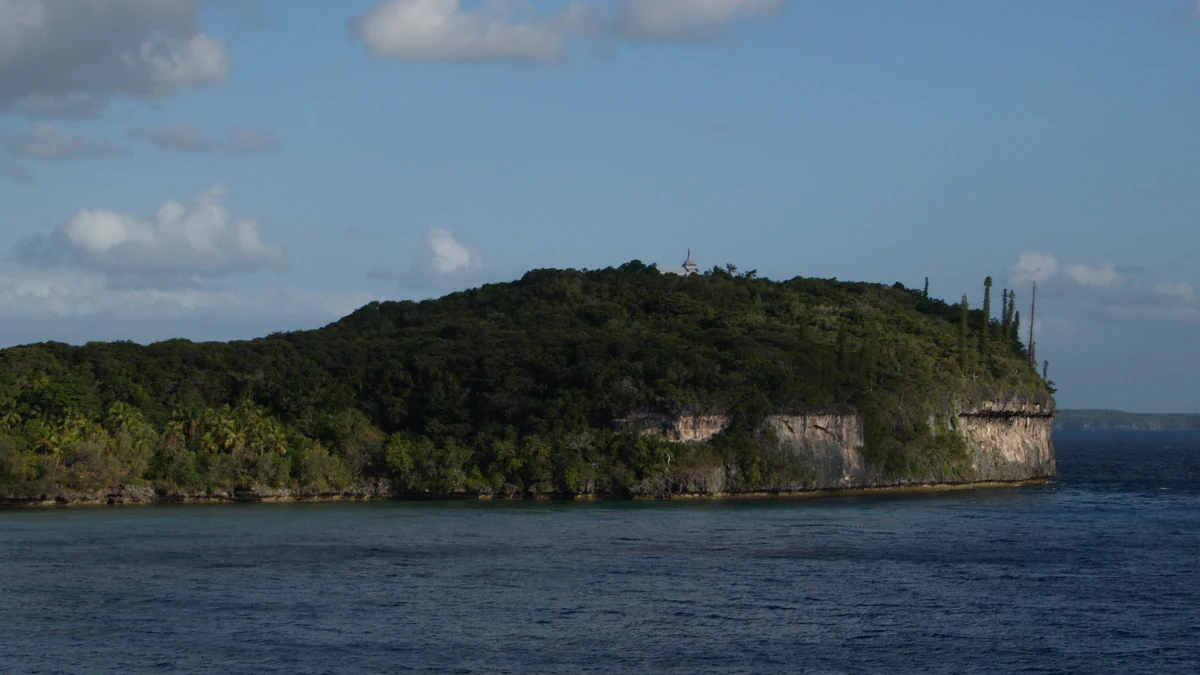
Easo cruise portis the tender gateway to Lifou in New Caledonia’s Loyalty Islands. The landing gives immediate access to local stalls, the west-coast shoreline and the Notre-Dame de Lourdes chapel, while beaches and cultural sites farther across Lifou require organised road transport.
The central choice is whether to keep the day close to Easo or commit to one cross-island excursion. The small landing area is easy to understand, but vehicle capacity, customary access, marine conditions and the final tender make improvised long-distance plans weaker than they first appear.
Easo Cruise Port at a Glance
| Port name | Easo |
|---|---|
| Main arrival area | Easo village tender landing on Lifou’s west coast |
| Cruise region | Australasia / Pacific Islands |
| Country / Territory | New Caledonia |
| Currency | CFP franc (XPF) |
| Languages | French and Drehu; some English in visitor services |
| Port role | Day Call |
| Disembarkation | Tender |
| Walkability | Good around landing; chapel path is steep and wider island requires transport |
| Shuttle required | No for Easo; organised vehicle recommended for east-coast beaches and natural sites |
| Main transport | Tender, walking, excursion minibus and pre-arranged local vehicle |
| Best first-time plan | Chapel and Easo area, or one organised Lifou excursion with a protected return |
| Main caution | Customary access, limited vehicles and the single tender landing make improvisation risky |
Easo is a tender anchorage on Lifou’s west coast
the church, local stalls and nearby shoreline are available without a long transfer The officialLifou cruise-stop guideidentifies Easo as the main cruise arrival area. Do not overlook that ships anchor offshore and tender conditions can alter the usable hours. Note the final tender and any ship-specific limits before leaving the landing.
The New Caledonia pilotage guide places the anchorage off Easo village rather than at a conventional pier. Keep the final activity near the landing.
The Notre-Dame de Lourdes chapel is the natural first walk
The white chapel above Easo is reached by a short but rising path from the landing area. For a cruise passenger, that means it provides the clearest local orientation and a wide coastal view. Go early, wear secure shoes and take water. Heat, steps and uneven ground make the climb more demanding than the distance suggests.
Treat the chapel and surrounding grounds respectfully; it is a religious site, not only a viewpoint. Return downhill before adding a beach or vehicle excursion.
Jinek Bay access is controlled for a reason
Treat access as a privilege governed locally. The marine area near Easo has sensitive coral and customary management. The practical advantage is visitor access may require a local fee, permission or compliance with day-specific rules; the weakness is old online advice can be wrong after environmental or community restrictions change. Ask at the landing before entering the water and follow current signs.
Independent planning is realistic only when every transfer is understood. Do not stand on coral, feed fish or assume every part of the bay is open to cruise visitors. Leave the water early enough to change and reach the tenders. Where one connection is uncertain, a ship excursion or cruise-aware local operator is the stronger choice.
Official excursions are the safest way to reach distant parts of Lifou
Use organised transport when the destination is more than a short walk away. The key local detail is that theofficial excursion overviewlists organised ways to explore beyond Easo. In practice, a structured tour resolves vehicle supply, local access and the ship return. Pre-book any must-see cross-island route. Independent taxis and minibuses may be scarce when a large ship lands.
Confirm whether the tour is sold by the ship, a local operator or at the landing, and what happens if tendering begins late. Make the operator state the return point and time.
Luengöni is a beautiful but separate beach plan
Luengöni Beachlies on Lifou’s east coast and is known for pale sand and clear water. This matters because it offers a very different landscape from the Easo landing. The cross-island road journey consumes time and transport cannot be improvised reliably. The sensible response is to visit only with confirmed return transport
Ask whether swimming access, facilities and local conditions are suitable on the day. Leave Luengöni with a generous road margin before the tender cut-off.
Vanilla, caves and customary visits need local guidance
Prioritise one meaningful hosted experience over a rushed list. The broaderLifou destination guidehighlights Kanak culture, plantations and natural sites. The practical advantage is a hosted visit can explain the island more responsibly than unaccompanied wandering; the weakness is some land and caves are on customary property and are not open without permission. Choose a recognised local tour and follow the host’s instructions.
Dress modestly for community visits and ask before photographing people, homes or ceremonies. Let the guide control access while the transport operator protects the return.
Easo’s market is useful for a low-transfer day
Use the landing area as a genuine local stop rather than merely a waiting zone. The key local detail is that cruise days often bring local stalls and services close to the tender landing. In practice, passengers can buy crafts, snacks or a short local activity without crossing the island. Carry small CFP-franc notes and agree prices in advance. Cash, change and product availability vary with the call.
Check food handling and avoid taking restricted plant or animal products back through ship or border controls. Shop before the final tender queue forms.
French and Drehu are part of the island’s identity
Lifou is within New Caledonia and has a strong Kanak and Loyalty Islands cultural setting. The choice works best when a few polite French words and attention to local guidance improve interactions speak calmly, ask permission and accept that some places may be closed. Otherwise, assuming a resort-style service culture can create misunderstandings.
Local hosts may use Drehu as well as French; English is not guaranteed in every independent interaction. Keep the ship’s written port information with you.
Cash and connectivity should be planned before tendering
Easo is not a full urban service centre. For a cruise passenger, that means passengers who carry modest cash and offline information are less dependent on signal or card terminals. Download maps and bring small CFP-franc notes. ATMs, strong mobile data and foreign-card acceptance may not be available at the landing.
Keep the amount limited and protect valuables during swimming. Do not delay the return while searching for a final cash purchase.
Mobility varies sharply between the landing and excursions
The immediate Easo area is compact, but the chapel path, tender transfer, beaches and natural sites introduce steps, slopes and uneven ground. This matters because a passenger may manage the market but not the full viewpoint or cave route. The tender itself can be the largest barrier. The sensible response is to ask the ship about boarding assistance and tour vehicle access
For a reduced-mobility plan, remain near the landing and choose only the portions that match stamina. Avoid relying on an accessible vehicle that has not been confirmed.
Rain and wind affect both road and sea plans
weather can change tender comfort, snorkelling visibility and cross-island road conditions at onceMétéo-France New Caledoniaprovides the relevant official forecast. Do not overlook that heavy showers can make paths slippery and reduce shelter options near the landing. Carry water, sun protection and a light waterproof layer.
A cloudy day can still suit a cultural or island tour, while strong marine conditions may control the call regardless of sunshine. Follow ship announcements if tendering is paused.
The final tender should shape the last ninety minutes
queues can build quickly when tours return together Most independent passengers funnel back through the same Easo landing. Do not overlook that a late vehicle arrival leaves no alternative port or pier. Schedule the final stop close to Easo and return before the advertised last tender.
Use the remaining time for the market or shoreline rather than starting a second road trip. Join an earlier tender if the sea is worsening.
Cross-island driving takes longer than the map suggests
a vehicle can cover the island efficiently only when the route is planned Lifou’s roads connect scattered settlements, beaches and natural sites rather than forming an urban transport grid. Do not overlook that waiting for passengers, customary access and road conditions can extend each stop. Agree a small number of destinations and a turn-back time.
Ask whether the driver remains with the group or whether another vehicle handles the return. Begin the journey back before the tender margin is needed.
Food, water and toilets are not evenly distributed
Make basic comfort part of the excursion comparison. Facilities are concentrated around communities and organised visitor stops. The practical advantage is a tour that names its meal and comfort arrangements is easier to judge than an open-ended island drive; the weakness is remote beaches and cave areas may offer little shade or sanitation. Carry water and use facilities when they are available.
Passengers with dietary needs should bring a suitable snack and confirm any included meal. Do not depend on a final food stop near the tender.
Photography needs both environmental and cultural restraint
Lifou’s cliffs, chapels, villages and beaches are highly photogenic. For a cruise passenger, that means good photographs are possible without entering restricted land or focusing a camera on residents without consent. Ask the guide or host before photographing people and sensitive sites. Customary places and ceremonies may have rules that are not obvious to an outsider.
Keep away from cliff edges and do not leave marked paths for a better angle. Put the camera away when the tender recall begins.
Book landing-area excursions before vehicle capacity disappears
Balance spontaneity with a complete return plan. A limited number of local minibuses and guides may sell tours close to the Easo tender landing. The practical advantage is these can work well for passengers who understand the route and return time; the weakness is the most suitable vehicles may fill quickly and late departures have less margin. Compare the itinerary and reserve promptly without rushing the safety questions.
Confirm the operator’s name, destinations, total duration, price and guaranteed Easo return. Reject any departure that treats the final tender as a target rather than a deadline.
Treat Lifou as a Local Island Call
A pre-arranged excursion is worthwhile when it includes the specific place you want to see. Otherwise, keep the day near the landing and let the island’s landscape and community be the experience.
Easo is best approached through the chapel, nearby settlement and one organised Lifou experience. Customary access and limited vehicles mean visitors cannot assume that every beach, cave or viewpoint is independently available.
CruisePing Recommended Port Day
On a first call, take an early tender and walk to the Notre-Dame de Lourdes chapel before the heat builds. Then decide between a locally confirmed nearby water activity and a pre-booked island excursion. Do not add a cross-island beach after spending most of the morning around Easo.
Where transport was not booked in advance, stay local. The chapel, market, shoreline and any currently authorised bay access form a coherent day, and remaining near the landing protects the tender return. This is preferable to negotiating a late, uncertain vehicle to the opposite coast.
Weather & Best Time to Visit Easo
| Month / season | Typical high | Typical low | Rain / conditions |
|---|---|---|---|
| May–October | 26°C | 18°C | Drier and cooler; trade winds can still affect tenders |
| November–April | 30°C | 23°C | Hot, humid and wetter; tropical systems possible |
| Transition months | 28°C | 21°C | Variable showers, warm water and changing marine conditions |
For Easo, wind and swell control the tender while rain affects chapel paths and cross-island roads. A hot sunny day also makes the viewpoint climb and unshaded waiting more demanding. Check thecurrent official forecastbefore committing to the day.
Frequently Asked Questions
Can you walk from Easo cruise port?
Yes. The landing, market area and chapel are walkable, although the chapel path is steep.
Can you visit Luengöni Beach independently?
Only with confirmed transport and a generous return margin. Vehicle supply can be limited on cruise days.
Can you snorkel near Easo?
Access is subject to current local and environmental rules. Ask at the landing and obey any fee, permit or closure.
Which currency is used on Lifou?
The CFP franc. Bring small notes because cards and ATMs should not be assumed at the tender landing.
Useful Official Links
- New Caledonia Tourism: Lifou cruise stop
- Official Lifou cruise excursions
- New Caledonia Tourism: Lifou
- Météo-France New Caledonia
CruisePing Port Verdict
Easo offers a strong small-island day when passengers respect its limits. The chapel and landing area work independently; distant beaches and cultural sites work best through organised local transport. Customary access and the tender are not minor details but the framework of the visit.
Ready to browse our article library?
Looking beyond Easo? Explore more ports in theAustralasia / Pacific Islandsregion, or narrow it toNew Caledoniain particular. For cruise comparisons, planning shortcuts and value guides, head over to ourmain article archive.