
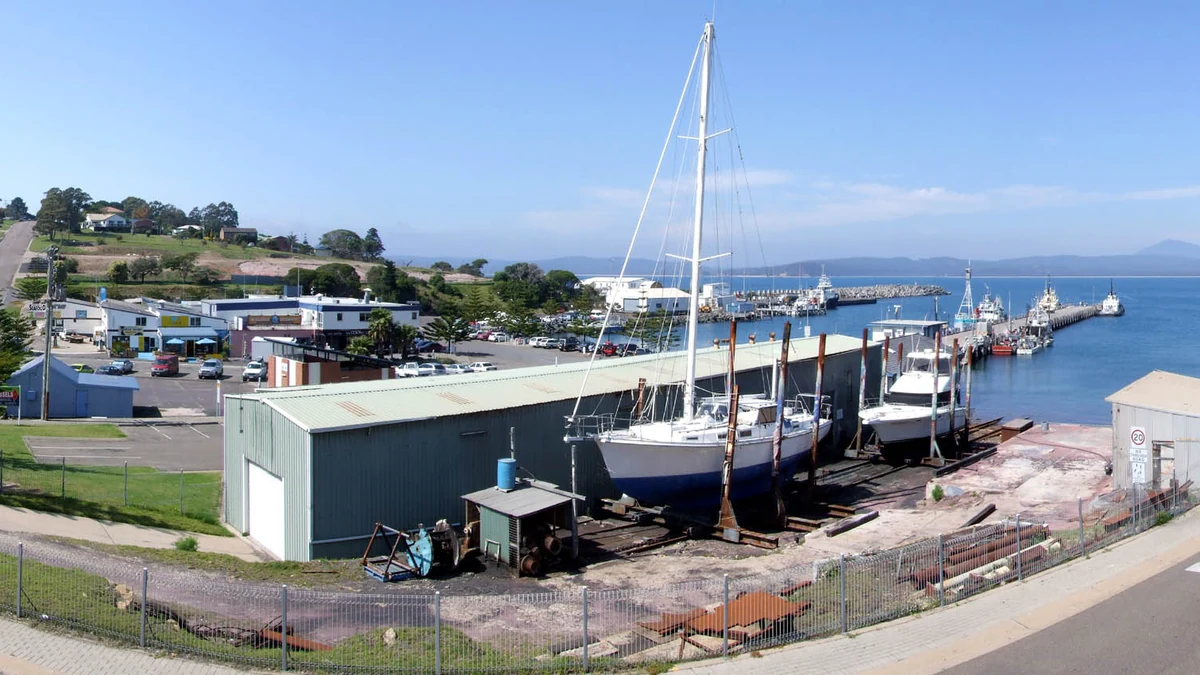
Eden cruise portplaces passengers at Snug Cove on the edge of a small New South Wales harbour town with a distinctive whaling story. The waterfront is close, but the main streets and museum sit uphill, so a call that looks fully walkable still needs a mobility decision.
Most first-time passengers should choose between a town-and-heritage day, a seasonal whale-watching trip or one organised Beowa National Park route. The local museum gives Eden a strong independent option, while remote headlands and historic sites need confirmed transport and a conservative return.
Eden Cruise Port at a Glance
| Port name | Eden |
|---|---|
| Main arrival area | Eden Cruise Wharf at Snug Cove |
| Cruise region | Australasia / Pacific Islands |
| Country / Territory | Australia |
| Currency | Australian dollar (AUD) |
| Languages | English |
| Port role | Day Call |
| Disembarkation | Docked for most calls; operational variation possible |
| Walkability | Good to waterfront and town, but the route climbs from Snug Cove |
| Shuttle required | No for fit walkers; useful for town and required for national-park or remote heritage sites |
| Main transport | Walking, cruise shuttle, taxi, excursion coach and wildlife boat |
| Best first-time plan | Killer Whale Museum and town, or one seasonal whale or Beowa excursion |
| Main caution | The uphill town route and limited regional transport make gradients and return planning important |
Eden’s cruise wharf puts passengers beside Snug Cove
Port Authority of New South Walesdescribes the Port of Eden and its cruise facilities at Snug Cove. The choice works best when many calls provide a direct docked arrival rather than a long industrial shuttle follow the signed passenger exit and note the collection point for return. Otherwise, berth arrangements and secure-port walking routes remain ship specific.
The waterfront, cafés and harbour views begin close to the berth, while the town centre climbs uphill. Keep the final walk downhill and straightforward.
The town centre requires an uphill walk
Separate walkability from flatness. The key local detail is thatVisit Edencovers the compact town, lookout points, heritage and coastal setting. In practice, independent passengers can reach the main streets without a formal excursion. Use a shuttle or taxi when offered rather than spending all available energy on the climb. The gradient can be tiring in heat or for reduced-mobility visitors.
Footpaths and road crossings vary, so follow the visitor route rather than choosing the steepest shortcut. Allow extra time for the downhill return and port security.
The Killer Whale Museum is the essential local anchor
it gives a town day a strong identity that cannot be replaced by generic coastal sightseeing TheEden Killer Whale Museumexplains the town’s whaling history and the story of Old Tom. Do not overlook that opening hours and visitor capacity can change on cruise days. Check the current schedule before climbing from the wharf.
Allow enough time for the displays rather than treating the museum as a quick weather shelter. Place shopping or cafés after the museum so they can be shortened if necessary.
The Killer Whale Trail links the harbour to wider history
The widerSapphire Coastvisitor material connects Eden’s viewpoints, maritime stories and coastline. For a cruise passenger, that means a self-guided heritage route can extend the museum visit without needing a vehicle. Select a short section that matches stamina. Some viewpoints involve gradients, road edges or longer distances than the map suggests.
Ask the visitor centre which paths are currently open and practical from the cruise berth. Turn back while the return remains comfortable.
Whale watching is seasonal and sea dependent
Eden is a recognised whale-watching centre, particularly during migration periods. For a cruise passenger, that means a marine excursion can be the headline choice when timing and wildlife conditions align. Book through the cruise line or a cruise-aware operator. Sightings are never guaranteed and the boat departure must fit ship clearance.
Compare vessel type, sea time, shade, toilets, motion and the guaranteed latest return. Allow unloading time at the wharf after the cruise.
Beowa National Park needs an organised road plan
Treat the national park as a separate half-day direction. The key local detail is thatBeowa National Parkprotects dramatic headlands, beaches and walking routes north and south of Eden. In practice, it offers the strongest landscape excursion beyond town. Use a guided excursion or confirmed private vehicle. Trailheads, road conditions, fire closures and walking exposure make casual independent transport weak.
Choose a limited route such as a lookout and short walk rather than assuming a complete coastal circuit fits. Return to Eden before the final port traffic builds.
Boyd Tower and Davidson Whaling Station require careful routing
The region’s whaling heritage extends beyond the town museum to sites around Twofold Bay. For a cruise passenger, that means a vehicle route can connect landscape and history. Confirm current road and site status before departure. Sites lie in different directions and may involve unsealed access or walking.
A local guide adds value by explaining the shore-based whaling story rather than merely driving between structures. Do not add both remote heritage areas to a short call.
A harbour-and-town day is a strong poor-weather fallback
Snug Cove, the museum, cafés and selected viewpoints remain useful when offshore or park excursions are unattractive. For a cruise passenger, that means the day can be shortened without losing its local character. Use any cruise shuttle and keep a waterproof layer available. Heavy rain and wind still make the uphill route uncomfortable.
Spend the weather window at the viewpoint, then move indoors. Return before exposed harbour conditions worsen.
Taxis and local vehicles are limited resources
Eden is a small town and cruise-day demand can exceed normal transport supply. The choice works best when pre-arrangement is more reliable than expecting a vehicle at a remote trailhead book the full outward and return journey. Otherwise, rideshare coverage and mobile signal should not be assumed.
Write down the driver’s contact details, price and collection point. Set the return time conservatively.
Accessibility depends on gradient and surface
The cruise facility can be straightforward, but the town rises from the waterfront and natural attractions use uneven paths. The choice works best when a limited-mobility visitor can still enjoy the harbour and museum with transport support ask about shuttle accessibility and museum entry. Otherwise, a route described as short may include steep sections or few resting places.
For a lower-strain day, use a vehicle uphill and walk downhill only if comfortable. Keep the final port approach within capability.
Coastal weather changes quickly
Use the local forecast to choose between coast, sea and town. TheBureau of Meteorology forecast for Edenshould be checked for wind, rain and marine conditions. The practical advantage is a calm harbour morning can become an exposed afternoon on a headland or wildlife boat; the weakness is temperature alone gives little warning of wind chill or swell. Carry layers and choose footwear for wet surfaces.
Independent planning is realistic only when every transfer is understood. National-park fire and closure information is equally important in warmer periods. Change to the town route when road or sea conditions are doubtful. Where one connection is uncertain, a ship excursion or cruise-aware local operator is the stronger choice.
The final return is simple only if you stay on the right side of the hill
Finish close to the water. The key local detail is that the ship is close to the town geographically, but passengers still need to descend, enter the secure port area and complete boarding. In practice, shopping at the top of town can consume the walking margin. Place the last activity at Snug Cove or on the downhill route. Do not begin a final café stop without checking the time needed to reach the wharf.
Passengers returning from Beowa or remote heritage sites should enter Eden before the final buffer begins. Aim to reach the port entrance well before all-aboard.
Cruise-day shuttles should be used strategically
Some calls provide transport between Snug Cove and the higher town area. This matters because a short shuttle ride can preserve energy for the museum and viewpoints. Frequency, accessibility and final service time vary by ship. The sensible response is to photograph the timetable or note the last collection
Board at the official stop and allow for queues when several excursion coaches return. Walk downhill only when the route and stamina are comfortable.
Local food works best as part of the harbour return
Do not place a long lunch before a fixed museum entry or wildlife departure. Eden’s cafés and seafood businesses reflect its working coastal setting. The practical advantage is a meal near the end of a town route can give the day a relaxed finish; the weakness is service can slow when a ship brings a sudden concentration of visitors. Order with the all-aboard margin in mind.
Ask about takeaway where a seated meal would be too tight and check dietary needs before ordering. Choose a venue on the downhill or waterfront side of town.
Wildlife viewing from shore still requires distance
Let the landscape provide the observation point. The key local detail is that seabirds, seals and migrating whales may be visible around Twofold Bay and nearby headlands. In practice, shore observation can add interest without committing to a boat. Use established lookouts and binoculars. Cliff edges, slippery rocks and approaching wildlife too closely create unnecessary risk.
Do not enter restricted harbour areas or scramble beyond barriers for a photograph. Return from the viewpoint before weather or light deteriorates.
The visitor centre can refine an independent route
Let current local conditions improve the town plan. Current local advice can identify museum hours, shuttle changes, path conditions and the most practical nearby viewpoint. The practical advantage is a short information stop may save more time than following an old online itinerary; the weakness is seasonal closures and cruise-day crowding can alter the best walking sequence. Ask one focused question about the route you actually intend to take.
Collect only the map or information needed for the call and keep the harbour return visible. Use advice early rather than seeking help after transport has become scarce.
Choose the Town, Wildlife or a Regional Drive
The gradients between the landing, waterfront and town affect mobility. CruisePing would keep the museum and central sights together, or use organised transport for the regional landscape.
Eden’s Killer Whale Museum and harbour history support an easy local day. Seasonal whale activity or a Beowa National Park excursion can justify a booked trip, but each should be treated as the main choice rather than added after a long uphill town walk.
CruisePing Recommended Port Day
Walk or take the shuttle uphill early and visit the Eden Killer Whale Museum before it becomes busy. Continue through the town and select one nearby viewpoint or short section of the heritage trail, then descend towards Snug Cove for a harbour-side final hour.
During a strong whale season, replace the town extension with a cruise-compatible wildlife trip, but keep the museum if the schedule allows. Choose Beowa National Park only as a dedicated organised excursion; it should not be bolted onto a full independent town day.
Weather & Best Time to Visit Eden
| Month / season | Typical high | Typical low | Rain / conditions |
|---|---|---|---|
| December–February | 24°C | 16°C | Warm; sea breezes, UV and occasional rain |
| March–May | 22°C | 12°C | Mild and often settled; cooler mornings |
| June–August | 17°C | 7°C | Cool, variable and windy; layers needed |
| September–November | 21°C | 11°C | Spring changeability and whale-migration interest |
Eden’s headlands and whale boats feel more exposed than the sheltered town. Wind, swell, bushfire conditions and national-park closures can matter more than average temperature. Check thecurrent official forecastbefore committing to the day.
Frequently Asked Questions
Can you walk from Eden cruise port to town?
Yes, but the route climbs from Snug Cove. A shuttle or taxi is useful for passengers who find hills difficult.
What is the best attraction in Eden?
The Eden Killer Whale Museum is the strongest local anchor and works well without a full excursion.
Can you visit Beowa National Park on a cruise day?
Yes, but use an organised excursion or a pre-arranged vehicle with a protected return.
When can you see whales from Eden?
Migration seasons vary by species and year. Check current local reports and remember that boat sightings are never guaranteed.
Useful Official Links
- Port Authority NSW: Port of Eden
- Visit Eden
- Eden Killer Whale Museum
- Beowa National Park
- Bureau of Meteorology: Eden
CruisePing Port Verdict
Eden is a rewarding small Australian port because the town’s whaling history gives independent visitors a clear purpose. The museum and harbour make the easiest first visit; whale watching and Beowa are stronger only when treated as separate, properly timed excursions. The main practical issue is elevation, not distance.
Ready to browse our article library?
Looking beyond Eden? Explore more ports in theAustralasia / Pacific Islandsregion, or narrow it toAustraliain particular. For cruise comparisons, planning shortcuts and value guides, head over to ourmain article archive.