
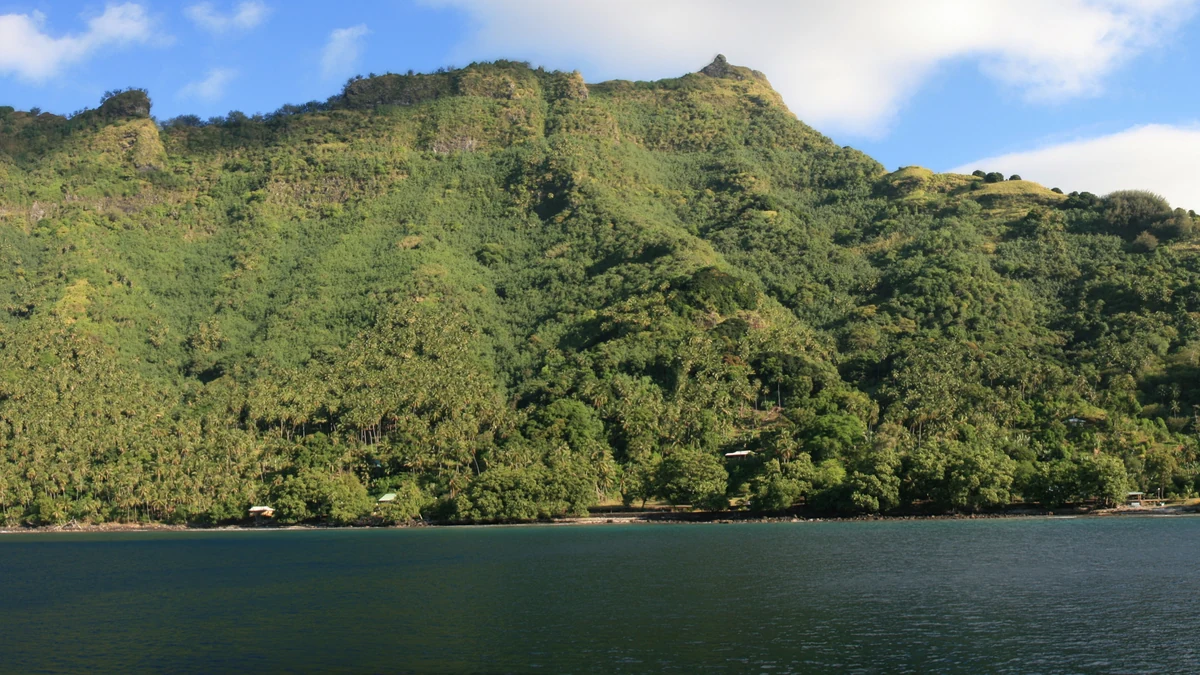
Hapatoni cruise port is a tiny expedition-style tender call on Tahuata in the Marquesas. Passengers arrive beside a village of carved timber, a large church, the shaded Royal Road and a steep green bay rather than a conventional terminal, excursion desk or transport rank.
This is a port where DIY is not merely cheaper; it is usually better. Walk slowly through Hapatoni, spend money with local artisans and accept any hosted cultural programme offered for the ship. Do not try to manufacture a full-island itinerary. Vaitahu may look close on a map, but an improvised road or boat transfer adds more risk than value on a short tender call.
Hapatoni Cruise Port at a Glance
| Port name | Hapatoni |
|---|---|
| Main arrival area | Tender or expedition landing on the Hapatoni waterfront |
| Cruise region | Australasia / Pacific Islands |
| Country / Territory | French Polynesia |
| Currency | CFP franc (XPF) |
| Languages | French and Marquesan |
| Port role | Day Call |
| Disembarkation | Tender or Zodiac-style expedition landing |
| Walkability | Good through the village; paths become uneven and steep beyond it |
| Shuttle required | No |
| Main transport | Walking, ship-guided cultural walk and occasional pre-arranged local boat |
| Best first-time plan | DIY Royal Road, church, village and artisans; join a hosted cultural walk if the ship provides one |
| Main caution | There is virtually no independent transport or tourist infrastructure, and the tender controls the day |
Ships tender to the Hapatoni waterfront
Ships normally anchor in Hapatoni Bay and transfer passengers ashore by tender or expedition craft, with the exact boarding surface depending on the vessel and conditions.
Listen to the ship’s briefing before collecting a tender number. There is no alternative public pier or road connection to fall back on if the landing changes, and a sea-condition cancellation cannot be solved independently.
DIY or organised tour? Go DIY
Our recommendation is to explore Hapatoni independently. The village is compact, the important sights are close together and a coach-style excursion would add little. The pleasure comes from the setting, the people and the detail of the walk rather than from covering distance.
A ship-guided cultural walk is worth joining when it is led or hosted locally, because interpretation can explain carvings, church decoration and village history. That is different from paying simply to be escorted along a route you could easily walk.
The Royal Road is the priority
The Royal Road is the most distinctive feature of the village: a raised nineteenth-century route shaded by mature tamanu trees and bordered by homes, vegetation and local craft activity.
Walk it slowly in both directions rather than treating it as a path to somewhere else. The shade is valuable in tropical heat, while the carvings, trees and changing views towards the bay provide more interest than a rushed search for a single landmark.
The church deserves respectful time
Hapatoni’s large Catholic church is prominent for a settlement of this size and is known for stained glass and locally worked decorative details. It is a living religious building rather than a museum.
Enter quietly when access is permitted, dress modestly and avoid photographing worshippers without consent. We would prioritise the church above a speculative boat trip or a long uphill walk because it expresses the village’s history and craftsmanship in one accessible stop.
Local carving is part of the visit, not a shopping add-on
The Tahuata Tourism Committee represents visitor activity across the island, which is particularly associated with skilled carving in wood and bone; artisans may display work when a ship calls. Buying directly can support the community and gives passengers a chance to ask how an object was made.
Look carefully at quality and symbolism rather than negotiating aggressively. Carry small CFP-franc notes, ask whether cards are accepted and check ship or later-country biosecurity rules before buying untreated wood, seeds, shells or animal-derived material.
A hosted dance or music programme is worth staying for
When the village organises a welcome, dance or music presentation, it should be treated as a central part of the port day rather than something to watch for two minutes before walking away.
Stay within the designated audience area, follow requests about photography and contribute when an appropriate collection or craft market supports the event. A genuine hosted programme adds more value here than an externally packaged excursion.
Do not turn homes into exhibits
Hapatoni is a small residential community. The fact that a path passes close to houses does not make verandas, gardens or family activity public attractions.
Remain on accepted routes, greet people without demanding interaction and ask before taking close photographs. The best independent visitor is curious without behaving as though the ship has temporarily taken ownership of the village.
Vaitahu is not the default cruise-day extension
Vaitahu is Tahuata’s principal village and has additional historical interest, including a small museum mentioned in cruise information. It is a legitimate destination during a longer island stay.
We would skip it on a normal Hapatoni call unless the ship operates the transfer. Road and small-boat arrangements are limited, the return cannot be improvised easily and the extra journey removes the unhurried quality that makes Hapatoni worthwhile.
A local boat ride needs ship-level timing discipline
A short coastal ride may occasionally be offered or arranged, giving excellent views of Tahuata’s cliffs and bays. The scenery can be compelling, but vessel standards, lifejackets, communication and return timing must be clear.
Use a ship-sanctioned activity or a provider specifically coordinated with the expedition team. Do not accept a spontaneous longer crossing merely because the sea appears calm from the beach.
The wider Marquesas setting should shape behaviour
The official Marquesas Islands guide places Tahuata within a wider region of living culture and rugged landscapes, while Te Henua Enata – The Marquesas Islands recognises intertwined cultural landscapes and exceptional natural heritage.
That status should not encourage passengers to hunt for an official plaque. It should encourage restraint: follow local routes, avoid disturbing archaeological material and understand that valley, settlement, ridge and sea form one connected cultural landscape.
Swimming is secondary
The bay may look inviting, but Hapatoni is not a managed resort beach with lifeguards, rental equipment and clearly marked swimming zones. Tender movement, shoreline conditions and local advice matter.
Swim only when the ship and residents indicate a suitable area. For most passengers, village time is the stronger use of the call; we would not arrive expecting a polished beach day.
Cash is more useful than a card
There is no reason to expect an ATM or universal electronic payment in a village of this scale. Small-denomination CFP francs make craft and refreshment purchases simpler and avoid creating change problems.
Bring only a modest amount ashore and protect it from spray during the tender. Do not rely on foreign notes being accepted, even when a vendor is accustomed to occasional cruise visitors.
Food and drink choices are limited
The ship may be the most dependable source of meals, drinking water and specialist dietary provision. Local refreshments can be enjoyable, but supply and opening arrangements vary from call to call.
Carry water, take essential snacks for medical needs and buy locally when something suitable is offered. Do not expect a restaurant timetable or make the village responsible for meeting a complex dietary request without notice.
Heat changes a short walk
Météo-France Polynésie’s Marquesas forecast describes a warm tropical climate with relatively small temperature variation. Humidity, rain and direct sun can still make a compact village walk tiring.
Use the Royal Road’s shade, carry water and wear footwear that remains secure after a wet tender. A light rain layer is more useful than an elaborate excursion bag.
Accessibility begins with the tender
The village itself is close to the landing, but passengers may face moving craft, steps, wet surfaces and uneven ground before reaching it. Paths and thresholds are not designed as a modern accessible tourism precinct.
Ask the expedition team for the exact transfer conditions. A limited-mobility passenger who can land may still enjoy the waterfront, church exterior and nearby craft activity without completing every village path.
Photography works best with permission
The bay, church, Royal Road and artisans provide strong photographic subjects, but close portraits and images of private activity need consent.
Learn a simple request in French, accept a refusal immediately and avoid blocking the route while composing photographs. Do not stage children or hand out money in exchange for intrusive pictures.
What to skip in Hapatoni
Skip the search for taxis, skip an improvised trip to Vaitahu, skip entering private land for a higher viewpoint and skip treating the call as a race to complete Tahuata. None of those choices improves the port day.
The worthwhile sights are already beside you: the waterfront, the Royal Road, the church, the village and any cultural welcome. Depth is the better itinerary.
The final tender should not be the target
A small landing can develop a queue quickly when most passengers return from the same short walking area. Weather may also cause the expedition team to bring the final operation forward.
Be near the waterfront before the published final tender and use the last period for a craft purchase or bay view. There is no advantage in standing at the far end of the village when the recall begins.
The village road should be walked at local pace
A cruise call can make a very small settlement feel temporarily crowded. Walking in one large procession makes it harder to see carvings, speak with artisans or give residents space to continue ordinary life.
Let the first group move ahead, pause in the shade and avoid surrounding a single stall or doorway. Hapatoni rewards patience more than being the first passenger to reach the far end of the Royal Road.
Language preparation improves simple encounters
French is useful for basic transactions, while Marquesan is part of local identity. English may be spoken by guides or some vendors but should not be assumed in every conversation.
Carry the ship name and final tender time in writing, learn a greeting and a polite request for photographs, and use gestures patiently. A few respectful words matter more here than a detailed independent itinerary.
A shortened call still works
If tendering begins late, there is no need to chase the original schedule. The Royal Road, church exterior, waterfront and craft activity are all close enough to remain meaningful within a reduced window.
Drop any boat or Vaitahu idea immediately and stay local. Hapatoni is unusually resilient because its best experiences do not depend on distance.
CruisePing Recommended Port Day
Take an early tender, orient yourself at the waterfront and walk the Royal Road before the day becomes hotter. Visit the church respectfully, spend time with artisans and remain for any locally hosted music, dance or interpretation. This is the best first-time plan and requires no independent transport.
Join a ship-guided cultural walk when it is genuinely locally led, but do not buy or arrange a wider island transfer simply to fill the timetable. Return to the landing early and let the final hour remain unstructured. Hapatoni is one of the ports where doing less produces the better day. Keep enough small cash for one or two purchases, but do not feel obliged to buy from every stall. A respectful conversation and an unhurried visit are also valuable forms of engagement.
Weather & Best Time to Visit Hapatoni
| Month / season | Typical high | Typical low | Rain / conditions |
|---|---|---|---|
| January–April | 30°C | 24°C | Hot, humid and often wetter; heavy showers possible |
| May–August | 29°C | 23°C | Warm with variable rain and trade-wind exposure |
| September–December | 29°C | 23°C | Generally drier, though tropical showers remain possible |
Hapatoni remains warm throughout the year. The practical issues are tender conditions, wet paths, humidity and sun exposure rather than seasonal cold. Check the current official forecast before finalising the day.
Frequently Asked Questions
Where do cruise passengers land in Hapatoni?
Ships normally anchor in the bay and use tenders or expedition craft to reach the Hapatoni waterfront.
Do you need a tour in Hapatoni?
No. The village, Royal Road, church and artisans are best explored independently. A locally led ship walk can add useful interpretation.
Can you visit Vaitahu from Hapatoni?
Only use a ship-organised or specifically protected transfer. We do not recommend improvising the road or boat journey on a normal call.
Can you use cards in Hapatoni?
Do not rely on them. Bring small CFP-franc notes for crafts or simple refreshments.
Is Hapatoni suitable for limited mobility?
The tender and uneven paths are the main barriers. Ask the ship about the landing; nearby waterfront and village elements may still be manageable.
Useful Official Links
- Seabourn: Hapatoni, Tahuata
- UNESCO: Te Henua Enata – The Marquesas Islands
- Tahuata Tourism Committee
- Météo-France Polynésie: Marquesas
CruisePing Port Verdict
Hapatoni is not a port that needs expanding through transport. Its strength is concentration: one beautiful bay, one shaded historic route, a church, artisans and a living village. Go DIY, accept local interpretation when offered and skip the urge to tour all of Tahuata. The village’s small scale is an advantage, not a deficiency.
Ready to browse our article library?
Looking beyond Hapatoni? Explore more ports in the Australasia / Pacific Islands region, or narrow it to French Polynesia in particular. For cruise comparisons, planning shortcuts and value guides, head over to our main article archive.