
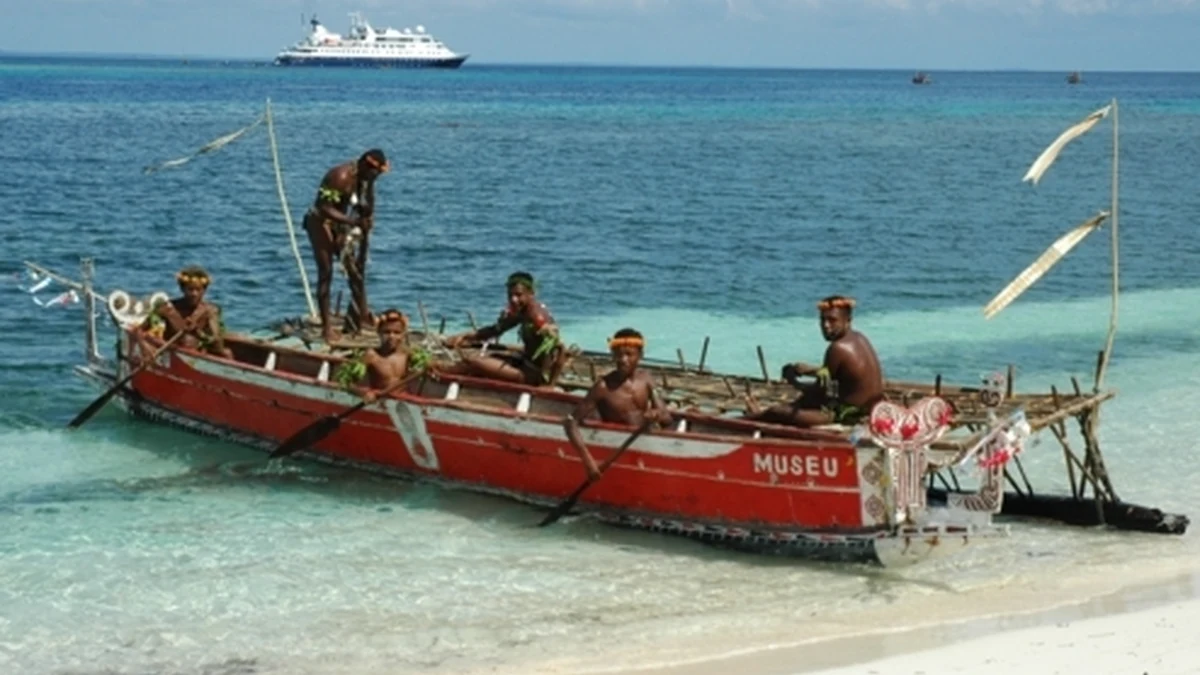
Kitava Island cruise port is a remote tender call in the Trobriand Islands, landing passengers at a small jetty beside a beach and village route. There is no terminal, public transport or formal town centre to organise around.
The best day is simple: walk into the hosted village area, watch any cultural presentation, browse crafts and spend time on the beach. A locally organised canoe to nearby Nuratu can be appealing, but only when the ship approves the operation and the return remains close. Do not enter burial caves or freshwater sites without a recognised local guide.
Kitava Island Cruise Port at a Glance
| Port name | Kitava Island |
|---|---|
| Main arrival area | Small cruise jetty and beach landing below the nearby village |
| Cruise region | Australasia / Pacific Islands |
| Country / Territory | Papua New Guinea |
| Currency | Papua New Guinean kina (PGK) |
| Languages | Kilivila and English |
| Port role | Day Call |
| Disembarkation | Tender to a small jetty |
| Walkability | Good near the beach and village; inland routes rise and become uneven |
| Shuttle required | No |
| Main transport | Walking and ship-approved local canoes or small boats |
| Best first-time plan | DIY village, cultural welcome and beach; add Nuratu only through a ship-approved local boat |
| Main caution | Facilities and safety support are minimal, while informal boat and inland access need careful judgement |
Tenders use the western cruise-jetty beach
The pin is placed on Kitava’s western landing area rather than the centre of the island. Cruise tenders approach a small jetty beside the beach, and passengers then walk inland towards the village.
The exact tender route remains the ship’s decision. Sea state, jetty condition or operational requirements can alter the landing, so onboard instructions override any map.
DIY or organised tour? DIY is the right default
Explore independently around the landing and village. Kitava does not need a conventional excursion: the beach, market, cultural activity and everyday landscape are close enough to reach on foot.
A ship-hosted village walk is worthwhile when a local guide explains houses, gardens, yam culture and customary rules. Avoid paying an intermediary simply to lead you along the obvious beach path.
The village walk is the cultural priority
The official Milne Bay Province guide places the Trobriand Islands within a much wider island region. On Kitava, the route inland reveals homes, gardens and community spaces that are not visible from the beach and helps explain the island beyond its shoreline.
Follow a recognised path or local host, remain outside private buildings unless invited and turn back before the heat makes the return uncomfortable. We would prioritise this above an unstructured search for a distant viewpoint.
Yam houses and gardens deserve interpretation
Yams carry social and ceremonial importance across the Trobriand Islands. The storage houses and displays should not be reduced to unusual architecture for photographs.
Listen to a host and ask respectful questions. Do not touch stored produce, step into gardens or assume every structure is open to visitors.
Cultural performances are worth staying for
Music and dance may be organised when a ship calls, sometimes involving schools or groups raising community funds. The programme can be the most memorable part of the day.
Stay for a complete performance, keep within the audience area and use the recognised donation or market process. Avoid blocking local participants for close photographs.
The beach is the strongest second half of the day
General port guidance describes Kitava’s beach and reef water as a major attraction. After the village walk, the shoreline provides an easy way to slow the pace while remaining near the tender.
Use the ship’s recommended swimming area, keep clear of tender operations and protect belongings from sand and spray. There is no need to search for a private beach farther away.
Nuratu is attractive but not automatically safe
The small offshore island commonly called Nuratu or Uratu is often mentioned as a snorkelling destination. Local canoes may offer transfers when a cruise ship visits.
Use the crossing only when the cruise line or expedition team has assessed it. Ask about flotation, passenger load, sea conditions and the final return. A cheap fare does not replace a lifejacket or accountable operator.
Snorkelling should follow local and ship advice
Clear water and coral make snorkelling tempting, but visibility does not reveal current, shallow coral heads or boat traffic. There may be no lifeguard or formal rescue cover.
Use a buddy, avoid standing on coral and stay inside any boundary given by the crew. Beginners should remain in the calmest approved area rather than following stronger swimmers towards the reef edge.
Burial caves require explicit permission
Some port descriptions mention burial caves, freshwater holes and village sites. These are culturally and physically sensitive places, not open attractions that passengers should seek independently.
Visit only with a recognised guide and clear community approval. We would skip them on a normal call unless the ship has established a formal, respectful route.
The wartime road is an optional historical layer
A historical account of Kitava during the Second World War describes a road cut through the coral from the beach landing towards the village.
The history can add context to the inland walk, but remains are not necessarily signed or protected for casual exploration. Do not leave the accepted path in search of military debris.
Carvings and crafts should be bought fairly
Craft sellers may offer bowls, figures, walking sticks, woven pieces and other work. Quality varies, but direct purchases can support households and schools.
Carry small kina notes, ask who made the item and avoid hard bargaining over a modest price. Check biosecurity restrictions before buying untreated wood, shells, feathers or plant material.
Photography needs permission
Children, decorated canoes and performers draw cameras quickly. The volume of visitors can make photography feel intrusive even when each passenger intends no harm.
Ask for portraits, avoid photographing inside homes and never hand out sweets merely to stage an image. Wider scenes of the beach, jetty and performance area are usually easier to take respectfully.
Food and water remain basic
Local fruit and simple refreshments may be sold, but passengers should not expect treated water, allergy labelling, refrigeration or a restaurant.
Bring sealed water and essential snacks from the ship. Enjoy local food when the ship is comfortable with it, and never leave waste on the beach or in the village.
Kina is the useful currency
An ATM and card network should not be expected. Small Papua New Guinean kina notes make craft purchases and agreed local services much easier.
Exchange before the call, keep money secure and settle the price before boarding a canoe or accepting a guided activity.
Heat and showers can shorten the inland walk
The PNG National Weather Service provides official public forecasts. Kitava remains hot and humid, with tropical showers capable of making coral and earth paths slippery.
Walk inland early, carry water and return to the beach before fatigue builds. A rain shower is not a reason to shelter inside a private home unless invited.
Medical and rescue capacity is limited
Kitava is remote and does not offer the clinical or rescue support of a developed port. Small injuries can become more serious when the tender, heat and water are added.
Carry medication, disclose health limitations before a boat or snorkel activity and return to the ship promptly if unwell.
Accessibility is difficult
The tender and small jetty may involve steep steps, movement and narrow surfaces. Sand and the inland slope add further barriers, while accessible toilets should not be assumed.
Ask the ship for a call-specific assessment. Passengers who can land may still enjoy the immediate beach, market and performance without climbing to the village.
What to skip on Kitava
Skip unapproved canoe transfers, skip caves without a local guide, skip wandering into private gardens and skip trying to cover the whole island. These choices add risk while missing the port’s real strength.
A village walk, cultural programme, fair craft purchase and beach time already make a complete day.
Return to the jetty early
Most activities finish close to the same small landing, and queues can form rapidly after a performance or when weather changes.
Dry off, collect purchases and join a tender before the final scheduled craft. Do not remain on Nuratu or inland until the last possible moment.
The climb inland should be judged before starting
The route from the beach towards the village can feel steeper and hotter than its map distance suggests. Passengers may have little shade, and wet coral or soil can become slippery after rain.
Look at the surface, carry water and turn back early when balance or heat tolerance is uncertain. The beach and cultural programme remain worthwhile without completing the inland route.
Boat operators need a clear passenger limit
Local canoes and small motorboats vary in design and capacity. A vessel that is culturally familiar and appropriate for local use still needs to be assessed for a concentrated group of cruise visitors.
Board only through the process accepted by the expedition team, wear the provided flotation and refuse an overloaded departure. Waiting for the next approved craft is better than creating pressure on the operator.
Community payments should be coordinated
Fees for performances, guiding, photographs or boat transfers can be handled differently on each call. Paying several people for the same activity can create confusion, while bypassing an agreed collection can undermine local organisation.
Ask the ship team or recognised host how payment works before the activity starts. Carry small notes and settle the agreed amount without turning the exchange into a public argument.
Children should not become the entertainment
Young residents may be curious about the ship and may take part in organised performances, but passengers should not follow, pose or reward children for private photographs.
Use the authorised event space, keep family groups together and make school support through a recognised channel. Respect is more important than leaving with a close portrait.
A shortened call favours beach and culture
If tendering is delayed, drop Nuratu and any inland cave idea. The landing beach, market and village welcome can still provide a complete sense of Kitava.
Remain near the jetty and return equipment or purchases before the queue builds. A simple call is not a failed call here.
CruisePing Recommended Port Day
Take an early tender, walk into the village with a recognised local host or the ship’s cultural team, and return for any organised performance and market. Spend the later part of the day on the approved beach and snorkel area close to the jetty. Use the early part of the call for the inland walk, when heat is lower and the tender landing remains easy to monitor.
Add a Nuratu canoe transfer only when the ship has approved the operators, safety equipment and return. Otherwise, skip it. The beach-and-village plan is more authentic and considerably safer than an improvised small-boat adventure. Ask the expedition team which payments and donations have been agreed with the community, and keep the final hour on the landing beach. That combination supports local organisation while protecting the tender. When conditions are doubtful, remain on the main beach rather than attempting the crossing.
Weather & Best Time to Visit Kitava Island
| Month / season | Typical high | Typical low | Rain / conditions |
|---|---|---|---|
| May–October | 29°C | 23°C | Warm with somewhat lower rainfall; showers still possible |
| November–April | 31°C | 24°C | Hot, humid and wetter; thunderstorms and tropical systems possible |
| Year-round shore | Warm | Warm | Tender sea state and heavy rain can change landing and swimming |
Kitava is tropical throughout the year. Heat, lightning, rain and tender conditions matter more than small temperature changes. Check the current official forecast before finalising the day.
Frequently Asked Questions
Where do cruise tenders land on Kitava Island?
They normally use a small jetty beside the western beach, with the village reached on foot inland.
Do you need a tour on Kitava?
No. The beach, village, performances and market form a strong DIY day. A locally led ship walk can add cultural interpretation.
Can you take a canoe to Nuratu?
Only when the ship or expedition team has approved the operation and safety arrangements.
Can you visit the burial caves?
Use only a recognised, community-authorised guide. We would not seek them independently during a short cruise call.
What currency should you carry?
Bring small Papua New Guinean kina notes. Cards and ATMs should not be expected.
Useful Official Links
CruisePing Port Verdict
Kitava does not need a complex itinerary. The right first visit stays close to the jetty, gives proper time to the village and hosted culture, and treats the beach as the relaxed second act. Small-boat and cave activities are optional only when the ship has made them accountable. Passengers should leave with a better understanding of the community, not merely a collection of photographs. That means using recognised guides, paying through agreed channels and accepting firm limits around boats, caves and private spaces. Simplicity protects both visitors and hosts. On every call.
Ready to browse our article library?
Looking beyond Kitava Island? Explore more ports in the Australasia / Pacific Islands region, or narrow it to Papua New Guinea in particular. For cruise comparisons, planning shortcuts and value guides, head over to our main article archive.