
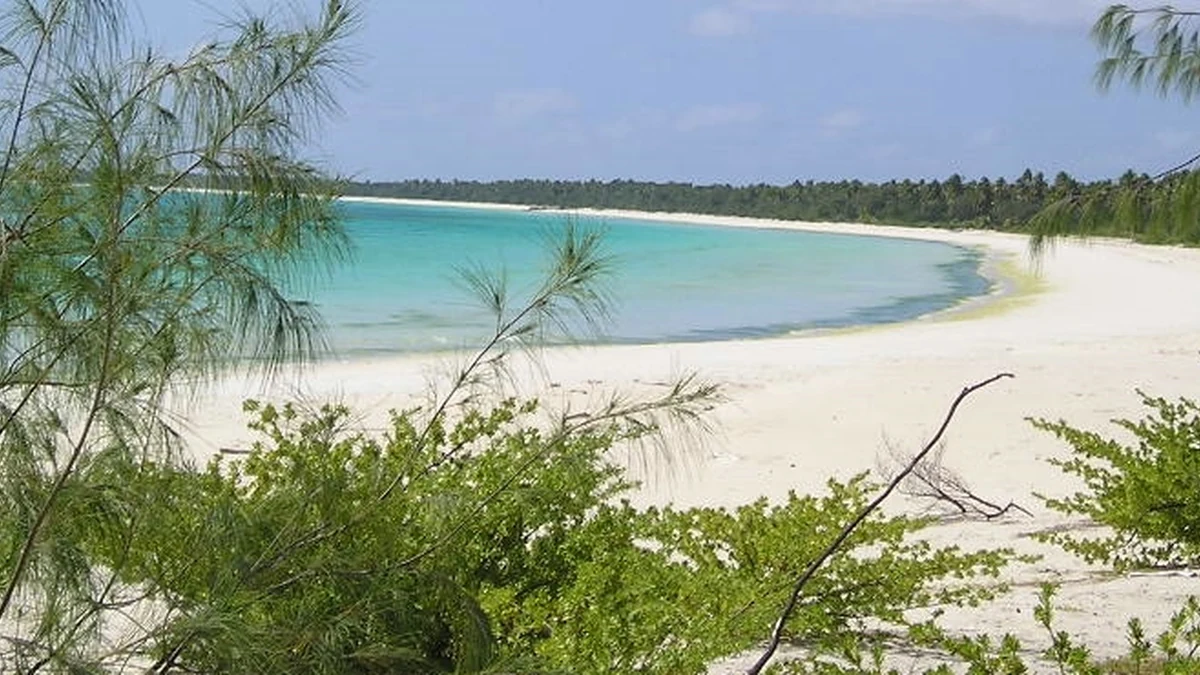
Ouvéa cruise port is a tender call at Wadrilla on one of the Loyalty Islands’ most striking atolls. The landing sits beside a working wharf and small community rather than a resort strip, while the famous white-sand coast stretches far beyond comfortable walking distance.
The best first visit is an organised local island route, not an improvised walk from the wharf. Prioritise Fayaoué Beach, the Lékiny area and one culturally authorised natural site. A ship excursion provides the strongest return protection; a small local tour is better when it clearly includes customary permissions and a conservative tender return.
Ouvéa Cruise Port at a Glance
| Port name | Ouvéa |
|---|---|
| Main arrival area | Tender landing at Wadrilla cruise wharf |
| Cruise region | Australasia / Pacific Islands |
| Country / Territory | New Caledonia |
| Currency | CFP franc (XPF) |
| Languages | French and Iaai; some English in visitor services |
| Port role | Day Call |
| Disembarkation | Tender |
| Walkability | Only modestly useful around Wadrilla; island highlights require transport |
| Shuttle required | No dependable public shuttle; book a tour or transfer |
| Main transport | Ship excursion, pre-arranged local minibus or driver, and walking at individual stops |
| Best first-time plan | Organised Fayaoué–Lékiny route with local permissions and an early Wadrilla return |
| Main caution | Transport is scarce and customary access rules apply to caves, cliffs, blue holes and tribal land |
Wadrilla is the arrival point, not the full destination
Ships anchor offshore and tender passengers to the Wadrilla wharf. The coordinate-based map identifies the working landing rather than the centre of the long atoll, but the ship can adjust tender handling when sea conditions change.
Note the exact final tender and where locally booked vehicles meet. Wadrilla has basic community services, yet it is not a transport hub where passengers can assume another taxi will appear later.
DIY or organised tour? Organised wins
Ouvéa is an organised-tour port for most first-time visitors. The island is long, transport supply is thin and several natural sites require permission or a local guide. Those factors matter more than saving a modest tour cost.
Choose a ship excursion for maximum return protection or a cruise-aware local operator for a smaller group. DIY walking is suitable only for a deliberately limited Wadrilla day, not for reaching the headline beaches and cliffs.
Fayaoué Beach is the first priority
The official Fayaoué Beach guide describes a ribbon of white sand extending for more than twenty kilometres along the lagoon side. It is the landscape most passengers imagine when booking Ouvéa.
Ask the driver for a quiet, safe access point rather than the quickest roadside photograph. Allow real time to walk and swim where local advice supports it; this beach deserves more than a ten-minute coach stop.
Lékiny is worth including for landscape
The Lékiny Cliffs add limestone, forest and a different scale to the lagoon coast. Access can involve customary land and locally controlled routes.
Include Lékiny only through an operator who has arranged permission. We would prioritise it above a generic shopping stop, but not force it when access, tide or community arrangements make the visit unsuitable.
Customary permission is part of the itinerary
Kanak land is not open simply because a natural feature appears on a tourist map. Guides may make a customary gesture, pay a local access fee or explain where photography and swimming are permitted.
Treat that process as essential rather than an inconvenience. An operator who cannot explain who authorises a cave, cliff or tribal-land visit should not be trusted with the day.
A good operator should be able to name the community or landholder responsible for each restricted stop, explain whether the access fee is included and describe what happens when permission is unavailable. That information is more important than a brochure promising a fixed list of caves, blue holes and cliffs.
The order of a local tour may change after the guide speaks with residents or assesses water conditions. Treat a substituted authorised beach or village stop as evidence of responsible local practice rather than as a failure to deliver the itinerary.
The shark nursery must be guided
Young sharks may be observed in shallow nursery areas at suitable times. The appeal is obvious, but animal behaviour, tide and customary access prevent this becoming an ordinary walk-in attraction.
Use a recognised guide, remain where instructed and never pursue or feed the animals. We would choose this only when the operator presents it as responsible observation rather than guaranteed close contact.
Hanawa Blue Hole is not a casual roadside swim
The blue hole is on private or customarily controlled land and may require a local fee or host. Depth, water quality and entry conditions also differ from a managed swimming pool.
Visit only on an authorised tour and follow the day’s swimming advice. Passengers with limited mobility should ask about the path and water entry before booking.
Anubet Cave needs a local guide
Cave visits can add cultural and geological interest, but darkness, uneven surfaces and local restrictions make independent exploration inappropriate.
We would not leave a beach stop early merely to collect a cave name. Include Anubet only when it is a properly hosted element of a coherent route and the group has suitable footwear.
The Pleiades are a specialist boat day
New Caledonia’s Ouvéa activity guide highlights boat and snorkelling trips towards the northern or southern Pleiades.
These can be exceptional, but they should replace the land circuit. Book through the ship or a demonstrably cruise-aware boat operator; do not add a distant islet trip to a full beach-and-cliff itinerary.
Before booking, ask how long the open-water journey takes, whether the boat has shade and a toilet, what flotation equipment is carried and how much time is actually spent snorkelling. The remoteness that makes the Pleiades special also makes a late mechanical or weather delay harder to absorb.
For ordinary first-time visitors, the land route gives a better introduction to Ouvéa because it combines the lagoon, communities and limestone landscape. Choose the Pleiades only when boating and snorkelling are the main reason for going ashore, not as an expensive extra added to an already full day.
Swimming conditions still need local advice
The lagoon often appears calm, yet current, coral, boat channels and weather vary along the atoll. There may be no lifeguard or formal rescue cover at a remote beach access.
Use the place recommended by the guide, stay with a companion and avoid standing on coral. The quality of the beach does not remove the need for conservative swimming.
The coconut oil and soap factory is a useful secondary stop
The Ouvéa oil and soap factory lies near Wadrilla’s wharf area and can explain a local product without creating a long detour.
Use it as a final stop or wet-weather substitute. We would not rank it above Fayaoué or Lékiny on a first visit, but it is more relevant than generic souvenir shopping.
A local church visit needs respect
Wadrilla and other settlements contain churches that reflect the islands’ religious and community history. Access can depend on services and local activity.
Dress modestly, enter quietly and ask before photographing people. A short respectful stop adds context, but a tour should not turn active worship spaces into staged exhibits.
Rental cars are not the sensible cruise answer
Limited vehicle supply, unfamiliar access rules and the risk of losing time at collection make self-drive less attractive than it looks. The island’s single-road geography does not make every site publicly accessible.
For a normal call, buy local knowledge rather than a steering wheel. A private driver can work well when arranged in advance and briefed to protect the tender.
What to skip on a normal call
Skip trying to cover the full length of Ouvéa, skip unapproved cave or blue-hole access and skip accepting an informal long-distance ride without a return agreement.
We would also skip a boat excursion that reaches Wadrilla close to the final tender. One excellent beach, one landscape site and one community stop make the better day.
Heat and shade affect the route
The atoll’s open road and white sand amplify tropical sun. Waiting for a vehicle beside a remote beach can become more demanding than the walking distance suggests.
Carry water, a secure hat and sun protection from the tender. Use shaded stops around the hottest period and keep a lightweight rain layer available.
Accessibility needs stop-by-stop questions
The tender is only the first barrier. Sand, basic paths, uneven caves and vehicle steps can make advertised stops inaccessible even when the transfer itself is manageable.
Ask exactly how far the group walks and whether a passenger can remain at a beach viewpoint. A shorter private route may offer far more value than a full coach itinerary with unreachable attractions.
Cash and communication are limited
Small operators and access fees may rely on CFP francs, while mobile coverage and card terminals cannot be assumed at every stop.
Carry modest cash, save the operator’s details offline and agree what is included before departure. Do not depend on finding an ATM after the tender lands.
Return to Wadrilla before the margin disappears
The road may be quiet, but vehicle faults, community delays and swimming changes can consume time quickly. The tender queue then remains between the wharf and the ship.
A good operator plans an early Wadrilla arrival. Use any spare time near the wharf or soap factory instead of asking for one more distant stop.
A driver should aim to be back while there is still time for a slow tender queue, not at the published final boarding. Use any spare minutes beside the wharf rather than asking for one last beach stop.
That conservative finish is especially important when wind or swell is already slowing the tender cycle.
A short Wadrilla stop can still be worthwhile
When tender operations shorten the call, remain near Wadrilla and ask the visitor team which nearby beach access is authorised. The wharf, church area, local products and one carefully selected shoreline stop can still produce a coherent visit.
Do not respond to a late landing by asking a driver to race towards Lékiny. A smaller plan protects both the community arrangements and the ship return.
Use the remaining time to understand the immediate community rather than waiting beside the tender. A short waterfront walk, a respectful church exterior visit, local food or soap products and one authorised patch of lagoon can feel much more connected to Ouvéa than a rushed minibus journey.
Language preparation helps
French is the most useful visitor language, while Iaai is central to local identity. English cannot be assumed for every driver or host.
Keep the ship name and final tender in writing, and confirm price, destinations and return time before the vehicle leaves Wadrilla.
CruisePing Recommended Port Day
Take a ship excursion or pre-booked local minibus that combines a meaningful Fayaoué Beach stop with Lékiny or another properly authorised natural site. Confirm customary permissions, swimming arrangements and an early Wadrilla return before leaving the wharf.
When no robust tour is available, keep the day deliberately local around Wadrilla, the wharf area and a nearby authorised beach transfer. Do not improvise a full-island journey. Ouvéa is magnificent, but transport and permissions—not a lack of sights—set the sensible boundary.
Weather & Best Time to Visit Ouvéa
| Month / season | Typical high | Typical low | Rain / conditions |
|---|---|---|---|
| December–March | 30°C | 24°C | Hot, humid and wetter; tropical systems possible |
| April–June | 27°C | 21°C | Warm with gradually lower humidity |
| July–September | 24°C | 18°C | Drier and milder; trade winds can strengthen |
| October–November | 27°C | 21°C | Warming with increasing showers |
Ouvéa remains warm, but wind and swell control tendering and lagoon boats while heavy rain can affect unsealed paths. Check the current official forecast before finalising the day.
Frequently Asked Questions
Where do cruise tenders land on Ouvéa?
They normally use the Wadrilla wharf area, subject to ship and sea conditions.
Can you explore Ouvéa independently?
Only on a very limited local plan. The long island, scarce transport and customary permissions make an organised tour the better first choice.
What is the best sight?
Fayaoué Beach is the visual priority; Lékiny adds the strongest landscape contrast when access is authorised.
Can you visit a blue hole or cave alone?
No. Use a recognised local guide and respect customary or private access.
Should you take a Pleiades boat trip?
Only as the main organised activity with a protected return. Do not combine it with a full road circuit.
Useful Official Links
- New Caledonia Tourism: Ouvéa guide
- What to see and do in Ouvéa
- Fayaoué Beach
- Lékiny Cliffs
- Météo-France Nouvelle-Calédonie
CruisePing Port Verdict
Ouvéa rewards passengers who accept that local access is part of the destination. The strongest first visit combines Fayaoué’s lagoon coast with one properly authorised cultural or natural site, using a guide who understands customary arrangements.
Do not improvise caves, blue holes or a distant Pleiades boat after landing. Stay local when the tender is late, return to Wadrilla early and allow the island’s communities to determine how sensitive places are visited.
Ready to browse our article library?
Looking beyond Ouvéa? Explore more ports in the Australasia / Pacific Islands region, or narrow it to New Caledonia in particular. For cruise comparisons, planning shortcuts and value guides, head over to our main article archive.