
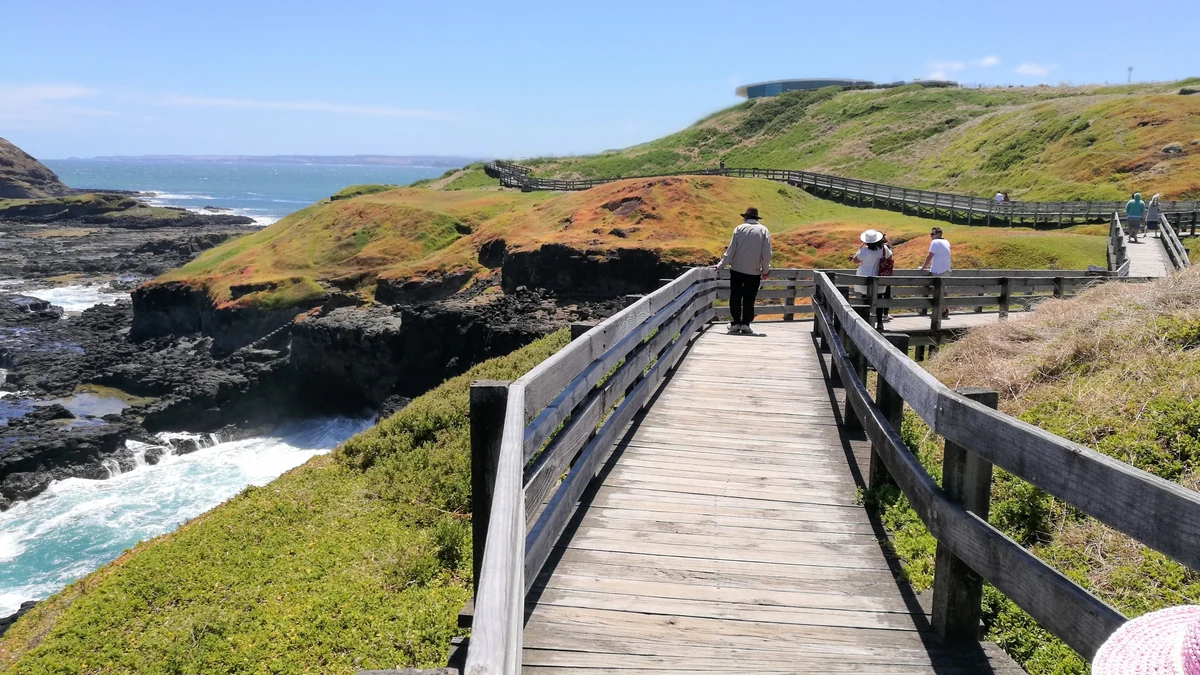
Phillip Island cruise port is a tender call at Rhyll Jetty, with cruise-day shuttles often linking the small harbour village to Cowes. The island’s famous wildlife sites lie well beyond walking distance, and the celebrated Penguin Parade takes place after sunset—usually after a visiting cruise ship has sailed.
The best first-time plan is therefore a daytime organised wildlife loop: Koala Conservation Reserve, The Nobbies and Churchill Island, with the exact combination chosen around call length. DIY Cowes or Rhyll works as a fallback, but it is not a substitute for the island’s wildlife coast. Do not buy an excursion that implies the evening Penguin Parade is included unless the ship schedule explicitly proves it.
Phillip Island Cruise Port at a Glance
| Port name | Phillip Island |
|---|---|
| Main arrival area | Tender landing at Rhyll Jetty |
| Cruise region | Australasia / Pacific Islands |
| Country / Territory | Australia |
| Currency | Australian dollar (AUD) |
| Languages | English |
| Port role | Day Call |
| Disembarkation | Tender |
| Walkability | Good in Rhyll and Cowes; headline attractions need road transport |
| Shuttle required | Often provided from Rhyll to Cowes; confirm on the ship |
| Main transport | Cruise shuttle, ship excursion, local wildlife tour, taxi and walking |
| Best first-time plan | Organised daytime wildlife loop to Koalas, The Nobbies and Churchill Island |
| Main caution | The Penguin Parade occurs at sunset and is normally incompatible with a daytime cruise call |
Rhyll Jetty is the cruise landing
The official cruise page confirms that tenders arrive in the Rhyll Jetty area. The red-marker map uses the jetty navigation-light coordinate rather than Cowes or the island centre.
Note whether the return tender leaves directly from Rhyll and where excursion vehicles assemble. A shuttle may run every twenty to thirty minutes, but frequency and final departure are call-specific.
DIY or organised tour? Organised for the island, DIY for the towns
Use an organised tour for wildlife attractions. The road network is simple, but the distances, timed entries and tender return make a coordinated vehicle much more useful than independent transport.
DIY is strong only for Rhyll Inlet, Cowes, beaches and food. A town-only day is pleasant, yet it does not reveal why Phillip Island has an international wildlife reputation.
The Penguin Parade is usually the wrong cruise-day promise
Little penguins return from the sea after sunset. Most cruise calls finish during the afternoon, so the headline evening event is operationally impossible even though it dominates island marketing.
Do not book a “penguin” product without checking the actual viewing time against all-aboard. A daytime visit to the visitor centre or habitat does not equal the parade and should be described honestly.
Some daytime tours use the Penguin Parade visitor centre as a comfort or interpretation stop. That can be worthwhile only when the description is honest: passengers will learn about little penguins but will not witness the evening arrival.
An occasional itinerary with an unusually late departure may change the calculation, but this must be confirmed by the cruise line rather than inferred from sunset time. Independent passengers should never assume the ship will wait for the parade.
Koala Conservation Reserve is the best reliable wildlife stop
The island’s official attractions guide identifies the Koala Conservation Reserve among the core nature experiences.
Elevated boardwalks provide a controlled chance to see koalas without relying on roadside luck. We would prioritise it above a generic winery or shopping stop on a first visit.
The elevated boardwalks reduce disturbance and give visitors a realistic chance of seeing koalas at different heights in the woodland. A guide adds value by helping passengers identify sleeping animals, territorial signs and the pressures on fragmented habitat rather than promising constant activity.
Allow enough time to walk both the shorter and longer boardwalk options according to mobility. A fifteen-minute coach stop wastes the attraction because koalas often require patient observation before the eye adjusts to branches and foliage.
The Nobbies gives the strongest coastal landscape
The Nobbies boardwalk reveals basalt coast, blowholes, seabirds and views towards Seal Rocks. It provides the dramatic ocean setting missing from a route confined to Cowes.
Allow enough time for the boardwalk rather than stopping only at the visitor-centre window. Wind can be fierce, so carry a layer even when Rhyll feels warm.
The visitor centre can provide shelter and interpretation when wind makes the exposed boardwalk uncomfortable. The outdoor route remains the prize, but passengers should not underestimate how quickly cold Southern Ocean wind can change walking speed and comfort.
Daytime visitors should separate The Nobbies from the evening Penguin Parade product. The coastline, seabirds and Seal Rocks views are worthwhile in daylight, while the famous penguin arrival occurs after sunset and normally falls outside the cruise call.
Churchill Island adds history and easy wildlife
Churchill Island combines farm heritage, wetlands and gentler walking than the exposed Nobbies. It is particularly useful for families or passengers who want a varied day without repeated long boardwalks.
Include it with Koalas or as an alternative when coastal weather is poor. We would not combine all major sites if the call leaves each with only a brief coach-door photograph.
Farm demonstrations and heritage buildings can give the visit a clearer theme than another brief wildlife lookout. Check the day’s demonstration times before deciding the route because arriving between activities can make the stop feel much thinner.
The gentler paths and sheltered sections suit mixed-mobility groups better than an itinerary built entirely around long coastal boardwalks. Families may also find the combination of animals, machinery and open space easier than several hours of coach-based wildlife searching.
A seal cruise can be the best specialist excursion
Wildlife Coast Cruises and other recognised operators use boats to view the Australian fur-seal colony at Seal Rocks. This is the organised alternative that offers something land touring cannot reproduce.
Choose it when marine wildlife is the priority and sea conditions are suitable. It should replace part of the road circuit, not be squeezed between Koalas, Churchill Island and a late tender.
Ask about vessel size, enclosed seating, toilets, motion and the likelihood of spray. The colony is offshore in exposed water, so a passenger comfortable on the cruise ship may still find the smaller wildlife boat demanding.
When the seal cruise is chosen, reduce the land itinerary deliberately. Koalas plus the boat can work on a long call; adding Churchill Island, Cowes and The Nobbies as compulsory stops usually leaves the day controlled by boarding times rather than wildlife.
Rhyll itself is a good short-call fallback
The official Rhyll guide describes a quiet fishing village beside important wetland habitat.
Walk the foreshore, use the historical trail and continue towards Conservation Hill when time and surfaces allow. This is a more coherent fallback than waiting in a shuttle queue for a very short Cowes visit.
Rhyll works particularly well after a delayed landing because the jetty, foreshore, wetlands and local food remain close together. Passengers can scale the route to the time available without another fixed departure.
A short local wildlife or birding walk arranged through the ship can add interpretation, but there is no need to pay for a full island coach when only a few hours remain.
Rhyll Inlet rewards birdwatchers
Mudflats, mangroves and wetlands attract resident and migratory birds. The habitat is subtle rather than spectacular from a coach window.
Take binoculars, move quietly and remain on paths. A birdwatcher may reasonably choose Rhyll over the standard island circuit, especially during a short or windy call.
Carry binoculars and use the recognised wetlands paths rather than approaching feeding or roosting birds across mudflats. The inlet is a good choice for passengers who prefer quiet observation to a busy coach circuit and remains close enough to protect the tender.
Cowes is the practical independent hub
Cruise information notes that shuttles often make the short trip from Rhyll to Cowes. The town offers cafés, shops, a beach and a simple waterfront walk.
Use Cowes for a relaxed DIY day or the final period after a tour. Do not spend the best wildlife hours shopping before an organised departure.
A town-based day works best when passengers accept it as a relaxed alternative rather than a failed full-island tour. The beach, pier, cafés and shops provide an easy sequence, while a short taxi or organised transfer can add one nearby wildlife attraction.
Confirm the last useful shuttle to Rhyll before settling into lunch. Cowes is only a short road journey from the tender landing, but limited cruise-day vehicle supply means a late taxi request can create an unnecessary return problem.
Cape Woolamai is for active repeat visitors
Cape Woolamai has excellent coastal trails and seabird habitat, but routes require transport, time and exposed walking.
We would not rank it above Koalas and The Nobbies on a first call. Choose it for a focused hiking day only when the call is long and the return vehicle is secure.
The headland offers some of the island’s strongest walking scenery, but the longer circuits require several hours, exposed tracks and reliable transport back to Rhyll. A short beach or lookout stop is more realistic for most calls.
Choose Cape Woolamai when walking is the main purpose of the day and the weather is settled. It should replace the wildlife circuit rather than being added after Koalas and The Nobbies.
A rental car adds less freedom than expected
Collection, tender timing, timed attraction entry and vehicle return all reduce the useful window. Wildlife on roads also requires careful driving.
For a normal call, a cruise-aware small-group tour is better. Hire a car only when pre-booked, the driver is confident and the route is deliberately limited.
A private driver is useful for mobility
A private vehicle can reduce coach waiting, tailor boardwalk distances and keep a family together. It also allows a quick switch when wind makes a site unsuitable.
The driver must still understand the Rhyll tender deadline. A custom vehicle does not make the evening Penguin Parade compatible with an afternoon departure.
What to skip on a normal call
Skip the Penguin Parade unless the cruise line explicitly operates it, skip trying to see every wildlife attraction and skip a long winery circuit before seeing the coast.
We would also avoid Melbourne: the road journey discards Phillip Island’s distinctive value and creates a fragile return.
Wildlife viewing needs distance
The official wildlife-viewing guide reinforces that koalas, wallabies, seabirds and seals are observed in protected habitats rather than treated as props. Boardwalks and viewing rules protect both visitors and animals.
Do not feed wildlife, leave paths or crowd an animal for a photograph. Choose operators whose guides enforce good behaviour rather than promising closeness.
Koalas, wallabies and birds should not be approached for a better phone photograph. Boardwalks and guide instructions exist to protect habitat and prevent groups from surrounding an animal.
The strongest wildlife day is one where behaviour remains natural. A distant active animal is more valuable than a close sighting created by noise, food or blocked escape routes.
Weather changes the best order
Coastal wind can make The Nobbies uncomfortable while sheltered woodland remains enjoyable. Rain can also affect visibility and boardwalk grip.
A good tour adjusts the order instead of cancelling the entire route. Carry a waterproof layer and let the guide choose the exposed stop when conditions are strongest.
A tour should be willing to move The Nobbies earlier when visibility and wind are favourable, then use the more sheltered Koala Conservation Reserve or Churchill Island later. A rigid sequence can waste the best coastal window.
Rain does not automatically ruin the wildlife circuit, but it changes walking speed and photography. Carry waterproof layers and protect enough indoor or sheltered interpretation to prevent the day becoming a succession of wet coach stops.
Accessibility varies across the wildlife loop
Tender steps are followed by vehicle boarding and different boardwalk gradients. Koala and Churchill Island facilities may be easier than some coastal trails.
Ask which viewing areas are step-free and how far the group walks. A private or accessible tour can retain the essential wildlife story without forcing every boardwalk.
Protect the Rhyll return
The final transfer is not complete when a coach reaches Cowes. Passengers still need the shuttle or tour vehicle to Rhyll and the tender to the ship.
Finish the wildlife route with a direct jetty return. Use spare time in Rhyll rather than asking for one more distant stop.
Independent passengers should be back in Rhyll before the final tender sequence becomes busy. The island’s roads are straightforward, but wildlife stops, coach unloading and limited taxis can all stretch the final journey. Use spare time on the foreshore rather than asking a driver to add one final detour. This is particularly important after a seal cruise, when passengers must disembark the wildlife vessel before beginning the separate ship-tender process.
Passengers using a private driver should agree a latest departure from the final wildlife stop before leaving Rhyll. That simple decision prevents enthusiasm at The Nobbies or Cowes from consuming the tender margin.
Keep that agreed departure visible to everyone in the group.
Tour dispatch should happen directly from Rhyll
A locally booked guide should know the tender arrival and avoid requiring passengers to reach Cowes independently before the tour begins. That extra shuttle can undermine a seemingly generous itinerary.
Confirm the vehicle, meeting sign and latest accepted landing time. A good operator shortens the route after a delayed tender rather than rushing wildlife stops.
A local operator collecting at Cowes after the tender has already required a shuttle creates an extra transfer at both ends. Direct Rhyll collection is operationally cleaner, particularly when the first tender is delayed.
Ask whether the vehicle waits for the ship’s passengers, how the route is shortened after a late landing and where it returns them. A tour described as cruise-friendly should answer all three questions without vague assurances.
Lunch should not consume wildlife time
Cowes and island producers offer good food, but a long formal meal can remove the only comfortable period at The Nobbies.
Choose an efficient lunch or allow passengers to buy their own food. On a first visit, the wildlife landscape should lead the timetable.
A pre-ordered or efficient café meal is better than an elaborate lunch stop inserted into a wildlife circuit. Phillip Island’s attractions require patient observation, and that is where the timetable should be spent.
CruisePing Recommended Port Day
Book a ship excursion or cruise-specialist local tour that prioritises Koala Conservation Reserve and The Nobbies, adding Churchill Island only when the call is long enough. This is the best first-time balance of reliable wildlife, coastal landscape and a protected Rhyll return.
For a short or disrupted call, stay independent: walk Rhyll’s foreshore and inlet, or use the shuttle to Cowes for the beach and town. Do not chase the sunset Penguin Parade or Melbourne. The daytime wildlife circuit and the local fallback should be treated as two distinct, honest options.
Weather & Best Time to Visit Phillip Island
| Month / season | Typical high | Typical low | Rain / conditions |
|---|---|---|---|
| December–February | 24°C | 14°C | Mild to warm; strong sun and coastal wind |
| March–May | 20°C | 11°C | Cooler with variable rain and calmer periods |
| June–August | 15°C | 7°C | Cool, windy and wet at times; whale season offshore |
| September–November | 19°C | 10°C | Changeable spring weather and strong UV |
Phillip Island is exposed to Bass Strait. Wind can be more important than temperature, particularly at The Nobbies and on wildlife boats. Check the current official forecast before finalising the day.
Frequently Asked Questions
Where do cruise tenders land on Phillip Island?
They normally land at Rhyll Jetty.
Can cruise passengers see the Penguin Parade?
Usually not, because the parade happens after sunset and most ships leave earlier.
What is the best organised route?
Koala Conservation Reserve and The Nobbies, with Churchill Island when time allows.
Can you explore independently?
Yes in Rhyll and Cowes. The major wildlife attractions need transport.
Is Melbourne a sensible excursion?
No. It wastes the island call and creates a long road return.
Useful Official Links
- Visit Phillip Island: Cruise ships
- Cruise ship visits and shuttles
- Phillip Island attractions
- Rhyll
- Bureau of Meteorology
CruisePing Port Verdict
Phillip Island is a daytime wildlife port. A well-paced Koala Conservation Reserve and Nobbies tour is the best first choice, with Churchill Island or a seal cruise used as a genuine alternative rather than another compulsory stop.
The Penguin Parade normally occurs too late for cruise passengers. When the call is short, choose Rhyll, Cowes and one nearby wildlife experience instead of paying for an itinerary built around a famous event you cannot actually see.
Ready to browse our article library?
Looking beyond Phillip Island? Explore more ports in the Australasia / Pacific Islands region, or narrow it to Australia in particular. For cruise comparisons, planning shortcuts and value guides, head over to our main article archive.