
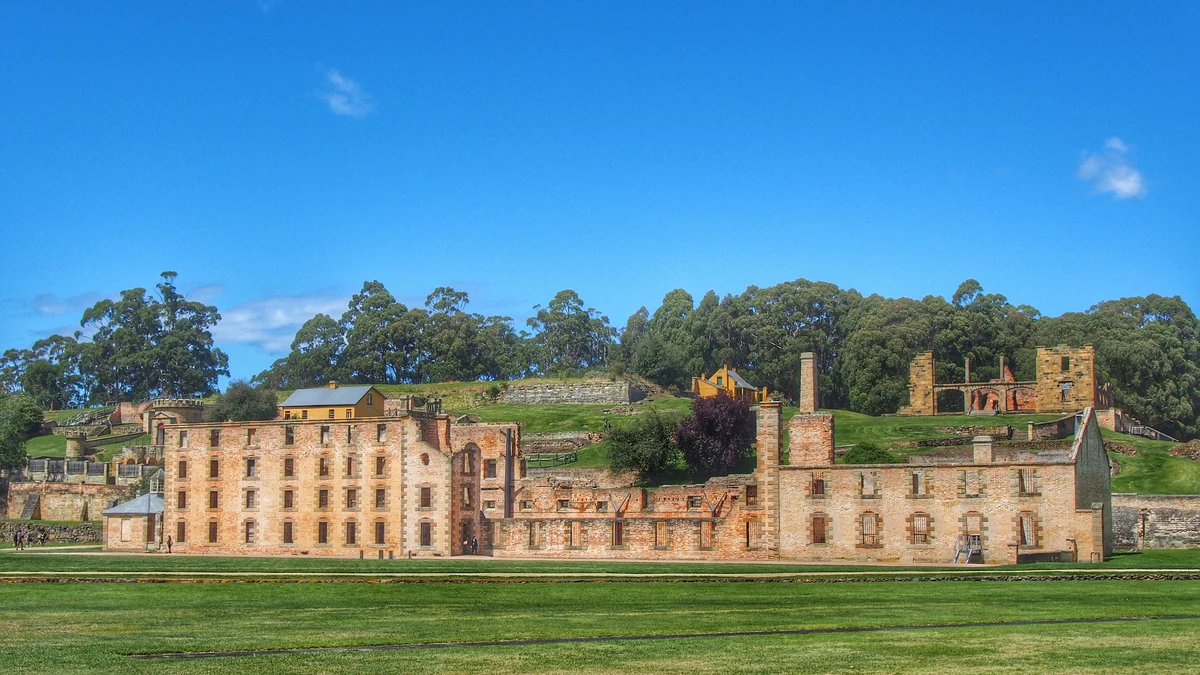
Port Arthur cruise port is one of the rare tender calls where passengers land inside the principal attraction. The jetty sits within the World Heritage historic site, only a short walk from the visitor centre, so a high-quality independent day begins immediately without a shuttle or town transfer.
Our first-time recommendation is to stay at Port Arthur and explore the site properly, using the included introductory interpretation and harbour cruise when available. An organised Tasman Peninsula excursion is worthwhile only for passengers who already know the site or strongly prefer coastal geology. Hobart is far too distant and should not be considered from a normal call.
Port Arthur Cruise Port at a Glance
| Port name | Port Arthur |
|---|---|
| Main arrival area | Tender jetty inside Port Arthur Historic Site |
| Cruise region | Australasia / Pacific Islands |
| Country / Territory | Australia |
| Currency | Australian dollar (AUD) |
| Languages | English |
| Port role | Day Call |
| Disembarkation | Tender |
| Walkability | Excellent within the site, though the grounds are extensive and sloping |
| Shuttle required | No for the core site; internal courtesy transport may assist |
| Main transport | Walking, historic-site courtesy vehicle, ship excursion and pre-booked regional coach |
| Best first-time plan | DIY historic site with introductory talk, key buildings and harbour cruise |
| Main caution | Do not sacrifice the world-class site for a rushed long road trip to Hobart |
The tender lands inside the historic site
Port Arthur confirms that cruise passengers arrive by tender at the site jetty. Marine and Safety Tasmania records the jetty within the historic-site grounds.
This is a major planning advantage: there is no gateway transfer to solve. Confirm whether site entry is included by the cruise line, then begin interpretation before the excursion coaches depart.
DIY or organised tour? DIY wins for a first visit
Port Arthur Historic Site is the best first-time choice and is easy to explore independently. A guide can add depth, but a regional coach is not needed to reach the headline attraction.
Use an organised excursion only when it offers something genuinely different: Tasman Peninsula geology, the Coal Mines, a specialist Cape Raoul cruise or mobility-adapted transport.
Start with the introductory interpretation
The official visitor guide explains the site’s scale, buildings and harbour setting. A short introductory talk or essentials tour gives the names and chronology needed to understand what follows.
Do this early. Wandering directly towards the penitentiary produces photographs, but it can leave the social system, punishment regime and lives of convicts poorly understood.
Use the site map to divide the day into the waterfront institutional core, the Separate Prison and the elevated domestic or administrative buildings. That prevents the visit becoming a series of unrelated ruins and avoids repeatedly climbing the same slopes.
Check the included tour and harbour-cruise times immediately after landing. Fixed activities should shape the independent route, while the penitentiary and museum displays can be visited flexibly between them.
The penitentiary is the visual centre, not the whole story
The waterfront penitentiary ruin is the landmark most passengers recognise. Its scale communicates the settlement’s institutional power and relationship with the harbour.
Allow time for it, but do not stop there. The Separate Prison, church, Commandant’s House and smaller domestic buildings provide the human and administrative detail that makes Port Arthur more than a ruin.
Use the penitentiary as the geographical anchor, then connect it with work, accommodation, punishment and administration elsewhere on the site. The building is most meaningful when visitors understand what happened beyond its surviving walls.
Read the interpretation before moving on to the church or Commandant’s House. Otherwise, the dramatic ruin can dominate the visit so completely that the institution’s broader social system disappears.
The Separate Prison is the essential second stop
The Separate Prison reveals the later philosophy of isolation, silence and psychological discipline. Its intact plan makes the punishment system unusually legible.
We would prioritise it above a long souvenir stop or an additional panoramic coach loop. Read the cells and corridors slowly; this is one of the most intellectually important areas on the site.
The building rewards close reading because the architecture itself enforced separation: individual exercise yards, chapel partitions, sightlines and controlled movement all formed part of the system. Moving too quickly reduces it to another stone prison.
Allow emotional space after the visit. The Separate Prison can be more unsettling than the larger penitentiary, and immediately rushing into a café or souvenir queue weakens the historical experience.
The church and gardens change the atmosphere
The roofless church and landscaped grounds create a striking contrast with the penal buildings. They also show how religion, authority and the settlement’s designed environment interacted.
Include them on the route towards the Commandant’s House. The visual beauty should not obscure the coercive system that created and maintained the place.
The Commandant’s House explains hierarchy
The elevated residence illustrates how status shaped living conditions within the settlement. Its position and domestic detail make the contrast with convict accommodation visible.
Visit when open and use the uphill route intelligently. Passengers with limited stamina can use internal assistance or choose a shorter circuit rather than omitting all higher ground.
The harbour cruise is worth taking
Standard entry commonly includes a short harbour cruise, subject to availability and booking arrangements.
The water view explains the harbour’s role as barrier, workplace and transport route. It is a better use of twenty minutes than an unstructured café stop, but check the departure time early because cruise-call slots can fill.
The cruise also provides a valuable period of seated rest after walking the sloping site. Sit where commentary can be heard clearly and carry a layer because conditions on the water can feel colder than among the buildings.
Passengers considering the separate Isle of the Dead tour should understand that it is a different, longer commitment. The standard harbour cruise gives the essential geography; the cemetery landing is for visitors who want deeper specialist interpretation.
Isle of the Dead needs a specific booking
The burial island can add a powerful layer to the visit, but access is through a guided boat tour rather than independent wandering. Timing may not fit every cruise call.
Choose it when social history is a priority and the return leaves sufficient time for the core buildings. Do not let a specialist add-on crowd out the Separate Prison on a first visit.
Cape Raoul Cruises is the best organised alternative
The official Cape Raoul cruise departs from the historic-site jetty and uses roughly ninety minutes to explore cliffs, caves and wildlife.
This is an attractive option for repeat visitors or passengers who want Tasman Peninsula scenery without a long coach journey. On a first visit, it should supplement only when the site still receives several hours.
Choose the coastal boat when dramatic geology and wildlife are a genuine priority or when a repeat visit makes another full historic-site day unnecessary. The cliffs and sea caves reveal a side of the peninsula that cannot be appreciated from the tender or coach road.
For first-time visitors, protect several hours for the historic site before adding the cruise. A schedule that sends passengers straight back onto another boat can leave them having visited Port Arthur without understanding Port Arthur.
Remarkable Cave and Tessellated Pavement need road transport
These coastal formations reveal the wider peninsula but are not adjacent to the tender. A coach or private driver is required, and individual stops involve weather-exposed walking.
Choose a half-day regional excursion only when geological scenery matters more than detailed convict history. We would not combine every coastal site with a rushed Port Arthur visit.
The two sites lie in different directions and should not automatically be combined. Remarkable Cave fits more naturally with the southern peninsula, while Tessellated Pavement belongs to an Eaglehawk Neck route that may also include coastal viewpoints.
Ask how much time is spent outside the vehicle and whether steps, uneven rock or weather exposure limit access. A shorter focused geology excursion is better than a coach itinerary that names several formations but allows only roadside photographs.
The Coal Mines are a specialist heritage excursion
The Coal Mines Historic Site extends the convict story into a more dispersed landscape. It is meaningful for repeat visitors and serious history enthusiasts.
It is not the best first-call substitute for Port Arthur itself. Road time and a less concentrated site make it weaker for passengers with only a few hours.
Hobart is not a sensible target
The road to Hobart is far too long for a call whose world-class attraction begins at the tender. Traffic and distance create unnecessary risk while discarding the reason the ship came to Port Arthur.
We would reject any independent Hobart plan outright. Visit Hobart from Hobart; use Port Arthur to understand Port Arthur.
The internal courtesy vehicle can preserve energy
The site’s visitor information describes a courtesy vehicle serving selected points during operating periods.
Ask at the visitor centre rather than assuming a fixed timetable. Use it to reach higher or farther buildings, then walk downhill through the most important areas.
Use the vehicle strategically for the steeper return from the Commandant’s House or other elevated areas, then continue walking across the flatter waterfront. Saving energy early makes it more likely that passengers can give proper time to the museum and Separate Prison later.
The service is not a private shuttle and may involve waiting. Build it into a flexible route rather than depending on a precise pickup immediately before the tender.
Food should fit around interpretation
The visitor centre and site facilities provide practical refreshment, but popular times can create queues when tenders and coaches arrive together.
Eat before or after a booked harbour activity rather than sacrificing the introductory talk. A short lunch is enough on a first visit because the grounds deserve the time.
Use lunch as a deliberate break between major areas rather than allowing a queue to consume the harbour cruise or Separate Prison. A lighter meal can also make the uphill sections more comfortable.
Passengers with dietary requirements should check current options before leaving the ship. The site is substantial enough that returning to the tender for food wastes more time than planning the break properly.
The site requires respectful interpretation
Port Arthur includes histories of punishment, labour, death, family and institutional violence. It should not be reduced to ghost stories or picturesque ruins.
Read personal accounts, avoid jokey cell photographs and let interpretation include both convicts and the people who administered the settlement. The place is more affecting when treated seriously.
Thousands of people experienced punishment, labour, family separation and institutional control here. Avoid language that turns cells and restraints into entertainment or treats convict suffering as a picturesque backdrop.
Personal stories in the galleries and interpretation help move the visit beyond architecture. Give them time, particularly accounts involving women, children, soldiers and free residents whose lives complicate a simple prison narrative.
Weather can make the grounds feel much colder
The sheltered harbour does not prevent wind, rain or rapid temperature changes across the open grounds. Historic surfaces can become slippery.
Carry layers and waterproof protection even when the ship forecast looks mild. Use the gallery and indoor buildings during heavy showers rather than abandoning the site.
Accessibility is better than the age of the site suggests
The tender remains the first barrier, but selected tours and the harbour cruise can be accessible, and internal transport helps with distance. Historic buildings still contain thresholds and uneven surfaces.
Ask the visitor centre to design a priority route. A passenger need not enter every building to understand the site’s core story.
Photography should support rather than replace the visit
The harbour, penitentiary and church are highly photogenic, especially in changing Tasmanian light. It is easy to spend the call chasing the same broad view from multiple angles.
Take the landmark photographs, then put the camera away inside interpretive spaces. The Separate Prison and personal histories require attention that a lens can dilute.
The waterfront and ruins are exceptionally photogenic, but the most important evidence often sits in small labels, reconstructed spaces and personal records. Put the camera away periodically and allow the site to be read rather than merely collected.
What to skip on a normal first visit
Skip Hobart, skip a full regional coach circuit that leaves less than two hours onsite and skip treating the café or gift shop as fixed itinerary stops.
We would also skip a specialist island tour if it prevents the Separate Prison and main settlement route. Port Arthur itself is not the fallback; it is the priority.
Return to the jetty without crossing the margin
Although the jetty is inside the attraction, the grounds are extensive and uphill buildings can be farther away than expected. The final tender queue may begin before the published cut-off.
Work back towards the waterfront during the last hour. Use the penitentiary, museum areas or harbour edge as the final stop rather than remaining at the Commandant’s House.
The site’s slopes can make the final walk slower than the morning route, particularly after several hours on foot. Finish the elevated buildings first and let the last part move downhill towards the waterfront, museum and jetty. That sequence reduces dependence on the courtesy vehicle and keeps passengers close to the tender if weather or ship instructions change.
Keep the ship time visible throughout the afternoon.
Do not leave it late.
Site entry arrangements should be checked onboard
Some cruise lines bundle entry, while others structure the call through excursions or separate arrangements. The tender landing alone does not prove every premium tour is included.
Read the ship notice before paying twice. The standard site experience is already substantial, and extra tours should be chosen for content rather than uncertainty.
A shortened call should stay within the waterfront core
When tenders begin late, prioritise the introductory talk, penitentiary and Separate Prison, then add the harbour cruise only if the slot remains comfortable.
Do not leave on a regional coach after a delayed landing. The historic site can be reduced intelligently without losing its central argument.
With limited time, prioritise the introductory interpretation, penitentiary, Separate Prison and harbour view. Drop elevated houses and remote peninsula additions first.
This compact route still explains the institution’s structure and human consequences. Trying to preserve every stop after a late tender produces a faster visit but not a better one.
CruisePing Recommended Port Day
Go directly from the tender to the introductory interpretation, then visit the penitentiary, Separate Prison, church and Commandant’s House in a logical circuit. Reserve the included harbour cruise early and use the courtesy vehicle selectively if distance or hills would reduce the visit.
Choose Cape Raoul Cruises or a Tasman Peninsula coach only as a deliberate alternative, not because DIY feels insufficient. Do not attempt Hobart. The historic site is the strongest and easiest port day, and it deserves most of a first call.
Weather & Best Time to Visit Port Arthur
| Month / season | Typical high | Typical low | Rain / conditions |
|---|---|---|---|
| December–February | 20°C | 10°C | Mild, changeable and often windy |
| March–May | 17°C | 8°C | Cooler with rain and crisp clear periods |
| June–August | 13°C | 5°C | Cold, wet and windy at times |
| September–November | 16°C | 7°C | Rapidly changeable spring conditions |
Port Arthur’s sheltered harbour can disguise cold wind on the open grounds. Rain and changing light affect walking comfort more than distance alone. Check the current official forecast before finalising the day.
Frequently Asked Questions
Where do cruise tenders land at Port Arthur?
They land at the jetty inside Port Arthur Historic Site.
Do you need an excursion?
No. The historic site is the headline attraction and is ideal for independent exploration.
Is the harbour cruise worth doing?
Yes. It adds geographical and historical context and is commonly included with entry.
Can you visit Hobart?
We strongly advise against it because of the long road journey and the exceptional site beside the tender.
What should you prioritise?
The introductory interpretation, penitentiary, Separate Prison, church and harbour cruise.
Useful Official Links
- Port Arthur cruise information
- What to do at Port Arthur
- Port Arthur entry and harbour cruise
- Cape Raoul Cruises
- Port Arthur Jetty
CruisePing Port Verdict
Port Arthur is one of the strongest DIY heritage calls because the tender lands inside the historic site. Begin with interpretation, give the penitentiary and Separate Prison proper time and take the included harbour cruise when its schedule fits.
Use an organised coastal boat or peninsula excursion only when it offers a deliberately different experience. Hobart and an overloaded regional circuit weaken the day; the historic site beside the landing is the attraction worth protecting.
Ready to browse our article library?
Looking beyond Port Arthur? Explore more ports in the Australasia / Pacific Islands region, or narrow it to Australia in particular. For cruise comparisons, planning shortcuts and value guides, head over to our main article archive.