
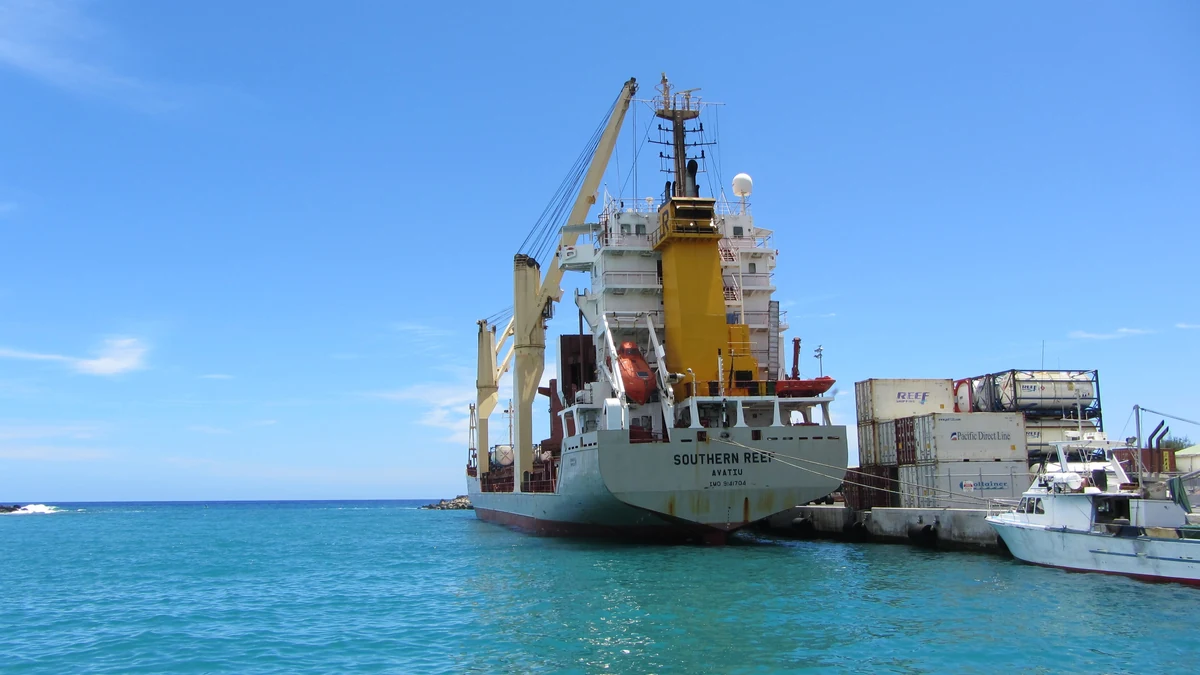
Rarotonga cruise port normally uses Avatiu Harbour beside Avarua, although the Ports Authority also maintains an alternative Arorangi cruise-tender facility. Ocean swell can cancel or move the landing, so every independent plan must begin with the actual port announced onboard.
The best first-time choice is a protected Muri Lagoon cruise or a well-paced cultural island tour, not a scooter rental or unguided Cross-Island Track. DIY Avarua and the clockwise or anticlockwise bus can produce a strong low-cost day when the tender is stable. Do not try to fly to Aitutaki: the timing and separate airport processes make it an irrational cruise-call gamble.
Rarotonga Cruise Port at a Glance
| Port name | Rarotonga |
|---|---|
| Main arrival area | Avatiu Harbour cruise tender pier; Arorangi is the alternative landing |
| Cruise region | Australasia / Pacific Islands |
| Country / Territory | Cook Islands |
| Currency | New Zealand dollar and Cook Islands dollar (NZD/CID) |
| Languages | English and Cook Islands Māori |
| Port role | Day Call |
| Disembarkation | Tender |
| Walkability | Good from Avatiu to Avarua and Punanga Nui Market |
| Shuttle required | No for central Avarua; use bus, taxi or tour for the island |
| Main transport | Walking, clockwise/anticlockwise bus, organised lagoon cruise, island tour and taxi |
| Best first-time plan | Cruise-compatible Muri Lagoon trip or cultural island tour; DIY Avarua and bus as fallback |
| Main caution | Tendering is weather-sensitive and the alternate Arorangi landing changes all collection plans |
Avatiu is the primary tender port
The Cook Islands Ports Authority identifies Avatiu Port as Rarotonga’s main maritime hub and Arorangi as an alternative cruise-tender facility.
The coordinate map marks the Avatiu tender pier inside the harbour. Check the ship notice before meeting a tour because an Arorangi landing moves passengers to the island’s western side.
DIY or organised tour? Organised for lagoon and culture
Use an organised product for Muri Lagoon or a culturally interpreted island route. Boat safety, collection and local explanation justify the cost.
Use DIY for Avarua, Punanga Nui Market and the round-island bus. We would not hire a scooter merely to recreate what the bus and a guide can do more safely.
Muri Lagoon is the best organised first choice
Official tourism information calls a Muri lagoon cruise a central Rarotonga experience, combining snorkelling, a motu, food and cultural entertainment.
Book through the ship or an operator who guarantees collection from the actual tender landing. The programme should return with enough time to cross the island if the ship uses Avatiu.
Compare the collection plan as carefully as the lagoon itinerary. A vehicle beginning at Avatiu may not be able to adapt instantly to an Arorangi landing, and the cross-island transfer must be included in the promised return time.
The motu lunch and cultural programme are part of the appeal, but they also fix the schedule. Choose an operator that leaves the lagoon early enough to absorb loading, traffic and the final tender rather than relying on a nominal driving time.
Choose the lagoon product by water confidence
Some cruises emphasise snorkelling and energetic entertainment; others provide glass-bottom viewing, island time and easier water entry.
Ask about steps, flotation, lunch, shade and toilets. A passenger who does not swim can still enjoy Muri, but should choose the vessel rather than assuming every product offers the same dry experience.
A cultural island tour can be better than a scenic circle
Rarotonga’s value lies in living Cook Islands Māori culture, inland plantations, marae, churches and the relationship between the coastal road and Ara Metua.
Choose a guide who explains people and place rather than simply driving one circuit with beach photographs. We would rank strong cultural interpretation above a generic “highlights” coach.
Look for a route that includes locally interpreted marae, agriculture, historic roads or community life rather than a sequence of beach lay-bys. The guide’s authority and knowledge matter more than the number of stops.
A smaller vehicle can adapt more easily to the announced landing and to passengers’ mobility, but private touring still needs a conservative return. Flexibility should improve interpretation, not become an excuse to keep adding stops.
Avarua is the best independent base
Avatiu lies close to Avarua, where the market, shops, cafés, churches and everyday government centre can be reached on foot.
Begin here when the tender lands late or before a later tour. The town is more useful than immediately joining a queue for transport around the entire island.
Use the town to orientate the day before committing to a bus or taxi. Confirm the landing, current bus pattern and market activity, then decide whether the useful independent extension lies east towards Muri or west towards Arorangi.
Avarua also provides the safest final stage because food, shops and the port lie close together. Finish here after the bus rather than scheduling the most important purchase or meal on the far side of the island.
Punanga Nui Market is call- and day-dependent
The market beside Avatiu can be lively, especially on Saturday mornings, but not every cruise call receives the same number of stalls.
Use it early when operating, buy food and crafts thoughtfully and keep biosecurity rules in mind. Do not build the entire port day around a market assumed from an old itinerary.
The round-island bus is the best DIY transport
Cook Islands Tourism notes that the island can be circled in roughly forty-five minutes and is served by local transport. The clockwise and anticlockwise buses create a simple independent framework.
Confirm the current timetable and final practical return. Get off for one or two meaningful stops rather than attempting to sample every beach and waiting repeatedly at the roadside.
The circular road makes navigation easy, but the bus is not a hop-on service operating every few minutes. Each stop creates a wait, so two carefully chosen breaks are normally the practical maximum.
Ask the driver where to stand for the return and whether the same timetable applies on Sunday or a public holiday. Carry small cash and avoid boarding a nearly complete circuit when walking back to the port would be quicker.
Bus timing needs a tender buffer
A full circuit time does not include waiting, stops, traffic, boarding and the final walk through the port. Sunday and evening patterns may differ.
Return to Avarua well before the final tender. Do not board a bus in the wrong direction merely because it arrives first unless the remaining circuit still fits.
Scooter hire is not our first recommendation
Scooters are common on Rarotonga, but licences, helmets, left-side traffic, weather and unfamiliar roads create avoidable risk during a short call.
Use the bus or an organised tour. Experienced riders may disagree, but the modest time saving rarely justifies the accident and paperwork exposure for a cruise passenger.
Visitors may need to satisfy local licence requirements, and rental administration can consume part of the call before the ride begins. Rain, dogs, driveways and unfamiliar roundabouts add risks not visible on a simple island map.
The bus, taxi or private guide covers the same coastal road without placing the return on one passenger’s riding confidence. Save scooter exploration for a longer land stay.
The Cross-Island Track needs a guide and time
Tourism authorities have improved Cross-Island Track safety with ropes and signs, which demonstrates that this is a real tropical hike rather than a town footpath.
Attempt it only with a recognised guide, suitable weather and a generous call. We would skip it on a first cruise visit in favour of lagoon and culture, particularly after rain.
A guide provides route finding, river and mud judgement and a realistic pace. The walk can become much slower after rain, while mobile coverage and rescue access are not equivalent to a town trail.
Treat the hike as the whole day. Do not add Muri Lagoon or a full island circuit, and carry footwear and clothing suitable for arriving back muddy before the tender.
The Needle is not a casual viewpoint
Te Rua Manga, the Needle, is reached through the Cross-Island route and should not be treated as a quick taxi stop. Mud, roots, river crossings and navigation can extend the walk.
Do not hike independently against the tender clock. A guided trek is the only sensible cruise-day version, and it should replace the lagoon cruise.
Muri Beach without a cruise is still worthwhile
Passengers who prefer independence can take the bus or taxi to Muri, use public beach areas and enjoy lagoon views without buying a full cruise.
Confirm where swimming and snorkelling are suitable and allow for the return. Do not assume private resort loungers, pools or equipment are available to day visitors.
Tikioki and marine reserves need responsible behaviour
Lagoon reserves support coral, fish and giant clams. Shallow water can appear easy but still contains sharp coral and ecological sensitivity.
Follow local signs, avoid standing on coral and use reef-conscious sun protection. A guided snorkel is preferable when a passenger cannot identify safe access.
Churches require Sunday awareness
Cook Islands Christianity is a visible part of community life, and Sunday services can be culturally meaningful. At the same time, commercial hours and buses may be reduced.
Attend only when visitors are welcome, dress respectfully and avoid treating worship as a staged performance. Plan Sunday calls around limited services rather than expecting a normal shopping day.
Island food is worth building into the day
Local cafés, market food and organised lunches can introduce fish, taro, coconut and tropical produce. Cruise-day demand may create queues.
Eat near the chosen route and keep the final meal close to Avatiu. We would not spend an hour crossing the island solely for one famous café.
A lagoon cruise often includes lunch, while a land day gives more choice around Avarua, Muri or village cafés. Decide which meal belongs to the main route rather than crossing the island for a single recommended venue.
Allow for preparation time and Sunday closures. The most sensible final meal is close to the announced tender port, where a delay can be absorbed without sacrificing the ship return.
Aitutaki is not a cruise-day excursion
Aitutaki requires flights, airport transfers and an entirely separate lagoon schedule. Even when flight times look possible, delays or weather can destroy the ship return.
We reject this plan completely. Visit Aitutaki on a stay; use a Rarotonga call to experience Rarotonga.
A private guide is excellent for cultural depth
A private or small-group local guide can adapt to an Avatiu or Arorangi landing, include inland roads and reduce time spent collecting other passengers.
This is the organised option we would choose over a large panoramic coach when culture, mobility or photography matters. Demand a firm port return and clarity about access fees.
Ask what places the guide is authorised to interpret and whether fees or customary arrangements are included. A meaningful visit may involve fewer stops and more conversation than a standard island circuit.
Private touring is particularly valuable for mixed mobility because the route can reduce beach entries and long walks. It must still finish beside the actual tender facility rather than at a general Avarua meeting point.
Tender cancellation risk is unusually important
Rarotonga’s exposed reef and harbour entrance can make landing difficult even in bright weather. The captain may cancel the call or use the alternative facility.
Book products with transparent cancellation terms. Do not prepay a non-refundable private activity that cannot adapt to either landing.
Rarotonga can be cancelled even when the island is visible and the weather appears bright from the ship. Swell at the reef entrance and safe tender handling, not the general holiday forecast, determine whether passengers can land.
Use operators with clear no-landing refunds and avoid non-refundable vehicle or scooter arrangements. A flexible booking is worth more here than a small advance discount.
Weather and lagoon wind alter the day
Tropical showers may pass quickly, while swell outside the reef can remain operationally serious. Mountain cloud also reduces hiking safety and views.
Keep Avarua and the bus as the fallback for a cancelled lagoon boat. A wet town day is better than forcing an unsafe tender or track.
Muri can remain bright while the mountain interior is wet, or the lagoon can become choppy while Avarua stays comfortable. Judge the chosen activity by its local conditions rather than one island-wide symbol on a weather app.
When wind affects boats, switch to a cultural drive or town-and-bus route. When heavy rain affects the track, do not substitute an unguided hike simply because a lagoon departure has been cancelled.
Accessibility depends on tender and boat transfers
Avatiu’s flat pier and central location can be manageable, but ship tenders, lagoon boats and beach landings add separate barriers.
Ask each operator about steps, boarding assistance, shade and toilets. A private island drive can deliver culture and scenery without repeated water transfers.
Cash and currency need simple preparation
New Zealand dollars circulate, and Cook Islands notes and coins may be received as change. Cards are common in larger businesses but not universal.
Carry small cash for buses, markets and minor purchases. Remember that Cook Islands currency is difficult to exchange away from the country, so spend or change surplus before sailing.
What to skip on a normal call
Skip Aitutaki, skip an unguided Cross-Island Track, skip renting a scooter without strong experience and skip trying to combine a full lagoon cruise with an island circuit.
We would also avoid a generic coach that never leaves the coastal main road or explains Cook Islands culture.
The final return depends on the announced landing
A tour returning to Avatiu is not useful when the ship has tendered to Arorangi, and vice versa. Operators should know the call arrangement before departure.
Keep the landing name and ship time in writing. Finish the last hour close to the correct pier rather than relying on a full island circuit to run exactly.
Keep the port name, ship time and operator number offline on the phone. Drivers and bus passengers should confirm whether the final approach is through Avatiu Harbour or the separate Arorangi facility.
Use the final hour on the same side of the island as the ship. Crossing the entire coastal road for one last beach or café turns a flexible island day into a traffic-dependent gamble.
That discipline matters.
Arorangi changes the best independent route
An Arorangi landing places passengers west of Avarua and closer to western beaches, but farther from the market and Avatiu-based meeting points.
Do not insist on the original town-first plan. Use the operator or bus direction that suits the actual landing, then return to the same facility early.
When tenders use Arorangi, western beaches and local cafés become the low-risk core, while Avarua and Muri require deliberate transport. A tour written around Avatiu must confirm that its collection and final drop have been moved.
Do not cross the island twice merely to preserve a pre-written checklist. Build the day from the western landing and choose one eastern excursion only when the return remains protected.
Sunday calls need a different expectation
Church services and family life shape Sunday, while markets, shops and transport may operate more lightly.
A respectful service, beach and pre-arranged tour can make a strong day. Expecting Saturday-style commerce creates disappointment and pressure on local businesses.
The island’s slower Sunday rhythm is part of local life rather than a service failure. Shops, markets and buses may be reduced while churches and family activity become more visible.
Pre-book any essential transport, attend worship only where visitors are welcomed and keep beach time respectful. A cultural guide or lagoon product confirmed for Sunday is more dependable than hoping normal weekday commerce will appear.
CruisePing Recommended Port Day
Book a cruise-compatible Muri Lagoon cruise when snorkelling, a motu lunch and cultural entertainment appeal. The operator must confirm the actual Avatiu or Arorangi collection and return early. Treat the lagoon cruise as the main day rather than adding a full island circuit.
For a land-focused or disrupted call, explore Avarua and Punanga Nui Market, then use the clockwise or anticlockwise bus for one carefully chosen beach or cultural stop. Choose a private cultural guide when depth matters. Do not hire a scooter, hike the Cross-Island Track unguided or attempt Aitutaki.
Weather & Best Time to Visit Rarotonga
| Month / season | Typical high | Typical low | Rain / conditions |
|---|---|---|---|
| May–October | 26°C | 20°C | Drier and milder with trade winds |
| November–April | 29°C | 24°C | Hot, humid and wetter; tropical systems possible |
| Year-round lagoon | Warm | Warm | Wind, swell and rainfall affect tendering and water activity |
Rarotonga stays warm, but exposed-ocean swell controls cruise tendering while mountain rain can make inland tracks hazardous. Check the current official forecast before finalising the day.
Frequently Asked Questions
Where do cruise tenders land in Rarotonga?
Normally at Avatiu Harbour; Arorangi is the alternative tender facility.
Can you explore independently?
Yes. Avarua and the round-island bus make a strong DIY plan.
What is the best organised excursion?
A cruise-compatible Muri Lagoon cruise or a culturally interpreted island tour.
Should you rent a scooter?
We do not recommend it for a short cruise call because of licence, traffic and accident risk.
Can you fly to Aitutaki?
No sensible cruise plan should attempt it; the flights and separate lagoon schedule create unacceptable return risk.
Useful Official Links
- Cook Islands Ports Authority
- Cook Islands cruise information
- Cruising and boating in Rarotonga
- Culture and heritage in Rarotonga
- Cook Islands Meteorological Service
CruisePing Port Verdict
Rarotonga offers two equally credible first-time days: an organised Muri Lagoon or culturally interpreted island tour, and an independent Avarua-and-bus route. The better choice depends on the announced tender landing and the operating timetable.
Avoid scooter risk, an unguided Cross-Island Track and any attempt to fly to Aitutaki. Keep the final part of the day close to Avatiu or Arorangi and treat the island’s changing tender operation as the central planning constraint.
Ready to browse our article library?
Looking beyond Rarotonga? Explore more ports in the Australasia / Pacific Islands region, or narrow it to Cook Islands in particular. For cruise comparisons, planning shortcuts and value guides, head over to our main article archive.