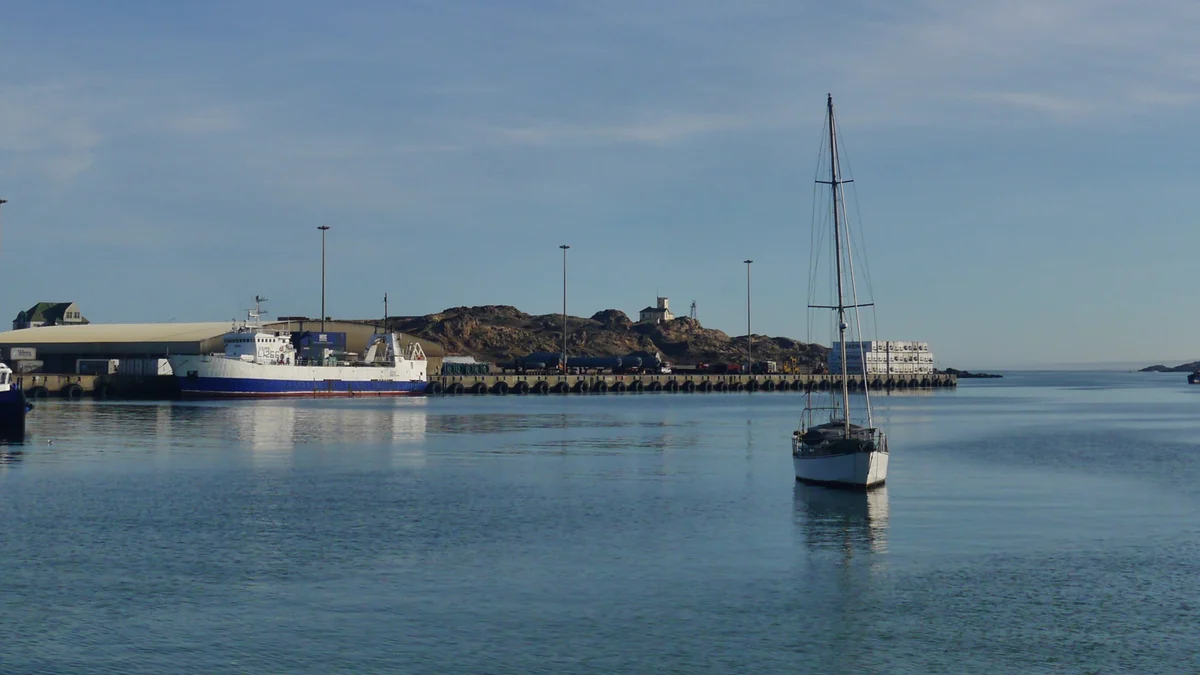
The Lüderitz cruise port brings ships into one of southern Africa’s most atmospheric coastal towns: a working harbour beside German-era architecture, desert hills and the abandoned diamond settlement of Kolmanskop. Cruise vessels normally use the security-controlled commercial port when berth and draft allow, with passengers transferred through the gate. The map pin marks the main port quay area, but the assigned berth and shuttle point remain operational decisions.
The first-time choice is unusually clear. CruisePing recommends a timed Kolmanskop visit followed by Lüderitz town, with Diaz Point added only when the call is long and the wind and road conditions cooperate. The ghost town is the distinctive excursion; the town provides the human context. Do not attempt to combine Kolmanskop, Bogenfels, a full peninsula drive and every historic building in one ordinary port day.
Lüderitz Cruise Port at a Glance
| Port name | Lüderitz |
|---|---|
| Main arrival area | Security-controlled Port of Lüderitz commercial quay and shuttle gate |
| Cruise region | Africa |
| Country / Territory | Namibia |
| Currency | Namibian dollar (NAD); South African rand accepted at parity |
| Languages | English, Afrikaans and German; other Namibian languages also spoken |
| Port role | Day Call |
| Disembarkation | Usually berthed; tender possible according to port operations |
| Walkability | Reasonable in town after the port transfer |
| Shuttle required | Usually yes through the industrial port; essential for regional sights |
| Main transport | Port shuttle, pre-booked vehicle and walking |
| Best first-time plan | Take the timed Kolmanskop tour, then explore Felsenkirche, Goerke House and the waterfront |
| Main caution | Kolmanskop access is controlled, taxis are limited and wind can make exposed stops uncomfortable |
Confirm the Berth and Shuttle Arrangement
Namport’s cruise tourism and infrastructure information treats Lüderitz as a working commercial port rather than a purpose-built city terminal. Passengers should expect security procedures and a controlled route to the gate or shuttle. Do not start walking across the quay unless port staff explicitly permit it.
The assigned berth can change with cargo activity, vessel size and weather. Note the shuttle collection point and final departure before leaving. CruisePing recommends using the ship or port transfer even when the town appears close, because industrial traffic and fencing can make the apparent shortcut unavailable.
Kolmanskop Should Be Booked Before the Call
The Namibia Tourism Board’s Kolmanskop overview explains how the diamond boom created a German-style settlement that was later abandoned. Entry and guided access are controlled, and morning tour times can fill when a ship calls. Reserve through the cruise line or a recognised local operator rather than relying on spare places at the gate.
The guide is important. Sand-filled houses make striking photographs, but the history of labour, segregation, diamond control and desert abandonment needs interpretation. CruisePing would protect the guided tour and shorten free photography rather than arrive late for the explanation.
Do Not Treat Kolmanskop as an Unrestricted Ruin
The site lies within a historically restricted diamond area and visitors must respect routes, buildings and instructions. Floors, staircases and partially buried rooms can be uneven or unstable. Do not enter closed structures or remove objects and sand as souvenirs.
Photography permits or rules can differ by visit type. Confirm whether tripods and commercial equipment are allowed. Closed shoes, sun protection and a light face covering help in windblown sand, while a compact bag is easier inside narrow rooms.
Lüderitz Town Is the Necessary Second Half
Felsenkirche, Goerke House and the colourful streets around the ridge reveal the prosperity and social structure behind the diamond era. A local walking guide can connect architecture, harbour trade and modern life rather than presenting the town as a collection of German façades.
Allow at least an hour after Kolmanskop. The slopes are noticeable and wind can be strong, so use the shuttle or taxi to the upper sights and walk downhill when possible. CruisePing recommends this town-and-ghost-town pairing over a long desert drive that leaves no time for Lüderitz itself.
Goerke House Benefits from Timed Access
The restored mansion is one of the clearest expressions of early twentieth-century wealth in Lüderitz. Interior opening can be limited, and a coach group may need a reserved slot. Ask whether the excursion includes entry or only an exterior photograph.
When the house is closed, the surrounding architecture and views still justify the stop. Do not wait indefinitely for a door to open; use the time for the church, streets and waterfront. A guide should explain what the building represented, not simply list imported materials.
Felsenkirche Gives the Best Town Orientation
The church stands above the harbour and provides a strong visual connection between town, desert and sea. Reaching it involves a slope and may involve steps, but even the exterior viewpoint helps first-time visitors understand Lüderitz’s compressed geography.
Wind on the ridge can be powerful. Secure hats, keep away from exposed edges and do not assume a sunny harbour means calm conditions above. Passengers with mobility limitations can use a vehicle for the climb and view the church without attempting every step.
Diaz Point Is Worthwhile but Not Essential
The peninsula drive leads through stark coastal desert to the historic cross and lighthouse area. The scenery, seals and ocean exposure can be memorable, but the route consumes time and the wind may make the final stop uncomfortable. Wildlife is possible, never guaranteed.
Add Diaz Point only after Kolmanskop and town are secure. CruisePing would skip it on a short call or delayed berth rather than reducing the ghost-town visit to a photograph. Ask the operator about road condition, vehicle type and the latest safe turnaround.
Bogenfels Is Not a Normal Half-Day Add-On
The official southern Namibia visitor overview places Lüderitz beside the restricted Tsau //Khaeb landscape. Bogenfels and deeper diamond-area routes require authorised tours, permits, suitable vehicles and most of a day. They are expedition choices, not spontaneous taxi trips.
Book such an excursion as the sole purpose of the call and verify ship-return protection. For a first visit, Kolmanskop offers the stronger balance of history, photography and manageable distance. CruisePing would not sacrifice Lüderitz town for an overlong restricted-area drive unless the passenger has already seen the core sights.
Wind Is the Defining Practical Condition
Lüderitz is famous for strong coastal wind. It can chill passengers, carry sand through Kolmanskop and make doors, hats and loose belongings difficult. Bring a close-fitting layer even under bright sun and protect cameras from grit.
A calm morning can strengthen later, so complete exposed sites early when possible. Operators may reverse the route or shorten Diaz Point for safety. Accept that judgement; forcing a coastal photo stop in severe wind adds discomfort without improving the experience.
The Benguela Current Keeps the Coast Cool
Sea temperatures and fog are influenced by the cold Benguela Current, so the coast can feel much cooler than inland Namibia. Layering is more useful than dressing for a generic desert forecast. Morning mist may clear, but it can also limit views across the bay.
Do not expect a conventional beach day. Lüderitz is about landscape, history and atmosphere rather than warm swimming. CruisePing recommends keeping beachwear on the ship and carrying wind protection instead.
Food and Crayfish Need Realistic Timing
Lüderitz is associated with seafood, particularly rock lobster when legally available, but a formal lunch can consume the margin between Kolmanskop and the ship. Reserve a restaurant only when the excursion return is predictable, and ask what is genuinely local and in season.
A lighter café meal in town is often the smarter cruise choice. State the shuttle deadline, pay before the final rush and keep enough cash for small purchases. Namibian dollars and South African rand circulate at parity, but change may be returned in local currency.
Use Registered Transport Rather Than Improvising
Taxi supply is limited compared with a large port, and the most important sights require timed or controlled access. A pre-booked driver should understand the port gate, ship deadline and permit requirements. Get a name, number and vehicle description before arrival.
Do not accept a cheap offer to enter restricted diamond areas without proof of authorisation. CruisePing prefers the ship excursion or an established local operator for Kolmanskop, while DIY walking is best reserved for central Lüderitz after the main tour.
Mobility Planning Must Include Sand and Buildings
A passenger may manage the coach but struggle inside sand-filled structures, on historic stairs or in strong wind. Ask which Kolmanskop buildings are entered, how far the walk extends and whether a shorter outside route is possible.
In town, use a vehicle to the high church area and walk only the comfortable sections. The port shuttle may have high steps, so confirm assistance with the ship. CruisePing recommends a private or small-group vehicle when pace and seating are decisive.
Shopping Is Better in Town Than at the Port Gate
Look for locally made craft, books, photography and Namibian products rather than generic imports. Ask where an item was produced and be cautious about materials derived from wildlife or protected natural resources.
Complete shopping after the town walk and before the shuttle, not during the reserved Kolmanskop period. A small purchase from an established local maker contributes more to the port day than a rushed queue at a temporary stall.
What to Skip on a First Visit
Skip an unpermitted restricted-area promise, a rushed Bogenfels add-on and a schedule that treats Lüderitz town as a five-minute coach window. Also skip swimming expectations and any plan that ignores the wind forecast.
CruisePing would choose Kolmanskop, the upper town and one good waterfront meal. Diaz Point is the first addition when time is generous, not a mandatory box that justifies cutting the core experience.
Kolmanskop Photography Needs a Time Budget
The sand-filled interiors reward patience with changing light, but photographers can lose track of the group and departure. Identify the permitted free-time area, set an alarm and keep the vehicle number. Do not block narrow doors with tripods or prolonged staged portraits.
Choose a few rooms rather than trying to document every building. CruisePing recommends listening to the full guided account first, because understanding the hospital, ice factory, entertainment and domestic spaces produces better photographs than wandering without context.
The Shark Island Name Requires Historical Context
Shark Island is often promoted for views and camping, yet it is also associated with the German colonial concentration camp where Nama and Herero prisoners died. Any visit should acknowledge that history and avoid presenting the peninsula as only a scenic photo stop.
Use a knowledgeable guide and behave with the restraint appropriate to a site of suffering. CruisePing recommends including it only when the operator can provide serious interpretation; a casual drive-by can trivialise an important part of Namibian memory.
The Town’s Colonial Architecture Needs a Wider Lens
Art Nouveau details and brightly painted façades are visually appealing, but the wealth behind them came through colonial rule and diamond extraction. A responsible guide connects architecture with labour, dispossession and the people excluded from the most celebrated interiors.
Ask who built, maintained and served these households as well as who owned them. This does not diminish the buildings; it turns attractive surfaces into history. CruisePing prefers a tour willing to hold both beauty and exploitation in the same account.
Desert Wildlife Is Subtle
The peninsula and surrounding desert may reveal flamingos, seals, jackals or specialised plants, but sightings depend on season and luck. Bring binoculars and let the guide explain tracks, geology and adaptation rather than demanding a large animal encounter.
Do not approach seal colonies, nesting birds or fragile lichen fields. Vehicles should remain on authorised roads. CruisePing recommends enjoying the stark landscape on its own terms instead of measuring Lüderitz against a safari port.
Port Delays Should Cut the Peninsula First
If cargo operations or clearance delay disembarkation, protect the reserved Kolmanskop entry and a concise town visit. Diaz Point and extended waterfront stops are the logical elements to remove because they consume driving time without replacing the core historical story.
Tell the operator this priority before departure. A guide who tries to preserve the original mileage may shorten every stop until none is satisfying. CruisePing would rather return early from a coherent two-part day than reach the gangway after a frantic peninsula loop.
Small-Ship and Large-Ship Experiences Can Differ
A smaller expedition vessel may berth close to the passenger route and dispatch one or two vehicles quickly. A larger ship can require staggered shuttles, more coaches and longer security queues. Online accounts from one vessel type may therefore mislead passengers on another.
Use your ship’s stated meeting time and do not assume a friend on a different cruise had the same gate. The attraction recommendations remain valid, but loading and return buffers should grow with the scale of the operation.
Harbour Operations Can Change the Walking Start
The port may release excursion coaches before independent passengers or direct shuttles to a temporary town stop. Listen for the correct vehicle and do not follow a group simply because it is leaving first. A different berth can also make the return gate unfamiliar from the morning view.
Photograph the shuttle sign and ask where the last authorised departure leaves town. CruisePing recommends finishing at that official collection point rather than asking a taxi to penetrate the commercial port. Security staff, not the apparent road distance, determine how passengers reach the gangway.
CruisePing Recommended Port Day
Book a morning Kolmanskop tour through the ship or an established operator. Use the guided portion to understand the diamond settlement, then take a measured photography period rather than wandering beyond permitted areas.
Return to Lüderitz for Felsenkirche, Goerke House when open and a short architecture walk. Add Diaz Point only if the berth is punctual and the operator can preserve a substantial port return margin.
CruisePing recommends finishing near the shuttle with a light seafood lunch or café stop. Do not use the last departure from town as the plan, because port security, traffic at the gate and gangway timing can create a queue.
For passengers remaining in town, ask where the shuttle turns and whether the upper historic quarter is served throughout the call. Use the vehicle for the climb, then walk downhill through the architecture and harbour streets. This preserves energy and avoids waiting on an exposed ridge when the wind strengthens.
Keep a small reserve of cash for museum entry, refreshments or a shuttle-side purchase, but confirm every included admission before paying again. Receipts are useful when several attractions are bundled into one local tour.
Weather & Best Time to Visit Lüderitz
| Period | Typical high | Typical low | Cruise-day implication |
|---|---|---|---|
| December to February | 21°C | 14°C | Mild rather than hot; strong wind and sun exposure remain likely. |
| March to May | 20°C | 13°C | Generally dry with variable fog and cooler evenings. |
| June to August | 18°C | 10°C | Coolest period; layers are essential for harbour and desert stops. |
| September to November | 20°C | 12°C | Wind commonly strengthens; sand and exposed peninsula conditions need checking. |
Check the Namibia weather service and the ship forecast for wind and fog. Temperature alone is misleading because the Benguela coast can feel cold in moving air.
Carry a windproof layer, secure hat and protection for camera equipment. Kolmanskop sand and Diaz Point exposure make strong wind more than a comfort issue; it can alter the route.
Lüderitz Cruise Port FAQs
Where do cruise ships dock in Lüderitz?
Usually at a commercial Namport berth, with passengers moved through a security-controlled port route. The exact berth is assigned operationally.
What is the best excursion?
Kolmanskop is the first-time priority, followed by Lüderitz’s historic upper town.
Can I visit Kolmanskop independently?
Access is controlled and guided times apply. Pre-book through a recognised operator rather than relying on a taxi at the gate.
Is Diaz Point worth visiting?
Yes on a longer call, but it is secondary to Kolmanskop and town and can be very windy.
What currency should I carry?
Namibian dollars or South African rand, accepted at parity. Carry small cash as well as a card.
Is Lüderitz suitable for reduced mobility?
A vehicle-based tour can work, but gangways, sand, historic stairs and wind require a detailed route check.
Useful Official Links
- Namport cruise tourism information
- Namibia Tourism Board Kolmanskop overview
- Registered Ghost Town Tours listing
- Official southern Namibia overview
- Namibia weather service
CruisePing Port Verdict
Lüderitz is strongest when its port day tells one connected story: diamonds created Kolmanskop’s improbable wealth, the harbour supported the settlement, and the modern town still carries that architecture against a severe desert coast.
CruisePing recommends Kolmanskop plus Lüderitz town. Add Diaz Point only with time and tolerable wind; reserve Bogenfels for a specialist itinerary. The best day connects the ghost town, harbour and desert rather than chasing the greatest driving distance.
Ready to browse our article library?
Looking beyond Lüderitz? Explore more ports in the Africa region, or narrow it to Namibia in particular. For cruise comparisons, planning shortcuts and value guides, head over to our main article archive.