
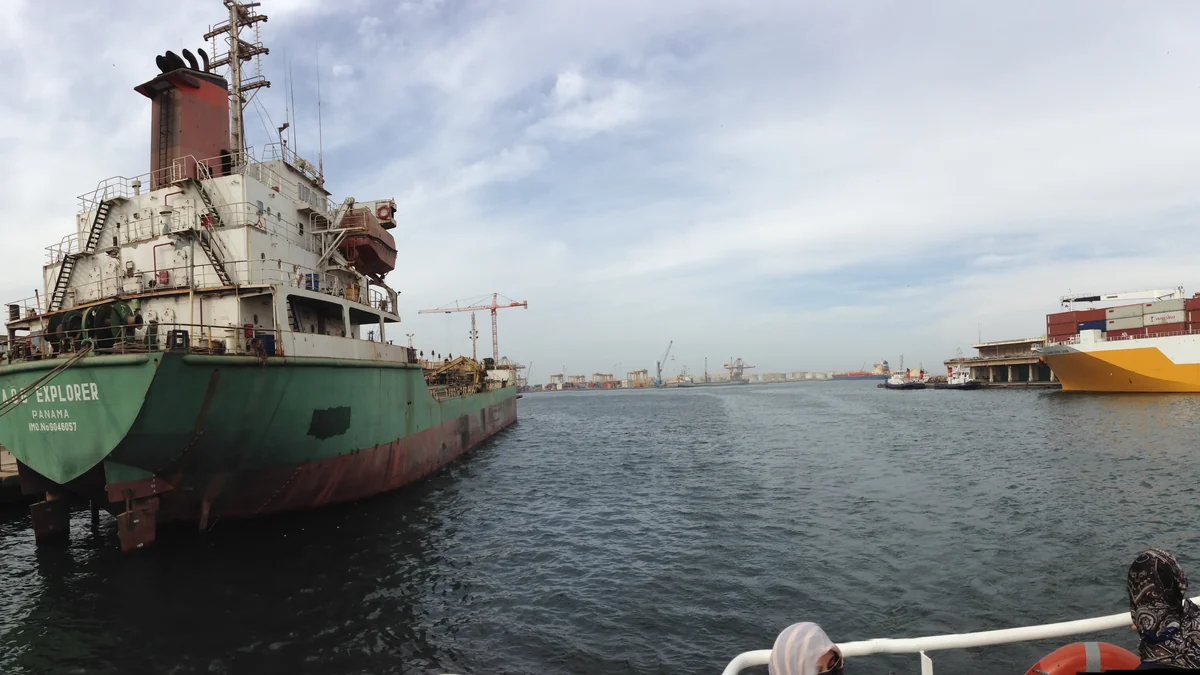
Dakar cruise port places passengers beside one of West Africa’s busiest working harbours and close to a capital that can absorb far more time than a single call allows. Cruise ships normally use Môle 1 or another assigned berth. The red pin marks Gare Maritime Internationale, a stable passenger-port reference near the Gorée ferry facilities, but the ship’s berth notice and secured exit route take precedence on the day.
The best first visit is usually built around one major choice: spend the central part of the call on Gorée Island, or stay on the Cap-Vert peninsula for museums, neighbourhoods and the African Renaissance Monument. CruisePing prefers Gorée with one compact Dakar element when the official ferry schedule aligns. Trying to add the island, several monuments, a market and the western headlands produces too many traffic and boarding dependencies.
Dakar Cruise Port at a Glance
| Port name | Dakar Cruise Port |
|---|---|
| Main arrival area | Môle 1 or another assigned berth; Gare Maritime Internationale is the stable passenger-port reference |
| Cruise region | Africa |
| Country / Territory | Senegal |
| Currency | West African CFA franc (XOF) |
| Languages | French and Wolof |
| Port role | Day Call |
| Disembarkation | Berthed in a secured working harbour, normally with a shuttle or controlled route to the public side |
| Walkability | Central Dakar begins near the port, but independent walking is affected by gate position, heat and heavy traffic |
| Shuttle required | Often provided or advisable for the first port transfer |
| Main transport | Port shuttle, authorised taxi, private driver, organised tour and Dakar–Gorée ferry |
| Best first-time plan | Gorée Island plus one compact Plateau or museum stop, subject to the ferry timetable |
| Main caution | Do not combine a fixed ferry return with a long western Dakar circuit and a late cross-city drive |
Where Cruise Ships Arrive in Dakar
The Port Autonome de Dakar cruise information confirms scheduled cruise calls, but individual ships can be assigned different positions within the commercial harbour. Môle 1 is the familiar passenger area. Gangway-to-gate distance, coach staging and whether walking is allowed can therefore change between calls. Read the ship’s daily programme before arranging a roadside pickup.
Gare Maritime Internationale is useful as a map reference because it lies in the established passenger district near central Plateau and the Gorée ferry operation. It should not be treated as a promise that the gangway will be outside that building. A private driver needs the vessel name, berth or official meeting point, and a telephone number that works without mobile data.
The First Thirty Minutes Determine the Day
Leave the ship with identification, small cash, sun protection and the ferry or driver details already downloaded. Port security and coach movements can make an apparently short exit slow. Passengers heading to Gorée should go directly to the ferry terminal rather than stopping for shopping, because missing one departure can remove a large part of the island visit.
Passengers taking a city tour should agree whether the driver is waiting inside the permitted port area or beyond the gate. Photograph the exact return point and note any shuttle frequency. Dakar is not a port where following another cruise group is reliable: different ships may use different exits, and coaches can return to separate access controls.
Gorée Island Is the Strongest First-Time Priority
The UNESCO listing for Gorée Island recognises a place whose surviving buildings, museums, streets and memorial landscape carry difficult histories connected with colonial rule and the slave trade. The island is also a lived community. Allow time to walk slowly, listen to qualified interpretation and recognise that the visit is more substantial than a sequence of photographs.
The official Senegal tourism pages describe Gorée’s museums, galleries and historic setting. A guide is valuable for context, particularly when several sites are open and time is limited. CruisePing would not rush straight from the landing to one famous doorway and then back to the boat; the lanes, viewpoints and wider historical setting are part of the reason to make the crossing.
Use the Official Ferry Timetable as a Hard Boundary
The Port of Dakar’s Dakar–Gorée ferry timetable should be checked close to arrival. Weekday, Sunday and holiday patterns differ, and a cruise call may begin after the most convenient outbound sailing. Queueing, ticket purchase and security add time on both sides. The return chosen on paper should not be the final ferry that could theoretically reach the ship.
Independent travel works best when the first practical ferry leaves soon after disembarkation and at least one later return remains available as protection. A short call, delayed clearance or reduced-mobility requirement shifts the balance towards a ship excursion. The excursion does not make the sea crossing faster, but it places ferry and port coordination with an operator that can communicate with the vessel.
A Realistic Gorée Visit Needs a Sequence
A useful island visit begins with a confirmed return sailing, then groups the principal historic sites before leaving time for the waterfront and lanes. Opening patterns can vary, so ask the guide what is accessible before committing to a route. Carry water and modest clothing; shade exists, but the quays and some streets are exposed.
Allow for steps on and off the ferry, changes in level and cobbled or uneven surfaces. A passenger who can manage the crossing but not a long island circuit should arrange a shorter guided route rather than treating every museum as mandatory. The visit remains worthwhile when it is focused. What weakens it is spending most of the available time in ticket queues and souvenir negotiations.
The Best City Alternative Is Culture, Not Distance
Dakar’s city option should start near the port. The Museum of Black Civilisations is a substantial cultural anchor close to the railway-station and Plateau area. Pair it with selected civic architecture, a meal or a carefully chosen market rather than immediately driving to the far western peninsula.
This route is better than Gorée when the ferry timing is poor, the sea is uncomfortable or the call is too short to protect the return. It is also the stronger choice for visitors who want air-conditioned museum time or fewer boarding steps. Check current opening arrangements and do not assume every museum opens early enough for the first hour ashore.
Plateau Can Be Walked, but the Route Needs Editing
Central Dakar contains broad avenues, older administrative buildings, commercial streets, the railway-station district and busy public spaces. A walk can be rewarding once passengers are outside the controlled harbour. Heat, crossings and changing pavement quality mean that a short, guided circuit often works better than an ambitious self-led loop built from a city map.
Choose two or three anchors and leave room for street life rather than collecting landmarks. Independence Square can be part of the orientation, but it is not a complete port day. The value lies in understanding how the colonial centre, modern capital and working harbour meet. Keep phones discreet in crowds and ask before photographing people or sensitive buildings.
Markets Need a Purpose and a Guide
Dakar’s markets offer textiles, food, household goods and a direct view of daily commerce, but they are crowded and can involve persistent selling. Decide whether the aim is a short cultural walk, a specific purchase or food exploration. A guide helps with direction and price expectations; a large cruise group can otherwise spend much of the stop regrouping.
Carry only the cash needed, keep valuables secure and agree a fixed meeting point outside the densest lanes. CruisePing prefers a limited market visit after a museum or city orientation, not a long stop inserted between a ferry and the port. When the schedule is tight, use a smaller craft outlet or gallery rather than relying on a driver to recover lost time in traffic.
African Renaissance and Mamelles Form a Separate Circuit
The African Renaissance Monument and the Mamelles area lie west of central Dakar. They suit passengers who want city views, modern symbolism and a broader peninsula drive, but the route competes directly with Gorée for time. Traffic can vary sharply, and the monument’s steps are a genuine mobility consideration even when a vehicle reaches the site.
Treat the western circuit as the main city excursion, perhaps with a coastal viewpoint or selected neighbourhood stop. Do not add it late after an extended island visit. A private driver gives more control than a large coach, provided the itinerary has a clear turnaround time. The driver should remove optional stops before the return margin, not after congestion has already developed.
Ngor and the Coast Are Better for Repeat Visitors
Dakar’s Atlantic side has beaches, surf areas and the pirogue crossing to Ngor Island. These choices reveal a different side of the capital, but they add another small-boat or cross-city dependency. They make most sense for a repeat visitor, an overnight call or a cruise itinerary that already includes Gorée through an organised programme.
Beach conditions, currents, boat standards and changing facilities must be checked locally. A cruise passenger should not accept an unplanned pirogue trip from a tout without confirming lifejackets and the return. For a first call, Gorée or the cultural city route offers a clearer sense of place with fewer loosely controlled elements.
Lake Retba Is No Longer the Automatic Excursion
Lake Retba, often marketed as the Pink Lake, lies outside central Dakar and requires a substantial road commitment. Its colour and water conditions have varied, and the name can create expectations that are not met on the day. The excursion can still include landscape, salt-working history and communities, but it should be sold honestly rather than as a guaranteed vivid-pink photograph.
Choose it only as a dedicated organised route with current local information, a defined return time and no Gorée crossing. CruisePing would not prioritise Lake Retba over Gorée for a first visit. The distance is difficult to justify when the ship is alongside a capital with major heritage and cultural choices close to the harbour.
Independent, Private or Ship Tour?
Independent Gorée is practical for confident passengers when clearance is early, the timetable is favourable and mobility is good. Buy the official ferry ticket, identify two acceptable return sailings and preserve time for port security. A private city driver is the most flexible way to combine Plateau with the western monument circuit, but the booking must state the port meeting point and final return.
A ship excursion is the best choice for a short call, a delayed arrival, a tightly timed ferry, significant mobility needs or a route extending beyond central Dakar. It is also sensible when several ships are in port. The weak option is an informal driver promising Gorée, monuments, markets and Lake Retba in one day; that proposal ignores ferry and traffic constraints.
Mobility Planning Must Cover Ferry and Street Surfaces
Ask separately about gangway assistance, port shuttle access, ferry boarding and the island route. A coach described as accessible does not automatically solve steps at the ferry or uneven lanes on Gorée. Manual wheelchairs may need help, while powered chairs require confirmation of weight, ramps and safe storage. Heat can also reduce walking tolerance quickly.
For reduced mobility, a museum-led city route with an authorised vehicle is often more reliable than the island. When Gorée is a priority, use the cruise line or a specialist operator and request exact boarding information in writing. Keep medication and water with the passenger, not in a coach compartment that may be inaccessible during queues.
Food Works Best as Part of One Route
Senegalese dishes such as thieboudienne deserve time, but lunch should support the day rather than divide it. On Gorée, choose a restaurant that understands the return ferry; in central Dakar, eat near the museum or Plateau circuit. Confirm price, included drinks and payment method before a group orders.
Avoid a long beachfront meal after a western peninsula tour when the port return still crosses busy roads. Passengers with allergies should carry a translated note in French and ask about stocks, peanuts and shared preparation. Bottled or reliably treated water is the conservative choice, and hand hygiene matters after market visits.
Money, Connectivity and Negotiation
The West African CFA franc is the practical currency for small purchases, ferry extras and market transactions. Larger established operators may accept cards, but terminals and small vendors can lose connectivity. Obtain cash from a reputable source and avoid displaying a large amount while negotiating.
Download maps, tickets and contacts before leaving the ship. French is widely useful; Wolof phrases are appreciated, but a guide or driver should handle detailed arrangements. Agree taxi or driver prices before departure, including waiting time and port return. Keep the vessel name and local ship-agent contact on paper in case roaming fails.
Safety and Respect in a Busy Capital
Dakar is an active city rather than a managed cruise precinct. Use authorised transport, keep valuables close in crowds and follow current ship or local advice about walking routes. Persistent selling is best handled with a polite, firm refusal. Do not hand over a passport as security for a purchase or transport agreement.
Gorée and its memorial sites require respectful behaviour. Listen before photographing interiors, avoid staged or flippant poses at places connected with enslavement, and ask permission before photographing residents. This is not only etiquette; it produces a more thoughtful visit and reduces friction in a community that receives large numbers of day visitors.
Return-to-Ship Timing Should Be Built Backwards
Start with the all-aboard time, subtract the port security and shuttle allowance, then choose the city departure or Gorée ferry that preserves an additional margin. A ferry arrival beside the port is not the same as standing at the gangway. Queues, coach loading and a changed gate can use the remaining minutes.
For a city driver, set a non-negotiable turnaround time and ask for a traffic check before the final stop begins. For Gorée, plan to use an earlier return than the last plausible one. CruisePing prefers spending the protected final hour near Plateau or the passenger district rather than attempting one more monument across Dakar.
CruisePing Recommended Port Day
For a full daytime call with early clearance, go directly to the official Gorée ferry terminal, use the first sensible sailing and choose a return that leaves at least one later service as protection. Spend the island visit on guided historical context, the principal sites and a short unhurried walk rather than trying to enter every museum.
Back in Dakar, add one nearby element: the Museum of Black Civilisations, a compact Plateau orientation or a planned lunch. Do not drive to the African Renaissance Monument unless the ferry return is early and current traffic supports it. Keep the final transfer simple, confirm the ship’s gate or shuttle point and arrive before the largest excursion coaches.
When ferry timing is poor, replace the island with a city culture route: museum, selected Plateau streets and either a market or the western monument circuit. CruisePing recommends a licensed guide or driver for that combination because the attractions are spread across traffic corridors and the value comes from interpretation, not from seeing them through a coach window.
Weather & Best Time to Visit Dakar
| Period | Typical high | Typical low | Cruise-day implication |
|---|---|---|---|
| January–March | 25°C | 18°C | Dry, often breezy conditions; strong for walking and Gorée, with a light layer useful on the ferry. |
| April–June | 28°C | 20°C | Warmer and increasingly humid; start exposed city or monument walking early. |
| July–September | 30°C | 25°C | Wet-season heat, humidity and heavier showers can affect roads, ferry comfort and visibility. |
| October–December | 29°C | 21°C | Rain reduces and conditions become more comfortable, though heat and sun remain important. |
Use ANACIM for the current Dakar forecast and marine conditions. Wind matters most for ferry comfort and exposed quays; heavy rain matters for traffic, pavement drainage and the time needed to cross the city.
A shower does not automatically cancel Gorée, but it changes the value of long outdoor walks and can concentrate passengers under limited shelter. Keep the Museum of Black Civilisations as the strongest weather fallback. In hot, humid months, shorten market and monument stops before cutting the protected return margin.
Dakar Cruise Port FAQs
Where do cruise ships dock in Dakar?
Usually at Môle 1 or another assigned berth inside the working Port of Dakar. The ship will confirm the secured exit, shuttle and excursion meeting point.
Can I visit Gorée Island independently?
Yes, when the official ferry timetable fits comfortably, clearance is early and mobility is suitable. Choose an early protected return rather than the final possible ferry.
Is Dakar walkable from the cruise port?
Parts of Plateau are close once you leave the port, but the gate position, industrial traffic, heat and busy crossings mean a shuttle or short taxi often improves the start.
What is the best first-time Dakar excursion?
Gorée Island with one compact central Dakar stop is the strongest plan for most first-time visitors.
Can I combine Gorée with the African Renaissance Monument?
Sometimes on a long call with an early ferry return, but it should not be assumed. Cross-city traffic makes the combination fragile.
Is Lake Retba worth prioritising?
Only as a dedicated excursion with current information and realistic expectations. It is not the best first-call choice compared with Gorée and central Dakar.
Useful Official Links
- Port Autonome de Dakar cruise information
- Official Dakar–Gorée ferry timetable
- Official Dakar tourism guide
- Official Gorée tourism guide
- UNESCO Island of Gorée
- Museum of Black Civilisations guide
- ANACIM weather service
CruisePing Port Verdict
Dakar offers one of the most consequential heritage visits on a West African itinerary, but the day depends on ferry timing and disciplined editing. Gorée deserves the central block of time; the capital then needs one supporting choice rather than a hurried circuit of distant landmarks.
CruisePing recommends Gorée plus a central museum or Plateau stop when the timetable works. Choose a city-only cultural route when it does not, and use an organised excursion for short calls, mobility needs or any itinerary that asks traffic and ferry connections to work without margin.
Ready to browse our article library?
Looking beyond Dakar? Explore more ports in the Africa region, or narrow it to Senegal in particular. For cruise comparisons, planning shortcuts and value guides, head over to our main article archive.