
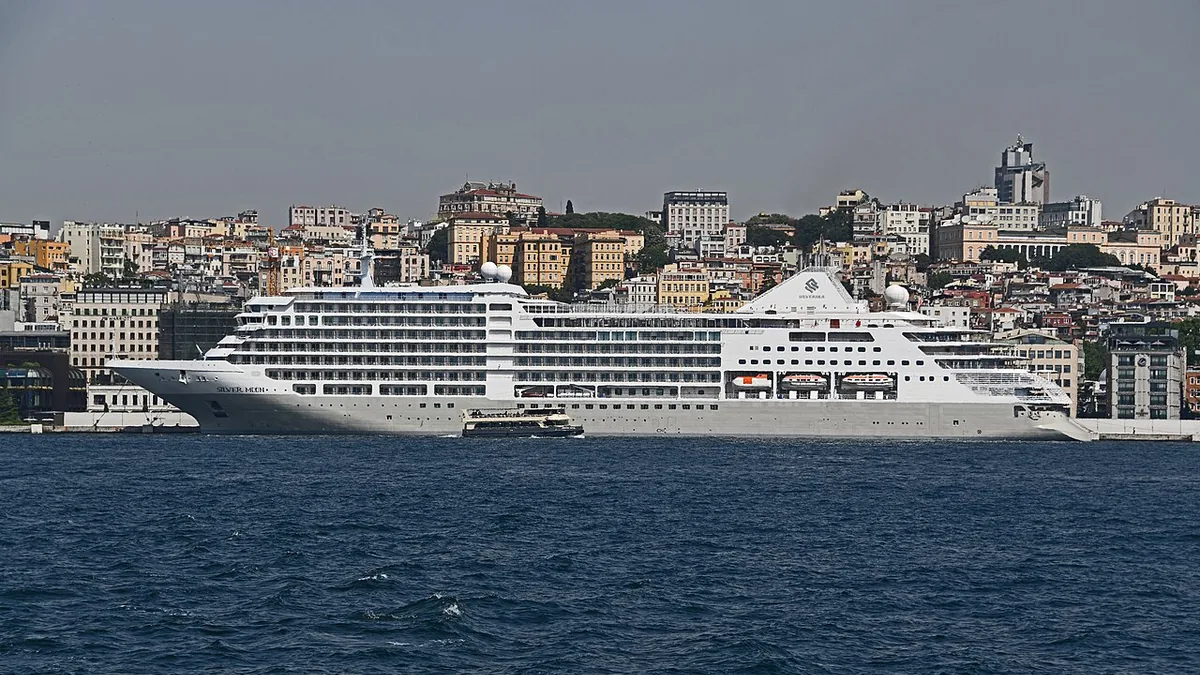
Silver Moon at a glance
| Cruise line | Silversea Cruises |
|---|---|
| Ship class or type | Muse Class |
| Entered service | 2020 |
| Last major refurbishment | No major rebuild announced |
| Gross tonnage | 40,700 GT |
| Length | 212.8 metres (698 feet) |
| Guest capacity | 596 |
| Crew | 411 |
| Passenger decks | 8 passenger decks |
| Cabins or suites | 298 all-suite accommodations |
| Accessible cabins | Accessible suites are available in selected categories |
| Dining venues | Eight dining venues |
| Bars and lounges | Dolce Vita, Panorama Lounge, Observation Lounge and pool bars |
| Pools and hot tubs | Main outdoor pool and whirlpools |
| Library | Dedicated library |
| Spa and fitness | Spa, beauty salon and fitness centre |
| Children's facilities | Very limited; the ship is designed primarily for adults |
| Adults-only facilities | No dedicated adults-only zone; the ship is strongly adult-oriented |
| Wi-Fi | Standard Wi-Fi is included for every suite; Premium Wi-Fi is available |
| UK departures or deployment | Worldwide fly-cruise deployment; occasional UK departures may be offered |
Silver Moon balances Silversea intimacy with a broader choice of restaurants and public rooms. Compare this ship with Silver Dawn guide through the fleet comparison, then check the official overview and fare inclusions before paying a deposit.
Best suited to
Food-focused couples, experienced luxury cruisers and guests who value a balanced 596-passenger ship.
Think carefully if
Families wanting extensive children’s facilities or travellers who prefer the open-air design of Nova Class.
Silver Moon needs to be judged on food and destination immersion, not merely on Silversea’s general reputation. The line’s butler service, included drinks, gratuities and suite-led accommodation establish the baseline. The real question is whether this particular ship’s scale, layout and deployment match the way you want to travel.
What makes Silver Moon different
The clearest distinction is food and destination immersion. Silver Dawn adds Otium as its defining idea, while Silver Muse has a slightly larger capacity and a refreshed but less S.A.L.T.-centred identity. That difference matters because Silversea’s ships can look deceptively similar in brochures: white hulls, all-suite accommodation and a high crew-to-guest ratio conceal meaningful differences in restaurant choice, outdoor space, expedition hardware and atmosphere.
At 596 guests, Silver Moon is small enough for personal service to feel credible rather than theatrical. It is not automatically the best ship in the fleet, however. Smaller capacity can mean fewer dining alternatives and quieter evenings; larger Silversea ships provide more choice without becoming mass-market. The right decision depends on which compromise you prefer.
Why S.A.L.T. changes the experience on Silver Moon
Silver Moon introduced Silversea’s Sea and Land Taste programme as a complete onboard idea rather than an occasional themed menu. S.A.L.T. Kitchen changes dishes with the region, S.A.L.T. Bar uses local drinks and ingredients, and S.A.L.T. Lab turns food into a participatory activity. The point is not that every session will be profound. It is that the ship creates a coherent link between destination, excursion and dinner which is stronger than on ships where local cuisine appears as a one-night special.
This makes Moon particularly persuasive in the Mediterranean and Asia, where ports have distinct food cultures and the itinerary can support market visits, tastings and regional menus. It matters less on a voyage chosen primarily for scenery or relaxation. Guests who have no interest in cookery should not pay a large premium for Moon over Dawn or Muse solely because S.A.L.T. receives prominent billing.
Silver Moon or Silver Dawn?
The sisters share their essential dimensions and much of their layout. Moon is the better choice when food and destination interpretation are central to the holiday. Dawn is stronger when Otium’s spa, sleep and in-suite wellness approach appeals more. Neither difference should override a clearly better itinerary, but it gives each ship a genuine identity rather than leaving them as interchangeable sisters.
Moon’s 596-guest size is also a useful sweet spot. It provides enough restaurants and lounges for a fortnight without creating the broad, resort-like feel of Nova Class. Guests moving up from Shadow or Whisper will notice more choice; those moving down from Nova or Ray will notice a more conventional and intimate flow.
Suites and where to book
On Silver Moon, every accommodation category is called a suite, although the practical difference between an entry category and the largest apartments is considerable. Entry-level suites provide the core Silversea service proposition, including a butler, while higher categories buy more living space, stronger views and often a better-separated bedroom and sitting area. The upgrade is worthwhile when the suite will be used heavily on a long voyage, in a cold region or during an itinerary with several sea days.
The deck plan for Silver Moon deserves as much attention as the suite category. Midship suites on lower or middle decks usually offer the most stable ride. Suites beneath the pool deck, close to service areas or near lift lobbies may experience more noise. Guests sensitive to movement should resist paying extra solely for height and instead study the deck plan around the exact suite number. Connecting doors also deserve attention because sound can travel through them.
Dining and the fare you are actually buying
Eight dining venues gives Silver Moon enough variety for its passenger count, but availability and reservation rules vary by venue. Complimentary restaurants form a strong core; selected speciality experiences may carry a fee or require early booking. In-suite dining is genuinely useful on Silversea, particularly after a long excursion or when weather makes outdoor spaces less appealing.
Silver Moon has an extensive inclusive core, but the fare should still be read item by item. The onboard core is extensive, including most drinks, gratuities and dining, but premium bottles, spa treatments, selected culinary experiences and some shore arrangements can still cost extra. On Classic voyages, standard excursions depend on the fare chosen. All-Inclusive Plus adds shore-excursion credit rather than making every tour free. Expedition voyages use a different inclusion model because planned landings and expedition activities are central to the itinerary.
Public rooms, pool and daily atmosphere
Main outdoor pool and whirlpools. Dedicated library. Public rooms aboard Silver Moon favour conversation, views and live music rather than large production shows. That makes the ship relaxing for guests who enjoy reading, lectures, drinks before dinner and unhurried meals, but subdued for anyone expecting a busy resort schedule.
The most successful Silver Moon itineraries balance serious time ashore with the ship’s calm service rhythm. Service can feel exceptionally personal because crew quickly learn preferences. The potential downside is social intensity: on a small ship, the same guests and crew are encountered repeatedly. Most Silversea passengers value that familiarity, but travellers who prefer anonymity may find a larger ship easier.
Itineraries and when this ship is the right choice
Silver Moon is used for Mediterranean, Asia, Australia and long destination-led voyages. The itinerary should carry more weight than small differences in décor. Check the number of sea days, tender ports, overnight stays and arrival times rather than comparing only headline destinations. A more expensive voyage may be better value when it includes longer calls or avoids awkward embarkation logistics.
On a Classic voyage aboard Silver Moon, shore arrangements require separate value judgement. Independent touring can work well in straightforward ports, while remote calls or short visits may justify the ship’s organised options. Compare the fare types and excursion credit against the tours you would realistically buy. Paying for a richer fare is poor value when you prefer exploring independently.
Accessibility, children and practical limitations
Silver Moon can accommodate some reduced-mobility needs, but accessibility depends on the exact suite, gangway and itinerary. Adapted suites are limited, gangways can be steep and tender operations may exclude wheelchair users. Expedition ships add Zodiac transfers and uneven landings. Written confirmation should be obtained for any essential requirement before booking flights or non-refundable arrangements.
Although children can sail on many Silver Moon voyages, the ship provides little conventional youth programming or child-centred infrastructure. A well-travelled teenager may enjoy a destination-rich itinerary; younger children who need organised activities are likely to be happier on a different cruise line. Adult atmosphere is a feature, not an accidental omission.
Silver Moon compared with the realistic alternatives
| Choose Silver Moon when | Choose another Silversea ship when |
|---|---|
| Food-focused couples, experienced luxury cruisers and guests who value a balanced 596-passenger ship. | Families wanting extensive children’s facilities or travellers who prefer the open-air design of Nova Class. |
| The itinerary, dates and suite position are strong. | A sister ship offers a clearly better route or meaningfully lower total price. |
| You value food and destination immersion. | Your priority is a different fleet strength, such as Nova-Class outdoor design or Endeavour’s polar hardware. |
CruisePing recommendation
The best Silversea choice for travellers who want the mature Muse-Class layout with the fullest expression of destination-led food. Compare the exact suite, fare and itinerary rather than accepting a generic “Silversea is Silversea” argument. The fleet is consistent in service philosophy but not interchangeable in passenger experience.