
Landing at the Barcelona cruise port prepares you for one of the most vibrant, culturally rich turnaround stops in the entire Mediterranean. As Europe’s busiest cruise hub, Barcelona serves a massive dual role: it is the primary turnaround port where thousands of passengers begin or end their holidays, as well as a vibrant day-stop for ships crossing the Western Med.
The city’s layout is uniquely cruise-friendly, but the port itself is divided into two distinct zones that confuse many travellers. If your ship docks at the modern mega-piers rather than the downtown terminal, an unplanned logistical error can leave you stranded on a scorching, industrial bridge with heavy luggage.
In this guide, we map out the transit links from the airport, recommend the best hotel quarters for cruise passengers, expose the geographic illusion of the harbour bridge, and explain how to use the local bus system to unlock a brilliant DIY day in the Gothic Quarter.
At-a-Glance Port Directory
Before booking your flights and central hotels, here are the immediate fast facts you need to know about navigating the Barcelona waterfront:
| Port Metric | Practical Specification |
| Port Role | Dual Role (Major Embarkation Hub and Day-Visit Stop) |
| Arrival Method | Docked (Typically at Moll Adossat, occasionally at the World Trade Center) |
| Local Currency | Euro (€) |
| ATM Availability | Available inside major terminals, though city center machines offer better rates |
| Distance to Centre | Roughly 2 miles (3.2 km) from the main Moll Adossat piers to the foot of Las Ramblas |
Arrival, Transit & Hotel Logistics
Navigating your way from your flight to the ship’s gangway is remarkably straightforward if you land at the city’s primary international hub.
Reaching the Port from BCN
Barcelona-El Prat Airport (BCN) is located roughly 8 miles southwest of the cruise port. If you are heading straight to the ship on embarkation morning, a licensed city taxi from the airport arrivals rank is the most efficient option. The journey takes 25 to 30 minutes and operates on a transparent, flat-rate structure zone system (typically costing around €40 to €45, including port and airport luggage supplements).
For budget travellers staying in the city first, the Aerobús shuttle runs every 5 to 10 minutes from both airport terminals straight to Plaça de Catalunya in the heart of town for less than €7.
Choosing Your Pre-Cruise Hotel
Because Barcelona is a world-class tourist destination, accommodation prices spike significantly during the summer. To maximise your cruise logistics, target hotels in these specific zones:
- The Parallel & Drassanes District: Hotels situated near Parallel or the Drassanes metro station (such as the Hotel Universal or Hotel Bcn Urbaness Hotels Del Comte) are highly favoured by cruisers. They offer a comfortable, mid-range alternative to expensive beach resorts and position you right at the transit mouth of the port.
- The Las Ramblas & Gothic Border: Staying just off the lower end of Las Ramblas puts historic cafes and markets within immediate walking distance. However, ensure your hotel features double-glazed windows, as the central historic quarters remain incredibly lively into the early hours of the morning.
The “Fake Port” Reality Check: Distance vs. Expectation
When reviewing a cruise itinerary, seeing “Barcelona” listed suggests you can simply step off the ship and immediately start exploring the city. While this is technically true if your smaller luxury ship docks at the World Trade Centre piers, it is a significant geographic illusion for the vast majority of modern cruise liners.
Nearly all mainstream mega-ships dock at Moll Adossat (Terminals A, B, C, D, and E). While you can look across the water and clearly see the famous Montjuïc hill and the statue of Christopher Columbus, you are physically separated from the city by a massive, high-clearance shipping bridge called the Pont de la Porta d’Europa.
The walk from Terminal E across this industrial bridge to the edge of the city centre is over two miles long. It lacks shade, features steep inclines to clear passing container ships, and is entirely unsuited for passengers dragging cruise luggage. Never rely on walking off the ship independently from Moll Adossat; you must utilise local transit to clear the port boundary.
Top Attractions: DIY vs. Guided Tour Showdown
Barcelona is one of the easiest ports in the world to manage completely on your own, provided you bypass the cruise line’s overpriced motorcoach transfers.
The Ultimate DIY Choice: The T3 Portbus & The Gothic Quarter
You do not need a £50 ship excursion to see Barcelona’s historic heart. The city operates a brilliant, dedicated cruise shuttle called the T3 Portbus (also known as the Cruisegus).
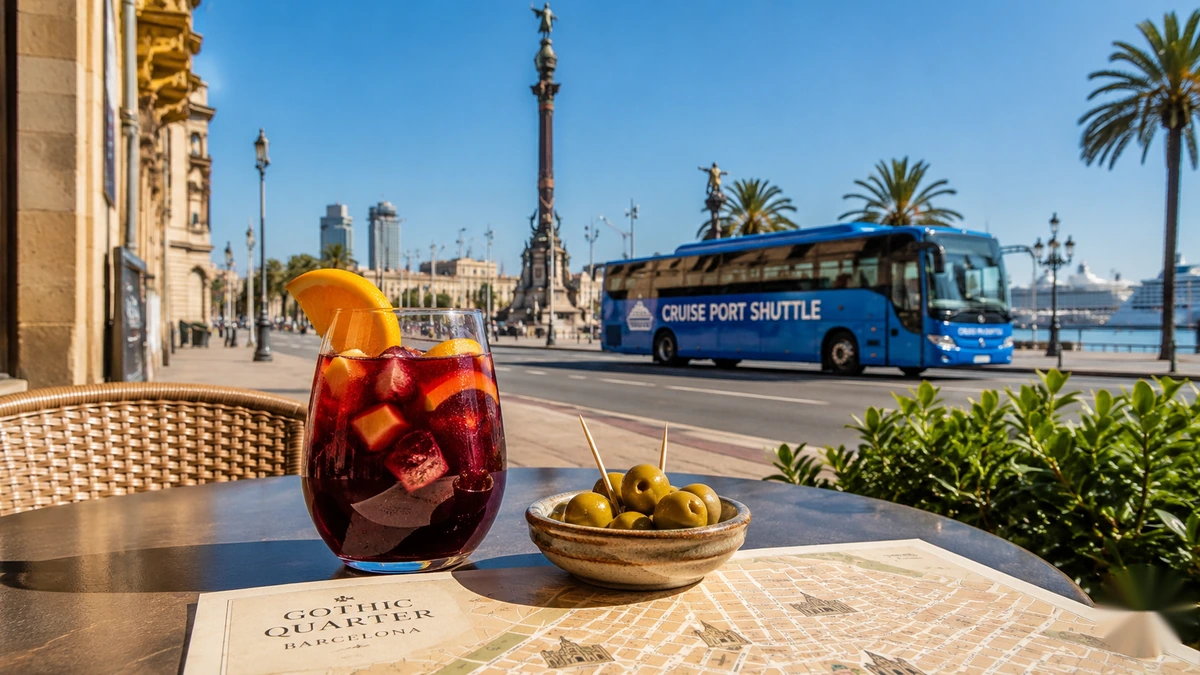
This blue shuttle bus waits immediately outside the doors of every terminal on Moll Adossat. For roughly €3 single or €4.50 for a return ticket (payable in cash or contactless to the driver), it drives you straight over the industrial bridge and drops you off at the Christopher Columbus monument (Mirador de Colom).
From this drop-off point, you are directly at the foot of Las Ramblas. You can safely wander up the famous pedestrian promenade completely DIY, explore the vibrant stalls of La Boqueria market, and turn right into the winding, car-free medieval alleys of the Gothic Quarter without spending a penny on official tours.
The Guided Tour Alternative: Sagrada Família & Montserrat
While the city centre is a DIY dream, certain landmarks require structured planning. Antoni Gaudí’s masterpiece, the Sagrada Família, operates on incredibly strict, timed entry slots that regularly sell out weeks in advance.
If you want to view the interior of the basilica or take an excursion out to the jagged mountaintop monastery of Montserrat, booking an official cruise line tour or a guaranteed skip-the-line private guide is highly recommended to ensure you clear security and return before the ship’s all-aboard time.
The Port-Side Pitfall & Value Hack
The single biggest financial trap at the pier is the Terminal Taxi Monopoly.
When a multi-thousand passenger ship finishes disembarkation at Moll Adossat, massive queues form at the official terminal taxi ranks. Private drivers and independent transfer operators frequently hover around these lines, offering weary passengers “flat-rate express rides” to nearby hotels or the train station for €30 to €40.
This is a massive overcharge. If you do not have excessive amounts of luggage, the ultimate value hack is to simply walk past the taxi queues, hop onto the T3 Portbus for a few Euros, and take the quick 5-minute ride over the bridge to the Columbus monument. The monument sits directly next to the Drassanes Metro Station, where you can catch a local subway train or easily hail a standard, metered yellow-and-black city taxi on the street for a fraction of the price.
CruisePing Port Verdict
Barcelona stands as an elite, high-value cruise destination if you respect the distance of the Moll Adossat bridge. By utilising the affordable T3 Portbus shuttle, choosing strategically placed transit hotels along Avinguda de Paral·lel, and exploring the historic Gothic lanes on foot, you can experience the absolute best of Catalonia without falling into common port-side financial traps.
Ready to browse our article library?
Looking for more practical cruising shortcuts? Head back to our main hub directory to explore comprehensive stateroom comparisons, tipping breakdowns, and value guides.