
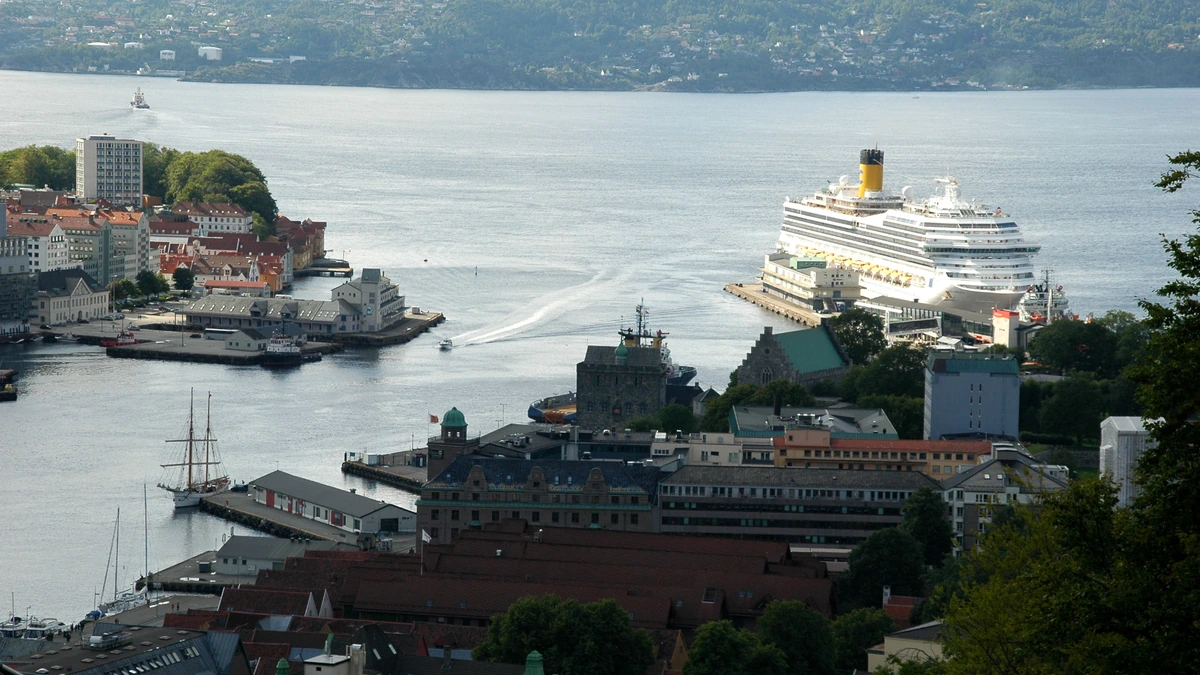
Sailing into the Bergen cruise port delivers you to the physical gateway of the legendary Norwegian fjords. Encircled by a dramatic amphitheatre of seven towering mountains and fronted by glassy, deep-water coastal channels, Bergen is a spectacular destination on Northern European and Scandinavian itineraries. For British travellers departing from home ports like Southampton or Newcastle, stepping off the gangway here offers a captivating blend of maritime heritage, medieval architecture, and vibrant Nordic culture.
The city is highly celebrated for its historic waterfront, particularly the timber-framed merchant houses of Bryggen, a protected UNESCO World Heritage site that recalls the golden age of the Hanseatic League. However, because Bergen is famously one of Europe’s wettest cities, averaging over 200 days of rainfall per year, maximising your time ashore requires a highly tactical approach.
The local transport networks operate with exceptional Scandinavian efficiency. By mastering the public light rail trams and local bus links, independent holidaymakers can easily bypass expensive cruise line transfers and navigate the city completely on their own terms, rain or shine.
In this comprehensive guide, we map out the separate pier configurations, break down the localised luggage and airport transit networks, expose the deceptive distance traps of the industrial docks, compare independent city walks with regional shore excursions, and reveal the value hacks that keep your holiday budget secure.
At-a-Glance Port Directory
Before finalising your daily walking route or purchasing mountain transport tickets, here are the essential quick facts for your arrival in Vestland:
| Port Metric | Practical Specification |
| Port Role | Dual Role (Marquee Day-Visit Stop and Primary Turnaround Fly-Cruise Hub) |
| Arrival Method | Docked (Ships berth at Skolten, Bontelabo, Jektevik, or Dokken) |
| Local Currency | Norwegian Krone (NOK), though the entire city operates on a cashless basis |
| ATM Availability | Available inside the main city rail terminals and along the central Fisketorget plaza |
| Distance to Centre | Immediate from Skolten (500 metres); up to 2 kilometres from Jektevik and Dokken |
Arrival & Pier Logistics
The marine infrastructure in Bergen is extensive, split across several distinct berthing zones situated on opposite sides of the historic city peninsula. To ensure your morning schedule is flawless, verify your ship’s designated berth via the official Port of Bergen Cruise Schedule prior to stepping off the gangway.
1. Skolten and Bontelabo Piers
These are the most coveted berthing locations for day-visiting transit guests. Situated on the northeastern flank of the harbour basin, Skolten and Bontelabo position your ship directly at the edge of the historic core.
When you clear the security gates, you are automatically placed onto a flat, paved public pavement. A scenic, 10-minute flat stroll past the medieval Rosenkrantz Tower brings you straight to the colourful timber facades of Bryggen and the bustling open-air Fish Market.
2. Jektevik and Dokken Terminals
If Bergen is serving as a turnaround home port for your itinerary, or if multiple mega-ships are visiting on the same afternoon, your vessel will likely tie up at the Jektevik or Dokken terminals. Positioned on the western side of the peninsula, these are heavy commercial and industrial cargo zones.
For safety reasons, the port authority enforces a strict ban on casual pedestrian wandering within the active container yards. Independent travellers are guided onto mandatory, complimentary port shuttle buses that carry passengers away from the cranes, dropping you off safely outside the main security gates.
Luggage & Drop-Off Logistics
For independent cruise passengers combining a Norwegian coastal voyage with an independent rail or air holiday, navigating luggage transitions in Bergen is exceptionally straightforward if you utilise the public infrastructure.
Bergen Airport, Flesland (BFO) is situated roughly 18 kilometres south of the city centre. Independent travellers can easily bridge this distance by utilising the ultra-modern, highly efficient light rail tram system operated by Skyss Public Transport.
To execute this route, walk directly out of the airport arrivals terminal into the subterranean transit vault and board the Bybanen Light Rail Line 1. The clean, air-conditioned trams depart consistently every 10 minutes, whispering across the suburban landscape to reach the central terminal at Byparken in exactly 44 minutes. A single adult ticket costs just 47 NOK (approximately £3.50) and can be purchased easily via contactless card at the platform kiosks or digitally through the Skyss mobile application.
From the Byparken terminus, the historic core and the fish market sit a flat, 5-minute walk away. If your ship is docked at the remote Jektevik terminal, you can switch at the nearby central railway station to the Bybanen Light Rail Line 2, riding it a brief two stops to the Nygård platform, which sits steps away from the terminal gates.
If you prefer private transit, official metered taxis wait along the airport terminal ranks. A direct drive from Flesland Airport to the cruise piers takes roughly 25 minutes and operates on a regulated tariff structure, typically costing between 500 NOK and 650 NOK depending on daily traffic and vehicle size.
The Railway Baggage Hack: For independent travellers arriving in the city via the scenic Oslo-to-Bergen rail link (Bergensbanen), dragging heavy suitcases across medieval cobblestones on a rainy afternoon is a major logistical chore.
To solve this, bypass the stress by utilizing the secure, coinless luggage storage lockers located inside the main concourse of theBergen Railway Station. Available for a flat daily fee payable via contactless credit cards, these lockers allow you to store your heavy bags safely, giving you the freedom to explore the city centre completely hands-free before your designated evening boarding window opens.
The “Fake Port” Reality Check: The Deceptive Industrial Peninsula Loop
When you stand on the top deck of your cruise ship as it rests alongside the pier at the Jektevik or Dokken terminals, you can look directly across the urban rooftops and see the famous spires of the city churches and the lower station of the funicular railway. Because the crisp mountain air creates exceptional visual clarity, it is easy for first-time visitors to fall into a major geographic illusion, assuming they can simply walk out of the port gates and reach the historic Bryggen quarter in less than five minutes.
This is a deceptive physical layout trap. While the straight-line distance appears minimal, the industrial docks are physically cut off from the historic centre by active railway lines, high-security custom fences, and a massive rocky ridge.
To walk from Jektevik to Bryggen independently, you cannot take a direct route. You must navigate a circuitous, 2-kilometre detour that winds through the steep, hilly streets of the university quarter, down past the National Theatre, and around the entire inner harbour basin.
Attempting this walk with heavy hand luggage or on a rainy morning can exhaust less mobile travellers before they even reach the primary historical sights. Treat Jektevik and Dokken as berths that strictly require a short motorised shuttle ride or a planned public tram transit to span the industrial buffer zone safely.
Top Attractions: DIY vs. Guided Tour Showdown
Bergen is an elite destination for independent exploration, allowing budget-conscious British cruisers to execute world-class itineraries completely on foot without relying on rigid ship-sponsored excursions.
The Ultimate DIY Choice: The Bryggen Walk & Mount Fløyen Funicular
You do not need to spend £70 per person on an official cruise line city highlights coach tour. The historic core of Bergen is remarkably compact, flat, and beautifully pedestrianised, making it an ideal destination for a completely independent DIY day out.
Start your morning by walking to Vetrlidsallmenningen, located just one block behind the vibrant open-air Fish Market, to find the lower station of the legendary Fløibanen Funicular. This historic cable railway features modern, glass-roofed carriages that climb a steep track up the mountainside, whispering through the pine forests to reach the spectacular Mount Fløyen viewpoint platform at 320 metres above sea level in just six minutes.
From the summit, you are treated to a jaw-dropping panoramic view over the entire city, the cruise berths, and the surrounding island channels. A standard return ticket costs roughly 130 NOK to 160 NOK, depending on the season. To avoid the massive queues that form when cruise line tour groups arrive, purchase your digital tickets in advance via the official Fløibanen Digital Portal so you can scan your barcode directly at the automated turnstiles, bypassing the ticket window entirely.
After descending the mountain, turn left to explore the narrow, atmospheric alleys of Bryggen. This timber merchant quarter features lean, tilting wooden buildings that house local artisanal workshops, traditional wool boutiques, and hidden courtyards that are completely free to explore at your own pace.
If the classic Bergen weather delivers a heavy downpour, you can pivot effortlessly to a high-value rain-day sanctuary. Walk along the edge of the central Lille Lungegårdsvann lake to reach the KODE Art Museums, a magnificent row of four interconnected galleries that house one of the largest collections of masterpieces by Edvard Munch anywhere in the world, offering hours of cultural shelter for a single modest admission fee.
The Guided Tour Alternative: Troldhaugen & Fantoft Stave Church
While the inner city landmarks are perfectly suited to independent public transit and walking routes, exploring the cultural treasures situated deep within the rural valleys is best handled via a structured tour framework.
Visiting Troldhaugen, the beautiful lakeside villa that served as the home of Norway’s most celebrated composer, Edvard Grieg, requires coordinated regional bus connections and a secondary 20-minute rural walk from the nearest suburban tram platform.
Similarly, if you wish to marvel at the intricate dragon-carved gables of the historic Fantoft Stave Church, navigating multiple interconnecting Skyss transit zones within a rigid port window leaves you highly exposed to unexpected schedule delays. Booking an official ship-sponsored coach excursion manages your entry permits seamlessly and guarantees your return capsule, ensuring you never risk missing the ship’s final all-aboard call due to transit bottlenecks.
The Port-Side Pitfall & Value Hack
The single biggest financial trap at this destination is the Hop-On, Hop-Off Bus and Private City Shuttle Premium.
The exact moment you pass through the outer security gates at either Skolten or Jektevik, you will encounter a row of bright red Hop-On, Hop-Off sightseeing buses alongside private cruise line shuttle coaches. Onboard excursion teams often emphasise the distance to the city and heavily promote these transfers, charging up to £20 to £25 per person for a return ticket.
Because the city centre is actually right on your doorstep or easily accessible via the public light rail, paying these rates represents a massive, unnecessary cruise passenger premium.
Independent holidaymakers can easily protect their budget by rejecting these commercial transport bubbles and using the local public transit app.
Simply use your smartphone to download the official Skyss Billett App or use a contactless bank card straight at the pier platform kiosks to purchase a 24-Hour Public Transport Pass for just 105 NOK (approximately £8.00). This digital pass delivers completely unlimited, unrestricted travel across the entire Bybanen light rail network and all local Skyss city buses. It fully covers your transit from the Nygård gate terminal, any city bus loops you wish to execute to the historic standard windmills or outer parks, and your return journey to the ship hull, allowing you to travel like a local for pennies.
Actionable Solo Embarkation Checklist
To guarantee a seamless, highly organised day exploring the capital of the fjords, integrate this specific timeline into your departure day schedule:
- Download the Skyss App Early: Secure the official Skyss Billett application on your smartphone while connected to your home Wi-Fi network, ensuring your payment card is verified before you clear the ship’s gangway.
- Pre-Book the Funicular Slot: Check the weather forecast on embarkation morning and immediately book your digital Fløibanen ticket online to bypass the massive shoreside queues at the ticket booths.
- Pack a Compact Umbrella and Shell Jacket: Do not rely on local souvenir shops for wet-weather gear; pack a high-quality, windproof waterproof jacket and a compact umbrella inside your daypack to stay comfortable during sudden downpours.
- Observe the Cashless Rule: Bergen is a completely cashless society; every public light rail kiosk, Fish Market stall, and museum ticket counter strictly requires contactless bank cards or smart devices.
- Verify Your Departure Terminal Room: Double-check your cruise ticketing documents on the eve of arrival to confirm whether your ship departs from Skolten or Jektevik, ensuring your return taxi or light rail route targets the correct side of the city peninsula.
CruisePing Port Verdict
The Bergen cruise port is a world-class gateway that perfectly rewards independent, budget-conscious British travellers who understand how to leverage the city’s brilliant infrastructure. By simply rejecting the expensive commercial tour buses at the pier, using the €3.50 public Bybanen light rail lines, pre-booking your Mount Fløyen funicular passes online, and embracing the historic rain-day museums, you can immerse yourself in the absolute best of ancient Norway completely on your own terms.
Ready to browse our article library?
Looking for more practical cruising shortcuts? Head back to our main hub directory to explore comprehensive stateroom comparisons, tipping breakdowns, and value guides.