
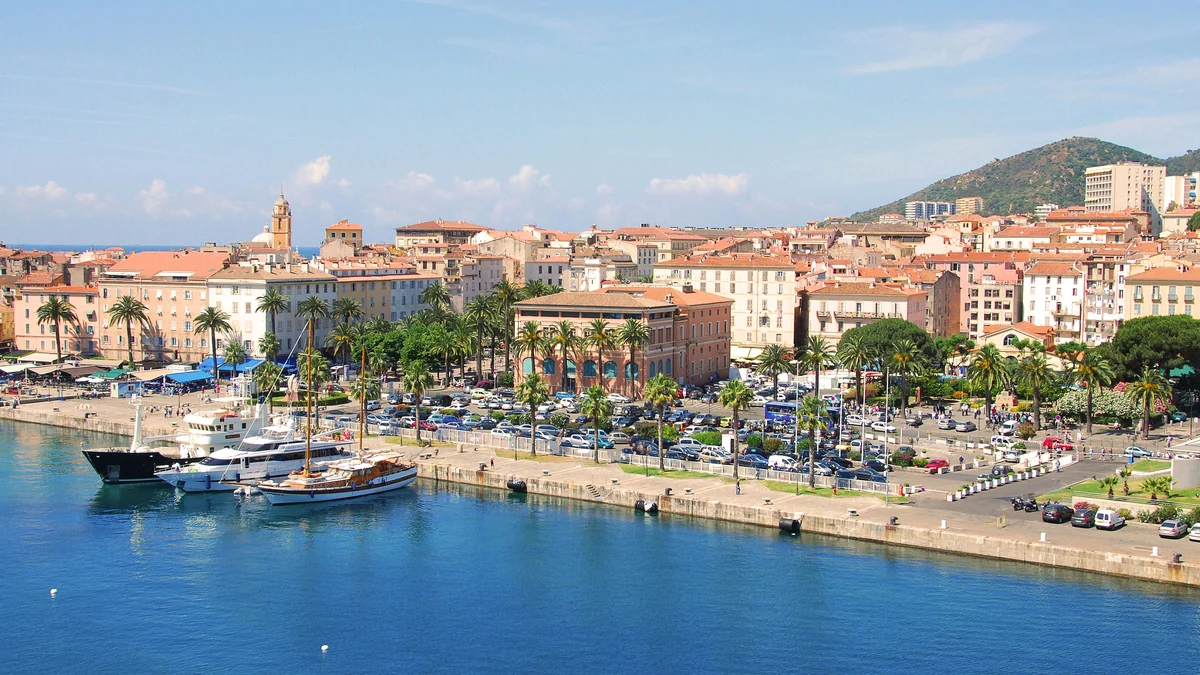
Ajaccio cruise port is one of the easier Mediterranean calls to organise independently. Ships normally berth or tender close to the Corsican capital’s waterfront, and the historic centre begins almost immediately behind the harbour. Maison Bonaparte, the cathedral, Place Foch, the market and the Fesch museum can all fit into a relaxed walking route, while Saint-François beach provides an unusually convenient swim beside the old town.
The harder choice is whether to leave central Ajaccio. The Sanguinaires coast and Pointe de la Parata are close enough to add without surrendering the whole day, but rural Corsica, Cargèse and the Prunelli gorges demand a proper road excursion. For a first visit, the strongest plan is usually Napoleon and the old town in the morning, followed by the Parata headland or the beach. That combination uses Ajaccio’s excellent location and avoids spending a short island call behind a coach window.
Ajaccio Cruise Port at a Glance
| Port name | Ajaccio Cruise Port |
|---|---|
| Main arrival area | Commercial harbour beside central Ajaccio; some calls may tender |
| Cruise region | Mediterranean |
| Country / Territory | France |
| Currency | Euro (EUR) |
| Languages | French and Corsican; English is common in visitor businesses |
| Port role | Day Call |
| Disembarkation | Usually docked, with tendering possible on some calls |
| Walkability | High in the centre; moderate on longer waterfront routes |
| Shuttle required | Normally no for the historic centre |
| Main transport | Walking, local bus, taxi, tourist road train, boat and organised excursion |
| Best first-time plan | Maison Bonaparte, old town, Fesch museum or market, then Pointe de la Parata |
| Main caution | Museum opening days, summer heat and allowing a firm return margin from coastal or mountain excursions |
Weather & Best Time to Visit Ajaccio
January to March
Typical high: 13–16°C
Typical low: 5–8°C
Rain / conditions: Cool, changeable and sometimes windy, with regular rain and quieter visitor services.
April to June
Typical high: 18–27°C
Typical low: 9–17°C
Rain / conditions: Mild to warm, increasingly dry and well suited to walking before the strongest summer heat.
July to September
Typical high: 27–31°C
Typical low: 18–21°C
Rain / conditions: Hot, bright and dry, with intense sun on exposed streets and busy beaches.
October to December
Typical high: 14–24°C
Typical low: 7–16°C
Rain / conditions: Warm early autumn can give way to wetter, stormier conditions later in the season.
Weather guide: CruisePing summary based on NASA POWER climate data for Ajaccio and western Corsica. Check the latest Météo-France forecast before the call.
Ajaccio can feel much hotter than the air-temperature figure when the sun reflects from pale stone and the harbour. In July and August, use the first hours for Maison Bonaparte, the Fesch museum or the uphill sections around the citadel, then move to the coast. Wind matters if your ship tenders or if you have booked a small-boat trip; a rough sea can change both without making the central walking day any less worthwhile.
Where Cruise Passengers Come Ashore
The Port of Ajaccio occupies the waterfront immediately beside the city. The port’s cruise information emphasises Ajaccio’s central position, and that is the practical advantage passengers notice first: after clearing the terminal or tender landing, you are not facing a long transfer to the destination named on the itinerary.
Berthing is ship-specific. Many cruise calls dock in the commercial harbour, while others may anchor and tender. Follow the ship’s instructions rather than assuming the procedure from a previous visit. Tender passengers should record the last boat time; docked passengers should note which harbour gate is being used, because the waterfront is long enough for a wrong turn to consume useful minutes at the end of the day.
From the usual arrival area, Place Foch and the old-town streets are only a short walk. Maison Bonaparte and the cathedral sit within the compact historic quarter, the Fesch museum is slightly north of the central square, and Saint-François beach begins beyond the citadel. This layout makes it sensible to postpone any taxi or bus until after the essential central sights rather than leaving the port immediately.
The waterfront is busy with ferries, local traffic, excursion coaches and passengers crossing between ship and town. The route itself is straightforward, but keep to marked pedestrian paths and allow extra time when a ferry is loading. Ajaccio is not a port where you need a shuttle to find civilisation; it is a port where an over-ambitious excursion can make you overlook the city at the gangway.
Understanding Ajaccio: Napoleon, Corsica and the Modern Capital
Ajaccio’s visitor story is inseparable from Napoleon Bonaparte, who was born here in 1769, yet the city works better when he is treated as one layer rather than the whole destination. The old quarter preserves family associations, churches and narrow streets, while the nineteenth-century city expanded along broad avenues and civic spaces. The harbour, market and beaches reveal a living Corsican capital rather than a historical set built around one famous name.
The best-known Napoleon site is the Bonaparte family house. It is relatively small, so admission control, security and room capacity can create a queue out of proportion to the length of the visit. Check the current arrangements through the official Ajaccio tourism information and avoid building the entire day around a fixed assumption that every room will be open. Even when entry is delayed, the surrounding old town and cathedral remain worthwhile.
The Palais Fesch gives Ajaccio a second serious cultural anchor. Its collection is particularly associated with Italian painting and the legacy of Cardinal Joseph Fesch, Napoleon’s maternal uncle. The museum is larger than Maison Bonaparte and rewards visitors who actually want art rather than simply another Bonaparte photograph. Choosing one museum well is usually better than rushing through both because a guidebook lists them together.
Corsican identity is visible in language, food, flags, music and the island’s relationship with mainland France. Visitors should avoid reducing the place to “French with better beaches” or treating every Corsican product as a souvenir version of Provence. Market stalls, charcuterie, cheeses, chestnut products and local wines make more sense when viewed as parts of the island’s mountain and pastoral culture.
A Practical Walking Route through Central Ajaccio
Start at Place Foch, the palm-lined square between the harbour and old town. It is a useful orientation point, often lively in the morning, and close to the market area. From here, enter the lanes around Rue Saint-Charles for Maison Bonaparte, then continue to Ajaccio Cathedral. The distances are short enough to adapt the order if one site has a queue or late opening.
The cathedral is modest in scale compared with grand mainland churches, but it matters to Ajaccio’s Napoleon story and gives the old-town route a natural pause. Dress with ordinary respect if a service is taking place. From the cathedral, the seafront and Saint-François beach are close, while the citadel occupies the headland between the beach and harbour. Access to the citadel itself can be restricted or event-dependent, so do not assume that every wall or internal area is open to casual visitors.
Return through the lower streets towards Place de Gaulle and the newer centre. The square, statues and surrounding cafés connect the compact old quarter with Ajaccio’s wider urban life. Continue north for the Palais Fesch if art is a priority, or remain around the market and harbour for a lighter visit. The route is flexible because no single leg traps you far from the ship.
For passengers with limited walking tolerance, a tourist road train or local sightseeing vehicle may provide an overview and reach viewpoints beyond the centre, but routes, durations and stop policies vary. Ask whether the vehicle permits passengers to leave and rejoin, or whether it is a continuous circuit. A narrated loop can complement a short walk; it should not be assumed to replace the intimacy of the old-town streets.
Pointe de la Parata and the Sanguinaires Coast
The most useful extension beyond central Ajaccio is the road west to Pointe de la Parata. The route follows the shore towards the Sanguinaires Islands, a chain of dark rocks and islets that becomes especially dramatic in clear light. At the headland, paths and viewpoints reveal a much wilder coast than the urban beach beside the port.
Local buses, taxis, sightseeing vehicles and excursions may all serve the area, but the day’s timetable should be checked rather than copied from an old blog. A taxi is the simplest choice for two to four people who want control over the return. Agree whether the driver will wait, return at a set time or leave you to find another vehicle. Mobile reception is not a substitute for a confirmed collection when several ships or ferries are in town.
The Parata visit is not completely step-free. The easiest viewpoints still require some outdoor walking, while the path towards the tower includes gradients and exposed sections. Strong sun, wind and little shade can make a short map distance feel more demanding. Passengers who do not want the full walk can still enjoy coastal views from lower points or a vehicle-based tour.
Boat trips offer another perspective on the Sanguinaires coast, but they are more weather-dependent than a road visit and often use a larger portion of the call. Ask where the boat departs, whether swimming is included, how much time is actually spent underway and what happens if conditions deteriorate. Do not book a coastal cruise so tight to the final tender that one delayed return creates two linked risks.
Longer Corsican Excursions: When They Are Worth It
Ajaccio is also a gateway to western Corsica’s mountains, gorges and villages. Excursions may head towards the Prunelli valley, the Tolla area, Cargèse or scenic coastal roads. These trips can be excellent, particularly for repeat visitors, but they are fundamentally different from the easy central day: narrow roads, bends and viewpoint stops make journey times less predictable than the distance suggests.
Cargèse combines coastal scenery with a distinctive history and churches associated with Greek settlers. It is a reasonable organised or private excursion on a longer call, especially when paired with selected viewpoints rather than an attempt to cover half the island. The road itself is part of the experience, but passengers prone to motion sickness should not underestimate repeated bends.
Mountain routes towards Prunelli or inland villages reveal Corsica’s scale and topography. Choose them when landscape is the main aim and the call is long enough to preserve a return buffer. A good excursion should state the approximate door-to-door time, the number of stops and whether lunch is included. “Panoramic Corsica” can otherwise mean many hours in a coach for several brief roadside photographs.
Calanques de Piana and Porto appear in ambitious excursion descriptions, but they are a major road commitment from Ajaccio. Their scenery is exceptional; the problem is not quality but fit. For an ordinary cruise call, local Ajaccio plus the Sanguinaires coast is more balanced. Reserve the far-west route for a very long day, an organised ship excursion or a land stay where road delays do not threaten sailing.
Best Things to Do from Ajaccio Cruise Port
Maison Bonaparte
Best for: Napoleon’s family history and the city’s most famous address.
How to do it: Walk from the port early and check current opening or timed-entry arrangements.
Watch: Small rooms and queues can make the visit slower than expected.
Palais Fesch – Musée des Beaux-Arts
Best for: A substantial art collection and a broader Bonaparte family connection.
How to do it: Allow a focused museum visit rather than squeezing it between too many outdoor stops.
Watch: Weekly closing patterns and temporary gallery changes.
Ajaccio Old Town and Cathedral
Best for: A flexible, low-risk independent route beside the ship.
How to do it: Link Place Foch, Rue Saint-Charles, the cathedral and the waterfront on foot.
Watch: Some lanes are uneven and the citadel is not automatically open throughout.
Pointe de la Parata
Best for: The strongest nearby coastal landscape and Sanguinaires views.
How to do it: Use a current local bus, taxi or organised sightseeing route with a clear return plan.
Watch: Heat, exposure, gradients and seasonal transport frequency.
Saint-François Beach
Best for: An easy swim without sacrificing the centre.
How to do it: Walk beyond the citadel after sightseeing and keep valuables secure.
Watch: Limited shade, sea conditions and the need to return dressed for the port.
Corsican Mountain or Village Excursion
Best for: Repeat visitors and passengers prioritising landscape over city museums.
How to do it: Choose a controlled ship, private or small-group excursion with realistic road timings.
Watch: Winding roads and itineraries that promise too many distant stops.
CruisePing Recommended Ajaccio Port Day
Begin with the city while it is cool and uncrowded. Walk from the harbour to Place Foch, then go directly to Maison Bonaparte if it is a priority. If the queue is long, reverse the route: see the cathedral and old streets first, then return when the initial tour groups have moved on. This flexibility is one of Ajaccio’s strengths and should be used rather than standing in a line simply because it was the first item planned.
Choose either the Fesch museum or a longer market-and-waterfront pause before lunch. Art enthusiasts should give the museum enough time to justify admission. Passengers who prefer atmosphere can explore the market, taste a Corsican snack and continue towards Place de Gaulle. Do not attempt to turn every Napoleon marker into a compulsory stop; the central route is better when it includes ordinary city life.
After lunch, travel to Pointe de la Parata by a checked local bus or pre-arranged taxi. Allow time for the lower viewpoints and, if fitness and weather permit, part of the headland walk. Return to Ajaccio with at least an hour of usable margin before the ship’s deadline. That margin allows for traffic, a missed bus or the additional port process without making the day feel anxious.
Use the final period close to the harbour: coffee around Place Foch, a quick market purchase or a short spell on Saint-François beach. Passengers on a shorter call should omit Parata and keep the day entirely central. Those on a long call can add Parata comfortably, but a distant mountain excursion should replace the city plan rather than be bolted onto it.
DIY or Organised Excursion?
Ajaccio is strongly suited to independent exploration because the principal city sights are close to the port and the street pattern is forgiving. A first-time passenger who is comfortable walking can have a complete day without paying for a tour. The central route also remains resilient if the ship arrives late, rain interrupts the beach or a museum is closed.
An organised excursion earns its price when it uses the island roads: mountain valleys, Cargèse, longer coastal viewpoints or a structured food-and-wine programme. The value should come from transport, interpretation and access, not from moving passengers between sights that are already five minutes from the harbour. Read the itinerary closely and calculate how much of the advertised duration is coach time.
For Pointe de la Parata, the middle option is often best. A taxi, local sightseeing circuit or current public bus provides enough structure without turning a nearby headland into a full-day tour. Independent passengers should confirm the return before leaving; organised passengers should check whether the excursion includes time to walk or only a brief viewpoint stop.
Passengers with reduced mobility may benefit from a private vehicle that can combine the old-town edge, memorial viewpoints and the coast with minimal walking. Ask specifically where vehicles can stop, because the final approach to some sites remains pedestrian. “Panoramic” does not always mean step-free, and historic-centre access can be restricted.
Food, Shopping and Local Etiquette
Ajaccio is a good port for a simple Corsican lunch because the ship is close enough to remove the usual anxiety about dining ashore. Charcuterie, cheeses, chestnut-based products, seafood and local wines appear widely, but choose a place that serves a manageable lunch rather than a long tasting menu. In summer, terraces near the harbour can fill quickly when ferry and cruise traffic overlap.
The market near Place Foch is useful for edible gifts, although rules on bringing meat, cheese or fresh produce back through customs vary by itinerary. Ask for sealed products and keep receipts where appropriate. Corsican knives, jewellery and decorative goods differ greatly in origin and quality; a Corsican motif is not proof that an item was made on the island.
French is the main practical language, with Corsican visible on signs and in local culture. A greeting before asking a question is appreciated. Service may feel less hurried than in a large resort, especially at lunch, so tell staff politely if you have a ship deadline rather than expecting the pace to change automatically.
Beach clothing belongs on the beach, not in churches or museums. The centre is relaxed, but ordinary respect in religious sites and residential lanes is enough. Ajaccio receives many visitors yet remains a working capital; avoid blocking narrow pavements while a group listens to a guide or treating family doorways as photograph sets.
Ajaccio Cruise Port Checklist
Before leaving the ship, photograph the port gate or tender landing, confirm the final boarding time and check the current opening of Maison Bonaparte or the Fesch museum. Carry water and sun protection even if you plan only a city walk.
If travelling to Pointe de la Parata, save the official or current transport information, agree any taxi return and retain an hour of margin. For longer road excursions, take motion-sickness precautions if needed and keep the ship’s port-agent details.
Keep the final part of the day within central Ajaccio. Place Foch, the market and Saint-François beach all allow useful time without putting the ship at risk. The port’s convenience is an asset; use it to finish calmly rather than to justify one more distant stop.
Useful Official Links
Use these official and authoritative pages to check details that can change before a Ajaccio call, including arrival arrangements, transport, opening information and local access.
- Port of Ajaccio cruise information
- Port of Ajaccio cruise schedule
- Ajaccio urban and peri-urban transport
- Ajaccio tourism office
- Maison Bonaparte
- Palais Fesch Fine Arts Museum
Frequently Asked Questions
Can you walk from Ajaccio cruise port to the centre?
Yes. The usual cruise arrival area is beside central Ajaccio, and Place Foch, the old town, Maison Bonaparte and the waterfront are readily reached on foot. Follow the ship’s specific route from the berth or tender landing.
Does Ajaccio cruise port require a shuttle?
Normally not for the main city sights. A ship may still provide operational transport from a particular berth, but the destination itself is close. Transport becomes useful for Pointe de la Parata or inland Corsica.
What is the best thing to do in Ajaccio on a first visit?
Combine the old town and one Napoleon-related site with the market or Fesch museum, then add Pointe de la Parata if the call is long enough. This covers Ajaccio’s history and its coast without a major road day.
Is Maison Bonaparte worth visiting?
It is worthwhile for visitors interested in Napoleon and family history, but it is a compact house museum rather than a large palace. Check opening and admission arrangements, and do not sacrifice the whole central route to a long queue.
Can you visit the Sanguinaires Islands from a cruise ship?
Boat excursions may operate, while Pointe de la Parata gives land-based views of the islands. Boat schedules and sea conditions vary, so preserve a generous return margin and do not rely on a late independent sailing.
Is there a beach near Ajaccio cruise port?
Yes. Saint-François beach lies beside the old town beyond the citadel, making a short swim practical after sightseeing. It is an urban beach, so keep valuables secure and allow time to change before returning to the ship.
Should you take a mountain excursion from Ajaccio?
Choose one if Corsican scenery is your priority or you have visited the city before. On a first call, central Ajaccio plus the Parata coast usually provides a better balance and much less road risk.
How much return time should independent passengers allow?
For the city centre, remain close during the final hour. From Pointe de la Parata, aim to be back in Ajaccio at least an hour before the ship’s deadline; from mountain routes, use a larger margin reflecting road and port access.
CruisePing Verdict
Ajaccio succeeds because it does not force a choice between seeing something worthwhile and protecting the ship. The historic centre, Napoleon sites, museum, market and beach are all close enough to shape around the call you actually receive. If arrival is late or weather deteriorates, the day can shrink without collapsing.
The mistake is to treat convenience as permission to travel too far. Western Corsica is beautiful, but winding roads turn distant names into full commitments. For most first-time passengers, Ajaccio in the morning and Pointe de la Parata in the afternoon is the strongest use of the port: city, history, coast and enough margin to return without watching the clock at every bend.
Ready to browse our article library?
Looking beyond Ajaccio? Explore more ports in the Mediterranean region, or narrow it to France in particular. For cruise comparisons, planning shortcuts and value guides, head over to our main article archive.