
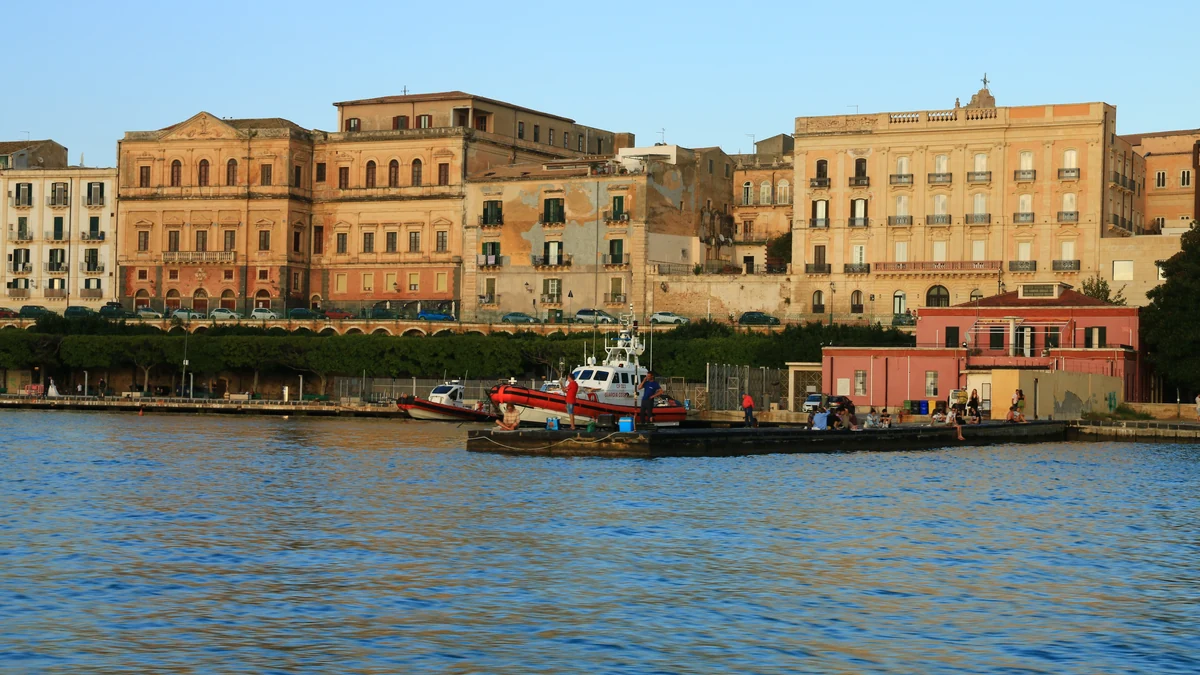
Augusta cruise port is an unusual eastern Sicily call at a large working harbour, not a polished walk-off terminal beside the island’s headline sights. The physical port is Augusta, but for most first-time passengers the strongest destination is Syracuse and its historic island of Ortigia, reached by a controlled road transfer south.
That gateway role needs a disciplined plan. Ortigia alone can fill the day with the cathedral square, lanes, waterfront and Castello Maniace area. The Neapolis Archaeological Park can be added when the call is long and transport is arranged, while Noto, Catania or Mount Etna should be treated as separate long excursions rather than items on a checklist. Local Augusta and nearby Brucoli provide a sensible fallback when the call, shuttle or road conditions do not support Syracuse.
Augusta Cruise Port at a Glance
| Port name | Augusta Cruise Port |
|---|---|
| Main arrival area | A large commercial and industrial harbour; berth varies by call |
| Cruise region | Mediterranean |
| Country / Territory | Italy |
| Currency | Euro (EUR) |
| Languages | Italian, Sicilian and some English in tourism |
| Port role | Day Call |
| Disembarkation | Docked |
| Walkability | Low from most commercial berths |
| Shuttle required | Usually or call-dependent |
| Main transport | Ship shuttle, organised coach, private driver and taxi |
| Best first-time plan | Ortigia in Syracuse, with Neapolis only if time supports it |
| Main caution | Ship-specific port access and trying to cover too much of south-east Sicily |
Weather & Best Time to Visit Augusta
January to March
Typical high: 15–19°C
Typical low: 7–11°C
Rain / conditions: Mild but changeable, with rain, wind and occasional rough coastal conditions.
April to June
Typical high: 20–30°C
Typical low: 11–20°C
Rain / conditions: Increasingly warm and bright; late spring is excellent for outdoor archaeology.
July to September
Typical high: 29–34°C
Typical low: 21–24°C
Rain / conditions: Very hot, dry and exposed, especially at Neapolis and in inland baroque towns.
October to December
Typical high: 17–28°C
Typical low: 9–20°C
Rain / conditions: Warm early autumn, followed by more frequent storms and heavy rain later.
Weather guide: CruisePing summary based on NASA POWER climate data for Augusta and Syracuse. Check the latest forecast.
Summer heat makes Neapolis the part of the day to schedule first, not the place to add after a long Ortigia lunch. Ortigia’s shaded lanes and sea breezes are more forgiving in the afternoon. Heavy rain can flood roads and make archaeological surfaces slippery, so a Syracuse old-town route is the stronger fallback than a complicated circuit through inland baroque towns.
A Rare Call at a Working Port
The Port System Authority of the Eastern Sicilian Sea manages Augusta as a major commercial harbour. Cruise activity is not the port’s dominant function, and passenger arrangements can differ substantially between calls. The authority’s passenger welcome information is therefore less useful than the ship’s specific berth and shuttle notice for deciding how the day begins.
Expect secure infrastructure, long internal distances and limited scope for independent walking from the gangway. Even when the old part of Augusta looks close on a map, the route out of an industrial port may not be permitted or pleasant. Use the ship shuttle, excursion transport or a verified private collection point rather than assuming a pavement connects the berth to town.
Before sailing, confirm whether a privately booked driver can meet at the ship, at a port gate or at a shuttle drop-off. Augusta’s harbour is extensive, and the wrong gate is not a minor mistake. Provide the operator with the ship name and date, and ask for a written meeting instruction rather than relying on “outside the terminal”.
The return needs two buffers: road time back to Augusta and movement through the port. A driver reaching the city edge at the all-aboard time is already late. Build the schedule backwards from the ship’s deadline, then choose how much of Syracuse can honestly fit.
Ortigia as the Main Gateway Choice
Ortigia is the historic heart of Syracuse and the strongest first-time destination from Augusta. Visit Sicily presents Syracuse as a city where Greek, Roman, medieval and baroque layers meet, but a cruise passenger does not need to chase every period. Ortigia’s compact island gives the best concentration of architecture, atmosphere and waterfront walking.
A good route starts around the Temple of Apollo and the market area, then moves through the lanes towards Piazza Duomo. The cathedral incorporates the structure of an ancient Greek temple, while the surrounding baroque façades turn the square into the city’s visual centre. Continue towards the Fonte Aretusa and the southern waterfront if time and heat permit.
Castello Maniace stands at Ortigia’s tip. The exterior position and sea views are worthwhile, but interior access and opening can vary. Do not make the whole day depend on one monument being open. The walk from Piazza Duomo towards the castle already reveals quieter streets, defensive edges and a different relationship with the sea.
Ortigia is pedestrian-friendly but not effortless. Stone paving can be slick, summer temperatures are high and the island is larger than it first appears. A drop-off near the entrance does not mean the cathedral, spring and castle sit side by side. Decide whether the castle is essential before walking to the far end, especially if transport is collecting from a fixed point.
Food fits naturally into the Ortigia plan. A market snack, granita, seafood lunch or café stop can add local character without turning into a separate expedition. However, table service in a busy tourist centre can be slow. Tell the restaurant when you need to leave, ask for the bill early and keep the driver’s collection location saved offline.
Adding Neapolis Without Rushing
The Neapolis Archaeological Park lies on the mainland side of Syracuse and contains the Greek Theatre, Roman Amphitheatre area and the quarry landscape associated with the Ear of Dionysius. It is not walkable as a quick extension from the far end of Ortigia during a cruise call. Transport between the two zones needs to be planned.
If archaeology is the priority, visit Neapolis first while temperatures are lower and before coach groups peak, then transfer to Ortigia for the remainder of the day. This order also protects the irreplaceable outdoor site from being dropped after a leisurely lunch. Allow time for the entrance process and for moving across a large, exposed park.
A combined private tour works when the call is long, the driver or guide controls both transfers and the group accepts a brisk but not frantic pace. A generic coach excursion may also be sensible if it clearly states how much free time remains in Ortigia. Avoid itineraries that add a third distant stop simply because the bus is already on the road.
Passengers with limited mobility should investigate current access before committing. Uneven ground, slopes and sun exposure can make Neapolis more difficult than Ortigia. A focused old-town day with a panoramic drive past the archaeological zone may provide better value than an exhausting partial visit.
Local Augusta and Brucoli as the Fallback
Augusta’s older centre occupies an island linked to the mainland, with the Spanish Gate, churches, streets and the Swabian Castle reflecting the town’s strategic maritime history. Access to individual monuments can be limited, and the urban fabric is less polished for visitors than Ortigia, but the town has genuine local interest.
A ship shuttle may deliver passengers to a practical central point. From there, a short walk can reveal the waterfront and civic centre, provided the ship confirms the permitted route. Treat the Swabian Castle as a site to verify rather than promise: its presence is important, but interior access may not align with the cruise call.
Brucoli, north of the port, offers a smaller coastal settlement and castle setting near the mouth of a canal. It is suitable for a short taxi outing, lunch or scenic stop when a long transfer feels unattractive. The value comes from a quieter local experience, not from a dense list of major monuments.
The local option is particularly useful if the ship arrives late, the port shuttle is irregular or road disruption affects Syracuse. A modest day in Augusta and Brucoli is better than spending most of a shortened call in traffic. Ask the driver to keep the route close to the port and return well ahead of the ship’s deadline.
Noto, Catania and Mount Etna
Noto is one of south-east Sicily’s great baroque towns and may appear in shore-excursion programmes from Augusta. Its streets and cathedral setting justify a visit, but it sits beyond Syracuse and creates a different day. Choose Noto as the principal destination, perhaps with a limited Ortigia stop, rather than attempting full visits to both.
Catania lies in the opposite direction and offers markets, baroque architecture and views towards Etna. It can be reached by organised road transport, yet the city is not the obvious default when Syracuse is closer and historically exceptional. Select Catania when you have already visited Syracuse or when the excursion content is unusually strong.
Mount Etna is a major inland commitment. Road time, altitude, weather, cableway or vehicle logistics and the distance back to Augusta make it appropriate for a protected ship excursion or robust private tour. Conditions at the summit area can differ completely from the port, and cloud can remove the expected views.
Do not combine Etna with a serious Syracuse visit on an ordinary call. A programme may list both names, but the practical result is often a sequence of short stops and long coach legs. The better cruise day gives one landscape or city enough time to become memorable.
Best Things to Do from Augusta Cruise Port
Ortigia, Syracuse
Best for: The strongest all-round first visit, combining architecture, lanes, food and waterfront.
How to do it: Organised transfer or private driver with a clearly agreed collection point.
Watch: The island is larger than it appears and summer heat slows the walk.
Neapolis Archaeological Park
Best for: Greek theatre, quarry landscapes and ancient Syracuse.
How to do it: Visit before Ortigia with transport connecting the two areas.
Watch: Exposure, uneven surfaces and entrance queues can consume time.
Augusta Old Town
Best for: A local, low-distance day when the call is short or transport is uncertain.
How to do it: Use the ship shuttle and verify which monuments are accessible.
Watch: The commercial port is not a walkable route into town.
Brucoli
Best for: A quiet coastal meal or short scenic taxi outing.
How to do it: Arrange a return taxi and keep it close to the ship’s schedule.
Watch: It is a modest local alternative, not a substitute for Syracuse’s depth.
Noto
Best for: Baroque architecture and passengers who already know Syracuse.
How to do it: Choose a dedicated excursion or private driver.
Watch: Pairing it with too much of Ortigia creates a rushed day.
Mount Etna
Best for: A landscape-led excursion and first experience of Sicily’s volcano.
How to do it: Use a protected ship tour or carefully managed private excursion.
Watch: Long road time, altitude weather and operational changes at the mountain.
CruisePing Recommended Port Day
Arrange transport from the correct Augusta port meeting point and go first to Neapolis only if archaeology is a major priority. Spend a focused morning there, then transfer to Ortigia and make the cathedral square, lanes and western waterfront the core of the afternoon.
For most passengers, an Ortigia-only day is even stronger. Enter near the Temple of Apollo, explore the market and central lanes, give Piazza Duomo proper time, then choose either Fonte Aretusa and the castle direction or a longer lunch. The absence of a second major site creates room to enjoy Syracuse rather than managing it.
Return to Augusta early enough for traffic and secure-port access. If the call is shortened, keep the driver local and use Augusta or Brucoli instead of forcing the original plan. The smartest gateway day changes scale before it becomes stressful.
Augusta DIY or Organised Excursion?
Pure DIY is difficult because the harbour is industrial and public transport may not begin at the passenger gate. Independent travel works best with a pre-booked driver who understands port access and has confirmed the exact collection point. Once in Ortigia, sightseeing is straightforward on foot.
An organised excursion is justified for a first visit to Syracuse, a Neapolis-and-Ortigia combination, Noto or Etna. The tour’s real value is the transfer, not merely commentary. Compare the amount of free time, the number of stops and the return protection rather than choosing the itinerary with the most famous names.
CruisePing would pay for controlled transport here. A private Syracuse transfer gives the best balance for a small group; a ship excursion is the safer choice for Etna or a complex multi-site day. Walking out of the commercial port and hoping to solve the route later is the weak option.
Building a Realistic Augusta–Syracuse Timeline
Treat the transfer as a sequence rather than one quoted drive time. Passengers first need to leave the ship, clear the secure port route, meet the shuttle or driver and exit the harbour. The road to Syracuse comes after that. At the far end, a coach may stop near a designated edge of Ortigia rather than beside Piazza Duomo, adding a walk before the sightseeing day properly begins.
For an Ortigia-only visit, a useful target is at least three unhurried hours in the historic centre after transport. That supports the Temple of Apollo area, market or lanes, Piazza Duomo, Fonte Aretusa and either the western waterfront or a proper lunch. Less time can still work, but the route should be shortened deliberately rather than completed at speed.
A Neapolis-and-Ortigia plan needs a longer call because the archaeological park and old town are separate zones. Build in admission, walking across the exposed park, the vehicle transfer between sites and the port-security return at Augusta. Ask the excursion provider for time at each site, not merely the total tour duration. When the answer leaves only a brief photo stop in Ortigia, a single-destination transfer is the better purchase.
On the return, aim for the Augusta port gate well before the ship’s final deadline. The vehicle may still need to pass security and reach the correct berth or shuttle handover point. A driver who promises arrival at the outer gate just before all-aboard has not allowed for the final port leg.
Augusta Cruise Port Checklist
- Obtain the ship-specific berth, shuttle and private-driver meeting instructions before arrival.
- Ask the driver to confirm which Augusta port gate is used for collection and return.
- Choose Ortigia alone or Neapolis plus Ortigia; do not automatically add Noto or Catania.
- Visit exposed archaeology early in hot weather and carry water.
- Save the pickup point and driver contact offline in case mobile reception is weak.
- Check current access for the Augusta Swabian Castle and other local interiors.
- Allow a road buffer and additional time to clear port security on return.
Useful Official Links
Use the Eastern Sicily Port System Authority for port context, its passenger welcome page for official services, and Visit Sicily’s Syracuse guide when planning Ortigia and Neapolis.
Augusta Cruise Port FAQ
Is Augusta a walk-off cruise port?
Usually not. Cruise ships use a large working harbour with secure and industrial areas. Expect a shuttle or organised vehicle and follow the ship’s exact access instructions.
Is Syracuse realistic from Augusta?
Yes. Syracuse is the strongest gateway destination, but road transport must be arranged. Ortigia alone is easy to explore once dropped near its entrance.
Can I visit Neapolis and Ortigia in one day?
Yes on a sufficiently long call with direct transport between them. Visit Neapolis first in hot weather and keep Ortigia as the more flexible second half.
Should I go to Noto as well?
Only if Noto is a main priority and the excursion is designed around it. Adding Noto to full visits of Neapolis and Ortigia usually produces a rushed itinerary.
What can I do close to the ship?
Augusta old town and Brucoli are the local choices. Confirm the shuttle, monument access and taxi return, because the commercial berth itself is not the sightseeing area.
Is Mount Etna a good excursion from Augusta?
It can be, but it is a long, weather-dependent road day. Use a protected ship excursion or experienced private operator and do not expect a substantial Syracuse visit as well.
CruisePing Port Verdict
Augusta should be planned as a gateway with an industrial-port beginning. Once that first transfer is solved, Ortigia provides one of Sicily’s richest cruise days and does not need to be overloaded with distant additions.
Most first-time passengers should choose Syracuse, keep the old town central and add Neapolis only when the call and energy support it. Noto and Etna are legitimate alternatives, not bonuses. The successful day is built around one excellent destination and a return that respects Augusta’s port access.
Ready to browse our article library?
Looking beyond Augusta? Explore more ports in the Mediterranean region, or narrow it to Italy in particular. For cruise comparisons, planning shortcuts and value guides, head over to our main article archive.