
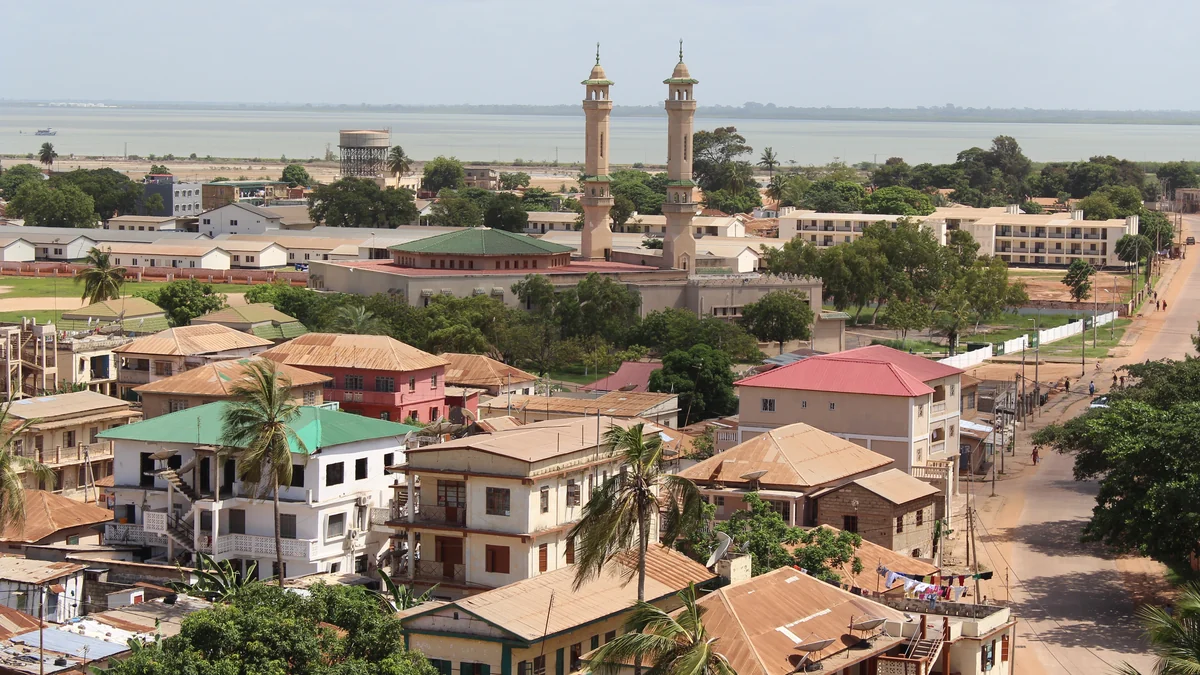
Banjul cruise port brings passengers into a commercial harbour at the mouth of the River Gambia. Ships normally berth, but the exact quay, shuttle and port gate are controlled operationally. The red pin marks the main cruise-berth reference within the Port of Banjul; it is not a public terminal where an independent driver should arrive without the ship’s access instructions.
The most dependable first-time day combines a focused look at Banjul with one nearby nature or cultural extension. CruisePing prefers the capital and Abuko Nature Reserve when a suitable guide is available. Kunta Kinteh Island and Juffureh are historically important, but they form a long road-and-boat excursion that should occupy the whole call and normally be booked through the ship or an established specialist.
Banjul Cruise Port at a Glance
| Port name | Banjul Cruise Port |
|---|---|
| Main arrival area | An assigned operational berth in the Port of Banjul; the map pin marks the principal cruise-berth reference |
| Cruise region | Africa |
| Country / Territory | Gambia |
| Currency | Gambian dalasi (GMD) |
| Languages | English, Mandinka, Wolof and Fula |
| Port role | Day Call |
| Disembarkation | Berthed in a secured working port, normally with controlled transport or shuttle movement |
| Walkability | Central Banjul is close, but walking from the berth is not consistently practical or comfortable |
| Shuttle required | Usually required or strongly advisable for the port exit and first transfer |
| Main transport | Port shuttle, authorised taxi, private driver and organised tour |
| Best first-time plan | Compact Banjul orientation followed by Abuko Nature Reserve or another nearby guided stop |
| Main caution | Treat Kunta Kinteh Island as a full-day route with a long return chain, not as an add-on to the city |
Where Cruise Ships Arrive in Banjul
The Gambia Ports Authority overview places the Port of Banjul on the River Gambia estuary and describes a national commercial gateway rather than a purpose-built cruise precinct. Cruise vessels use an operational berth according to traffic, draught and port requirements. Containers, cargo handling and security controls remain part of the arrival.
The map pin is therefore a stable berth-area reference, not a guarantee of the exact gangway. Passengers should follow the ship’s shuttle and transport instructions. A private guide needs the vessel name and public meeting point; being told simply to wait “at Banjul port” is not precise enough for a secured working harbour.
Do Not Judge the Transfer by Straight-Line Distance
Central Banjul lies close to the harbour, but passengers may first travel through the port estate to a controlled gate. Heat, coach movements and uneven road edges make casual walking less attractive than the map suggests. Ask whether the shuttle continues to a city meeting point or stops only outside security.
Photograph the gate or shuttle stop used on the outward journey. Port arrangements can change while the ship is alongside, particularly when cargo movements affect access. Keep the driver’s number and the ship agent’s contact offline. The final return should target the authorised entrance, not a pin dropped at the centre of Banjul.
Banjul Works Best as a Compact Capital Visit
Banjul is low-rise, busy and relatively small. Its value comes from the National Museum, market streets, religious buildings, civic landmarks and river setting rather than a long list of monumental attractions. A guide can connect these places to Gambian history and contemporary life while keeping the walk manageable in heat.
The National Centre for Arts and Culture is responsible for museums, monuments and cultural heritage. Check which sites are open on the call date, because a closed museum changes the balance of a city-only plan. A short orientation should leave enough time to notice the capital rather than moving directly from one coach stop to another.
The National Museum Adds Essential Context
The Gambia National Museum is the strongest indoor cultural anchor in Banjul. Exhibits and interpretation provide a foundation for understanding the country’s peoples, political history, material culture and relationship with the river. It is especially useful before a wider heritage excursion because it prevents distant sites from being reduced to a single story.
Current monument and museum charges can be checked through the NCAC entry-fee information. Opening and payment arrangements may still change, so a guide should confirm them before the group leaves the port. Allow enough time to read selected displays; using the museum only as a ten-minute comfort stop wastes its main contribution.
Albert Market Is Worth a Controlled Visit
Albert Market and its surrounding streets provide colour, food, textiles, household goods and concentrated city life. They also bring crowding, narrow passages, uneven footing and persistent offers from sellers. Enter with a clear purpose and agree exactly where the group will meet if anyone becomes separated.
A local guide helps with direction and respectful negotiation. Carry a small amount of dalasi, keep phones and wallets secure and ask before photographing traders. CruisePing would limit the market stop rather than remove it entirely: twenty focused minutes can add more understanding than an hour of pressured shopping that delays the main excursion.
Arch 22 Is a Viewpoint, Not the Whole Day
Arch 22 marks the road entrance to Banjul and offers a broad perspective over the low-rise capital and river environment when access is available. Steps and lift reliability need checking, while haze can reduce distant views. The monument works best as an orientation point at the start or end of a city circuit.
Do not let a coach schedule turn it into a lengthy souvenir halt. Passengers with reduced mobility can still use the surrounding stop without climbing. A guide should explain the political context and current meaning rather than presenting the structure only as a photography platform.
Abuko Nature Reserve Is the Strongest Nearby Extension
The Gambian environment ministry describes Abuko Nature Reserve as a protected gallery-forest area about 25 kilometres from Banjul. Its forest, pools, birds and smaller wildlife offer a meaningful contrast with the port and capital without requiring the full-day river journey associated with inland heritage routes.
Wildlife is never guaranteed, and Abuko should not be marketed like an East African safari. The value lies in forest habitat, birdlife and guided observation. Early or later visits can be more productive than the hottest middle hours, but a cruise call may dictate timing. Take water, insect protection and closed footwear, and ask how much of the route is shaded or uneven.
Choose a Guide Who Understands Nature, Not Just Transport
A driver who waits at the entrance is not the same as a trained nature guide. Ask who will lead the walk, how long it lasts and whether binoculars are available. Large noisy groups reduce the chance of seeing wildlife and can make narrow paths uncomfortable. A smaller vehicle-and-guide arrangement is often worth the additional cost.
CruisePing recommends Abuko after a compact Banjul orientation, with optional stops removed if the ship clears late. The return should begin before traffic pressure builds around the urban corridor. Do not add a distant beach simply because the driver says it is on the way; every extra stop reduces the time available for patient wildlife observation.
Kunta Kinteh Island Is a Full Heritage Commitment
Kunta Kinteh Island and Related Sites is a UNESCO World Heritage property extending beyond the small island to connected places along the River Gambia. The history includes European trading posts, colonial rivalry, enslavement and resistance. A responsible visit needs interpretation across the wider landscape, not only a brief boat photograph of ruins.
The NCAC monuments and sites information identifies the island and related heritage within the national cultural network. From Banjul, reaching the North Bank sites normally involves a substantial road or ferry component and then a local boat. The exact chain varies by operator, but it is long enough that the excursion should be the day’s central purpose.
Why the Roots Route Should Usually Be Ship Organised
The difficulty is not a single long drive. It is the sequence of port clearance, urban traffic, river crossing or road transfer, site visits, local boat operation and the entire return in reverse. A delay at any stage can consume the margin. Communication coverage and backup transport also matter away from Banjul.
A ship excursion or established cruise specialist is the sensible choice because the operator can coordinate vehicles, boat and heritage access while communicating with the vessel. Independent travellers should attempt the route only with a highly reliable local company and a written conservative programme. CruisePing would never combine Kunta Kinteh Island with Abuko and a full Banjul tour.
Heritage Interpretation Must Be Historically Careful
The river sites are often discussed through popular family narratives as well as documented regional history. A good guide distinguishes evidence, oral tradition and later cultural memory without dismissing their different significance. Choose an operator that works with recognised sites and local communities rather than offering theatrical claims designed for cruise passengers.
Photography should be respectful at memorial and museum spaces. Ask before photographing residents, guides or ceremonies. Buy locally made work when it genuinely supports the community, but do not allow shopping commissions to displace the time required for the historical visit.
Bakau and Kachikally Are a Different Kind of Alternative
Bakau lies outside Banjul and can be combined with selected coastal or cultural stops. Kachikally is known for its sacred pool and living cultural importance, but visitors should approach it as a community and religious site rather than a novelty attraction. Follow local rules, dress respectfully and use a guide who can explain appropriate behaviour.
This route can replace Abuko for passengers more interested in cultural practice than forest walking. It should not become a hurried collection of animal encounters and markets. Ask exactly what the visit includes and whether any wildlife interaction meets acceptable welfare standards before paying an operator.
Beaches Are Better as a Deliberate Low-Intensity Plan
The main resort beaches lie west of Banjul around the Atlantic coastal strip rather than beside the cruise berth. A beach transfer can suit repeat visitors or passengers who need a less demanding day, but the road time and return still need planning. Facilities, sea conditions and accessibility vary by venue.
Use a recognised hotel or beach operation with shade, toilets and secure transport. Agree the return pickup before entering the beach and avoid leaving passports or high-value items unattended. A beach day should remain a beach day; adding Abuko, the market and several craft stops turns rest into a fragile driving circuit.
Public Transport Is Not the Best Cruise-Day Tool
Shared minibuses and local taxis are part of daily transport, but routes, departure points, crowding and payment expectations are difficult to interpret within a fixed port call. They may be interesting to experienced regional travellers, yet they offer little protection when the ship’s gate and all-aboard time are non-negotiable.
Use an authorised taxi for a simple city movement and a pre-booked driver or tour for anything outside Banjul. Confirm the price, waiting time, fuel, admissions and whether the vehicle has functioning seat belts and air conditioning. Keep payment until the agreed service has been substantially delivered rather than handing a large amount to an unknown broker at the gate.
Mobility and Heat Change the Best Plan
Gangway gradients, shuttle steps and the distance across the working port should be confirmed before discussing attractions. Banjul streets can have broken surfaces, sand, open drainage and limited kerb access. Abuko adds natural paths; the Kunta Kinteh route adds repeated vehicle and boat transfers. An itinerary described as “easy” may refer only to distance.
For limited mobility, use a private vehicle for a shortened city circuit and choose museum or viewpoint stops with verified access. Ask whether the National Museum, Arch 22 and toilets can accommodate the passenger’s equipment. Carry medication, water and a folding seat where appropriate. A long Roots excursion is unsuitable unless every transfer has been checked individually.
Food, Water and Comfort Stops Need Planning
A guided lunch can introduce Gambian rice dishes, fish, sauces and local flavours, but the venue should fit the route and hygiene requirements. Confirm bottled or reliably treated water, allergy communication and washroom access. In intense heat, dehydration can become a bigger problem than hunger before passengers notice it.
Long heritage excursions need a stated comfort-stop plan. Do not assume facilities will appear at convenient intervals, and keep essential medication in hand luggage. For a city-and-Abuko day, eat after the reserve or near the return corridor so that a slow lunch can be shortened without losing the nature visit.
Money and Shopping Should Stay Simple
The Gambian dalasi is most useful for small purchases, market spending and tips. Established excursion operators may quote in euros, pounds or US dollars, but the exchange rate and change should be agreed. Cards cannot be assumed outside larger hotels, and connectivity can fail.
Choose locally made textiles, carvings or craft work with care and ask about origin. Persistent selling is managed best with a calm refusal rather than a long negotiation. Keep cash divided, avoid displaying the contents of a wallet and do not exchange money through an unsolicited intermediary who approaches inside a crowd.
Safety Relies on Authorised People and Clear Boundaries
Use the cruise line’s meeting area, an identified guide or an authorised driver. Keep valuables close in markets and avoid wandering into port or government areas where photography is restricted. Current ship advice should guide any independent walk. The capital is not a sealed tourist zone, and ordinary situational awareness matters.
Agree what happens if a traveller becomes unwell or wants to return early. A reputable operator will provide a direct port option rather than insisting that the whole group complete every shopping stop. Keep the vessel name, berth reference and shore-agent number offline.
Build the Return from the Port Gate Backwards
The driver should target the authorised gate or shuttle point well before all-aboard, then allow for port transport and security. Reaching central Banjul is not the same as reaching the ship. Cargo traffic or a changed entry route can lengthen the last kilometre unexpectedly.
For Abuko, set the final departure before the walk begins. For Kunta Kinteh Island, the operator must name the boat return, road margin and backup arrangement. CruisePing prefers removing a late craft stop or roadside viewpoint early rather than allowing the excursion leader to promise that lost time will somehow be recovered near the harbour.
CruisePing Recommended Port Day
Begin with a short guided Banjul circuit covering the National Museum, selected central streets and either Albert Market or Arch 22. Keep the city section compact enough that a late ship clearance does not destroy the main extension. Confirm current opening before committing to a museum-led route.
Continue to Abuko Nature Reserve with a guide who will walk the forest rather than wait beside the vehicle. Allow an unhurried observation period, carry water and return towards Banjul with a meaningful port margin. Use any meal or craft purchase as the flexible element that can be shortened when traffic or heat has slowed the programme.
Passengers whose priority is Kunta Kinteh Island should book a dedicated organised excursion and accept that Banjul itself may be reduced to a drive-through or one brief stop. CruisePing recommends this separation because the heritage route’s road-and-boat chain is too important and too vulnerable to be treated as an extra after a city tour.
Weather & Best Time to Visit Banjul
| Period | Typical high | Typical low | Cruise-day implication |
|---|---|---|---|
| November–February | 31°C | 18°C | Dry season with lower humidity; generally the most comfortable period for city and forest visits. |
| March–May | 34°C | 21°C | Hotter and increasingly demanding for exposed walking; carry more water and shorten midday stops. |
| June–August | 31°C | 24°C | Wet-season humidity and heavy showers can affect roads, paths and river operations. |
| September–October | 32°C | 23°C | Rain gradually eases, but heat, humidity and muddy nature trails remain possible. |
Check the Department of Water Resources daily forecast for Banjul and ask the operator about conditions on the intended route. Rain changes Abuko’s paths and road timings; wind, visibility and river conditions matter more on the Kunta Kinteh boat segment.
Dry-season calls are usually easier for walking, yet midday heat can still be intense. Start outdoor city stops promptly and use the vehicle between them. In the wet season, keep the National Museum as a city fallback and do not let a delayed road journey reduce the final port-security margin.
Banjul Cruise Port FAQs
Where do cruise ships dock in Banjul?
At an assigned berth within the working Port of Banjul. Passengers normally follow a controlled shuttle or vehicle route to the public side.
Can I walk from the ship into Banjul?
The city is close, but the operational gate, heat and road conditions mean walking is not consistently permitted or sensible. Follow the ship’s shuttle instructions.
What is the best first-time excursion?
A focused Banjul orientation followed by Abuko Nature Reserve gives the strongest balance of culture, city context and nearby nature.
Can I visit Kunta Kinteh Island on a cruise call?
Yes on a sufficiently long call through a well-organised full-day excursion. The road-and-boat chain requires a large return margin.
Is Banjul suitable for passengers with limited mobility?
A shortened private city circuit may work, but port transfers and street surfaces must be checked. Abuko and the Roots route involve more difficult terrain and transfers.
Should I use local public transport?
Not for a time-critical first visit. An authorised taxi, private driver or organised tour is far more predictable for returning to the secured port.
Useful Official Links
- Gambia Ports Authority overview
- Visit The Gambia
- Government visitor information
- National Centre for Arts and Culture
- NCAC monuments and sites
- UNESCO Kunta Kinteh Island and Related Sites
- Official protected-areas information including Abuko
- Gambia daily weather forecast
CruisePing Port Verdict
Banjul is most rewarding when the plan respects its scale. The capital supplies history, markets and river context; Abuko adds a realistic nature experience close enough to preserve the ship return. Together they make a varied day without pretending that every Gambian highlight sits beside the port.
CruisePing recommends city plus Abuko for a first call. Choose Kunta Kinteh Island only as a dedicated, professionally coordinated heritage excursion, and keep beach or Bakau routes as alternatives rather than additions. The essential discipline is to protect the final controlled transfer through the working harbour.
Ready to browse our article library?
Looking beyond Banjul? Explore more ports in the Africa region, or narrow it to Gambia in particular. For cruise comparisons, planning shortcuts and value guides, head over to our main article archive.