
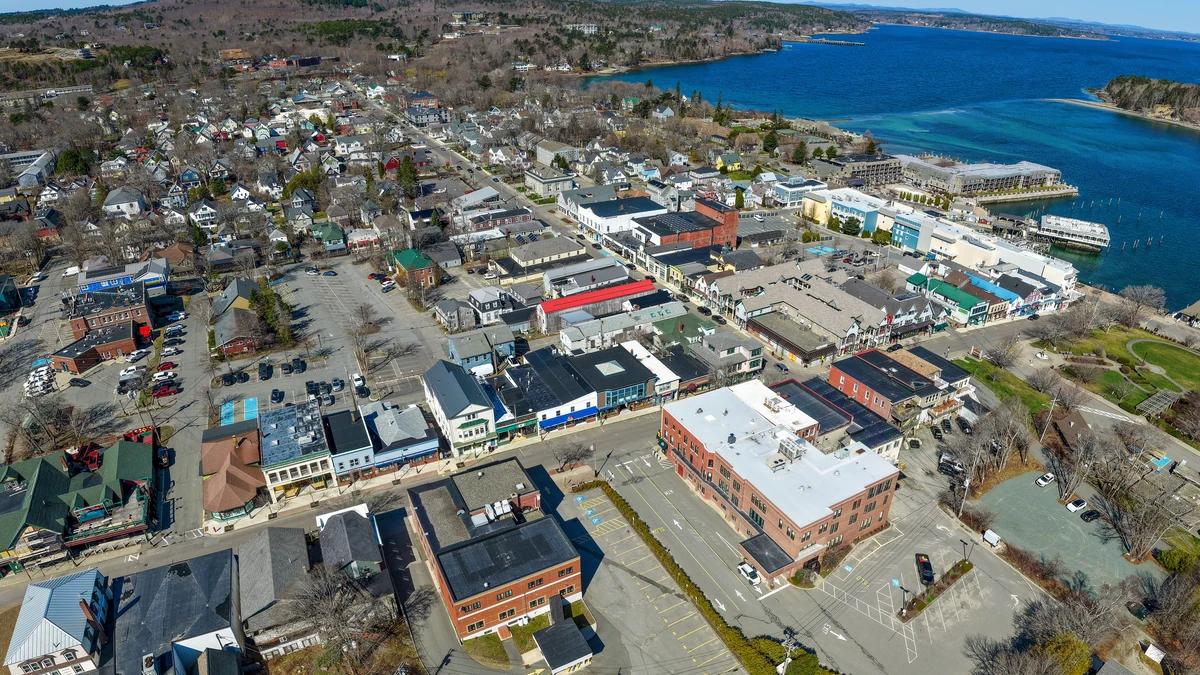
Bar Harbor cruise port gives passengers an unusually strong choice between a satisfying day on foot and a much bigger day in Acadia National Park. Ships normally anchor in Frenchman Bay and use tenders, so the waterfront feels close while still requiring time for boat loading, landing and the return queue. Once ashore, the centre is compact: Main Street, the Shore Path, shops, cafés and tour departures are all within a short walk.
The mistake is to treat Acadia as a casual add-on. Park distances, traffic, reservation rules and seasonal transport turn it into the day’s main commitment. A first visit works best when you decide before arrival whether the priority is Bar Harbor itself or a defined Acadia route, then leave enough slack for tendering and changing coastal weather.
Bar Harbor Cruise Port at a Glance
| Port name | Bar Harbor Cruise Port |
|---|---|
| Main arrival area | Tender landing at the municipal waterfront near Town Pier / Harbor Place |
| Cruise region | Alaska / North America / Canada |
| Country / Territory | USA |
| Currency | US dollar (USD) |
| Main languages | English |
| Port role | Tender day call and gateway to Acadia National Park |
| Disembarkation | Tender boat from the ship; the exact landing and sequence are controlled by the call arrangements |
| Walkability | High in central Bar Harbor; low for Acadia without transport |
| Shuttle required | No for the town centre; transport is essential for most park highlights |
| Main transport | Walking, ship excursion, local guided tour, seasonal Island Explorer bus and taxi |
| Best first-time plan | A focused Acadia circuit followed by a short waterfront walk, or a relaxed town-and-Shore-Path day |
| Main caution | Tender time, park traffic and Cadillac Mountain access rules can consume more of the call than expected |
The Tender Arrival Is Close, but It Is Not Instant
The Town of Bar Harbor publishes current cruise-ship and waterfront information, but the practical landing procedure remains ship-specific. Tender tickets, priority for excursions and the number of boats in service can all affect when independent passengers reach shore. Do not build a private tour around the scheduled arrival time alone; ask the operator for a meeting window that recognises tendering.
The municipal waterfront puts you near the commercial centre rather than at a remote terminal. From the landing, Main Street rises gently into town while the waterfront route runs towards the Shore Path. The final tender is the hard deadline. Return queues can grow when several excursions finish together, and fog or wind may slow the boat operation even when conditions look manageable from land.
Decide First: Bar Harbor or Acadia
Bar Harbor and Acadia overlap geographically but create different cruise days. A town day is flexible, largely walkable and easy to shorten. An Acadia day depends on transport and usually follows a fixed circuit. Trying to complete the principal park sights, explore the town, eat a long lunch and walk the full Shore Path often produces a rushed version of all four.
Choose Acadia when mountain, coast and forest scenery are the reason for the call. Choose Bar Harbor when you prefer a slower waterfront day, have limited mobility, dislike organised coach touring or arrive in poor visibility. A mixed plan is possible, but it should be one compact park route plus one short town activity rather than two full itineraries joined together.
Bar Harbor Works Well Without an Excursion
The town centre is small enough to understand quickly. Main Street and Cottage Street carry most shops and restaurants, while side streets reveal quieter residential architecture. The appeal is not a single must-see building; it is the combination of harbour, island-town atmosphere, food and easy access to the coast. Independent passengers can change direction at any point without risking a distant pickup.
The official town page for the Shore Path is worth checking because access, repairs and private-property boundaries can change. The path begins near the waterfront and follows the edge of Frenchman Bay. It is most useful as an out-and-back walk: turn when the remaining time, surface or weather says to turn rather than treating completion as the objective.
Build a Sensible Town Walking Route
A practical first circuit begins at the tender landing, follows the waterfront and Shore Path while energy is fresh, then returns through the centre for lunch and shopping. This order protects the scenic walk from afternoon crowds and leaves the most flexible activities until later. It also keeps you close enough to the harbour to abandon the walk if fog, rain or tender instructions change.
Allow extra time on wet days because granite, roots and uneven edges can become slippery. Passengers using a wheelchair or walker should not assume the entire Shore Path will be comfortable; the paved and commercial waterfront is easier. Benches and viewpoints encourage a slow pace, so distance on a map understates how long a genuinely enjoyable circuit can take.
Acadia National Park Is the Main Excursion Decision
The National Park Service Acadia site should be the starting point for current access, closures and visitor advice. The park is spread across Mount Desert Island, and the headline sights are not arranged as one compact attraction. Park Loop Road, Ocean Path, Jordan Pond and Cadillac Mountain each pull the schedule in a different direction.
For a single cruise call, a guided loop is often more efficient than assembling transport independently. A good route should state exactly which overlooks or short walks are included and how much time is spent off the vehicle. “Acadia highlights” can mean anything from a scenic coach circuit to a more active coastal walk. Read the detail before booking, particularly if the tour uses large coaches and has limited stop time.
Cadillac Mountain Requires Its Own Planning
Cadillac Mountain is famous for broad island and ocean views, but vehicle access is managed seasonally. The NPS explains the current Cadillac Summit Road vehicle-reservation system. A cruise excursion may hold its own commercial access arrangements; an independent visitor must not assume a taxi or rental vehicle can simply drive up at any time.
Cloud can erase the view even when the harbour is bright, while summit wind and temperature may be markedly different from Bar Harbor. Cadillac is worthwhile when the forecast and booking align, but it should not dominate every first visit. Ocean Drive and the rocky coast can provide a stronger day in low cloud because the scenery is experienced close at hand rather than from a summit viewpoint.
Ocean Path Gives Acadia More Than a Coach-Window View
Passengers who want some walking should look for a tour that includes a defined section of Ocean Path rather than only roadside photo stops. The coast around Sand Beach, Thunder Hole and Otter Cliff is dramatic, but distances and stopping patterns matter. Thunder Hole is tide- and sea-dependent; it is not guaranteed to perform on demand, and waiting for the perfect surge can distort the rest of the schedule.
Footwear should handle rock, roots and damp surfaces. Keep to signed routes and respect barriers because waves can reach farther than expected. A short, well-timed coastal walk followed by a scenic drive is usually more satisfying than racing between every named stop. It also creates a realistic buffer for traffic returning towards Bar Harbor.
Island Explorer Is Useful, Not a Cruise Guarantee
The seasonal Island Explorer bus system can connect Bar Harbor with parts of Mount Desert Island and Acadia. It is excellent public transport for visitors with time, but a cruise passenger must check the operating season, route, frequency, capacity and final return for the exact date. A map showing a route does not prove that it fits a six- or seven-hour call.
Use the bus only for a deliberately limited plan, such as one park area with a generous return margin. Do not chain several routes together or rely on the last plausible connection. Crowding, road congestion and missed buses can compound. When a ship has an early all-aboard, a pre-booked tour or taxi with a clear return agreement is usually the safer way to reach distant highlights.
Guided Tour or Independent Day?
A ship excursion buys coordination with the tender and reduces the risk of a late return, but it may involve larger groups and short scenic stops. A local small-group tour can offer better interpretation and flexibility, provided the operator understands the tender call and guarantees a conservative finish. Ask where the tour starts, whether the price includes park fees, and what happens if tendering delays the meeting.
Independent walking is the clear choice for Bar Harbor itself. Independent park travel makes sense only when the passenger has researched the route rather than treating local transport as interchangeable with an urban bus network. The most expensive option is not always the best; the useful distinction is between paying for access and coordination, and paying merely to be driven around places that are already easy to walk.
Mobility Changes the Best Acadia Plan
Tender boarding is the first mobility test. Gangway angle, tender steps, swell and crew procedures vary by ship and cannot be judged from the town map. Passengers should ask the cruise line about transfer assistance before booking a non-refundable shore activity. A tour advertised as “easy” may still involve coach steps, uneven viewpoints and standing while the guide speaks.
In town, gradients are moderate but repeated. The waterfront and commercial centre are manageable for many visitors, while the Shore Path and park trails demand more care. A scenic vehicle tour with a small number of accessible stops can deliver much of Acadia’s landscape without forcing an unsuitable walk. Build the day around the least mobile person rather than adding mobility decisions after the booking.
Food, Shopping and the Value of Leaving Space
Bar Harbor has enough cafés, seafood restaurants and shops to fill the time left after a park outing. Lobster is the obvious local choice, but a cruise day does not require a formal meal. A quick bowl, roll or bakery stop may protect an hour that is better spent on the waterfront. Popular restaurants can queue when several ships or tour groups return together.
Shopping is concentrated and easy to postpone until the final part of the day. That makes it useful schedule insurance: if a tour finishes early, browse; if it runs late, skip it. Carry a payment card but keep a small amount of cash for minor purchases or tips. Mobile coverage is generally useful in town, though it should not be the only way to retrieve tour instructions.
When Fog or Rain Changes the Plan
Coastal Maine weather is not a minor detail. Fog can remove summit views, rain can make walking slower, and wind can affect tendering. The best fallback is not necessarily to stay aboard. Bar Harbor still offers cafés, local shops and a shorter waterfront circuit, while Acadia’s forest and close coastal scenery can remain atmospheric when distant views disappear.
Reassess the plan before leaving the ship. A Cadillac-focused tour loses much of its value in solid cloud, whereas a coach route with forest, shoreline and interpretation may still work. Pack a waterproof layer rather than relying on an umbrella in wind. Shoes that remain secure on wet stone are more useful than heavy clothing in a mild but damp forecast.
Choose an Acadia Route That Fits the Call
Acadia is often sold as one destination, but the park-day experience depends on which landscape receives the time. A Park Loop Road circuit gives breadth and several short stops. An Ocean Path plan gives more physical contact with the coast. Cadillac adds a summit and reservation dependency. Jordan Pond adds a slower inland setting and can draw visitors into a longer meal or walk. A cruise passenger should know which version is being purchased.
Ask the tour operator for the order of stops and the expected time out of the vehicle. If the itinerary says “photo stop”, assume only enough time to step off, look and return. If it promises a walk, ask for distance, surface and pace. The most useful tour is not the one naming the most places; it is the one whose main stops are genuinely experienced.
Park Loop Road for Breadth
A Park Loop circuit suits first-time visitors who want to understand the island’s range without committing to a long walk. It can combine forest, granite coast and elevated views, but traffic and coach stopping rules shape the route. Sit on the side suggested by the guide only if it does not create a scramble; viewpoints often require leaving the vehicle, and the better memory will come from the stop rather than the window seat.
Check whether Sand Beach, Thunder Hole or Otter Cliff are actual stops or only named points on the drive. When several ships are in harbour, loading and parking can slow every group. A tour scheduled to finish close to the final tender should be treated cautiously even when the advertised driving time looks short.
Jordan Pond for a Slower Landscape
Jordan Pond offers a calmer inland contrast to the Atlantic edge, but it can consume more time than expected. Parking, shuttle transfers, restaurant waits and even a short shoreline walk must be added. A cruise excursion that includes a fixed meal may work well; an independent visitor who arrives hoping for an unbooked table can lose the return margin quickly.
Choose Jordan Pond when the lake and mountain setting genuinely appeals, not because a famous food stop is listed. A brief viewpoint without a walk may overlap with other scenic stops. Passengers with limited mobility should ask how far the vehicle parks from the viewpoint and whether the route includes steps or uneven ground.
Active Walking Versus Scenic Touring
Active passengers can find short hikes that fit a port day, but route selection must be conservative. Elevation gain, granite surfaces and the need to turn around make trail mileage a poor standalone measure. Use a guided walk or choose an out-and-back path where the return is obvious. Do not attempt exposed rung or ladder routes merely because they are famous; cruise timing, crowds and unfamiliar terrain remove the margin for error.
A scenic tour is not a lesser choice when visibility, mobility or time is limited. The park’s scale can be understood through a well-interpreted circuit, and a short accessible viewpoint may deliver more than a rushed hike. Match the route to the weakest operational factor—tender delay, weather, walking ability or call length—rather than to an idealised holiday plan.
Tender Timing and Private Tour Contracts
Independent tour terms deserve the same scrutiny as the route. Confirm whether the operator refunds a missed meeting caused by the ship, waits for a delayed tender and monitors an early departure announcement. A guarantee to “get you back” is meaningful only when the finish time is stated. Provide the ship name and call date, not just “Bar Harbor”, because several vessels may be operating different schedules in the same bay.
Meet close to the tender landing unless the operator gives a clearly mapped pickup. Do not accept a plan requiring an uncertain taxi to reach the tour start. At the end, ask to be dropped at the waterfront rather than a restaurant or shop uphill. The last part of the day should reduce dependencies, not create a new one.
Passengers returning from Acadia should use the first practical tender after their town stop rather than treating the published final boat as a target. Earlier boarding avoids the largest excursion wave and leaves the crew room to manage passengers whose tours have been delayed. The lost half-hour ashore is usually less valuable than a calm, certain return.
Return early.
Best Things to Do from Bar Harbor Cruise Port
Acadia National Park highlights
Best for: First-time visitors prioritising scenery
Plan: Book a defined park loop with stated stops and a conservative harbour return
Watch: Traffic, fog and vague “highlights” descriptions
Bar Harbor and the Shore Path
Best for: Independent visitors and flexible schedules
Plan: Walk the waterfront first, then return through town for food and shopping
Watch: Wet or uneven surfaces and turning too late
Cadillac Mountain
Best for: Clear-weather views and passengers with confirmed access
Plan: Use a tour or reservation-backed plan rather than hoping for entry
Watch: Cloud, wind and vehicle-reservation rules
Ocean Path section
Best for: Active visitors wanting coastal scenery
Plan: Choose one manageable segment and combine it with transport
Watch: Rocky footing, waves and insufficient return time
Food and harbour time
Best for: Passengers seeking a low-pressure day
Plan: Keep lunch flexible and leave shopping until the final hour
Watch: Restaurant queues on busy call days
CruisePing Recommended Port Day
For a first visit in reasonable weather, CruisePing would choose a small-group Acadia circuit that includes the rocky coast and at least one proper stop outside the vehicle, then return to Bar Harbor with ninety minutes or more before the required tender. Use that time for a short waterfront walk and a quick local meal rather than trying to add a second attraction.
When the forecast is poor or mobility makes the park awkward, make the town the plan rather than the consolation prize. Walk the accessible waterfront, sample the Shore Path as conditions allow, eat without watching a coach timetable and remain close to the tender. The strongest decision is the one that matches visibility, transport and the actual length of the call.
Weather & Best Time to Visit Bar Harbor
Use the National Weather Service Bar Harbor forecast close to arrival. The table gives rounded seasonal planning ranges rather than a promise for the day.
Late spring can be cool and variable; summer is milder but busy; early autumn often brings crisp conditions and changing foliage. Sea temperature and wind make the waterfront feel cooler than an inland reading. Carry a layer even when the afternoon forecast looks comfortable.
| Month / season | Typical high | Typical low | Rain / conditions |
|---|---|---|---|
| May | 17°C | 7°C | Cool, changeable and sometimes foggy |
| June | 22°C | 12°C | Milder with showers and coastal fog |
| July–August | 25°C | 15°C | Warmest period; busy with occasional humid or wet days |
| September | 20°C | 11°C | Cooler, often clear but variable |
| October | 14°C | 5°C | Chilly mornings, wind and faster weather changes |
Practical Questions for a Bar Harbor Cruise Call
Can I walk into Bar Harbor from the tender?
Yes. The central waterfront and commercial streets are close to the usual municipal landing, although the tender journey itself takes time.
Can I see Acadia without a ship excursion?
Yes, but only with a researched transport plan. Seasonal buses, local tours and taxis have different limits, and the final return must not depend on the last possible service.
Is Cadillac Mountain essential?
No. It is excellent in clear conditions with confirmed access, but the park’s coast, forest and lower viewpoints can make a stronger day in cloud.
How much tender margin should I leave?
Follow the ship’s stated final tender time and aim to be near the waterfront substantially earlier, particularly after a park tour or when wind and fog are present.
Useful Official Links
- Town of Bar Harbor cruise-ship information
- Town of Bar Harbor Shore Path information
- Acadia National Park
- Cadillac Summit Road reservations
- Island Explorer transport
- National Weather Service forecast
CruisePing Port Verdict
Bar Harbor rewards a clear decision. Use transport and most of the day for Acadia, or enjoy a flexible town-and-waterfront call without pretending that every park highlight can be added casually.
The best first visit usually combines one defined landscape experience with unhurried time close to the harbour. Protect the tender, treat Cadillac access and fog as real planning variables, and avoid measuring success by the number of named stops collected.
Ready to browse our article library?
Explore more ports in the Alaska / North America / Canada region, narrow the library to USA cruise ports, or return to the main CruisePing article library.