
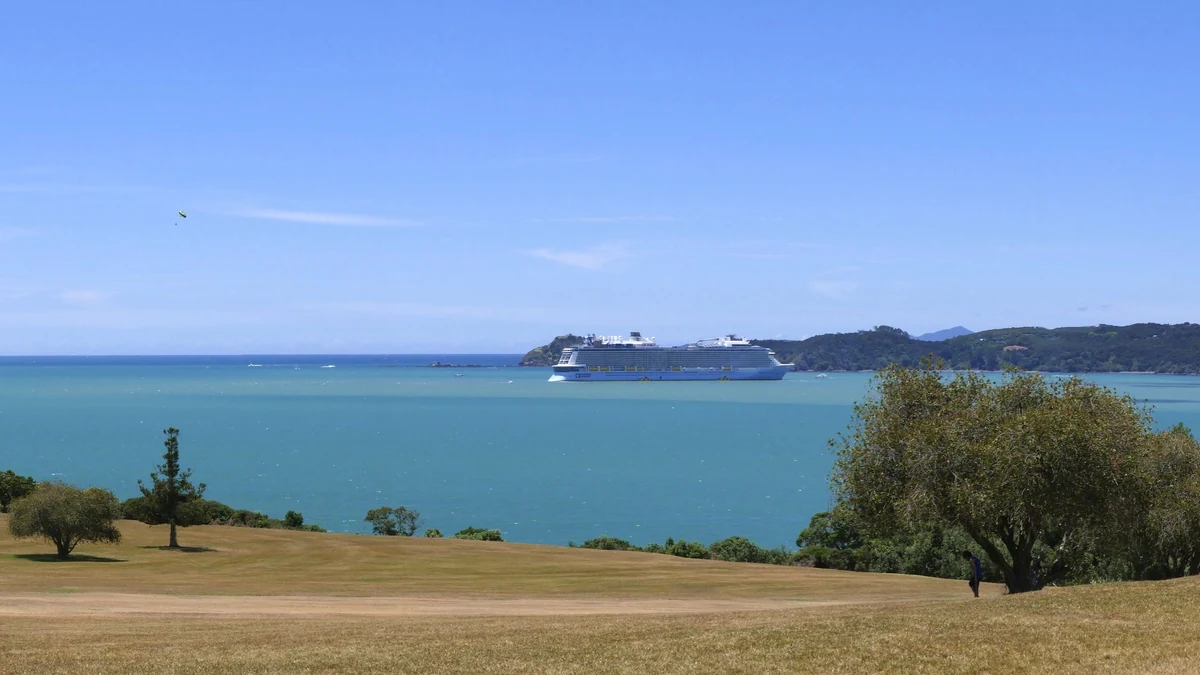
Visit Bay of Islands’ official cruise map confirms that Bay of Islands cruise port is a tender call to Waitangi Wharf. Independent passengers can use complimentary shuttles to Paihia, while pre-booked tour vehicles meet in the Waitangi arrival area. This geography creates three natural centres: Waitangi for national history, Paihia for tours and services, and Russell across the passenger ferry.
The best day does not attempt all of Northland. Waitangi, Paihia and Russell can be combined with care; a substantial bay cruise can replace much of the land route; Cape Reinga and other far-north drives are long excursions that should stand alone. Tender timing, shuttle queues and marine weather all reduce the hours shown on the itinerary.
Bay of Islands Cruise Port at a Glance
| Port name | Bay of Islands, New Zealand |
|---|---|
| Main arrival area | Tender landing at Waitangi Wharf, with tour dispatch and complimentary shuttle links |
| Cruise region | Australasia / Pacific Islands |
| Country / Territory | New Zealand |
| Currency | New Zealand dollar (NZD) |
| Languages | English and te reo Māori |
| Port role | Day call |
| Disembarkation | Tender |
| Walkability | Good between Waitangi and Paihia for capable walkers; shuttle is easier, and Russell requires a ferry |
| Shuttle required | Complimentary cruise-day shuttles normally connect Waitangi Wharf, Paihia and the Treaty Grounds |
| Main transport | Tender, cruise shuttle, walking, Paihia–Russell passenger ferry, marine tours and organised coaches |
| Best first-time plan | Prioritise Waitangi Treaty Grounds, then add Paihia and Russell only if tender and ferry time remain comfortable |
| Main caution | Long marine trips and far-north coach tours compete with the Waitangi–Paihia–Russell day and need protected return timing |
Waitangi Wharf Is the Operational Centre
Tenders deliver passengers to Waitangi rather than central Paihia. Tour groups are directed towards vehicles, while independent passengers join the cruise-day shuttle. The official map describes the road trip into Paihia as short and the waterfront walk as roughly 20–25 minutes, but tender queues and shuttle loading remain part of the day.
Before leaving the wharf, photograph the final shuttle and tender information. A passenger returning from Russell or a marine tour needs to know whether to travel to Paihia, the Treaty Grounds or directly to Waitangi Wharf. Do not rely on the morning queue looking the same in late afternoon.
Waitangi, Paihia and Russell Form a Natural Triangle
Waitangi provides the most important historical site. Paihia provides the main visitor services, tour boats and ferry wharf. Russell provides a smaller historic waterfront and a contrasting settlement across the bay. The three can fit together because their links are clear, but they should be sequenced around one timed booking.
For a first visit, begin at Waitangi before moving to Paihia. Russell is the optional third element. Starting with an unstructured ferry ride can leave insufficient time for the Treaty Grounds, which are beside the cruise landing yet deserve much more than a quick pass.
Best Things to Do in the Bay of Islands
Official Bay of Islands tourism information spans history, marine wildlife, sailing, island visits and regional touring. Cruise passengers should choose between a land-led day and a marine-led day. The land route uses Waitangi, Paihia and Russell. The marine route uses a substantial bay cruise and perhaps limited time ashore.
A far-north coach excursion is a third category. It can be memorable, but it removes most of the Bay of Islands itself. Judge it by the destination and road time, not by the number of stops advertised.
Waitangi Treaty Grounds Is the Essential First-Time Anchor
The Waitangi Treaty Grounds brings together museums, historic buildings, landscape, guided interpretation and cultural performance at the place associated with the signing of Te Tiriti o Waitangi / the Treaty of Waitangi. It is not merely a monument beside the wharf. Allow enough time to understand the differing Māori and English texts and the continuing importance of the relationship they express.
The grounds are close to the cruise landing and normally open daily apart from Christmas Day, but check current hours and programme times. A timed tour or performance can become the day’s anchor. Passengers with limited time should prioritise interpretation over attempting every walking path.
Paihia Is the Transport and Activity Hub
Paihia has the main visitor wharf, cafés, shops and many marine-tour departures. It is practical rather than monumental. Use it for lunch, ferry connections, a waterfront walk or the start of a booked cruise rather than expecting a dense collection of major sights.
The complimentary shuttle makes it easy to reach, but large call days create queues. Keep one eye on the return route to Waitangi and avoid leaving all shopping until the final shuttle window.
Russell Adds Historic Waterfront Character
The Paihia–Russell passenger ferry normally crosses in about 15 minutes and runs frequently, but schedules and payment arrangements can change. Russell offers a compact waterfront, historic streets, cafés and views back across the bay.
A ferry crossing creates two extra queues and another timetable. It works after Waitangi or as part of a relaxed land day, but not as an automatic addition to a long boat excursion. Return to Paihia early enough to absorb a missed ferry.
A Bay Cruise Can Become the Whole Day
Hole in the Rock, dolphin and island cruises depart from Paihia or use cruise-specific arrangements. Product lengths, wildlife policies and island stops vary considerably. Read whether the trip is primarily sightseeing, fast transport, sailing, swimming or a full-day island experience.
Marine weather and wildlife remain uncertain. A tour that finishes close to final tender leaves little resilience if the boat slows or returns to a different wharf. Ship excursions offer the strongest protection for the longest products; independent bookings need written cruise timing.
Cape Reinga Is a Long Northland Excursion
Cape Reinga and Ninety Mile Beach appear on cruise excursion lists because the far north is dramatic, not because it is close. The coach day contains extensive road time and leaves little or no opportunity for Waitangi, Paihia or Russell. Weather and road conditions also affect the route.
Choose it only when the far north is the primary goal. A ship-operated excursion is the rational choice because the return is long and there are few independent recovery options. Passengers wanting a first understanding of the Bay of Islands should stay closer.
Kerikeri and Regional Heritage Need Organised Transport
Kerikeri, historic mission sites, waterfalls and local food producers can form a regional road tour. They are not connected by a simple cruise shuttle, and taxi supply may be stretched. A guide helps sequence sites and explain early Māori-European contact beyond the single Waitangi narrative.
Do not mix a substantial Kerikeri circuit with Russell and a bay cruise. Choose either a regional land tour or the harbour triangle and give it enough time.
The Walk from Waitangi to Paihia Is Pleasant but Optional
Capable walkers can follow the waterfront between Waitangi and Paihia, gaining views and avoiding shuttle queues. The path is not the right choice for everyone after a tender, and weather or wet surfaces can make the shuttle more comfortable. Check current signage rather than improvising along the road.
Walking one way and shuttling back can work. Begin with Waitangi, then use the path to Paihia if time and conditions remain favourable. Preserve energy for the tender return.
Māori Cultural Content Deserves More Than a Performance Slot
A cultural performance at Waitangi can be powerful, but the museums, guided interpretation and landscape provide the context that prevents it becoming detached entertainment. Allow time to listen, not just photograph.
Use respectful pronunciation where you can, follow guidance in meeting houses and ask before photographing in restricted contexts. Te Tiriti remains a living constitutional and political issue, so avoid treating 1840 as a closed historical episode.
Tender, Shuttle and Ferry Queues Accumulate
Each individual transfer is short. Together they can absorb an hour or more: ship to tender, tender to Waitangi, shuttle to Paihia, ferry to Russell and the same sequence back. Build the day from the final tender backwards and remove the least important leg first.
The robust land route is Waitangi plus Paihia. Russell is added when queues are light. A marine tour or regional coach replaces several of those movements rather than sitting on top of them.
Mobility Planning Starts Before the Tender
Tender steps, floating pontoons, shuttle boarding, museum distances and ferry access each create different challenges. Ask the ship about assistance and the Treaty Grounds about current accessibility. A wheelchair-friendly museum does not automatically make the tender accessible.
Passengers avoiding ferries can still have a full day at Waitangi and Paihia. Those avoiding long walks should use the shuttle between the wharf, Treaty Grounds and village rather than spending limited energy on the connecting path.
A Three-Hour Waitangi Visit Is Not Excessive
The Treaty Grounds contain two museums, the Treaty House, Te Whare Rūnanga, ceremonial waka, guided interpretation and extensive grounds. A cruise passenger can easily spend several hours without repetition. Programme times may determine the most logical order, so check them before leaving the arrival area.
Visitors who rush through only the signing site often miss the complexity of Te Tiriti, the northern wars, Māori political authority and the treaty’s modern significance. The grounds are close to the tender precisely because they are the port’s strongest use of time, not because they are a quick preliminary stop.
Sequence Waitangi Around the Guided and Cultural Programme
Waitangi works best when the timed elements determine the order. On arrival, check the day’s guided tours, cultural presentations and any special programme before walking directly to the far end of the grounds. The Waitangi Treaty Grounds visitor information should be checked before the cruise, but the programme displayed on the day is the final guide. A sensible sequence might begin with a guided introduction, continue through Te Kōngahu Museum of Waitangi, then reach the Treaty House, Te Whare Rūnanga and ceremonial waka before returning for the cultural experience or second museum.
This order matters because the site is larger and more layered than it first appears. The history is not confined to one signing moment, and passengers benefit from hearing Māori and Crown perspectives before interpreting the buildings and landscape independently. Rushing to a photograph and leaving for Paihia can reduce Waitangi to a landmark. By contrast, allowing the programme to structure the visit creates a coherent half day while still leaving time for lunch, waterfront walking or Russell.
Do not book a Paihia boat departure so tightly that it forces an early exit from a guided experience. Allow time to return to the shuttle point, wait for transport and complete check-in. Where the ship offers a protected excursion combining Waitangi with another attraction, compare how much actual time is spent on the grounds rather than judging by the number of stops. CruisePing’s first-time preference is a substantial Waitangi visit followed by one flexible addition. Russell is the best extension when ferries are running smoothly; Paihia is the safer fallback when tender or shuttle queues have already consumed time.
Passengers with limited stamina should ask which programme elements involve prolonged standing and use the site transport or seating opportunities rather than shortening the historical content.
This is a day for understanding place as well as seeing scenery.
Russell Works Best as a Compact Historic Walk
From the ferry wharf, Russell’s waterfront, Christ Church, heritage streets and selected museums or historic properties can be combined on foot. The settlement’s quiet appearance sits over histories of Kororāreka as a trading, whaling and mission centre. Use interpretation rather than repeating the old “hell-hole of the Pacific” slogan without context.
Allow at least one ferry interval as a buffer on the return. A café queue or museum visit should never place you on the last ferry that could connect with the cruise shuttle. If time contracts, enjoy Paihia instead of making a rushed crossing.
Marine Tours Differ in Speed, Wildlife and Landing Time
Some trips use fast catamarans to reach the outer bay and Hole in the Rock; others sail slowly, focus on dolphins, stop at an island or include swimming. The longest product is not automatically the best. Compare actual time underway, shelter, toilets, mobility and the exact return wharf.
Wildlife operators must follow current viewing rules and may alter routes to reduce disturbance. A responsible change is not a failed tour. Cruise passengers should value a safe, well-interpreted bay journey over a promise to chase animals or force a passage in unsuitable sea conditions.
Haruru Falls and Kerikeri Are Separate Land Additions
Haruru Falls lies inland from Waitangi and can be included on a short vehicle circuit, while Kerikeri requires a more substantial regional route. Neither is part of the complimentary shuttle network. A taxi should be booked with a return, and a guide adds context to mission, horticultural and Māori sites.
If Waitangi is the day’s anchor, Haruru can be a modest addition. Kerikeri is better treated as a planned half-day that replaces Russell. Geographic discipline prevents the day from becoming repeated transfers through Paihia.
Families Can Build a Strong Day Without a Long Coach
Waitangi’s waka, performances, museums and open grounds can engage different ages, while Paihia offers food and a waterfront break. A short ferry to Russell adds movement without hours on a bus. Parents should still check programme content, walking distances and weather protection.
For marine tours, ask about child ages, lifejackets, prams, seasickness and island landing surfaces. A family that is uncertain about the outer bay can choose a sheltered sailing or remain on the land triangle without missing the port’s essential identity.
DIY Is Strong Locally; Organised Transport Is Strong Farther Away
Waitangi, Paihia and Russell are unusually manageable through tender, shuttle, walking and public ferry. There is little reason to buy an expensive general highlights tour merely to reproduce that triangle. Admission and timed programmes at Waitangi can be booked directly when the tender window permits.
Use organised transport for Cape Reinga, Kerikeri circuits, private estates or long marine trips. The farther the route extends from Waitangi Wharf, the more valuable protected return and local coordination become.
Call Length Changes Whether Russell Fits
On a short call, use Waitangi and Paihia only. With a normal full day, add Russell after the Treaty Grounds if ferries are running smoothly. With a very long call, choose either a substantial bay cruise or a regional land tour; do not simply add more transfers to the same triangle.
Build the schedule backwards from the final tender. Allow shuttle waiting at Paihia, travel to Waitangi and tender boarding. The return sequence is more important than the published ferry frequency because several ships’ passengers can converge at once.
Food and Shopping Are Easiest in Paihia and Russell
Paihia has the largest concentration of cafés and visitor services, while Russell offers a quieter waterfront meal. Waitangi has visitor facilities but should be planned around museum and programme time rather than assumed as the fastest lunch stop. Eat outside the peak if a large ship is in port.
Cards are common. Keep a small cash backup for minor purchases and check New Zealand biosecurity rules for food, wood, plant and animal products when returning to the vessel or travelling onward internationally.
Three Bay of Islands Day Shapes
National history and harbour towns: spend the morning at Waitangi Treaty Grounds, shuttle or walk into Paihia, and add Russell by ferry only when the timetable remains comfortable. This is CruisePing’s best first visit because it combines the destination’s most consequential site with the everyday geography of the bay.
Marine scenery: take one cruise-specific nature, sailing or outer-bay trip from Paihia or the ship’s arranged departure. Read the exact route and return wharf. Afterwards, use only nearby Paihia or Waitangi time; Russell and a complete Treaty Grounds programme will usually no longer fit.
Northland road tour: choose Kerikeri and regional heritage, or the much longer Cape Reinga route, through protected transport. This sacrifices most of the Waitangi–Paihia–Russell triangle. It is rational for repeat visitors or passengers with a particular far-north goal, not an automatic “see more” upgrade.
The three shapes should not be merged. Their clocks are different: museum and cultural programmes, marine departure times, ferry intervals and long-road return all compete. Decide the day shape first, then book its anchor. This also makes poor-weather decisions easier because you know which component can be replaced.
If the tender is late, drop Russell first from the local route, shorten Paihia shopping second and protect Waitangi. From a marine route, drop the post-cruise land add-on rather than asking the operator to compress the return. From a road tour, accept the guide’s reduced stop list and maintain the protected ship return.
What to Skip on a First Bay of Islands Call
Multiple ships can lengthen tender, shuttle and ferry queues. Before leaving Waitangi Wharf, record the final return instructions and decide which element will be dropped first if the morning runs late. That protects the culturally important part of the day instead of sacrificing it to a rushed final transfer.
Paihia beach time, extra shopping and Flagstaff Hill are optional rather than essential. The strongest local sequence remains Waitangi first, Paihia for transport and food, and Russell only when the ferry timetable and final shuttle or tender return remain comfortable.
The Hole in the Rock and longer wildlife cruises should also be treated as headline choices rather than as casual extras. Once boarding, sailing and the return to Paihia or Waitangi are included, a substantial marine trip can consume most of the usable call. Choose that day because the bay itself is the priority, not because it appears to leave a spare hour for the Treaty Grounds.
The Bay of Islands offers more than a single cruise day can use well. Haruru Falls and Kerikeri are worthwhile regional additions, but they need road transport and compete directly with the time needed for Waitangi, Paihia and Russell. On a first visit, CruisePing would not add them unless a driver or organised tour makes them the clear focus.
CruisePing Recommended Port Day
For a first visit, CruisePing would begin at Waitangi Treaty Grounds, using a guided tour or cultural programme as the anchor. Then take the shuttle or waterfront path to Paihia for lunch and a short waterfront look. Cross to Russell only if the ferry and final tender leave a comfortable margin.
Passengers whose priority is scenery and marine life should book one cruise-specific bay excursion and accept that it replaces much of the land triangle. We would reserve Cape Reinga for a repeat call or a traveller with a clear far-north objective.
Weather & Best Time to Visit the Bay of Islands
Northland is generally mild, but rain can be heavy and marine wind can change quickly. Summer is warm and busy; winter is cooler and wetter. Tendering and boat tours depend on local sea conditions, while road tours can be affected by intense rain.
| Month/season | Typical high | Typical low | Rain/conditions |
|---|---|---|---|
| December–February | 25°C | 16°C | Warm and often sunny, with strong UV, showers and busy visitor services |
| March–May | 22°C | 12°C | Mild autumn conditions, variable rain and generally comfortable walking |
| June–August | 16°C | 8°C | Cooler and wetter; heavy rain systems and rougher marine conditions possible |
| September–November | 20°C | 11°C | Changeable spring weather, improving warmth and intermittent wind or showers |
Check MetService for Paihia and Northland warnings as well as the ship’s tender update. A settled land forecast does not guarantee a comfortable outer-bay cruise.
Practical Questions for a Bay of Islands Cruise Call
Where do cruise tenders land?
At Waitangi Wharf, where tour dispatch and cruise-day shuttles operate.
Is there a shuttle to Paihia?
Complimentary cruise-day shuttles normally run between Waitangi, Paihia and the Treaty Grounds; confirm the call’s final arrangement.
Can I walk to Paihia?
Yes for capable walkers; the waterfront route is roughly 20–25 minutes according to the official cruise map.
How do I reach Russell?
Take the regular passenger ferry from Paihia, allowing time for queues and the return connection.
Can I visit Cape Reinga?
Yes on a long organised excursion, but it replaces the local Bay of Islands day and should have protected return.
What currency is used?
New Zealand dollars. Cards are widely accepted.
Useful Official Links for the Bay of Islands
Use these current sources to confirm arrival arrangements, attraction access, tour timings and live weather before your call.
- Official Bay of Islands cruise map
- Arriving by cruise ship
- Waitangi Treaty Grounds
- Waitangi opening information
- Paihia–Russell passenger ferry
- MetService Paihia forecast
CruisePing Port Verdict
The Bay of Islands is easy to over-plan because Waitangi, Paihia and Russell look close while marine and regional excursions sound equally accessible. The tender and transfer chain is the hidden constraint. Once that is respected, the port offers one of New Zealand’s strongest combinations of national history and coastal scenery.
Our first-visit choice is Waitangi first, Paihia second and Russell only if time remains. A bay cruise is a strong alternative, not an extra. That disciplined sequence produces a more meaningful day than chasing every famous Northland name.
Ready to browse our article library?
Explore more ports in the Australasia / Pacific Islands region, browse New Zealand cruise ports, or return to the main CruisePing article library.