
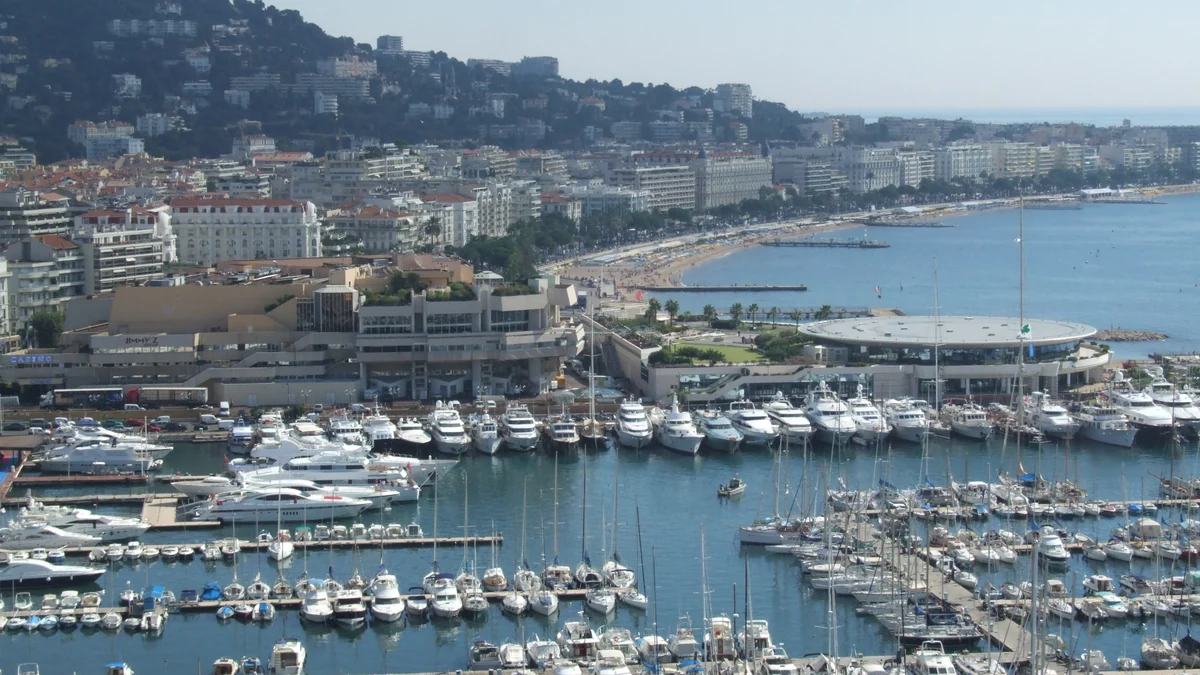
Cannes cruise port is a tender call that places passengers beside the Vieux Port, within walking distance of Le Suquet, the Forville market, the Palais des Festivals and the Croisette. The city is easy to enjoy independently, but its rail connections and ferries create a wide choice of alternatives: the Lérins Islands, Antibes, Nice, Monaco and inland villages all compete for the same limited day.
For a first visit, Cannes itself deserves priority. A town-and-island combination works well when the sea is settled, while Antibes is the strongest independent rail alternative. Nice requires a more disciplined schedule, and Monaco can consume too much of a shorter tender call. The most successful plan respects both ends of the journey: time to reach shore in the morning and time to clear the tender queue in the afternoon.
Cannes Cruise Port at a Glance
| Arrival | Tender into the Vieux Port area |
|---|---|
| Country | France |
| Currency | Euro (EUR) |
| Best first plan | Le Suquet, Forville market, Croisette and one optional island visit |
| Best rail alternative | Antibes |
| Best boat extension | Sainte-Marguerite or Saint-Honorat in the Lérins Islands |
| Main caution | Tender queues plus a second train or ferry connection |
Where Cruise Tenders Land in Cannes
Large cruise ships normally anchor in the bay and use tenders to the Vieux Port. This is an excellent landing position for independent visitors: Le Suquet rises immediately behind the harbour, while the Palais des Festivals and Croisette begin in the opposite direction. The official Ports of Cannes information gives general harbour context.
Tendering introduces uncertainty at both ends of the call. Passengers may need to collect a morning tender ticket, wait for clearance or queue to return. Do not plan a train or public ferry as though the published ship arrival time is the moment you can leave the harbour.
On the return, reach the Vieux Port before the ship’s final tender deadline. A train arriving at Cannes station is not the end of the journey; passengers must walk back to the harbour, locate the correct queue and board. The same principle applies to a Lérins ferry returning to shore.
Le Suquet: The Historic Side of Cannes
Le Suquet climbs above the old port and gives Cannes a historic centre that is easy to overlook beneath the film-festival image. Narrow streets, restaurants, old houses and elevated viewpoints lead towards the church and museum area at the top.
Start here before the day becomes hot and busy. The climb is manageable for many visitors but includes gradients and steps. Stop for views over the harbour rather than treating the summit as the only reward. The changing perspective explains the relationship between old Cannes, the port and the modern Croisette.
Passengers with limited mobility can explore the lower streets and waterfront without completing the ascent. A taxi may reduce effort, but historic surfaces remain. Ask exactly where it can set down before relying on a vehicle.
Forville Market
Forville market sits close to Le Suquet and brings food, flowers and local shopping into the route. It is most useful in the morning, when the stalls are active and the visit can support a picnic, snack or understanding of regional produce.
Opening patterns vary by day and season, so check current information through the Cannes tourism site. Do not build the whole call around a market without confirming that it operates on the date. Even when the main market is quieter, the surrounding streets remain a good link between old town and port.
A market stop should be purposeful rather than rushed. Look for products that travel well and comply with ship rules. Fresh food may be better enjoyed immediately than carried back through security.
Palais des Festivals and the Film-Festival Waterfront
The Palais des Festivals is central to the public image of Cannes. Outside major events, visitors can see the famous steps, handprints and waterfront setting without needing a long visit. During festivals and conferences, barriers, security and temporary structures may alter access.
Check the city calendar before sailing. Cannes can feel very different during a large event, and hotel prices or celebrity activity are less relevant to a cruise passenger than closed paths and crowded transport. A flexible walking route matters more than expecting a particular photograph.
Use the Palais as the transition between the Vieux Port and Croisette. It is a landmark, not necessarily the centrepiece. Le Suquet and the islands often provide more substance than waiting for an unobstructed view of the red-carpet steps.
Walking the Croisette
The Croisette curves along the bay past beaches, gardens, luxury hotels and shops. It is level, easy to navigate and well suited to a gentle independent day. The full promenade is longer than it appears when heat and crowds are considered, so decide how far to walk before turning back.
The attraction lies in the seafront sequence rather than a single sight. Mix people-watching with public spaces, hotel façades and sea views. Passengers uninterested in designer shopping can still enjoy the promenade without entering a boutique.
Walk outward after completing time-sensitive attractions, then return through parallel streets or by local bus if needed. Keep the final part of the route on the harbour side of town so that a café stop cannot threaten the tender.
Beaches in Cannes
Cannes combines private beach clubs with public beach areas. A short swim can fit easily into a city day, particularly after Le Suquet and the Croisette. Beach-club prices may include facilities and location rather than a superior sea.
Check whether the chosen section is public or private and what is included before sitting down. In peak season, loungers can fill and service may be slow. A cruise passenger does not need to reserve an expensive full day to enjoy the bay.
Keep valuables secure and allow time to change before returning to the tender. A beach close to the Vieux Port is safer than travelling far along the coast for a small improvement in sand or facilities.
Sainte-Marguerite Island
Sainte-Marguerite is the larger and more visited of the Lérins Islands. Ferries leave from Cannes, and the crossing is short enough to combine with part of the city when schedules align. The island offers woodland paths, rocky coves, Fort Royal and the story associated with the Man in the Iron Mask.
The official Cannes guide to the Lérins Islands is a useful planning source. Check the current ferry timetable and fort access. Do not rely on an old frequency, especially outside high season.
Decide whether the island is primarily a history walk, a swim or a nature break. Trying to circle large areas, visit the fort and spend a long time at the water can make the return rushed. Keep the ferry back to Cannes well ahead of the final tender.
Saint-Honorat Island
Saint-Honorat is smaller and shaped by the presence of the monastic community. Visitors come for the abbey, coastal walking, quiet atmosphere and vineyards. It offers a different experience from Sainte-Marguerite and should be chosen according to interest rather than treated as a second stop on an island checklist.
Boat information is available through the island ferry operator. Check dress and behaviour expectations around religious spaces and respect areas not open to visitors.
Saint-Honorat suits passengers looking for calm rather than a conventional beach day. A morning island visit followed by Le Suquet can work well. Visiting both main islands on a tender call usually adds connections without adding enough depth.
Antibes by Train
Antibes is the strongest independent rail alternative from Cannes because it delivers a distinct old town, ramparts, harbour and museums without requiring the longest journey on the Riviera. Cannes station is walkable from the tender landing, though passengers must allow for the walk, ticket purchase and platform.
Check live services through SNCF Connect. Trains can be frequent, but cancellations, crowding and platform changes remain possible. Choose a return that leaves at least one later service before the tender deadline.
In Antibes, focus on the old town and waterfront rather than adding another bus connection. The Picasso Museum may be a priority when open; otherwise the market streets and ramparts create a strong visit. Return to Cannes with enough time for a final walk from the station.
Nice by Train
Nice is realistic on a longer call and offers the old town, Promenade des Anglais, markets and major museums. The risk is not the rail journey alone but the breadth of the city. A vague plan to “see Nice” can lead to unnecessary local transport and a late return.
Choose one compact area. For a first visit, Vieux Nice, the seafront and a viewpoint or market are enough. A distant museum should replace part of that route rather than being added to it. Use trams and buses only when they clearly save time.
Book a return train with alternatives remaining. If disruption begins, leave early. A ship excursion may be worthwhile for passengers who want a guided overview or who dislike managing rail uncertainty from a tender port.
Monaco from Cannes
Monaco is famous and rail-accessible, but it is farther along the coast and contains separate areas linked by gradients, lifts and local transport. The palace, old town, harbour and Monte Carlo cannot all be treated as one compact stop.
From a short or medium Cannes call, Monaco is usually too ambitious independently. On a long call, select either the old town and palace area or Monte Carlo, then return with a large margin. Rail disruption farther from Cannes has greater consequences.
A cruise-line excursion offers clearer return protection, though road traffic can still reduce free time. Passengers who have not seen Cannes should question whether bypassing the tender city for a distant prestige destination actually improves the day.
Grasse and Inland Villages
Grasse, perfume experiences and hill villages offer an inland alternative to the coast. They are best handled by organised excursion or private driver because the route may involve buses, road traffic and several separate stops.
For perfume visits, distinguish a genuine workshop or museum interest from a sales-led factory stop. Ask how much independent time the itinerary provides. A broad “Riviera villages” tour may spend much of the call in the vehicle.
Choose one or two inland places rather than collecting names. The appeal lies in streets, views and atmosphere, all of which require time outside the coach. Preserve a final buffer in Cannes before the tender.
Weather & Best Time to Visit Cannes Cruise Port
January to March
Typical high: 12–16°C
Typical low: 5–9°C
Rain / conditions: Cool and changeable, with rough water capable of affecting tenders.
April to June
Typical high: 17–26°C
Typical low: 10–19°C
Rain / conditions: Increasingly warm; good conditions for Le Suquet and island walking.
July to September
Typical high: 27–31°C
Typical low: 20–23°C
Rain / conditions: Hot and busy; shade and an early old-town climb are valuable.
October to December
Typical high: 14–24°C
Typical low: 8–18°C
Rain / conditions: Mild early autumn can give way to heavier rain and unsettled seas.
Weather guide: CruisePing summary based on NASA POWER climate data for Cannes and the bay. Check a current marine forecast before relying on tenders or island ferries.
Wind and sea state can remove the island plan while leaving the city perfectly usable. Heavy rain strengthens the case for markets, museums and cafés. In summer, put Le Suquet first and save the level Croisette for later.
Recommended First-Time Cannes Day
Leave the tender and climb through Le Suquet before the heat and crowds build. Descend towards Forville market, cross the Vieux Port and see the Palais des Festivals. Continue along a manageable section of the Croisette.
If the sea is settled and ferry times fit, visit one Lérins island in the middle of the day, then return to Cannes with at least one ferry of margin. Otherwise add a beach, museum or longer city walk. Keep the final hour close to the Vieux Port.
Antibes is the preferred alternative for travellers who want another town. Go directly to the station, focus on Antibes’ old centre, and return early enough to enjoy a short Cannes waterfront walk before tendering.
DIY or Organised Excursion?
Cannes itself, the Lérins ferries and Antibes are strong DIY options. The city is compact and transport information is accessible. The main discipline is allowing for the tender at both ends.
An excursion becomes more valuable for Monaco, several hill villages or an inland route. It coordinates multiple connections and protects the ship return, though large groups may reduce free time. Compare the actual stops and duration.
Private transport can be useful for a tailored inland day but is unnecessary for a first exploration of Cannes. Pay for organisation when it removes a real transport problem, not simply because the Riviera appears complicated.
Mobility and Accessibility
The Croisette and harbour are largely level, making them the easiest parts of the day. Le Suquet has gradients, cobbles and steps. A taxi may reach higher streets but cannot guarantee step-free access to every attraction.
Tender boarding is the first assessment. Ask the ship about assistance, boat steps and landing conditions. Lérins ferries create another boarding stage and island paths can be uneven.
A lower-level route through the Vieux Port, Palais, Croisette and public gardens can still deliver a strong Cannes experience. Use local buses through Palm Bus when they remove distance, but check current routes and stops.
Food, Shopping and Budget
Cannes can be expensive, particularly on the Croisette and private beaches. Value improves quickly when passengers move into side streets, use Forville market or choose a fixed lunch away from the most prominent seafront tables.
Decide whether the setting is part of the purchase. Paying more for a coffee with a famous view may be worthwhile; paying the same premium for every meal, lounger and shop is unnecessary. Prices should be checked before ordering.
Keep the final meal close to the Vieux Port. A slow service in Antibes, Nice or on an island creates pressure. A slow service within sight of the tender queue is much easier to manage.
Calculating a Safe Rail or Ferry Return
Work backwards from the ship’s recommended tender time, not the final boat. Allow for the walk from Cannes station or the public-ferry quay, possible queues at the harbour and the time needed to identify the correct tender line. Then choose a train or island ferry that arrives before that protected window, with at least one workable service behind it where possible.
For Antibes or Nice, monitor the live SNCF service before leaving the destination. A cancellation is easier to absorb when discovered early. For the Lérins Islands, ask whether the ticket is valid on a specific departure and whether weather could reduce the schedule. Keep a city-only fallback ready until the boat is actually operating.
How Call Length Changes the Cannes Plan
A short call should remain in Cannes. A medium call can add one Lérins island or Antibes. A long call makes Nice, Monaco or an inland excursion more realistic, but the tender still removes flexibility at both ends. Published hours can overstate usable time when morning tender tickets and afternoon queues are involved.
Use a longer call to deepen one choice. Spend more time on Sainte-Marguerite, explore Antibes properly or combine Le Suquet with a museum and beach. Crossing the Riviera simply because trains exist often produces a less distinctive day than staying near the harbour.
Common Mistakes at Cannes Cruise Port
- Planning from the ship’s scheduled arrival rather than the time ashore.
- Returning by train or ferry too close to the final tender.
- Trying to visit both main Lérins Islands in a standard call.
- Using Nice or Monaco as a vague day trip without choosing a compact area.
- Ignoring event closures around the Palais des Festivals.
- Leaving the Le Suquet climb until the hottest part of the day.
- Assuming every beach in Cannes is free or every lounger price includes the same services.
Cannes Cruise Port FAQs
Is Cannes a tender port?
Yes for most large cruise ships. Use the ship’s instructions for tender tickets and the final boat.
Can I explore Cannes independently?
Yes. Le Suquet, Forville market, the Palais and Croisette are all close to the Vieux Port.
Which Lérins island should I visit?
Choose Sainte-Marguerite for Fort Royal, woodland and swimming; choose Saint-Honorat for the monastery and a quieter atmosphere.
Is Antibes easy by train?
It is the strongest rail alternative, provided live services are checked and the return leaves a spare train before the tender.
Can I visit Monaco?
It is possible on a long call, but the distance and internal movement make it a high-discipline plan. An excursion may be safer.
What works for limited mobility?
The harbour and Croisette are the easiest areas. Tender boarding and the slopes of Le Suquet require separate assessment.
On busy event days, build extra walking time around temporary barriers and crowds near the Palais. The Vieux Port remains the fixed return point, so avoid accepting a diversion that sends the final route far along the Croisette. A simple screenshot of the harbour map and tender instructions can prevent unnecessary searching at the end of the call.
Keep the ship card and tender notice separate from beach gear, so the essential return information stays dry and easy to reach.
Keep a simple local fallback ready.
CruisePing Port Verdict
Cannes offers more than enough for a first visit. Combine Le Suquet, the waterfront and Croisette, adding one Lérins island only when the sea and ferry schedule are comfortable. Antibes is the best independent rail alternative. Nice needs focus, while Monaco is better reserved for a long call or protected excursion. The tender margin should shape the plan without preventing passengers from enjoying the city directly beside the landing.
Ready to Browse Our Article Library?
Explore more ports in the Mediterranean, or narrow it to France in particular. For cruise comparisons, planning shortcuts and value guides, head over to our main article archive.