
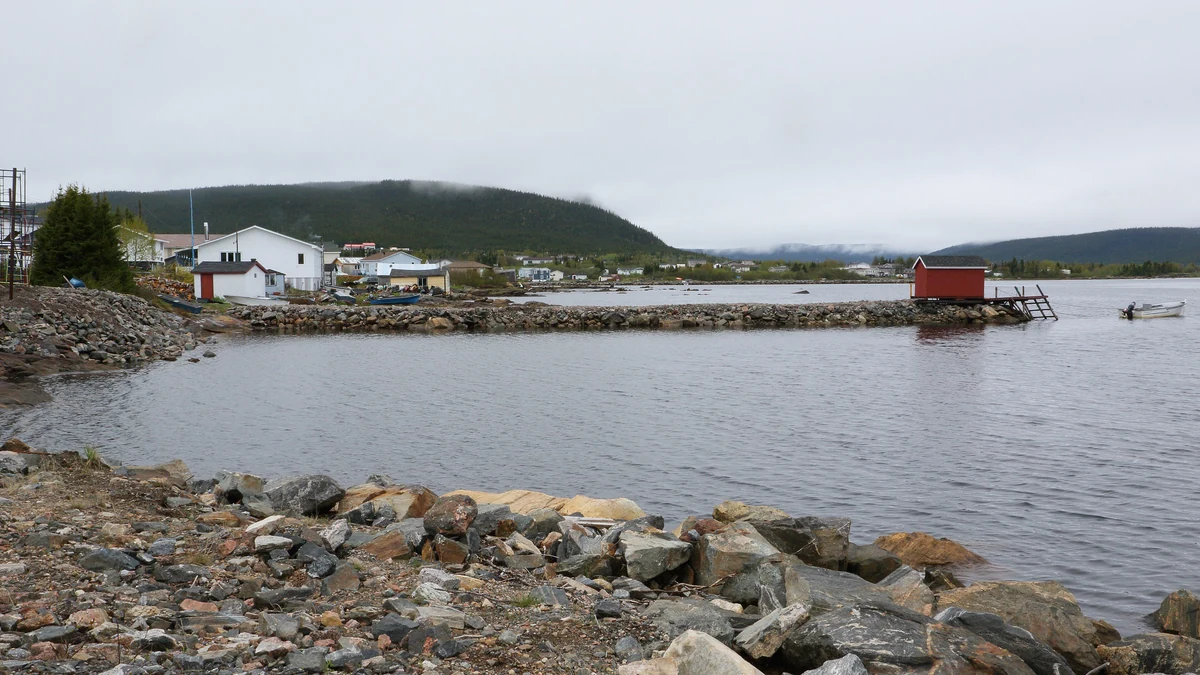
Cartwright cruise port is a small, remote Labrador call where the ship’s expedition plan matters more than any conventional terminal infrastructure. Passengers may come ashore by tender or small landing craft, with the exact point, timing and local programme confirmed by the ship. The settlement is compact, but the wider landscape—Eagle River, forest, coast and the distant Wonderstrands—cannot be treated as an easy independent add-on.
The value of the call lies in local scale, history and environment rather than a list of formal attractions. A good day is usually ship-led or arranged with local hosts: a settlement walk, cultural interpretation, a short nature outing or a scenic transfer that has been built around the vessel’s timetable. Flexibility is essential because wind, fog and landing conditions can alter the plan quickly.
Cartwright Cruise Port at a Glance
| Port name | Cartwright Cruise Port |
|---|---|
| Main arrival area | Ship-specific harbour or tender landing in the Cartwright waterfront area |
| Cruise region | Alaska / North America / Canada |
| Country / Territory | Canada |
| Currency | Canadian dollar (CAD) |
| Main languages | English |
| Port role | Remote expedition-style day call and Labrador community visit |
| Disembarkation | Tender or small-boat landing; arrangements are confirmed by the ship |
| Walkability | Moderate within the settlement; low for wider coastal and river landscapes |
| Shuttle required | Not normally for a settlement walk; organised transport is needed for any distant outing |
| Main transport | Walking, ship expedition programme, pre-arranged local vehicle and small boat where conditions permit |
| Best first-time plan | Follow the ship or local programme, then use remaining time for a respectful harbour and settlement walk |
| Main caution | Landing arrangements, local capacity and weather are variable, with few independent backup options |
There Is No Standard Cruise Terminal Routine
Cartwright should not be approached with assumptions borrowed from a larger Canadian port. There may be no conventional passenger terminal, taxi rank or continuously staffed visitor desk. The ship will confirm how passengers land, where guides meet and whether the visit is open walking time or a controlled group programme. That briefing is the operational source of truth for the call.
Keep clothing and essentials in a small waterproof bag. A tender or expedition craft may involve steps, an uneven landing surface and exposure to spray. Crew may cancel or shorten the landing if conditions deteriorate. That decision protects the return as well as the arrival; a calm morning does not guarantee an easy afternoon on an exposed Labrador coast.
A Settlement Walk Is the Natural Core of the Visit
Cartwright is small enough to understand at walking pace. The harbour, homes, community buildings and working waterfront reveal more when the visit is not treated as a race between attractions. Look for the relationship between settlement and water: boats, storage, shoreline and road all reflect the practical demands of a remote coastal community.
Walk only where access is clearly public and avoid photographing residents at close range without permission. Working areas may contain machinery, gear and uneven surfaces. The strongest experience often comes from a local guide or resident who can explain the community’s history, seasonal rhythms and changing connections with the rest of Labrador.
Local Interpretation Matters More Than Signage
The Labrador Coastal Drive information for Cartwright gives useful regional context, including the Eagle River and the Wonderstrands. On the ground, however, many stories are not packaged into formal visitor attractions. A local host can connect place names, family history, fishing, transport and landscape in a way that independent walking cannot reproduce.
Listen rather than arriving with a fixed checklist. Small-community calls work best when visitors accept that the programme may include a hall, demonstration, storytelling or informal welcome rather than a polished museum route. These encounters are not lesser substitutes for scenery; they are often the main reason expedition ships include Cartwright.
The Wonderstrands Are Not a Casual Walk from Town
The long sandy coast associated with the Wonderstrands is one of the region’s best-known landscape features, but it lies beyond an ordinary settlement stroll. Distance, road or boat access, tides and local conditions all need arranging. Do not set out independently because a map makes the coast appear close. A remote beach is only useful when the transport back is secured.
When a ship excursion includes the area, ask how passengers travel, how much walking is involved and what the fallback is in wind or poor visibility. The journey may be as important as the beach itself. Wear footwear that can handle wet sand and uneven approaches, and carry an insulating layer even when the settlement feels mild.
Eagle River and the Wider Landscape Need Local Access
Cartwright sits in a region of rivers, forest, wetlands and broad coastal views. Reaching those landscapes safely may require a local vehicle or boat and knowledge of current conditions. Wildlife sightings are possible but should never be promised. The better objective is to understand habitat and scale, with any animal encounter treated as a bonus.
Local operators such as those listed through Newfoundland and Labrador tourism tour information may offer customised experiences, but cruise-day availability must be confirmed well before arrival. Capacity is limited. A plan suitable for independent road travellers may not be running on the day a ship calls.
Do Not Build the Day Around the Provincial Ferry
The provincial Cartwright ferry information is designed for regional transport, not as a cruise excursion. Schedules, loading requirements and destinations do not create a practical sightseeing loop for a short call. The service is useful background for understanding community connections, not a transport shortcut to improvise after landing.
Likewise, do not assume a rental vehicle or regular taxi service will be available. Any transport beyond the settlement should be part of the ship programme or agreed directly with a local provider. The absence of on-demand options is not a flaw in the destination; it is a basic condition of visiting a small Labrador community.
Weather Clothing Should Be Built in Layers
Summer in Labrador can move between calm sun, drizzle, fog and cold wind within the same visit. The harbour may feel sheltered while an exposed shoreline feels much colder. Wear a breathable base, insulating layer and waterproof outer layer. A warm hat and gloves are not excessive for passengers who will sit in a small boat or stand outdoors listening to a guide.
Footwear needs grip and some water resistance. Boardwalks, gravel, grass and working-harbour surfaces may all appear in the same programme. Pack sun protection as well; clear northern light can be strong even in cool air. The aim is to adjust quickly rather than return to the ship whenever the weather changes.
Food, Money and Connectivity Are Limited Practicalities
Do not assume restaurant opening, card acceptance or cash access will match a larger port. Eat breakfast and carry water unless the ship confirms refreshments ashore. When a local community provides food or crafts, buy respectfully and use the payment method requested. Small notes in Canadian dollars can be useful, but the ship may arrange purchases differently during a hosted visit.
Mobile signal and data can vary. Download the ship’s landing instructions and retain the time in writing. A phone should not be the only clock or map. Because the settlement is small, connectivity is less important than staying aware of the group, guide and return point.
Mobility Depends on the Landing More Than the Distance
Cartwright’s compact scale can sound easy, yet tender steps, floating docks, gravel, slopes and uneven working surfaces may be decisive. Ask the expedition team to describe the landing after they have assessed it, not weeks in advance from a generic excursion label. Conditions may change what assistance is possible.
Passengers who cannot manage the shore transfer may still gain value from deck views and onboard interpretation. Those who land should choose the shortest meaningful route rather than pushing to keep pace with a more active group. A local presentation near the waterfront may provide more insight than a difficult walk undertaken only to say it was completed.
Use the Length of the Landing to Set Expectations
Some expedition calls provide only a few hours ashore; others combine a longer community visit with an organised outing. The programme may be shortened after the ship has already arrived if wind or visibility changes. Read every announcement and do not assume the original printed timetable remains active. In a small port, a thirty-minute reduction can remove the entire second activity.
When time is short, prioritise the hosted element. A local presentation or guided walk is difficult to recreate independently, while harbour photographs can be taken on the way back. When time is longer, add only the excursion that the ship or local team confirms. The absence of a full-day attractions list is precisely why the call can remain personal and place-specific.
Wildlife Watching Without Promises
The Labrador coast supports birds and marine wildlife, but distribution changes with season, food and weather. Scan from the ship, landing craft and shoreline, and listen to naturalists who know the current signs. Binoculars add more value than rushing towards a distant sighting. Keep clear of nesting areas and do not expect guides to approach animals for photographs.
A wildlife outing should still be worthwhile when sightings are limited. Landscape interpretation, boat handling, local ecology and the experience of travelling through the environment need to carry the tour. Operators who promise a particular species on a short call create the wrong expectation for both visitors and wildlife.
Respect the Capacity of a Small Community
The provincial Newfoundland and Labrador tourism overview of Labrador helps place Cartwright within a much larger and sparsely populated region. Visitor services may be assembled specifically for the ship rather than operating every day. Arrive on time, stay with the group and follow local instructions so limited vehicles, guides and venues are used fairly.
Do not judge the call by the number of shops open or whether every purchase can be made by card. Community hospitality is labour, and a ship visit can involve substantial preparation. Buy local work when it genuinely appeals, ask before taking close photographs and leave spaces as you found them. These behaviours matter more in a small settlement than collecting a long list of sights.
Keep the Final Walk Beside the Harbour
When the ship allows free time, use the final thirty minutes close to the landing. This protects against a changed pickup, a slower group member or a sudden weather instruction. It also gives the harbour a second look after local interpretation, when boats, shoreline and buildings make more sense than they did on arrival.
Best Things to Do from Cartwright Cruise Port
Guided settlement walk
Best for: First-time visitors and cultural context
Plan: Join a ship or local guide and focus on harbour, history and community life
Watch: Private property, uneven working surfaces and limited signage
Local cultural welcome
Best for: Passengers interested in Labrador stories and daily life
Plan: Follow the ship programme and allow time for conversation
Watch: Expecting a formal attraction rather than a community encounter
Wonderstrands outing
Best for: Landscape-focused visitors with arranged transport
Plan: Use a ship or local excursion with a weather fallback
Watch: Distance, tides, exposure and no independent return
Eagle River or nature outing
Best for: Small groups and wildlife interest
Plan: Book locally in advance and treat sightings as a bonus
Watch: Limited capacity, weather and boat access
Harbour photography
Best for: Flexible independent time close to the landing
Plan: Stay on public routes and ask before photographing people
Watch: Working equipment, slippery edges and wandering beyond the return area
CruisePing Recommended Port Day
CruisePing would follow the ship’s local programme rather than trying to create an independent excursion. Join the settlement walk or hosted visit first, when guides and transport are available. Afterwards, use any confirmed free time for a slow harbour circuit, photographs and a small local purchase, staying within easy reach of the landing.
Choose a Wonderstrands, river or wildlife outing only when it is offered as a properly timed excursion with a clear fallback. Cartwright is not improved by forcing a major attraction into the schedule. Its strength is the rare opportunity to spend time in a Labrador community at a scale that larger ports cannot offer.
Weather & Best Time to Visit Cartwright
Use the Environment and Climate Change Canada Cartwright forecast and, where relevant, the South Labrador Coast marine forecast. Rounded summer planning ranges are shown below.
Most cruise calls occur in the short milder season, but cold wind and fog remain possible. Marine conditions matter because they can affect both the landing and any small-boat outing. A forecast that looks dry is not automatically comfortable without wind protection.
| Month / season | Typical high | Typical low | Rain / conditions |
|---|---|---|---|
| June | 13°C | 4°C | Cool, variable with fog and rain possible |
| July–August | 17°C | 8°C | Mildest period; still changeable and breezy |
| September | 12°C | 4°C | Cooler days, colder nights and faster changes |
| October | 6°C | -1°C | Cold, exposed and increasingly wintry |
Practical Questions for a Cartwright Cruise Call
Will the ship dock?
Do not assume so. Tender or expedition-craft arrangements are ship-specific and may change after a local conditions assessment.
Can I arrange a taxi after landing?
On-demand transport should not be expected. Any trip beyond the settlement needs advance confirmation through the ship or a local provider.
Can I walk to the Wonderstrands?
No. Treat the area as an organised outing requiring transport, local knowledge and a return plan.
What should I wear?
Use warm, waterproof layers and grippy footwear even in summer. Conditions at the landing and exposed coast can be much cooler than the ship’s sheltered deck.
Useful Official Links
- Labrador Coastal Drive — Cartwright
- Newfoundland and Labrador tourism tour information
- Provincial Cartwright ferry information
- Environment Canada Cartwright forecast
- South Labrador Coast marine forecast
CruisePing Port Verdict
Cartwright is a remote community call, not a reduced version of a conventional port. Its value comes from local interpretation, harbour scale and access to Labrador landscape when the ship and weather make that possible.
Follow the confirmed landing plan, take the hosted programme seriously and avoid inventing transport after arrival. A respectful two or three hours with local context can be far more memorable than an overambitious outing that the destination is not set up to support.
Ready to browse our article library?
Explore more ports in the Alaska / North America / Canada region, narrow the library to Canada cruise ports, or return to the main CruisePing article library.